If you’re planning a family trip and you’re wondering whether an AI travel agent can do the work for you — this article is for you. I’ll show you what works, what doesn’t, and where exactly you can’t trust an AI travel agent without verification.
I just got back from an 8-day, 4-country road trip with my wife and 8-year-old daughter — Montenegro → Hungary → Czech Republic → Austria → Hungary → Montenegro, April 24 to May 1, 2026. We rented a car at Budapest Airport, drove through three borders, stayed in four hotels, and ate at nine restaurants where I have receipts.
Only after the trip ended did I send the same prompt to three top AI travel agents — Mindtrip, iMean AI, and Layla — and compared their recommendations to what actually happened. This isn’t “AI plans the trip → I take it → we’ll see.” This is “I already know what worked — now I can fact-check every word the AI said.”
Why I tested AI after the trip, not before. We lived in Vienna for almost a year. During that time, we regularly drove to Budapest, Bratislava, and Brno — these were our default weekend trips. We have favorite hotels, favorite restaurants, and a stack of practical tricks we’ve already worked out. Trusting an AI to plan a route I know better than the AI does — that’s a downgrade, not an upgrade. So we drove our own plan, and ran the AI test retrospectively, where I could compare recommendations to reality without risking the trip.
What Is an AI Travel Agent (and Why I Tested Three)
An AI travel agent is the next layer above an AI trip planner. Where a trip planner gives you a static itinerary, an agent talks back: it asks follow-up questions, integrates booking partners, remembers your preferences across the conversation, and (in theory) handles cross-border details like vignettes, deposits, and time-of-year holidays.
I picked three I genuinely respect from previous testing:
- Mindtrip — strongest hotel matching, best UX, fully free
- iMean AI — most structured output, multi-section format
- Layla — best insider knowledge, paywall-aggressive
The prompt I sent to all three was identical: a detailed 700-word brief covering route, dates, family composition, hotel preferences, that we lived in Vienna and know it well, our daughter’s age, and the cross-border car-rental concern. I wanted to see what each one would do with the same input.
→ Related: Best AI Trip Planners 2026: 10 Tools Compared
How I Tested
I sent each AI the same prompt in late April 2026, after completing the trip. I scored answers across:
- First-response coverage — did they hit the critical points without follow-ups?
- Hotel matching — did they pick hotels we’d actually want to stay in (or did pick)?
- Cross-border knowledge — vignettes, fees, regulations
- Hertz-specific knowledge — opening hours, deposit, cross-border rules
- Hallucinations — did they invent places that don’t exist?
- Paywall ethics — what’s locked behind payment, what’s accessible
For ground truth, I had:
- Receipts from 9 restaurants and 4 hotels
- Hertz contract showing exact charges
- Photos of border vignette price boards
- The actual Slovakia eZnámka price: €10.80 (~$11.65 USD)
- The actual best moment of the day for our daughter — Tropicarium-Oceanarium in Campona, Budapest, the 36-foot shark tunnel, €26 (~$28 USD) for the family
With this data in hand, I scored each AI’s answers.
Day-by-Day — A Real 4-Country Trip in 8 Days
Before we get into reviewing each AI individually, here’s the trip we actually took. This is the context for the entire test — comparing AI recommendations to a vague “ideal trip” is useless; you need to compare them to specific places and specific receipts.
Day 1 (April 24) — Podgorica → Budapest → Brno
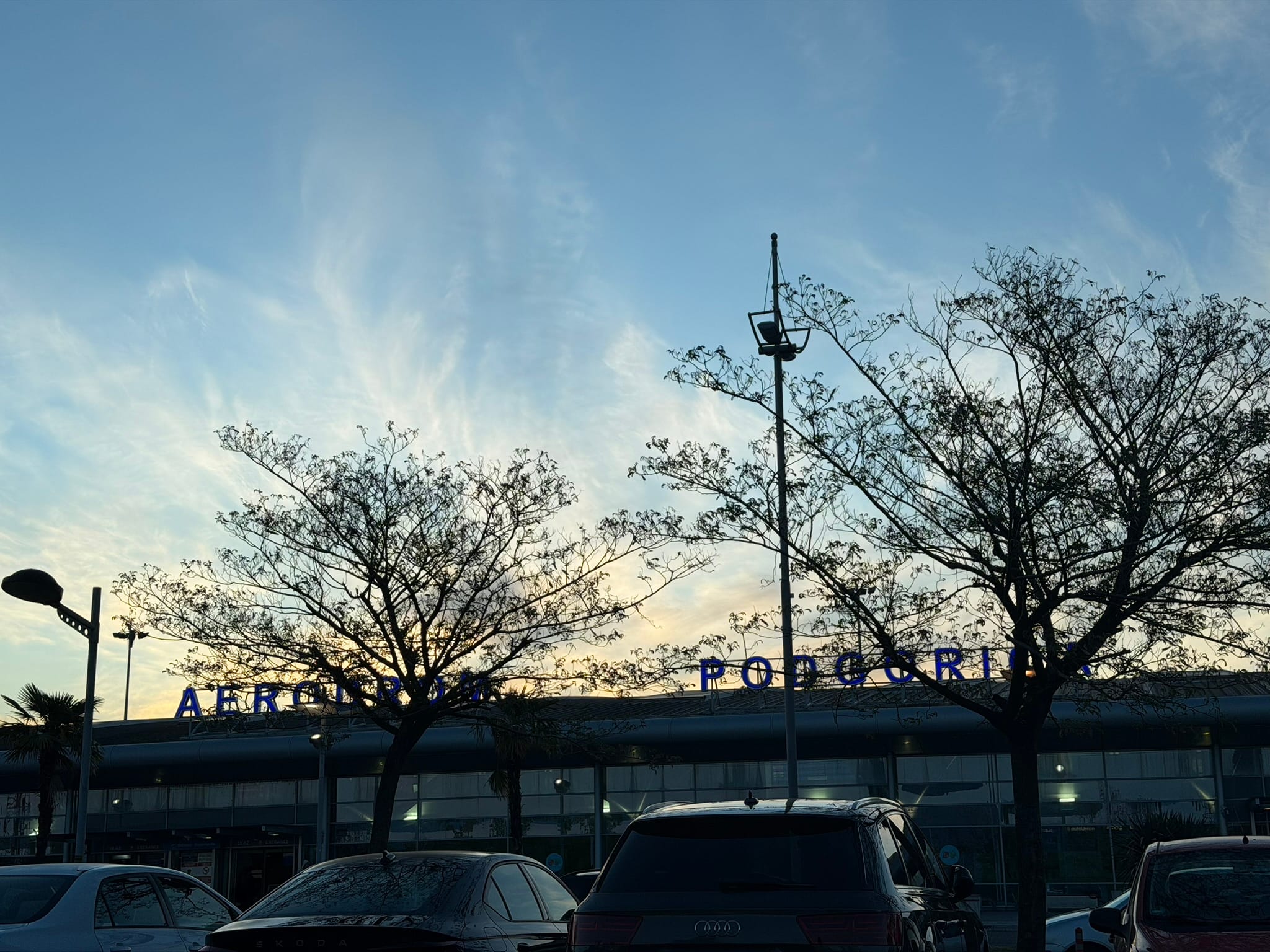
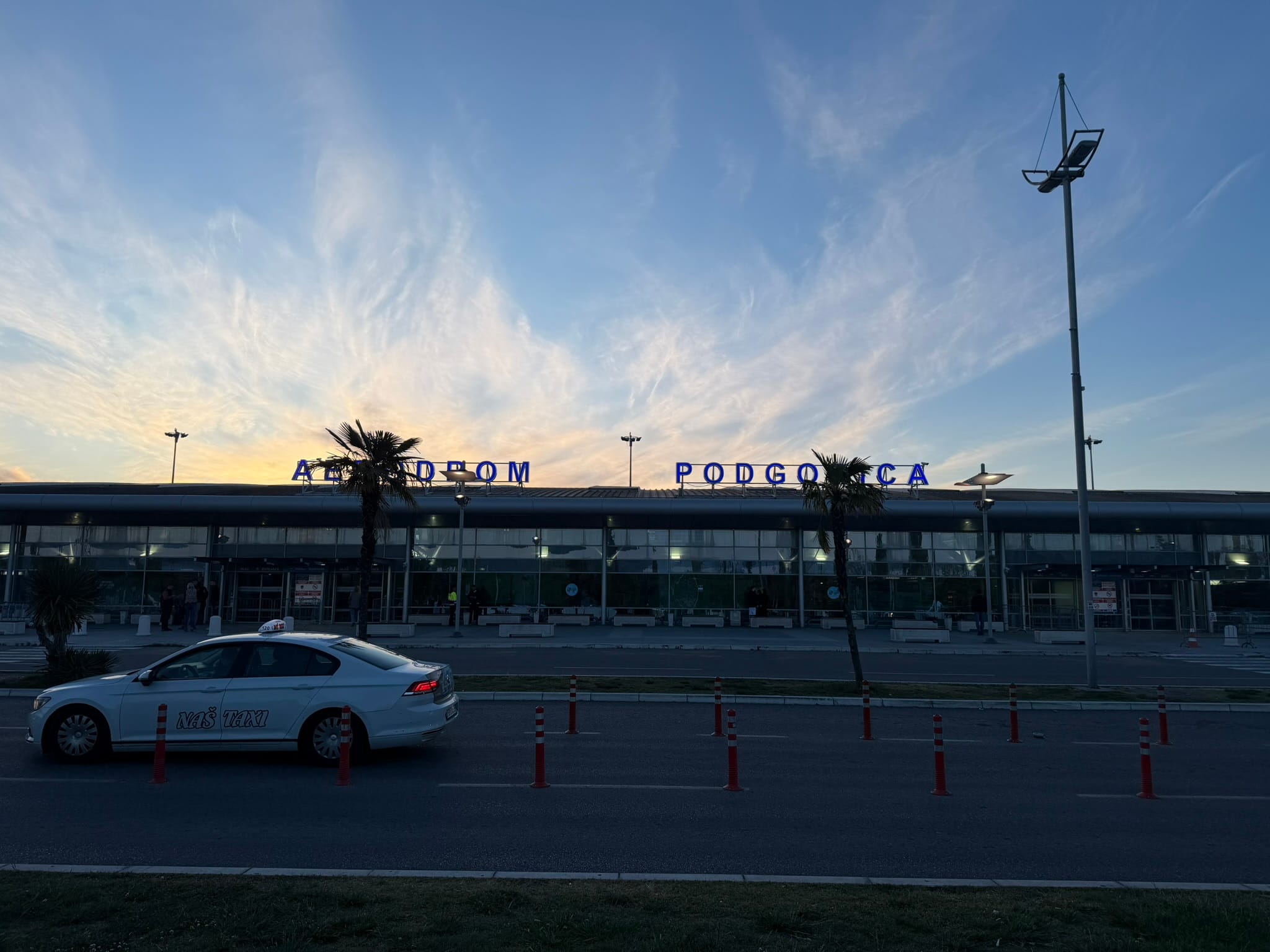
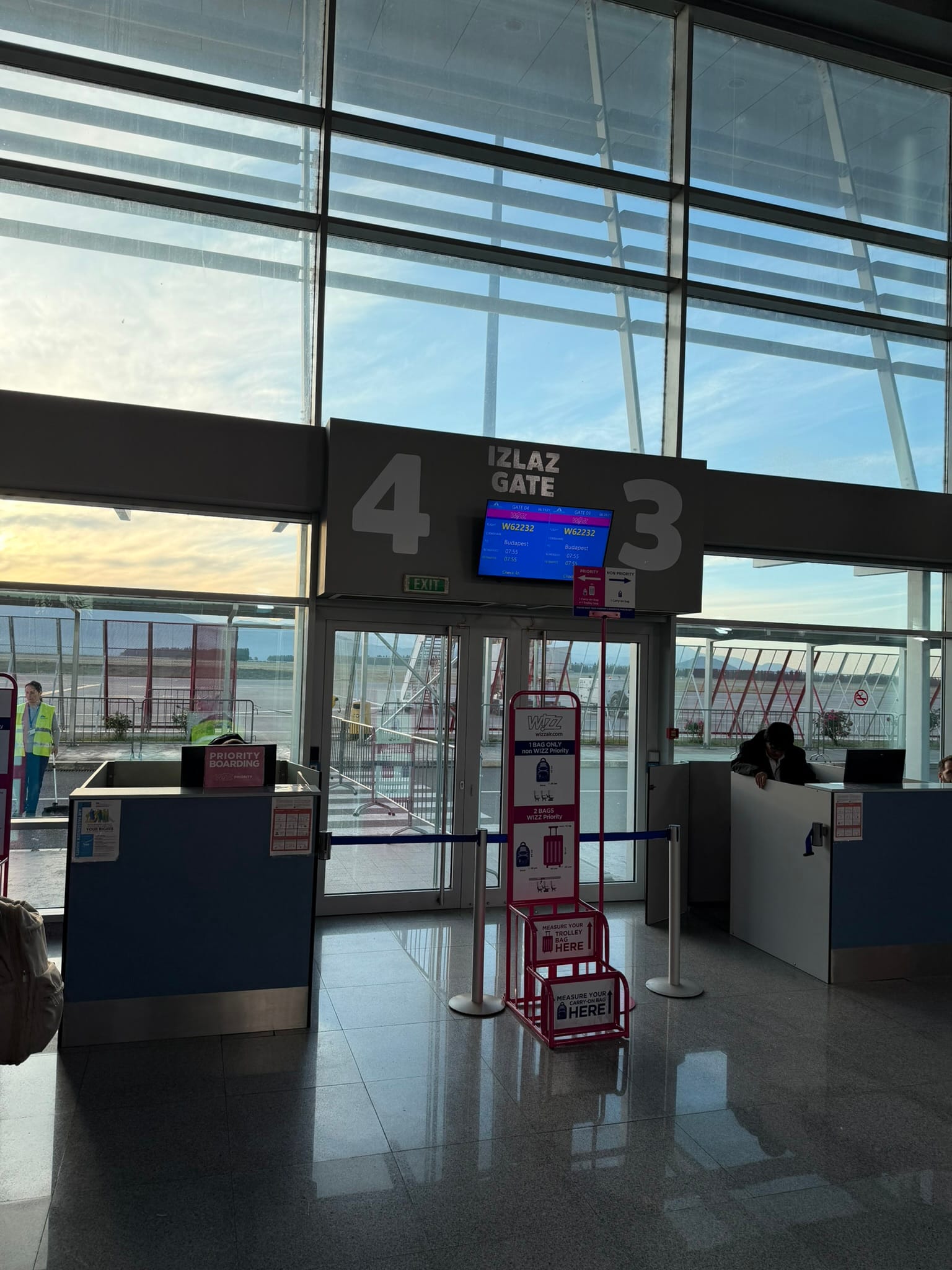
Up at 4:00 AM, out of Budva at 4:30. Wizz Air W62232 from Podgorica to Budapest, departing 7:55 AM, 1.5 hours in the air. Passport control at BUD took about an hour — half the booths weren’t open and the line was at a standstill. That was the first divergence from AI predictions: they all flagged “60–90 min EES wait,” but the actual delay wasn’t EES — it was understaffing.
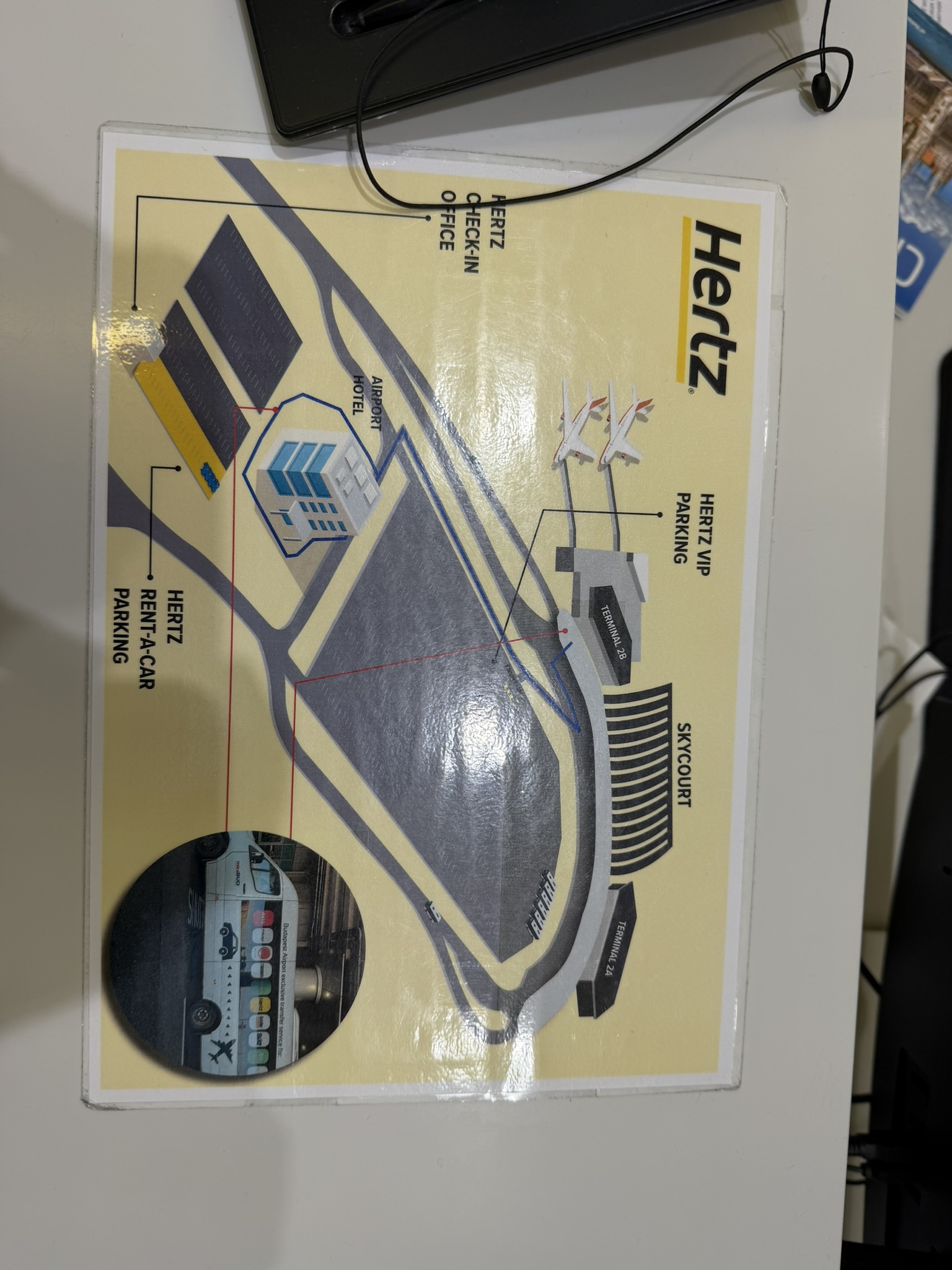
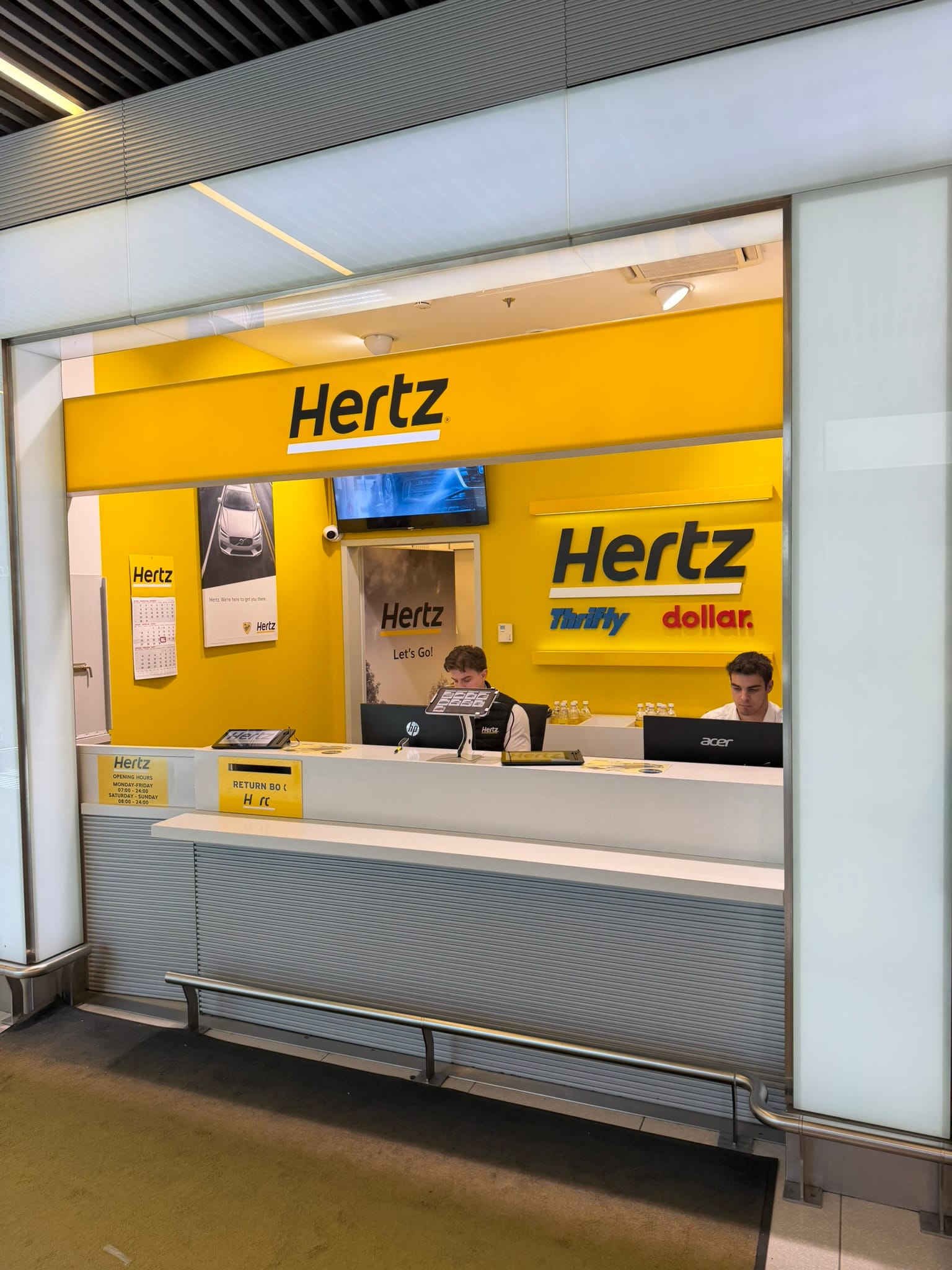
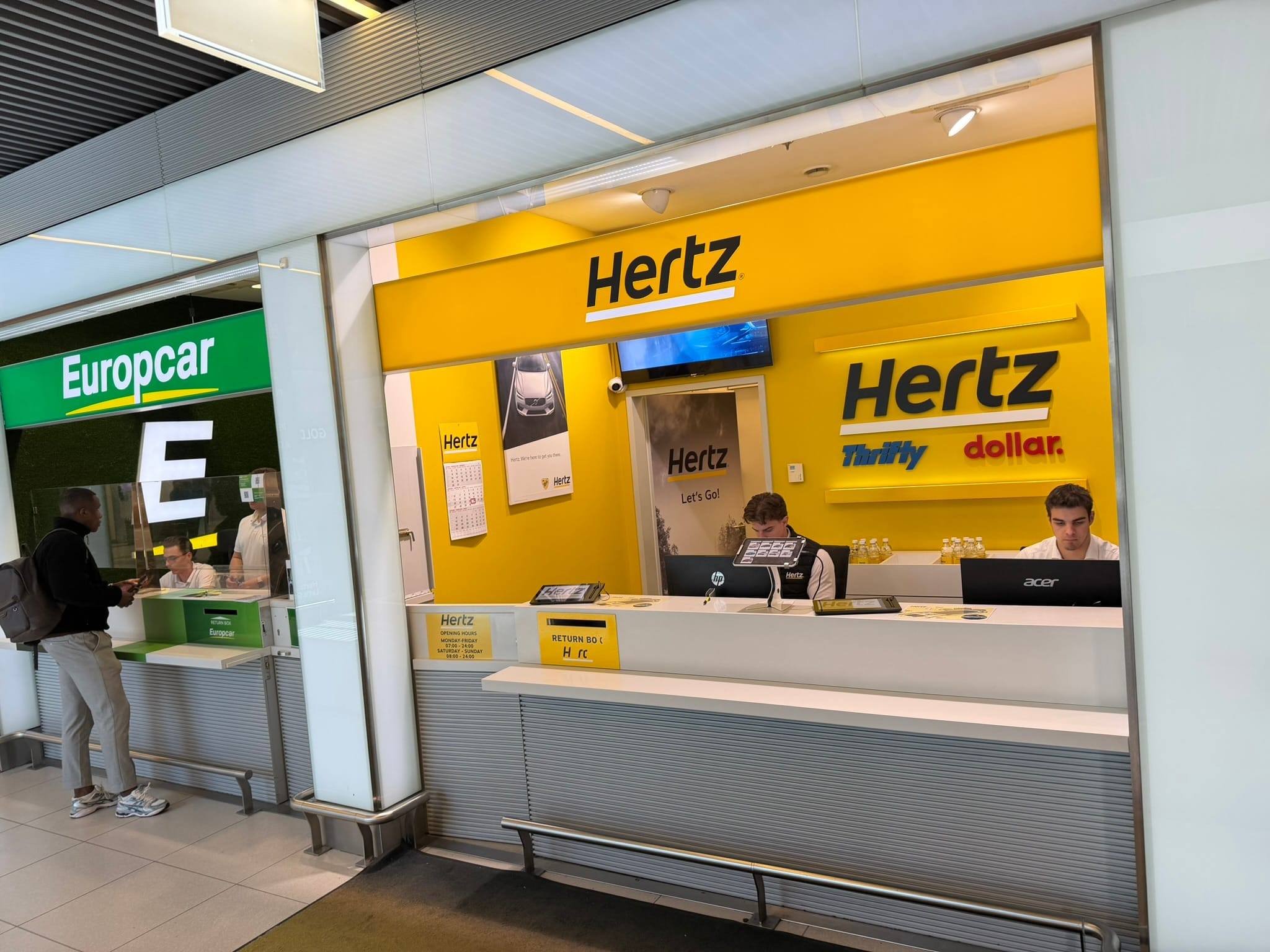
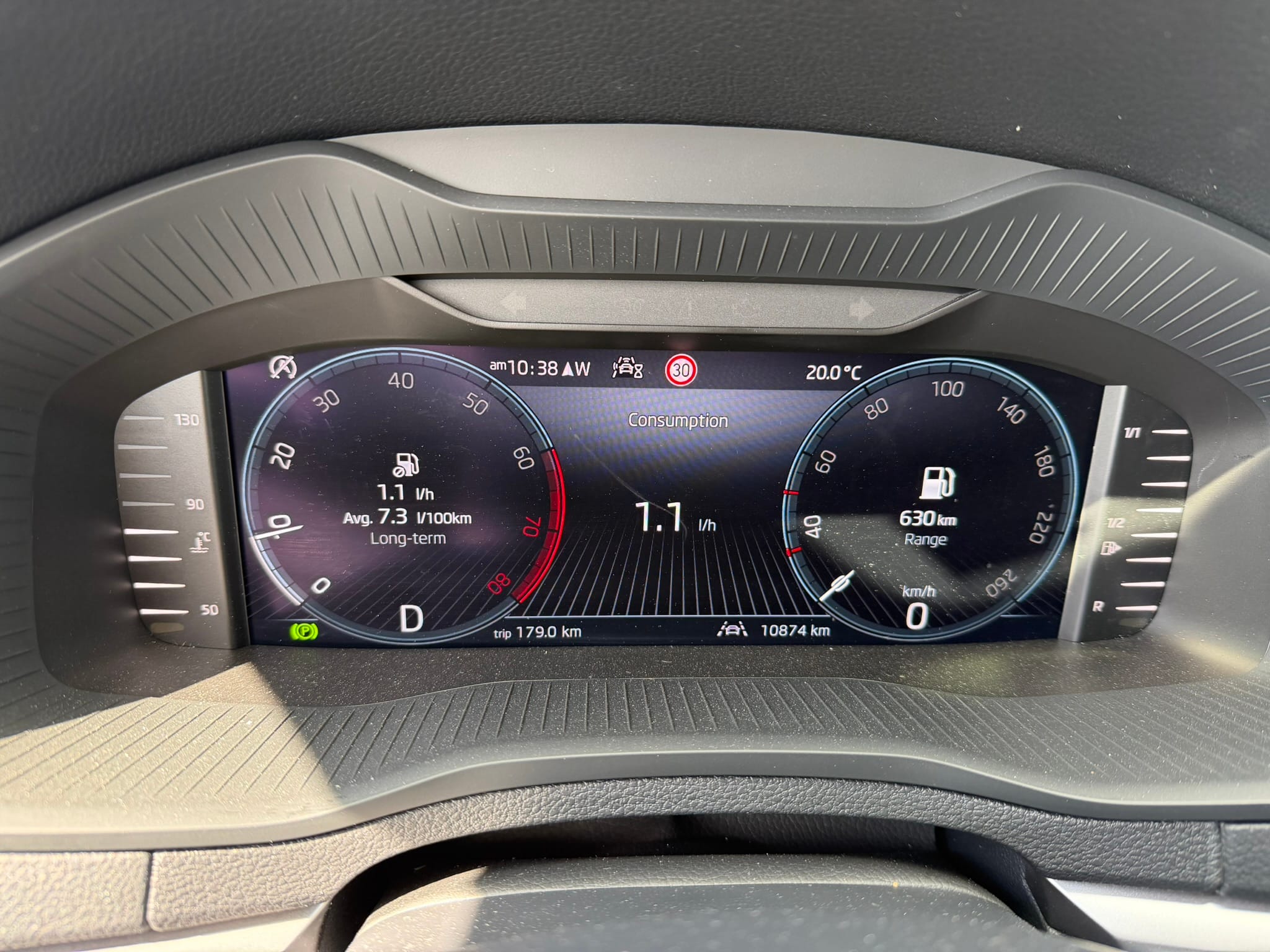
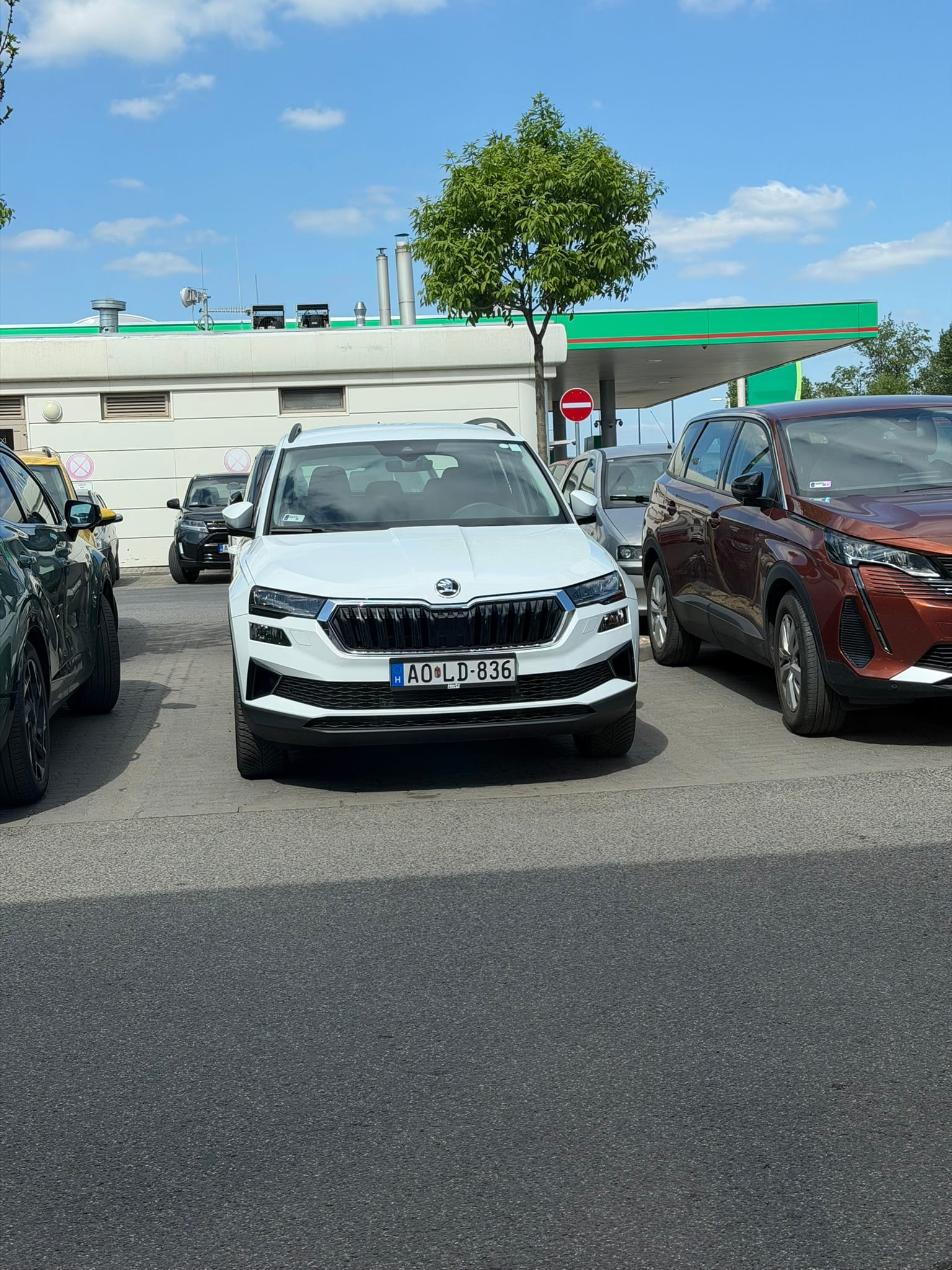
Hertz: a Skoda Karoq Selection 1.5 TSI in Holdfehér (a Hungarian word for “moonwhite”). Total on the receipt — €718.54 (~$777 USD) for 5 days, all-in: base rental €255.78, Super Cover €170, emergency roadside €40, child booster seat €15, cross-border fee €35, basic CDW + theft protection €25 each, 27% Hungarian VAT. One transaction, no hidden surcharges. We pulled out of the airport at 11:00 AM.
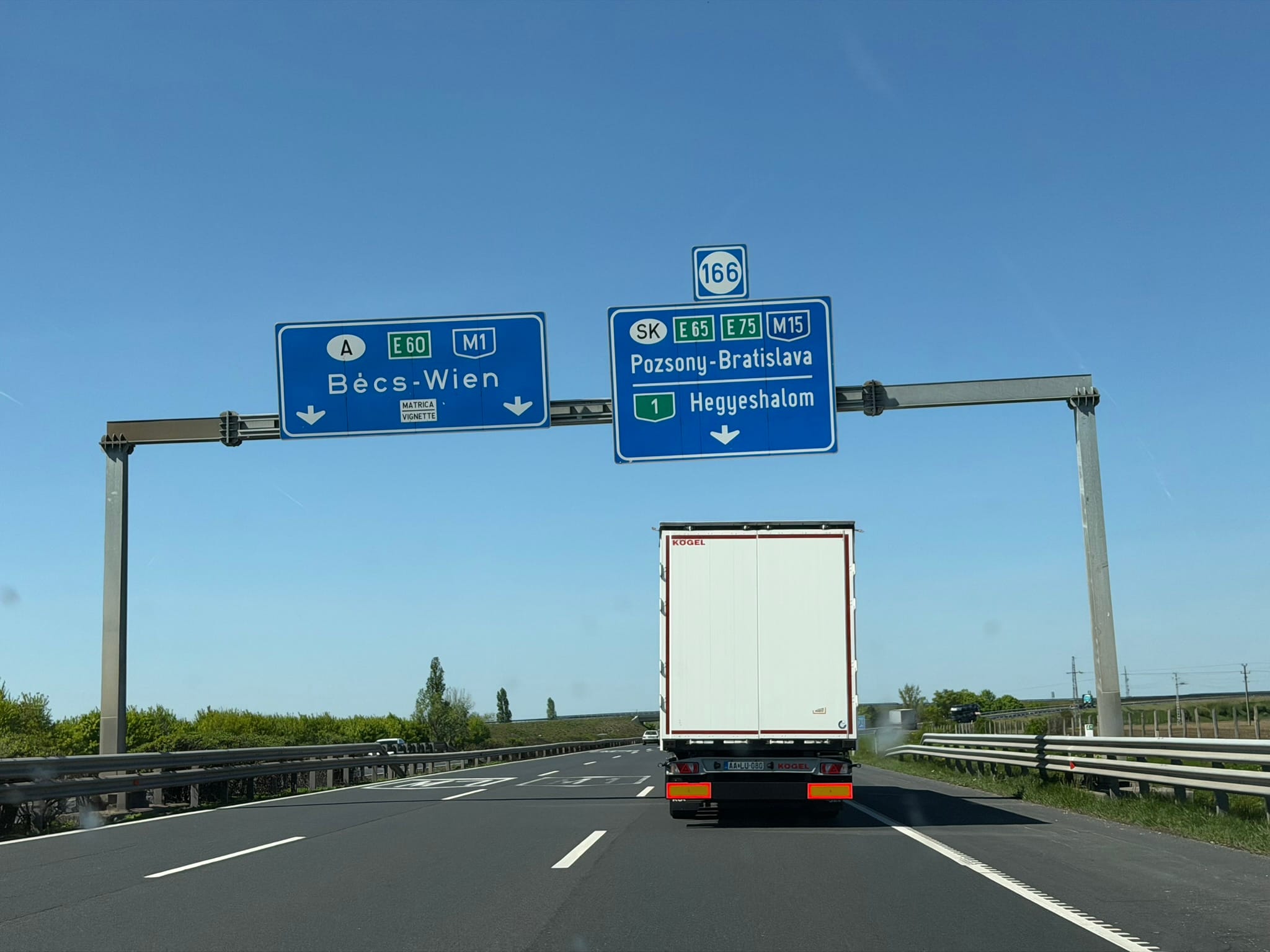
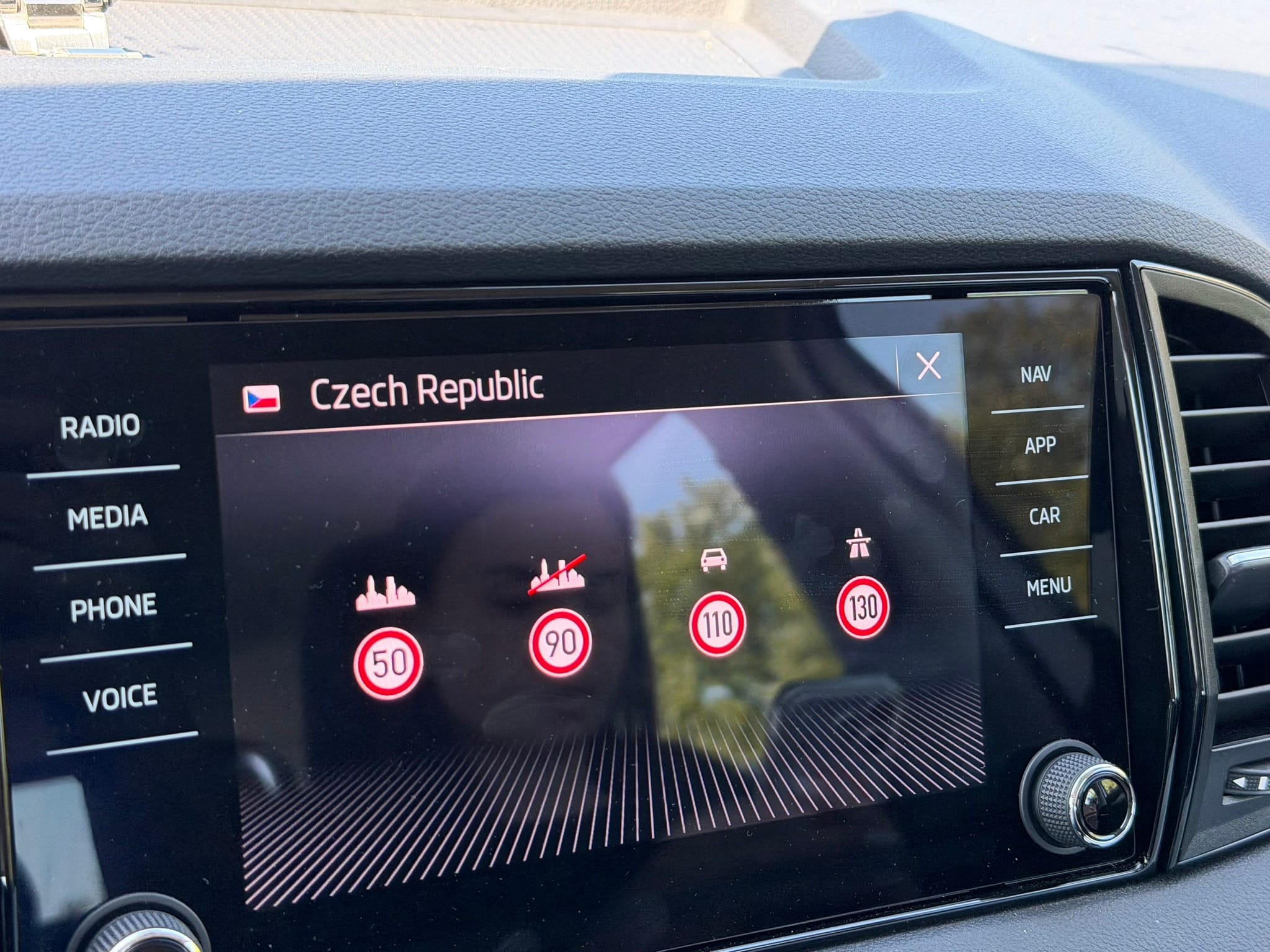
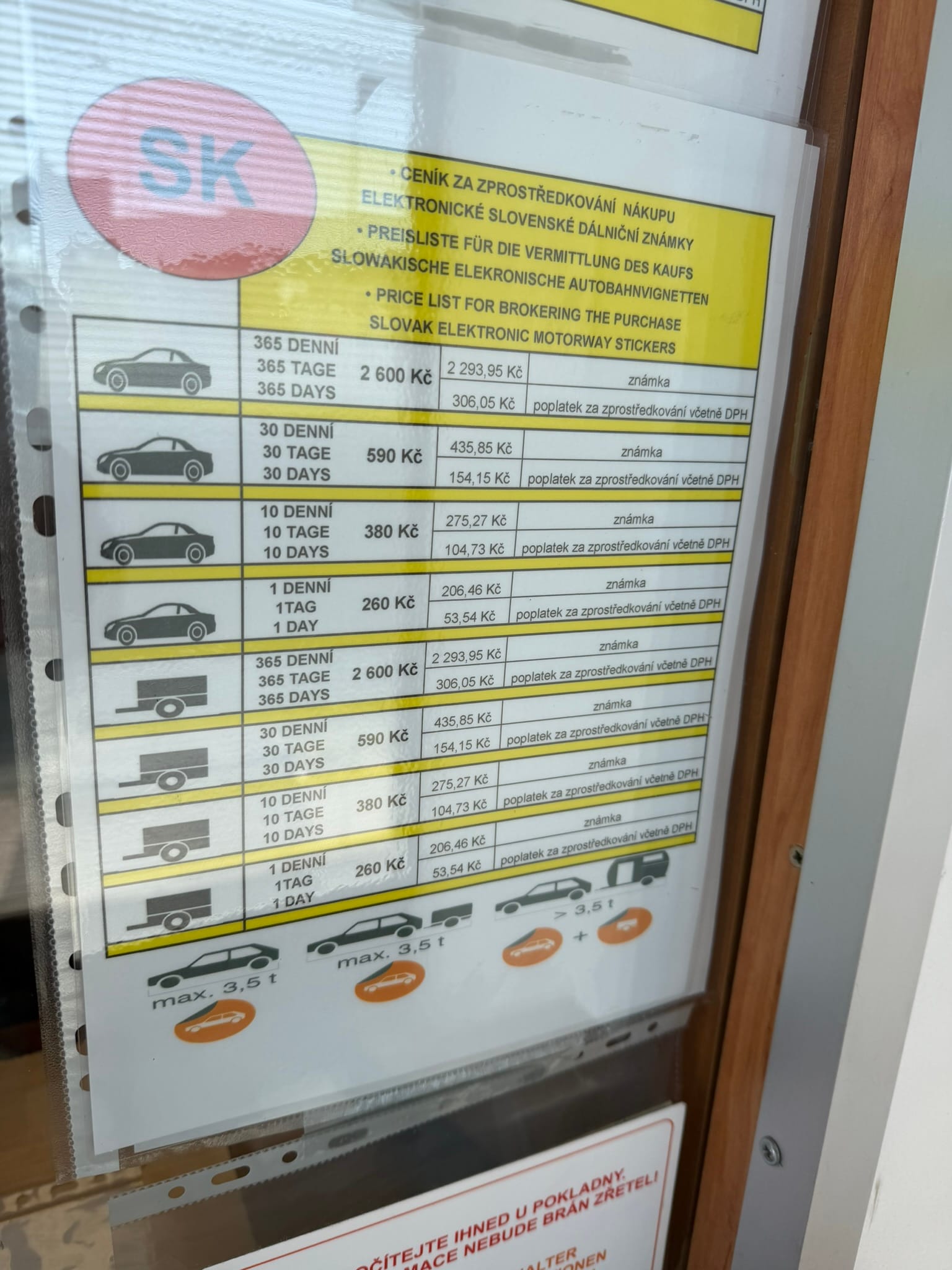
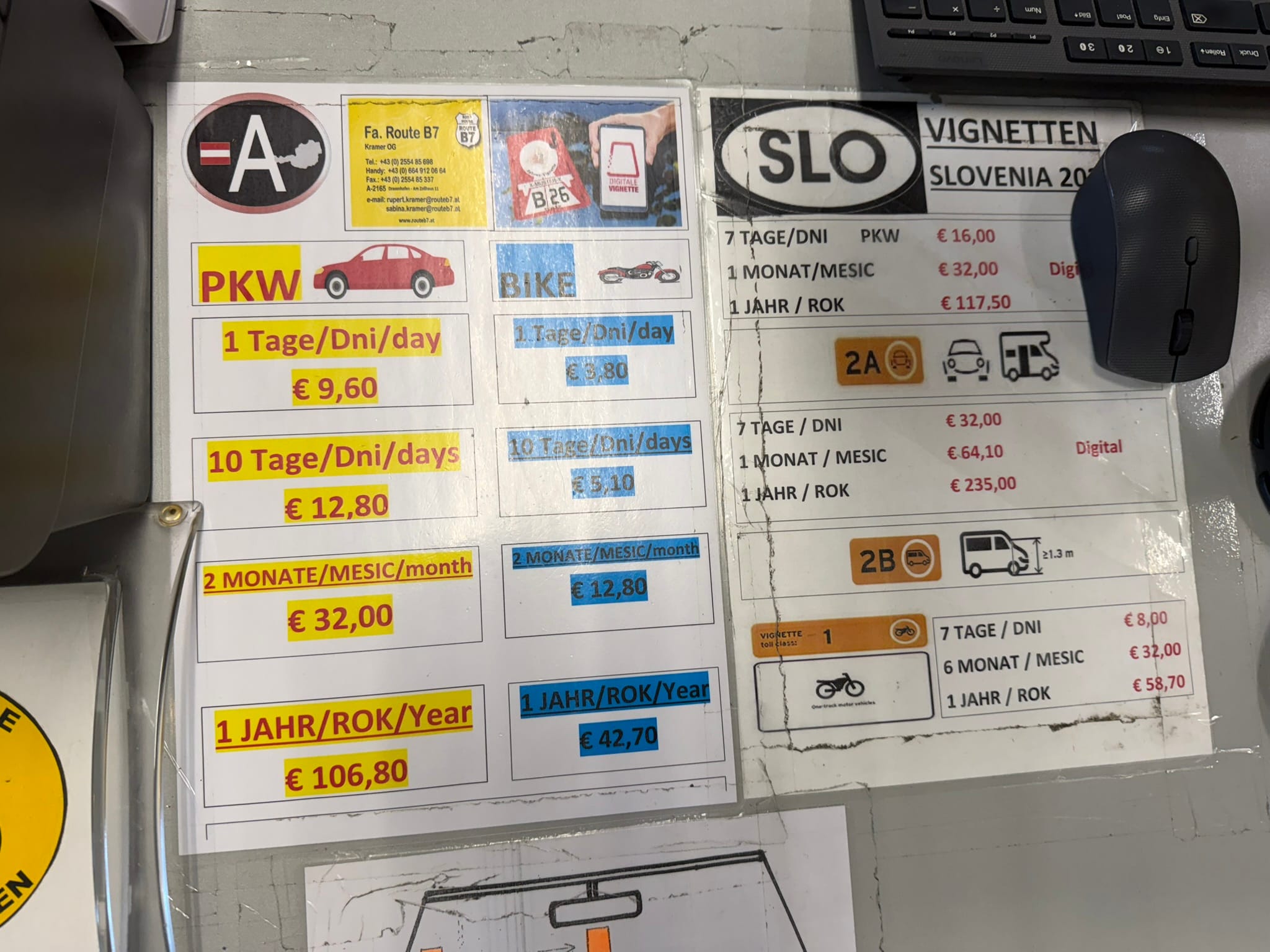
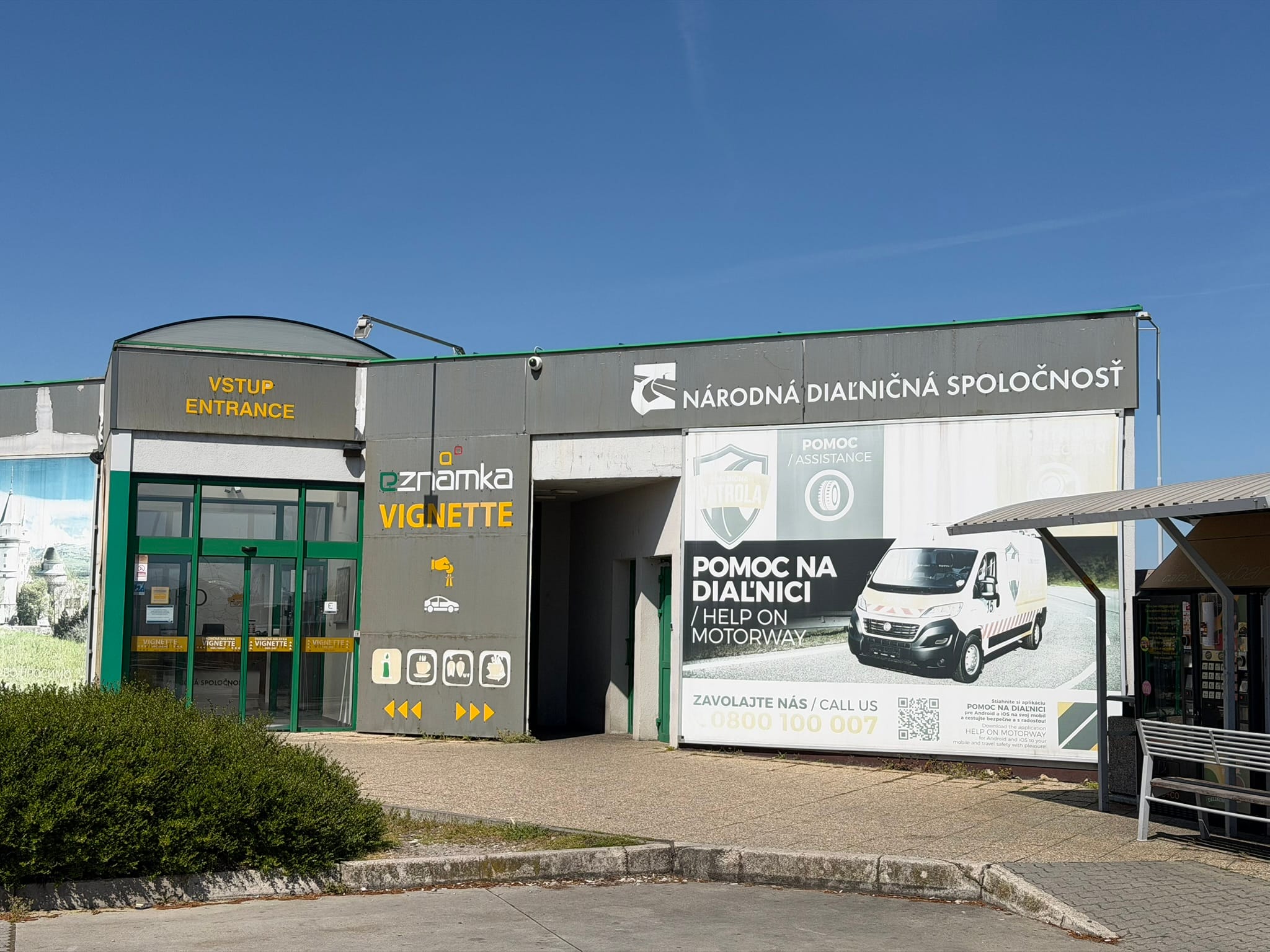
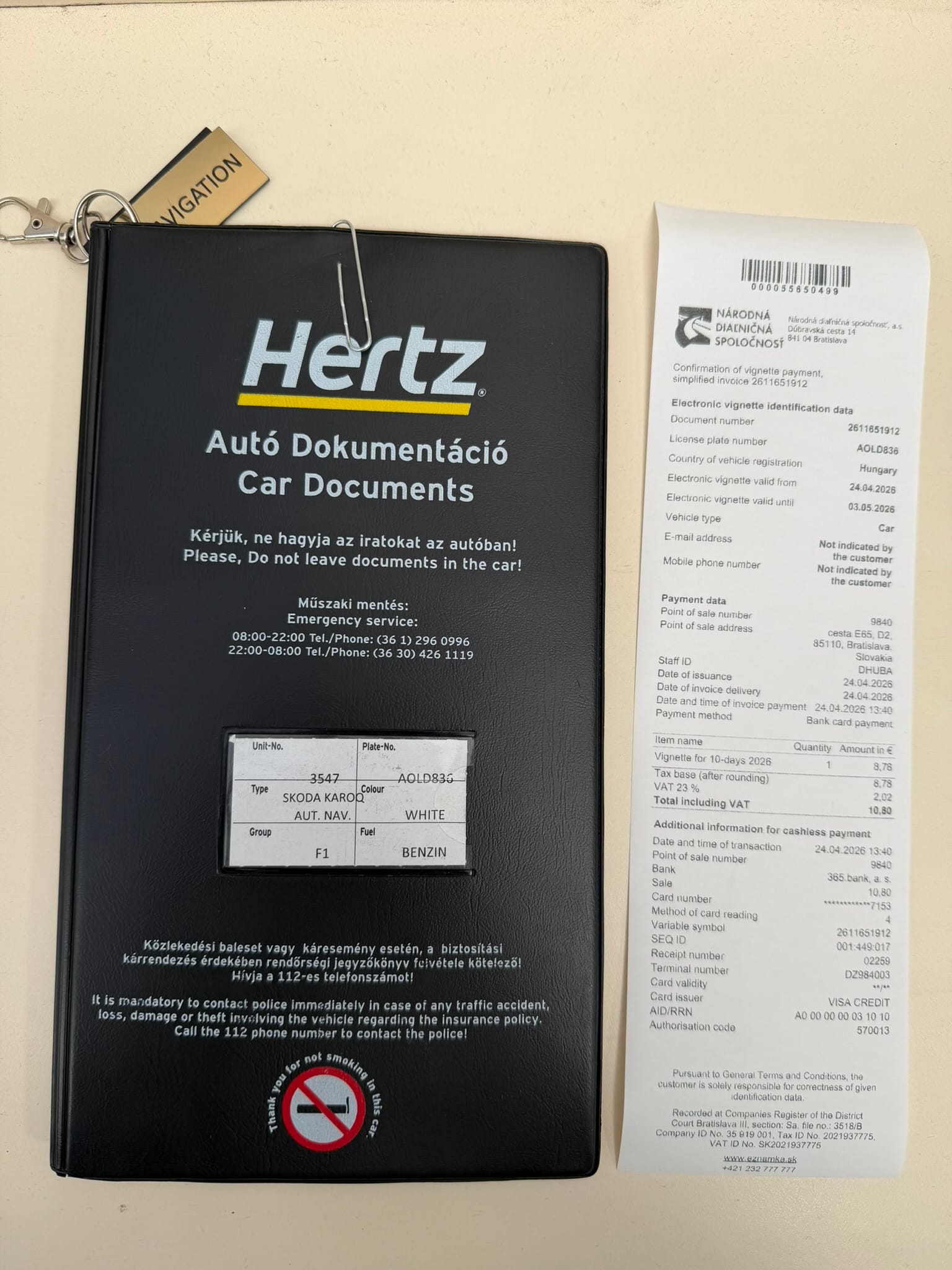
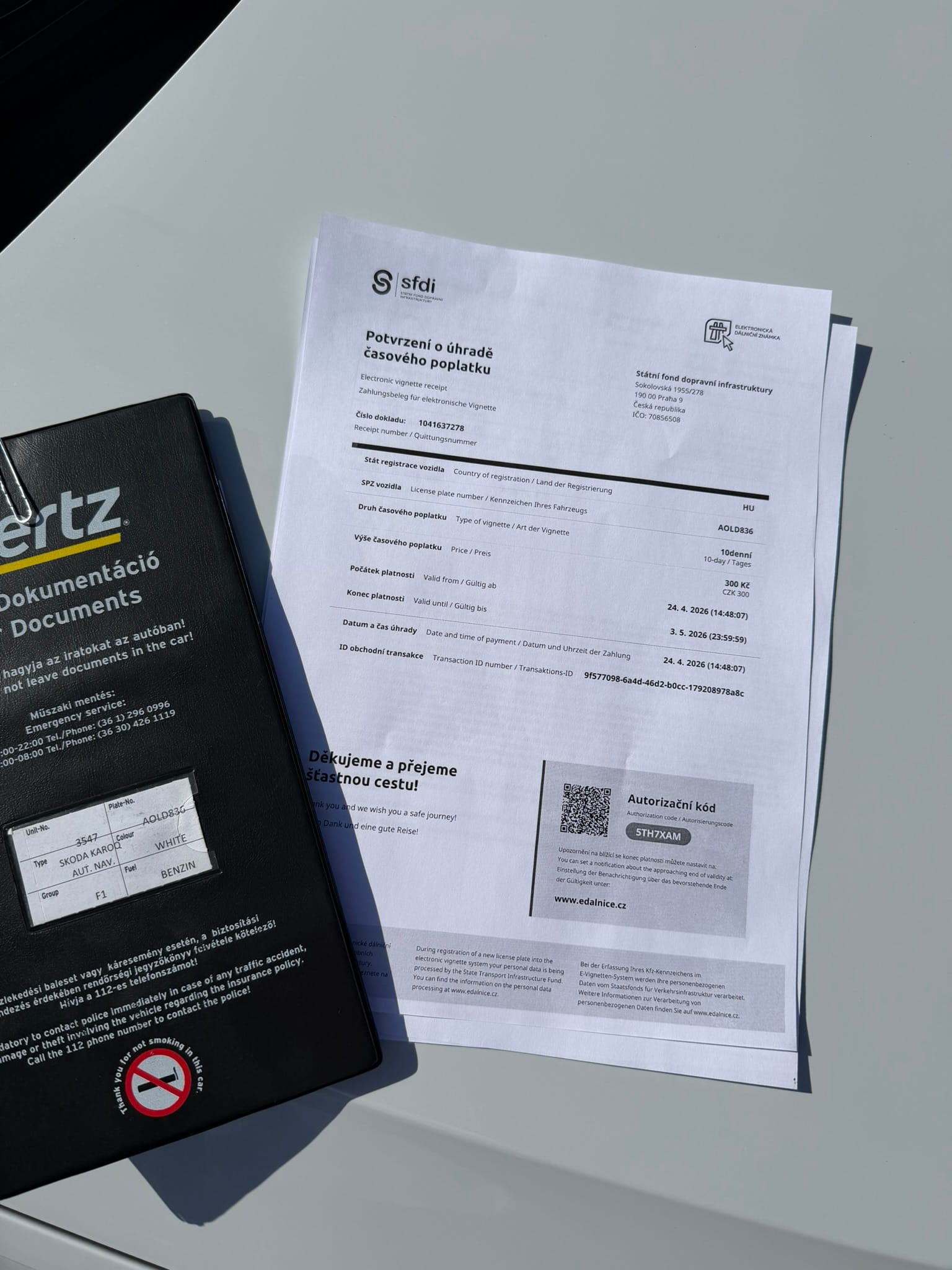
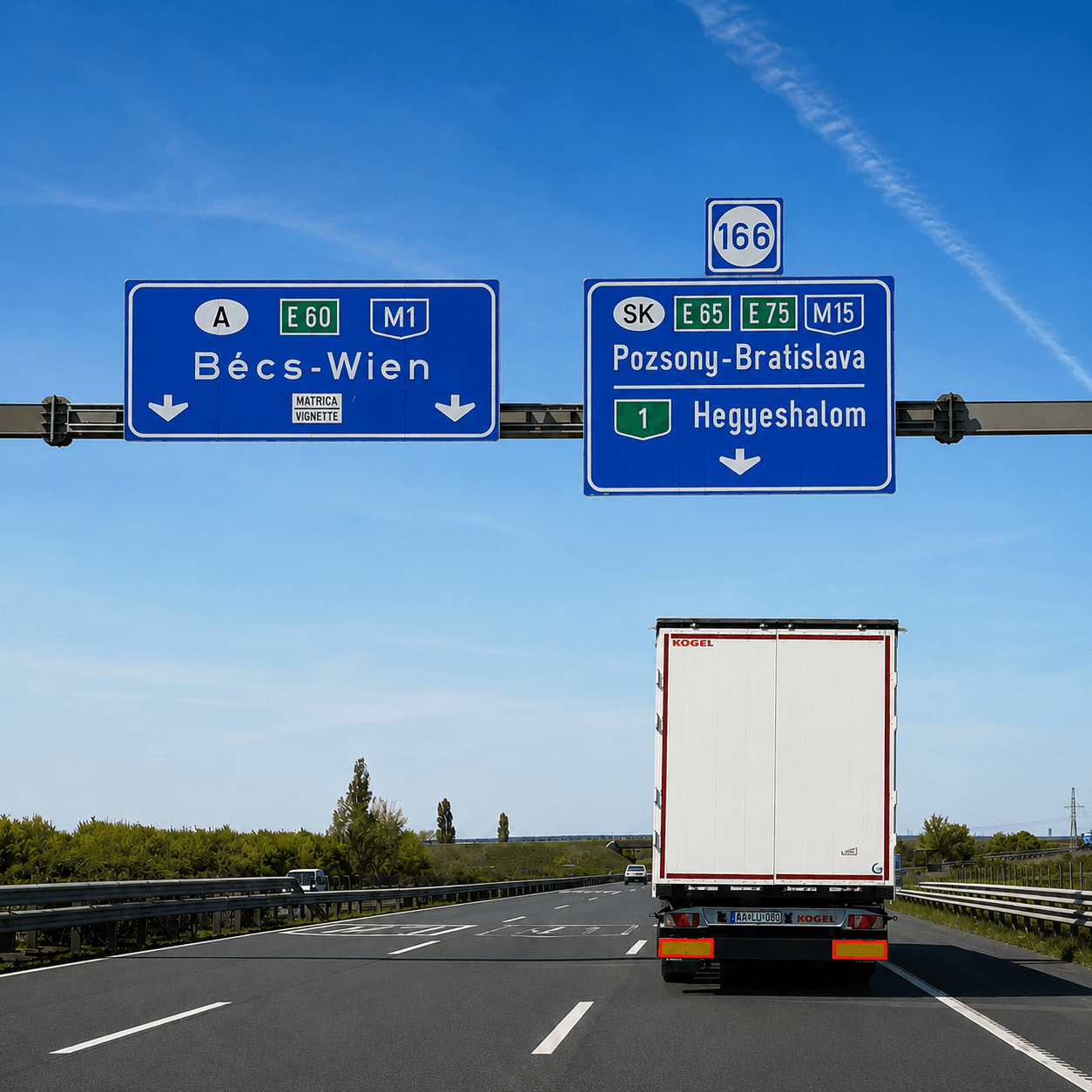
Drive Budapest → Brno: about 4 hours through three borders, HU → SK → CZ. I bought vignettes on the fly at roadside kiosks right at the borders. There are official Slovak pohraničí stops where you grab an eZnámka for €10.80 (digital, tied to your license plate) in two minutes. I got the Czech vignette the same way at the CZ border.
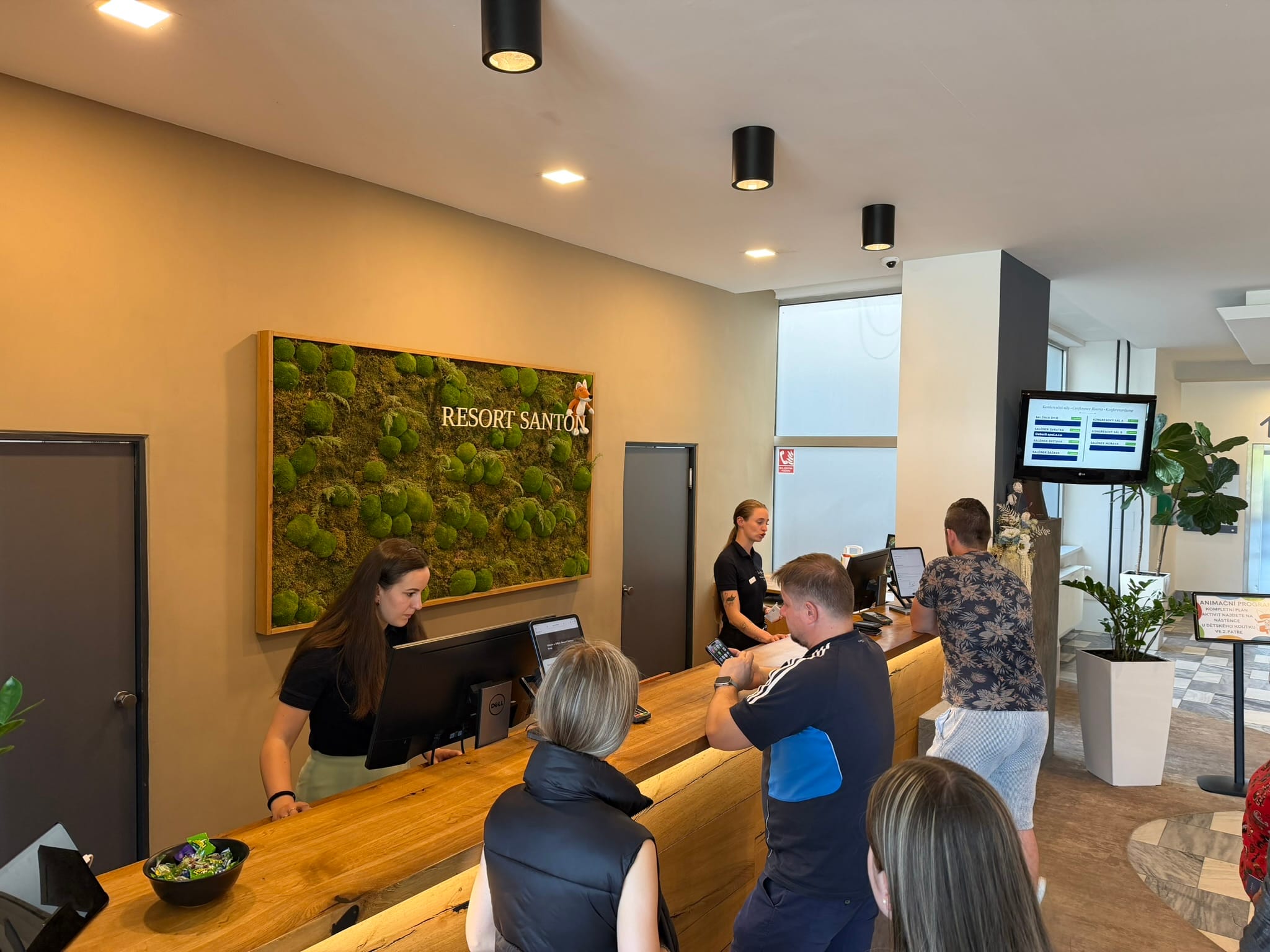
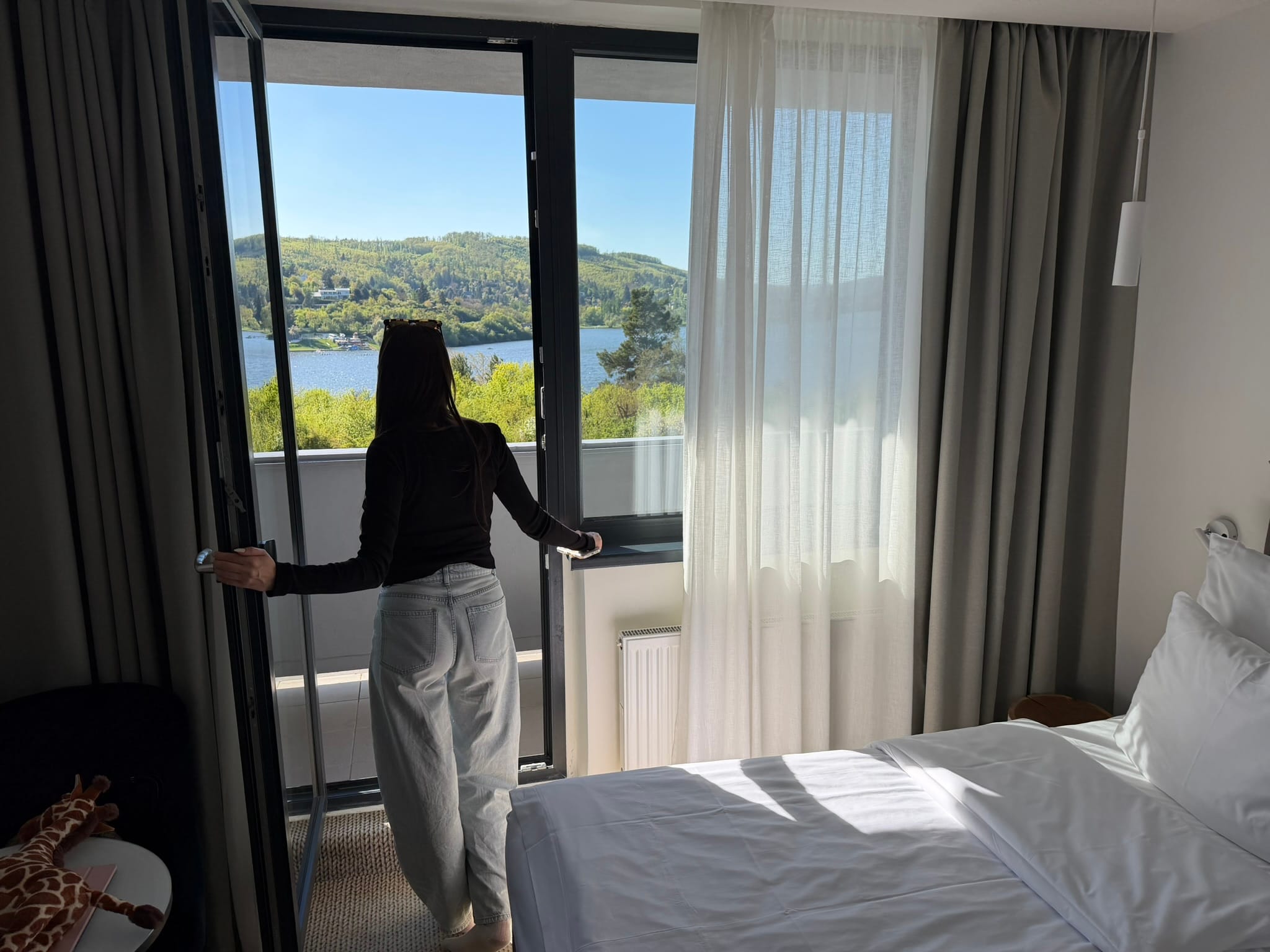
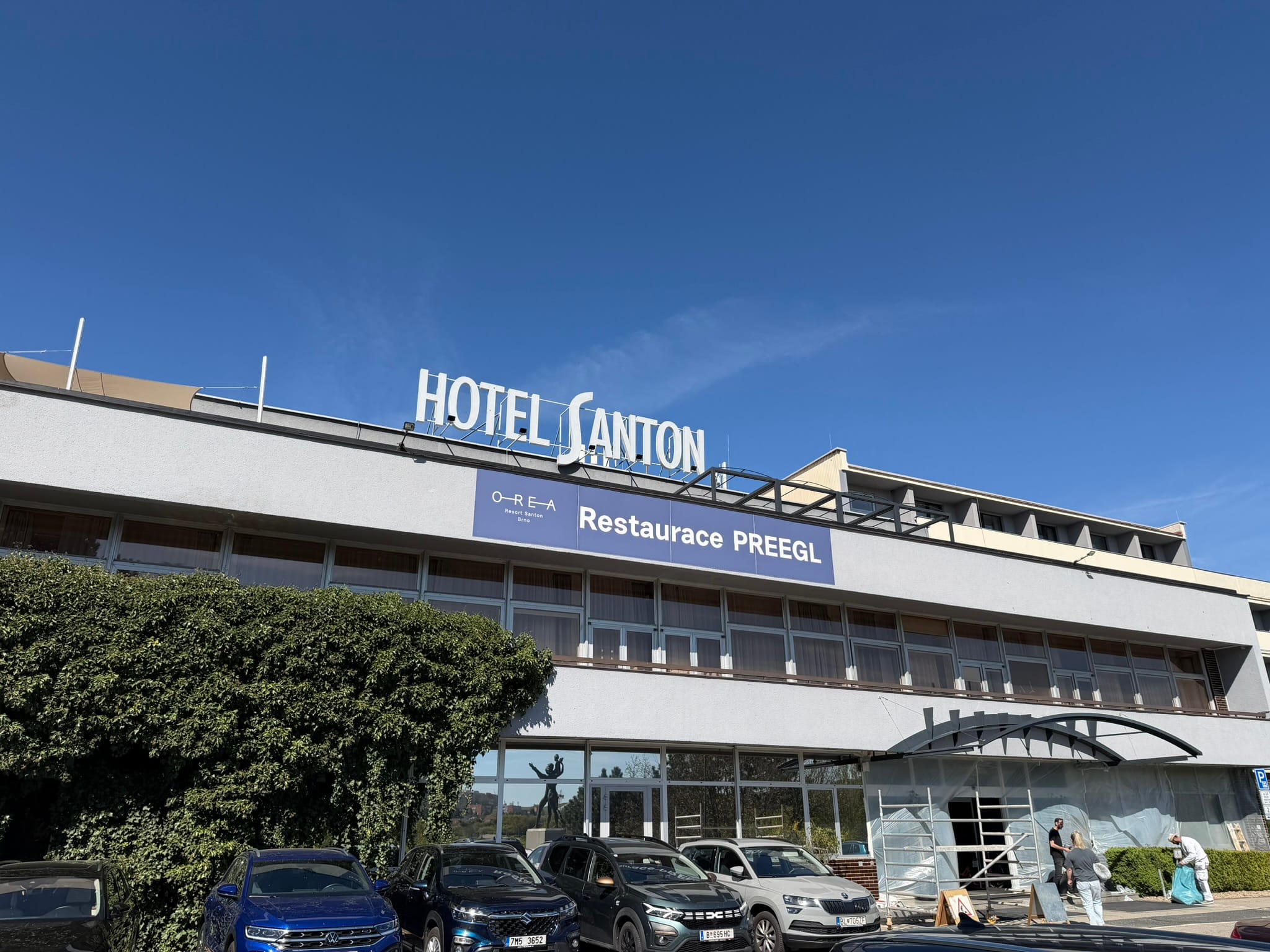
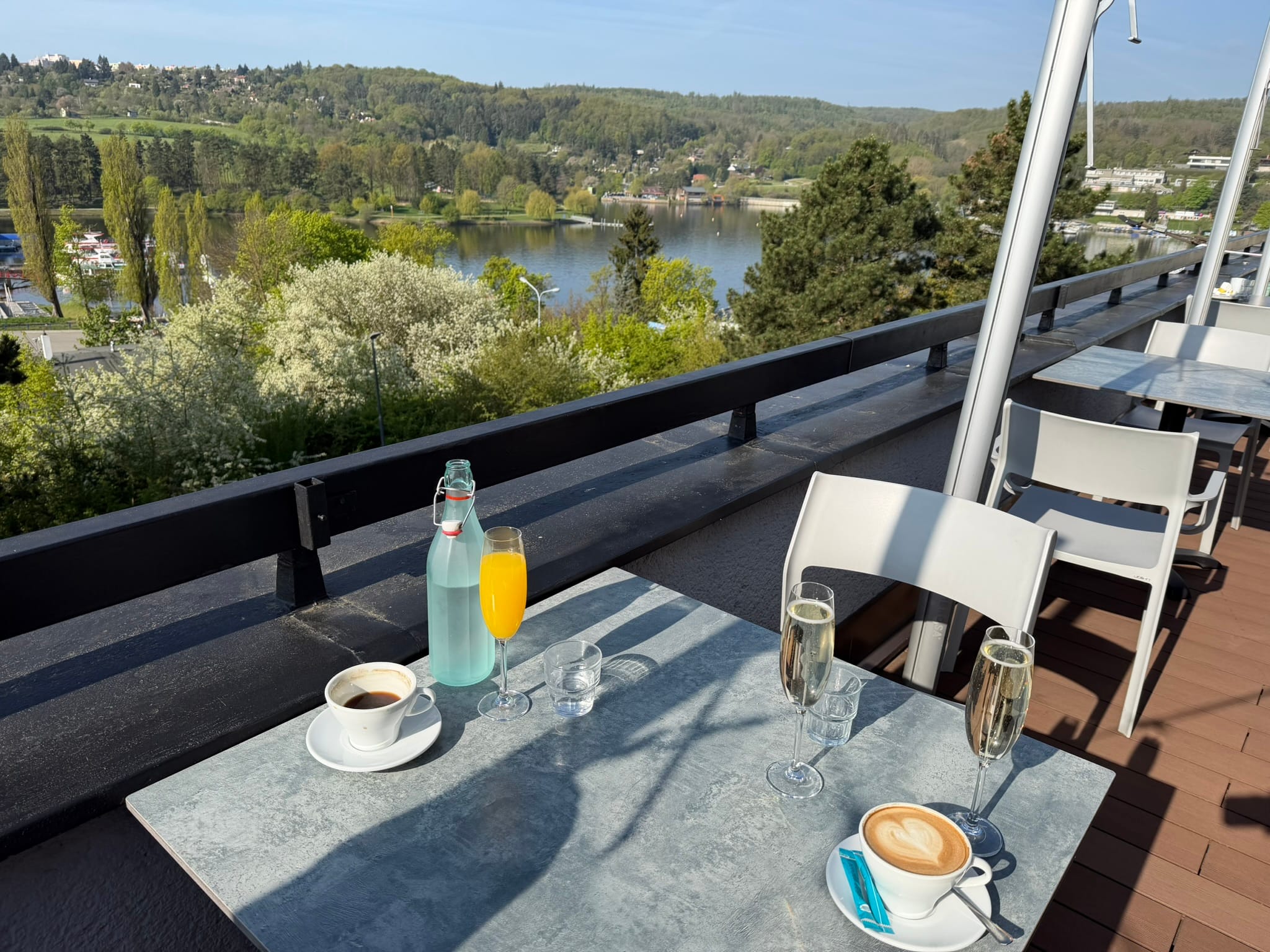
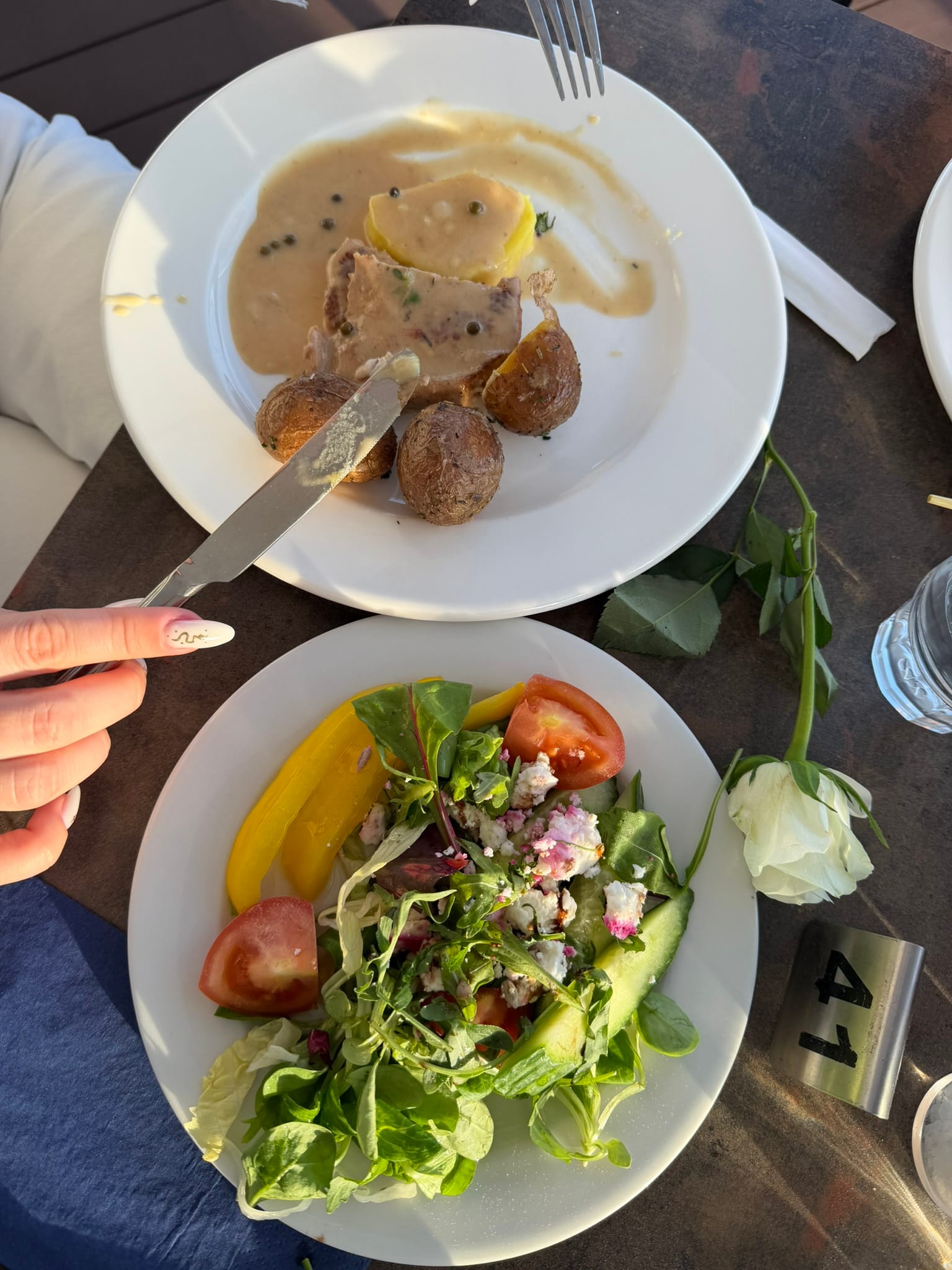
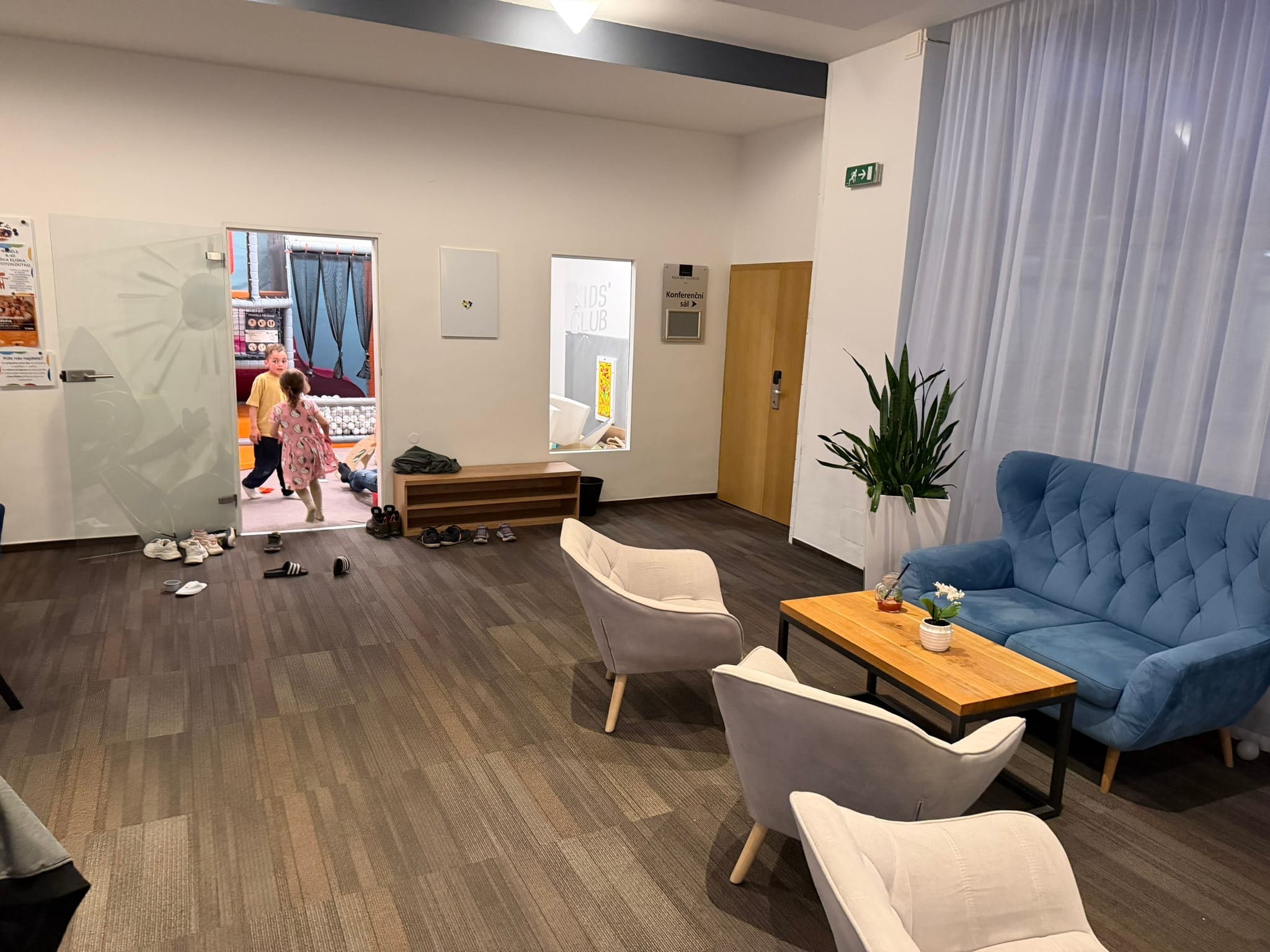
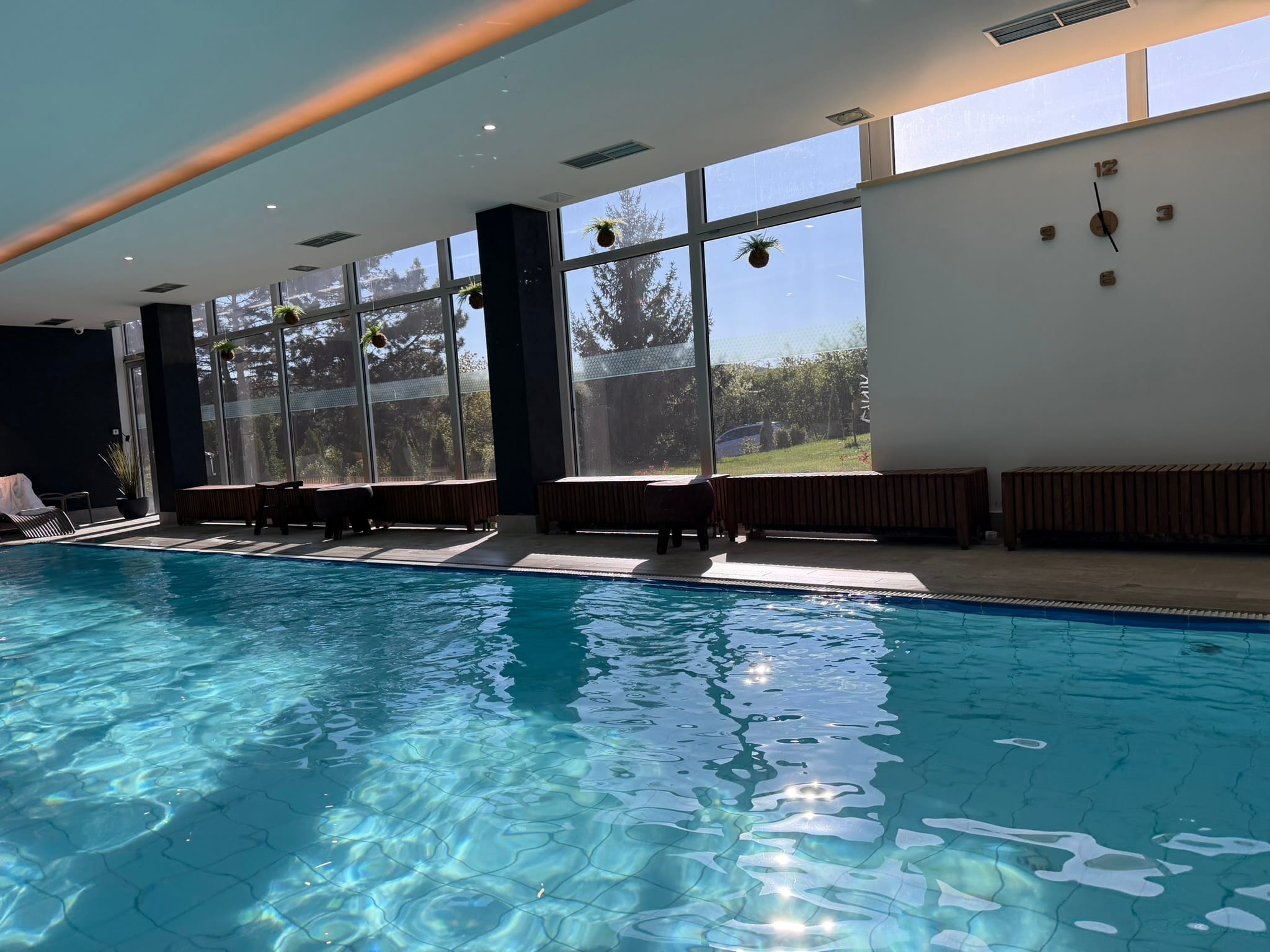
Checked into OREA Resort Santon (€110/night, ~$119 USD). Dinner at the hotel restaurant Preegl — chicken with risotto, schnitzel for our daughter, 989 CZK (~$43 USD) for the family. Spa in the evening: pool, aromatherapy sauna, dry sauna. After that, the kids’ play room.


Day 2 (April 25) — Lake Brno
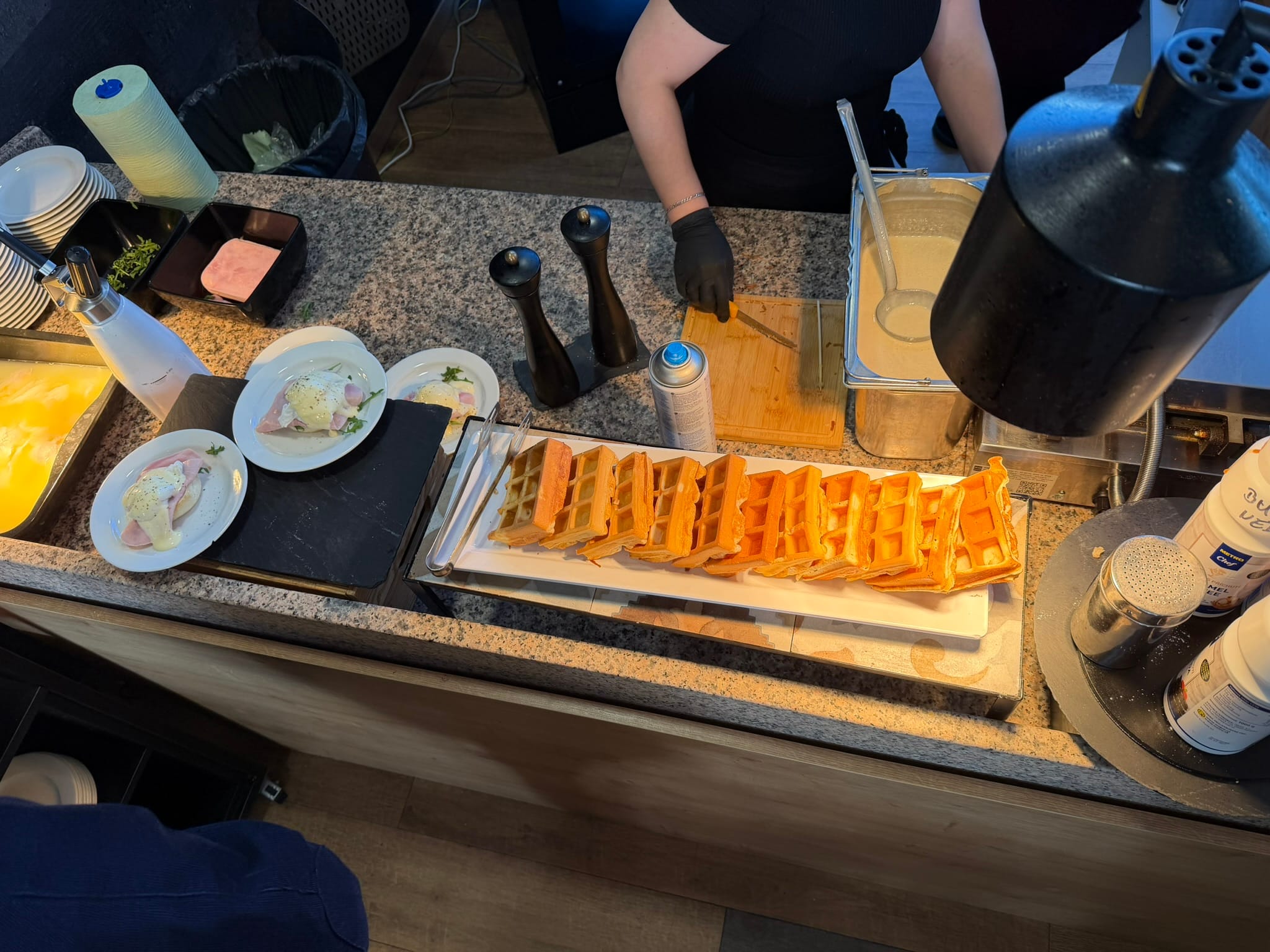
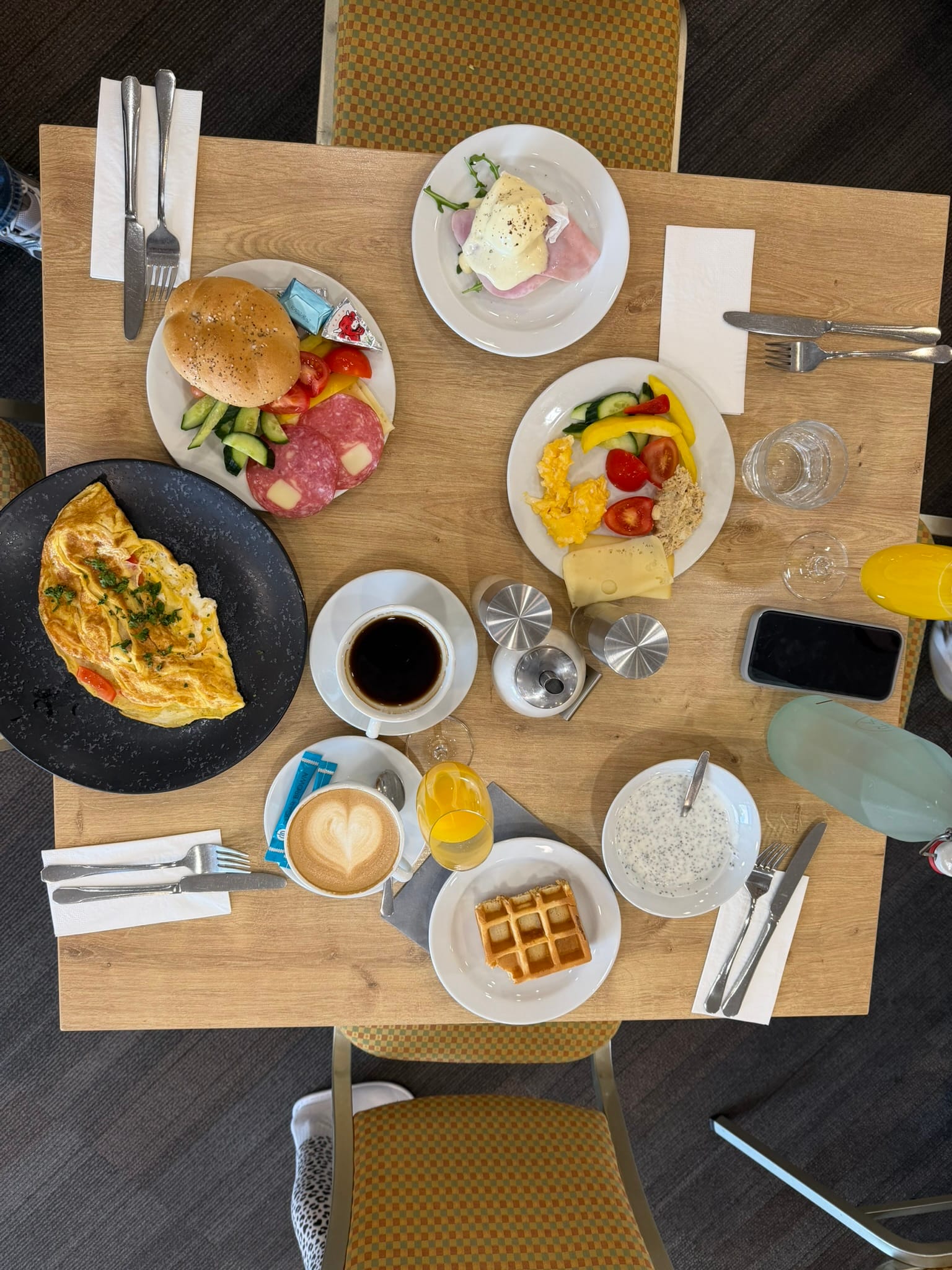
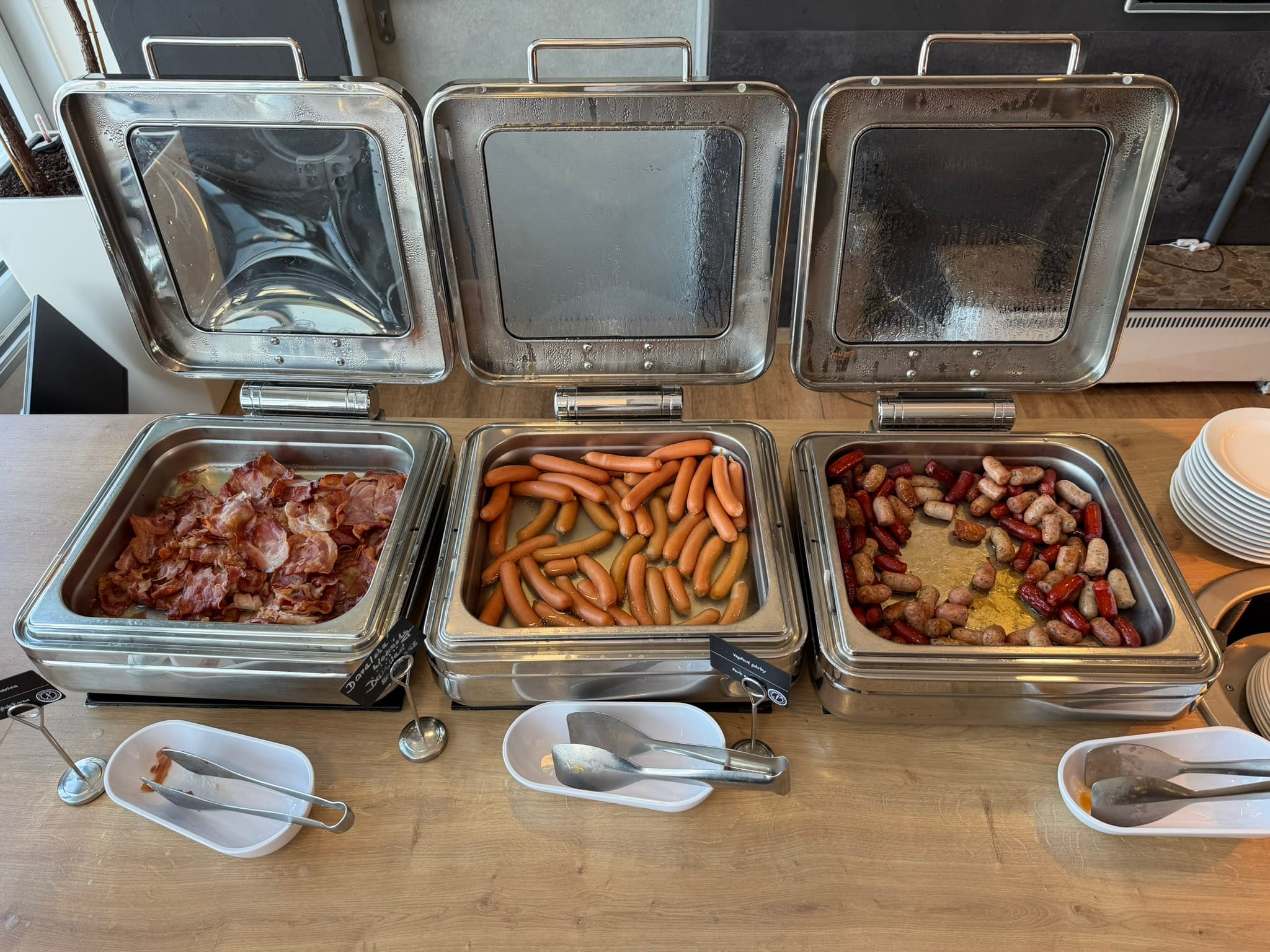
Buffet breakfast with live cooking (waffles, eggs Benedict made to order, prosecco). The hotel mascot is a fox that’s been our daughter’s friend since previous visits — this trip we just bought her a new outfit.
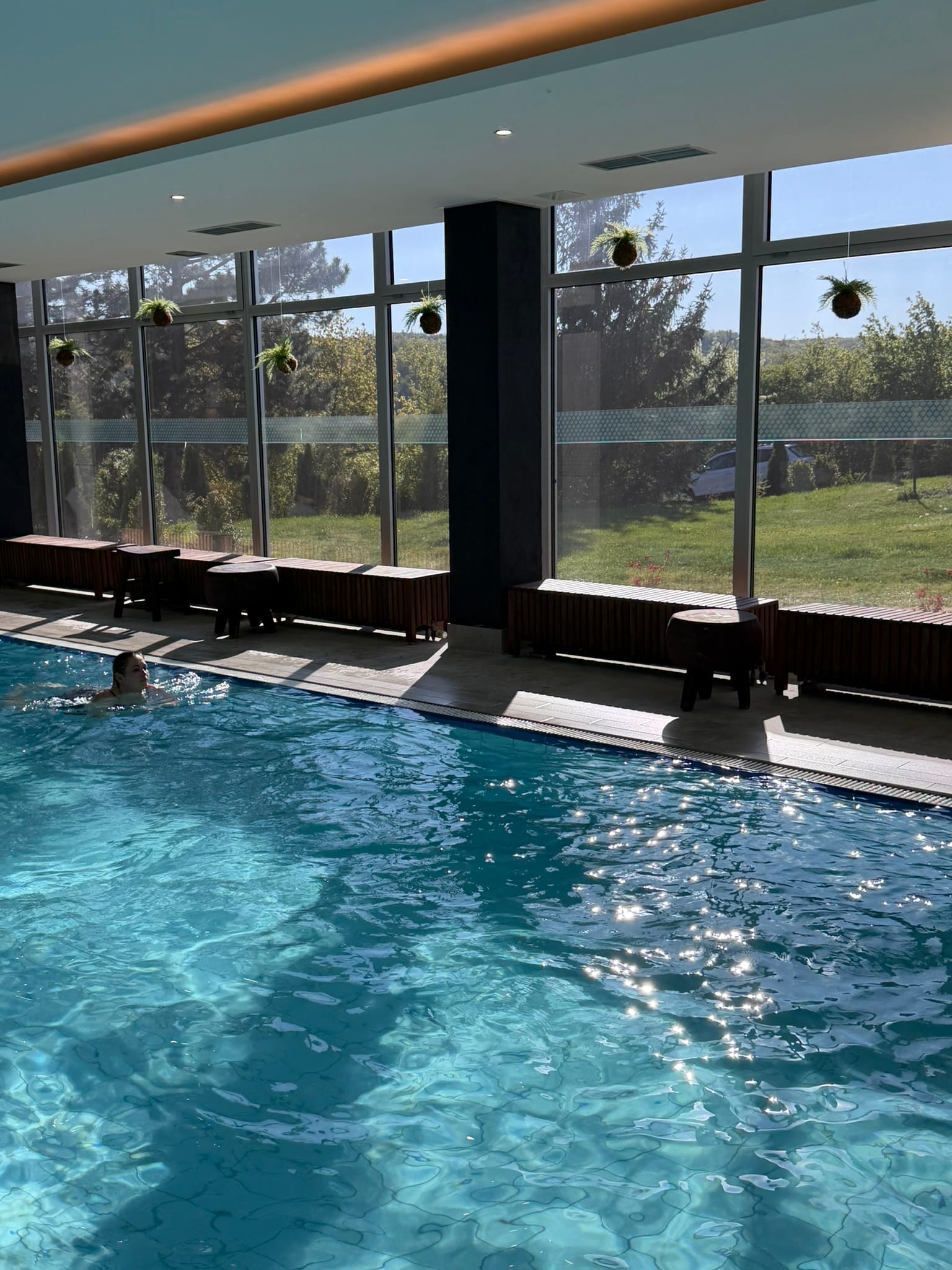
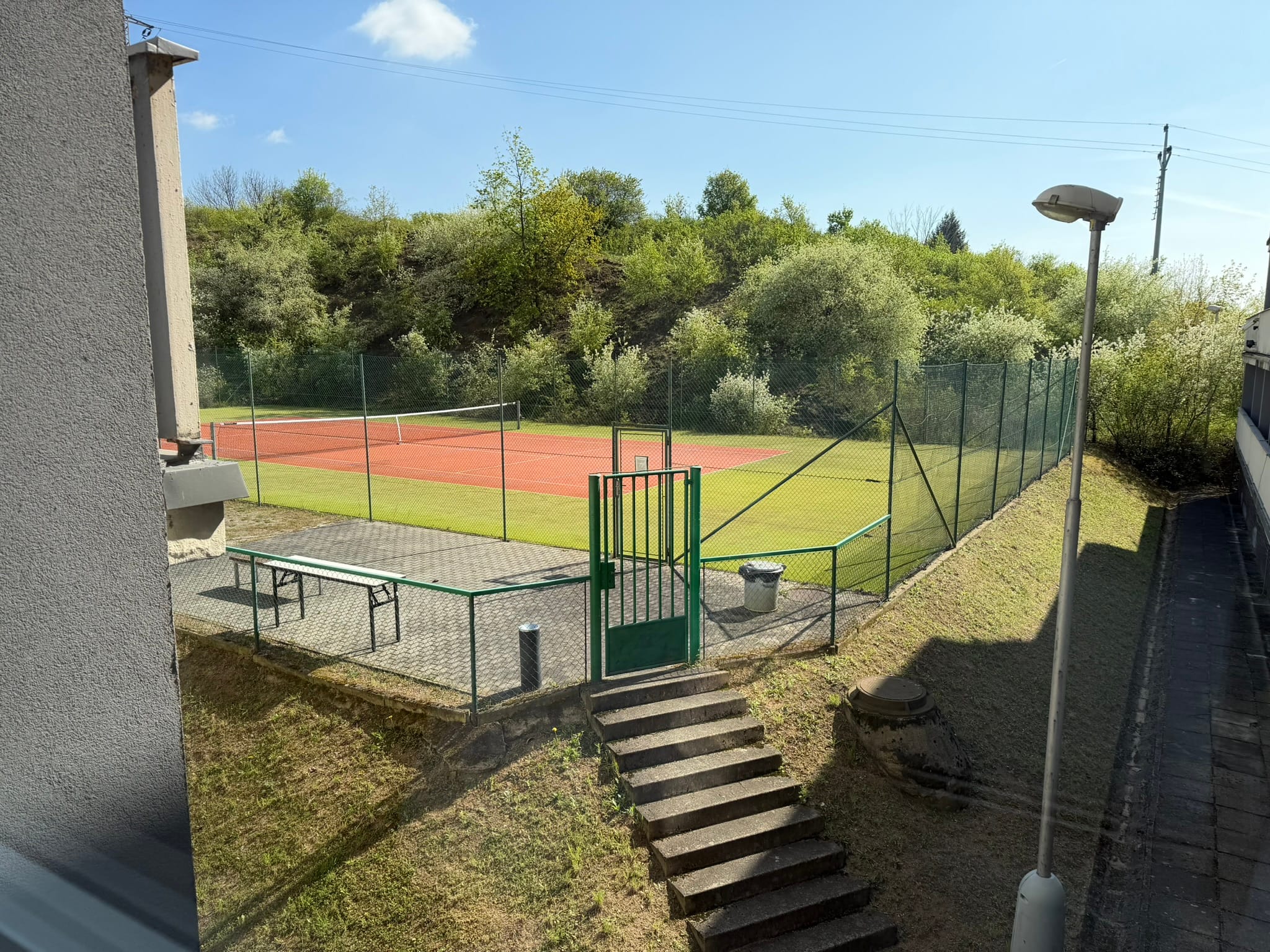

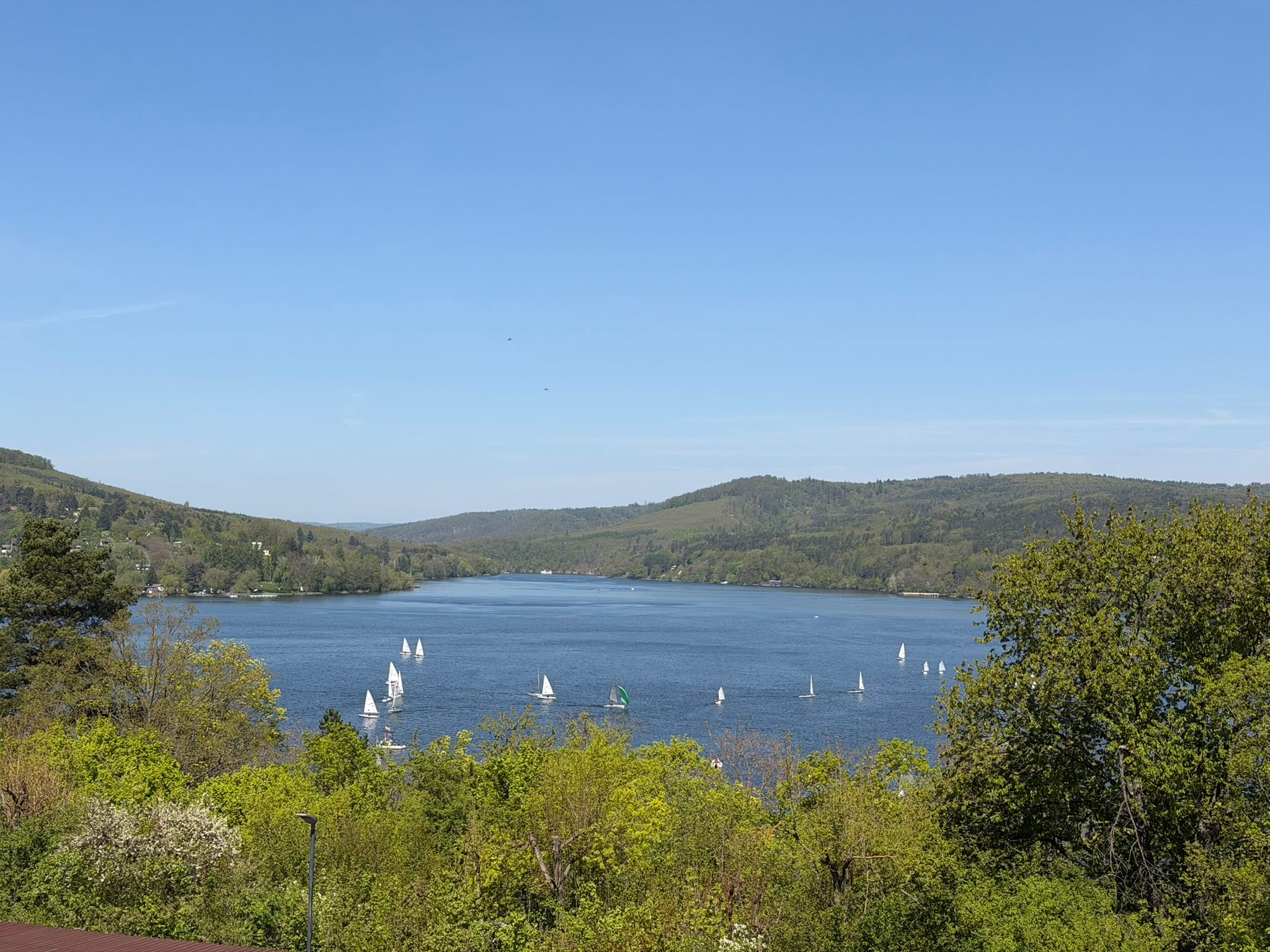
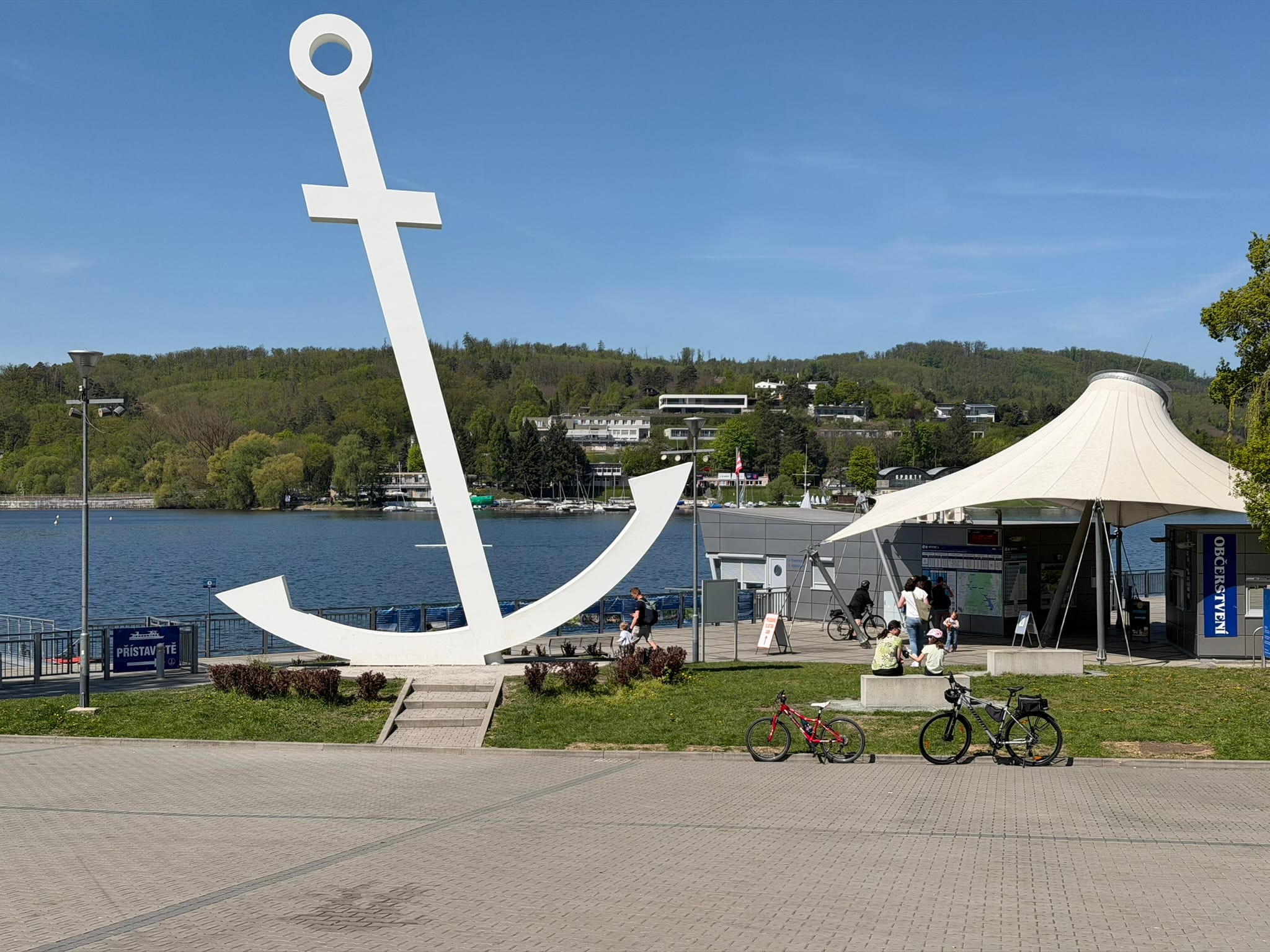
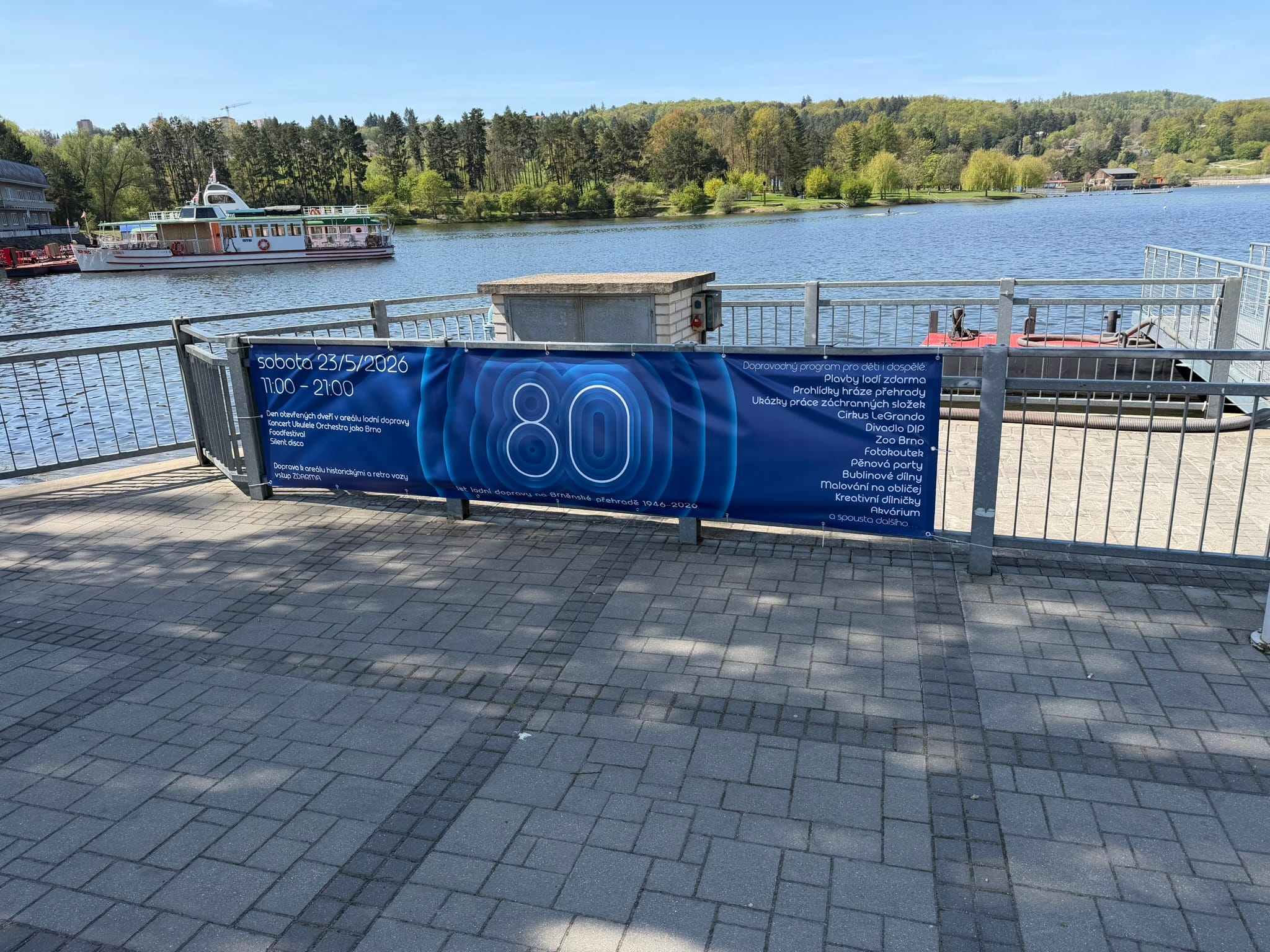
Until 11:00 AM — kids’ craft session run by the OREA animation team (free). Walked the Brněnská přehrada lakefront.
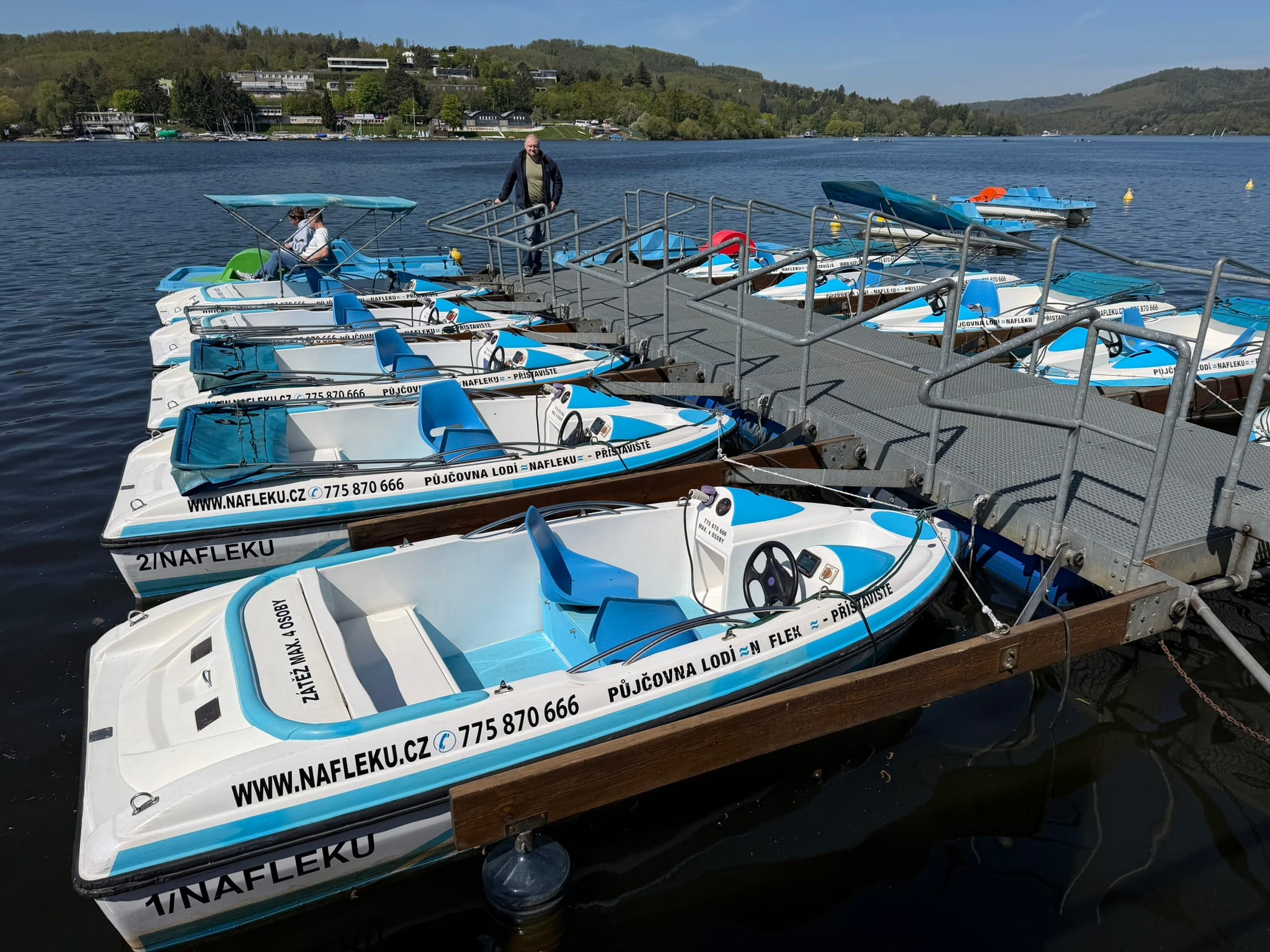
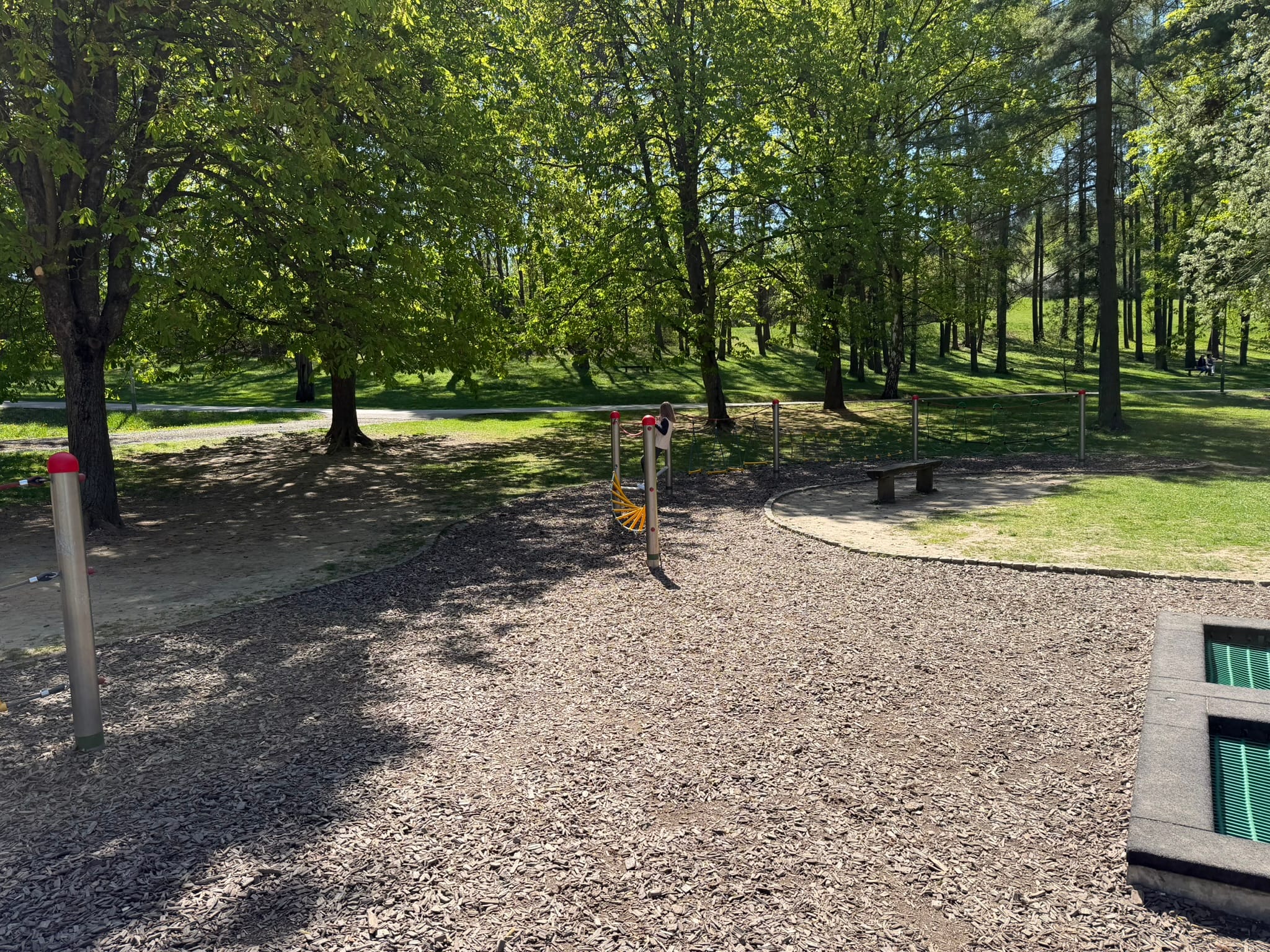
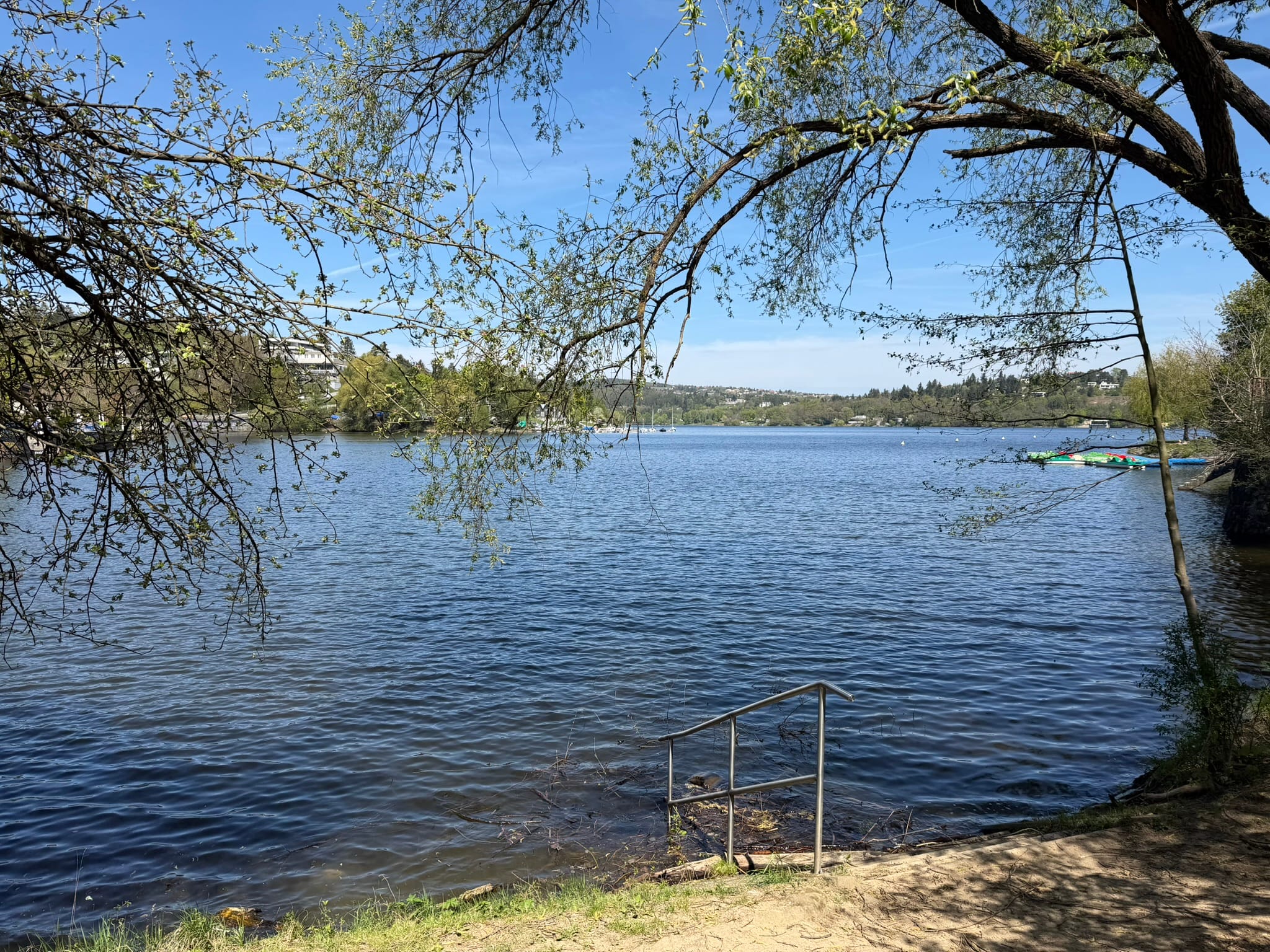
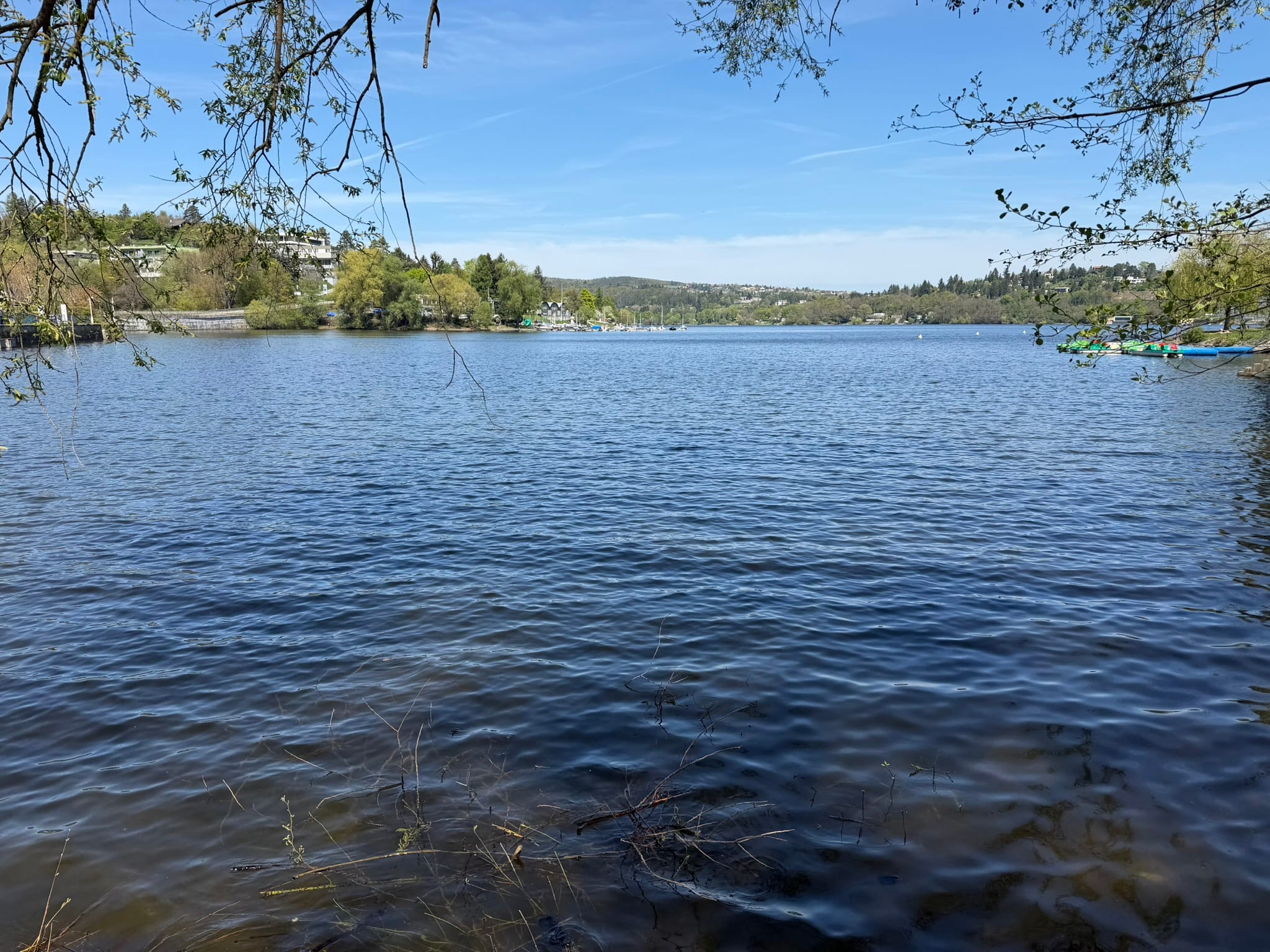
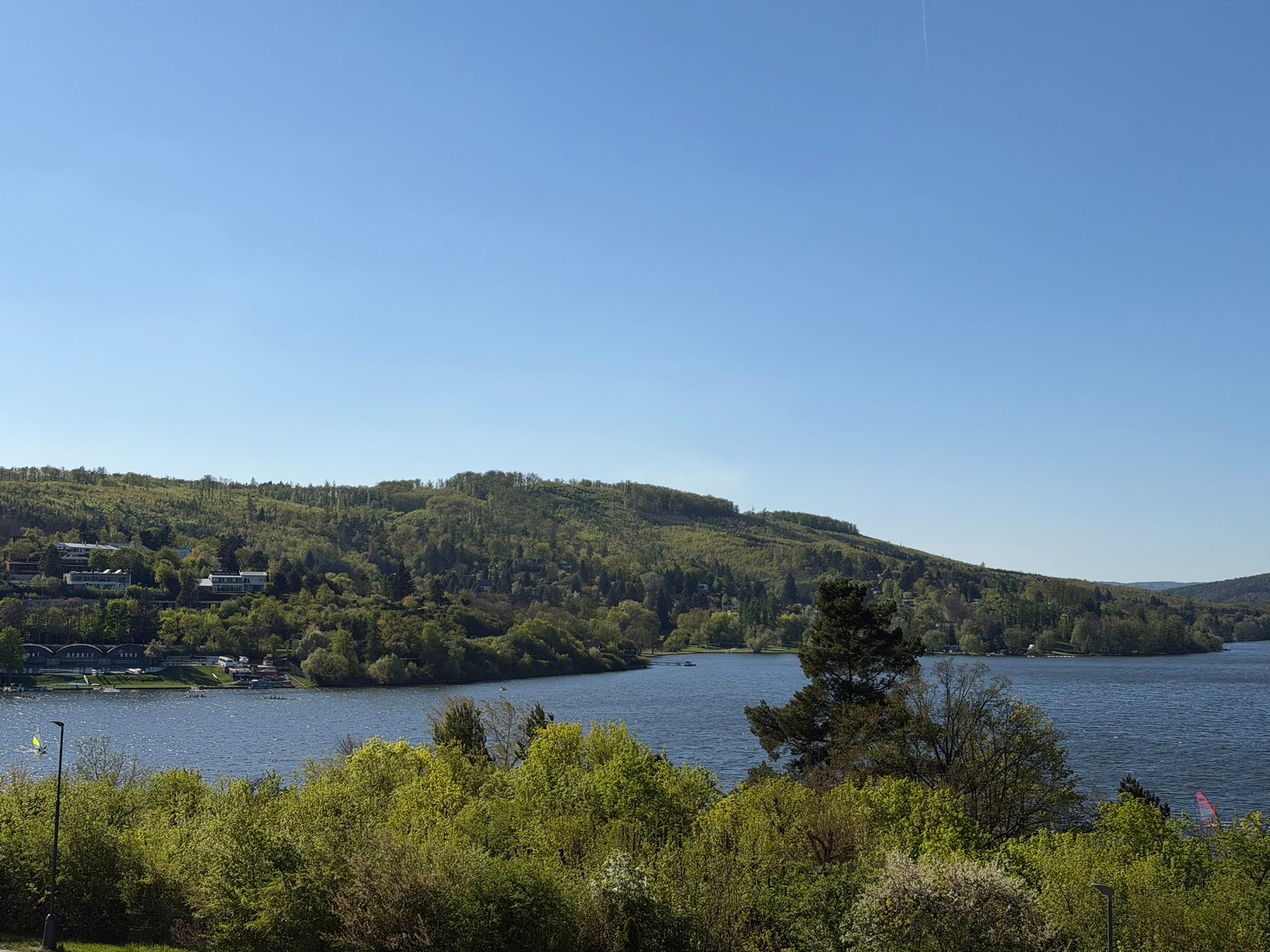
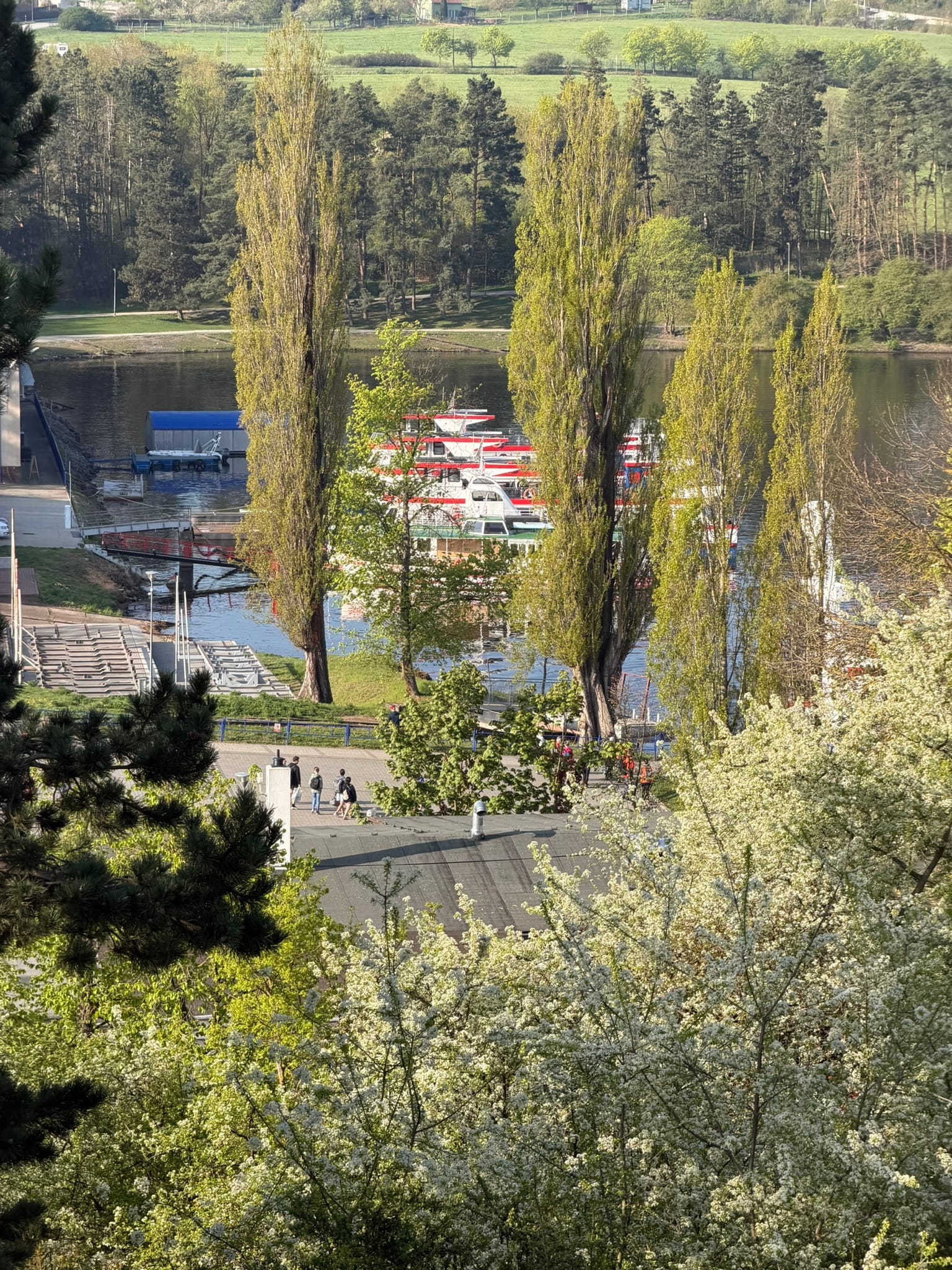
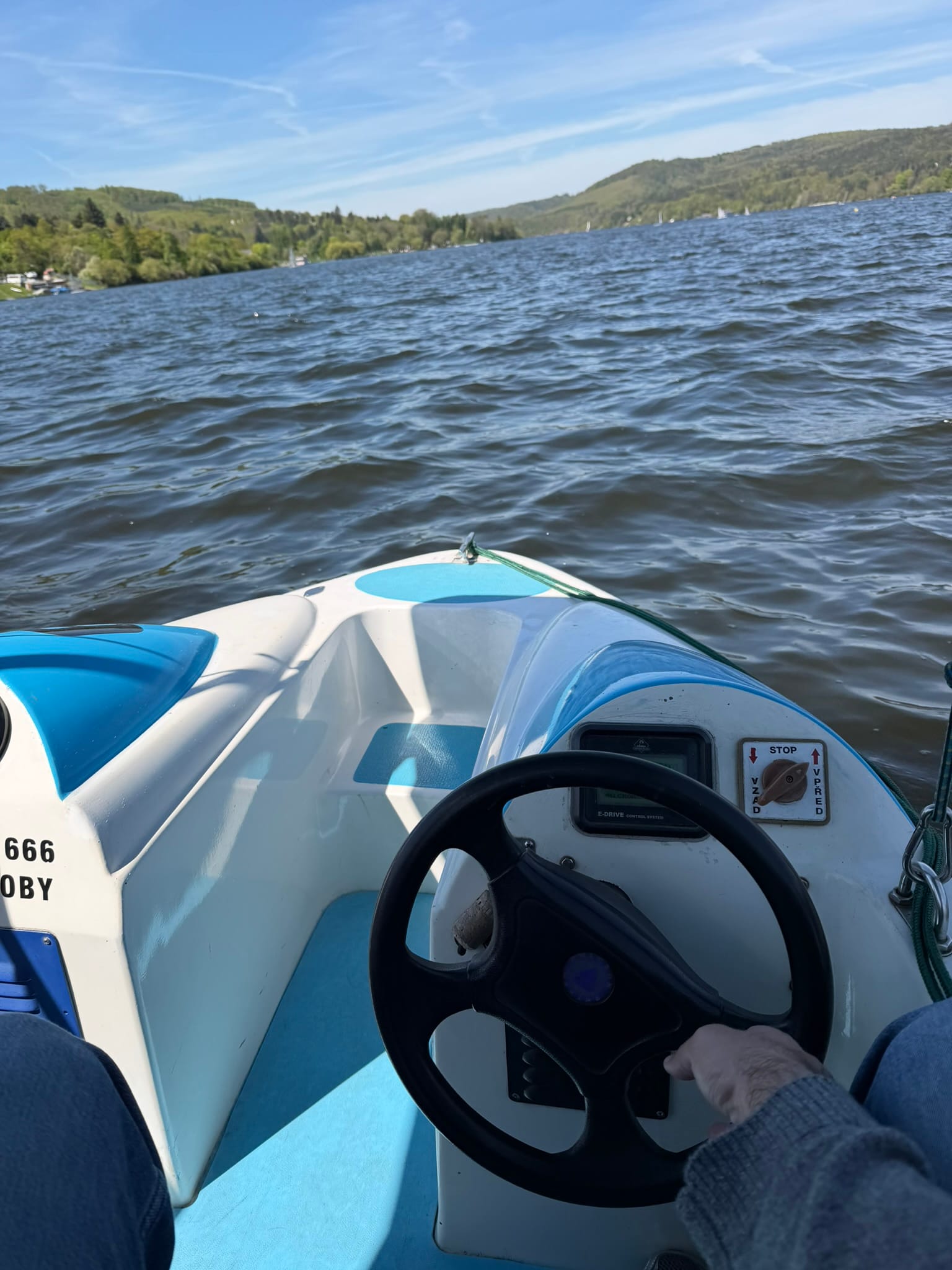
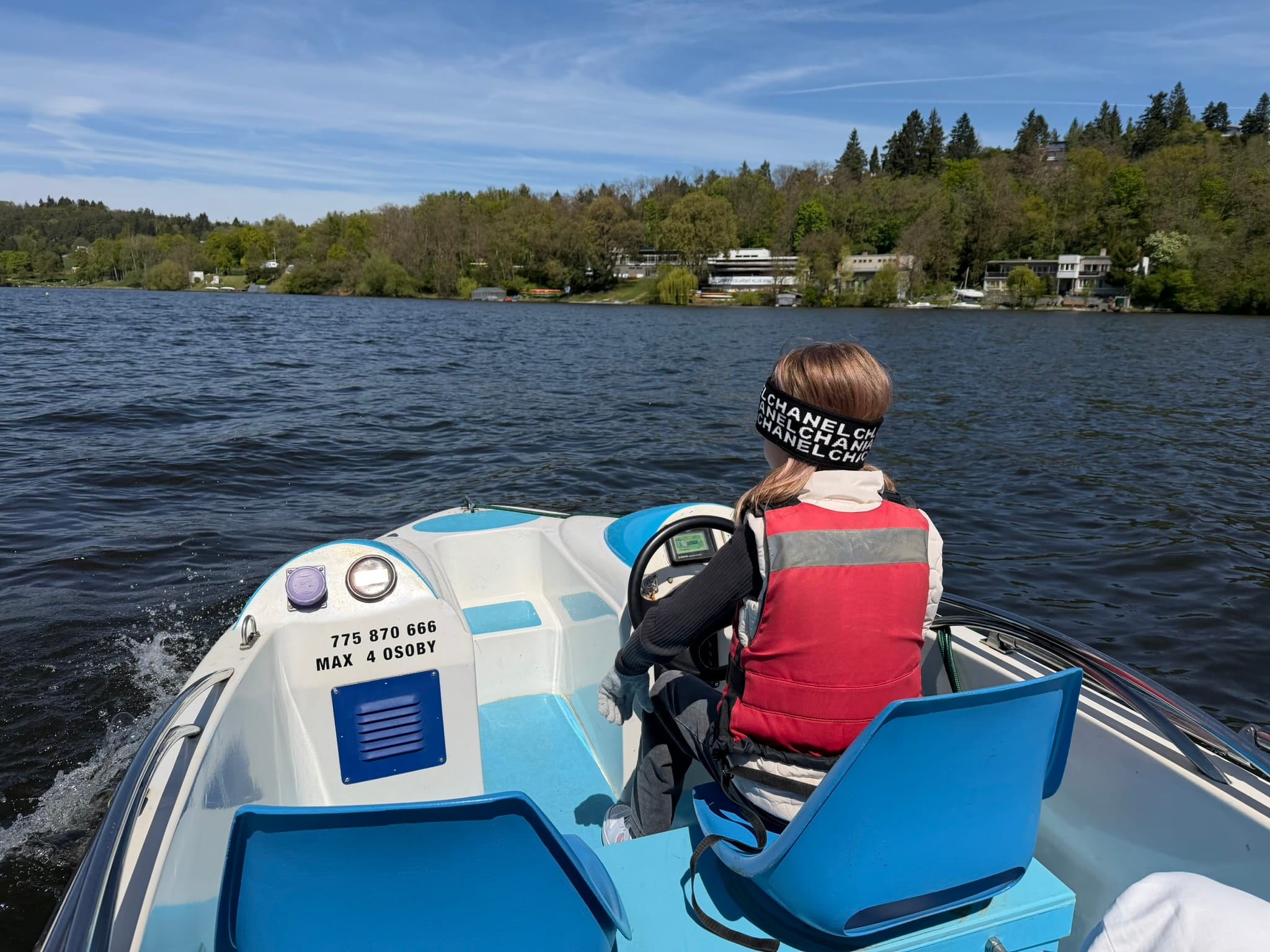
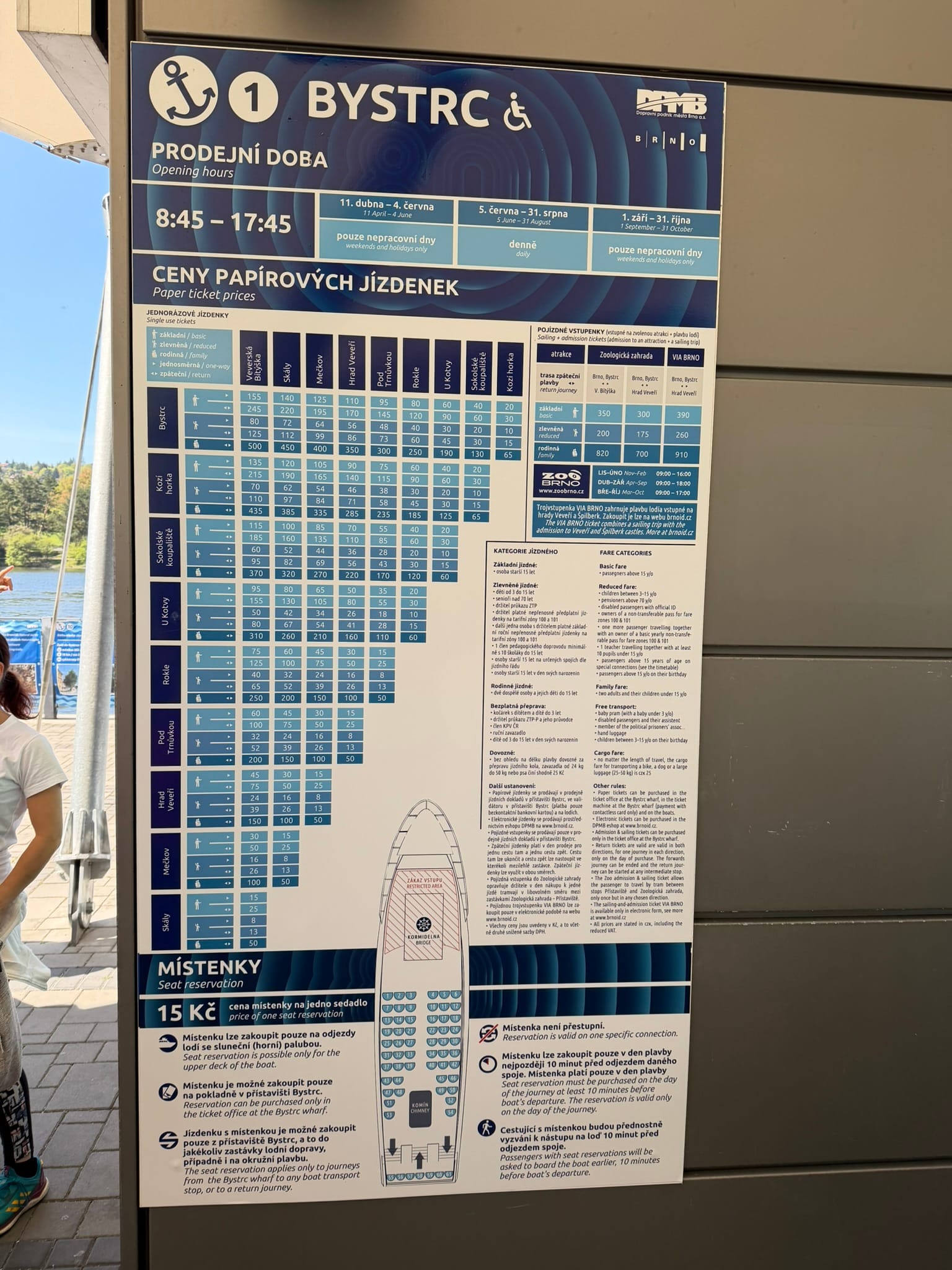
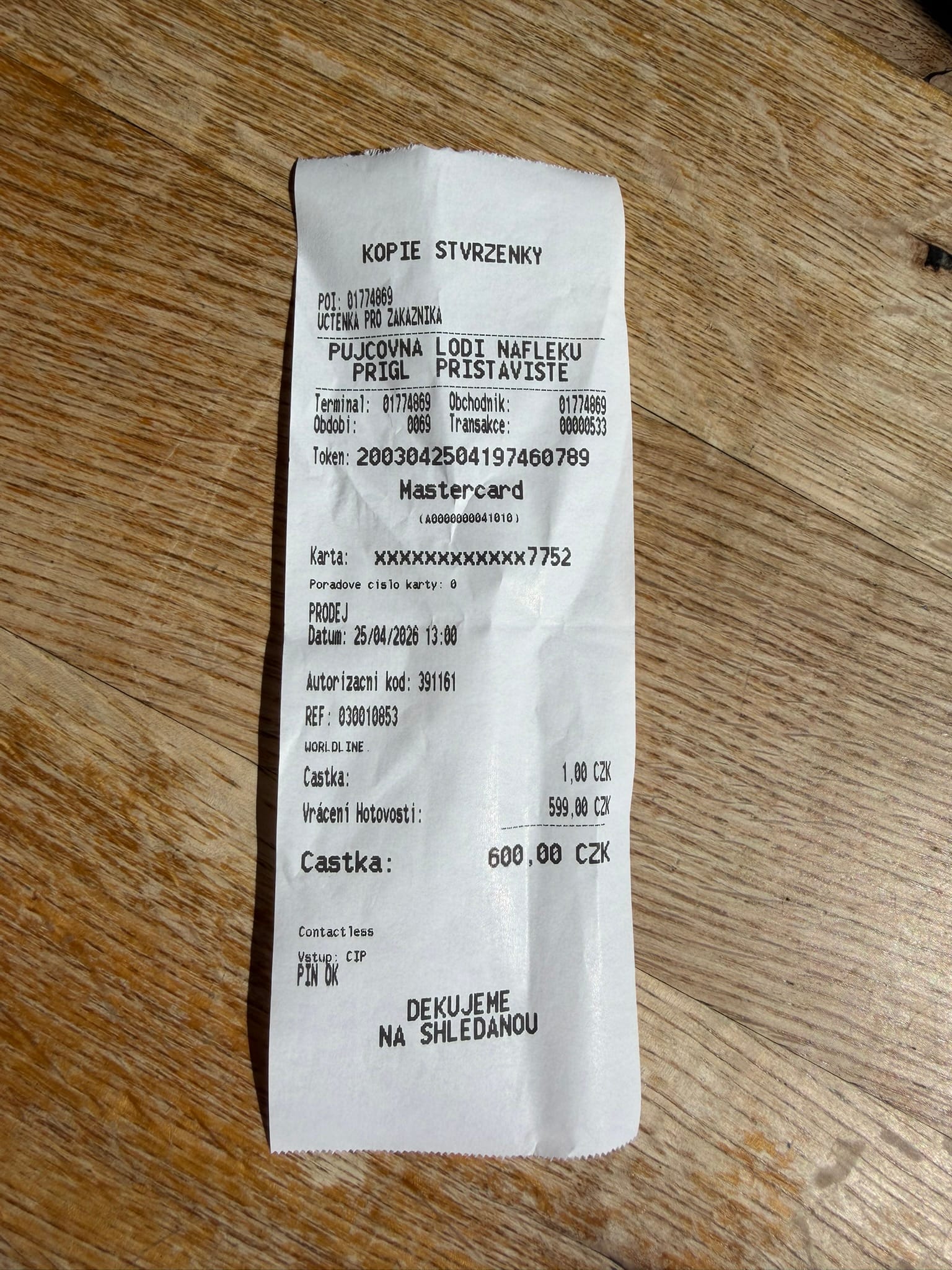
Electric boat from NaFleku at the Bystrc dock — 600 CZK (~$26 USD) for an hour. Quiet, easy to steer, summer on the water with the kid.

Day 3 (April 26) — VIDA! Science Centre
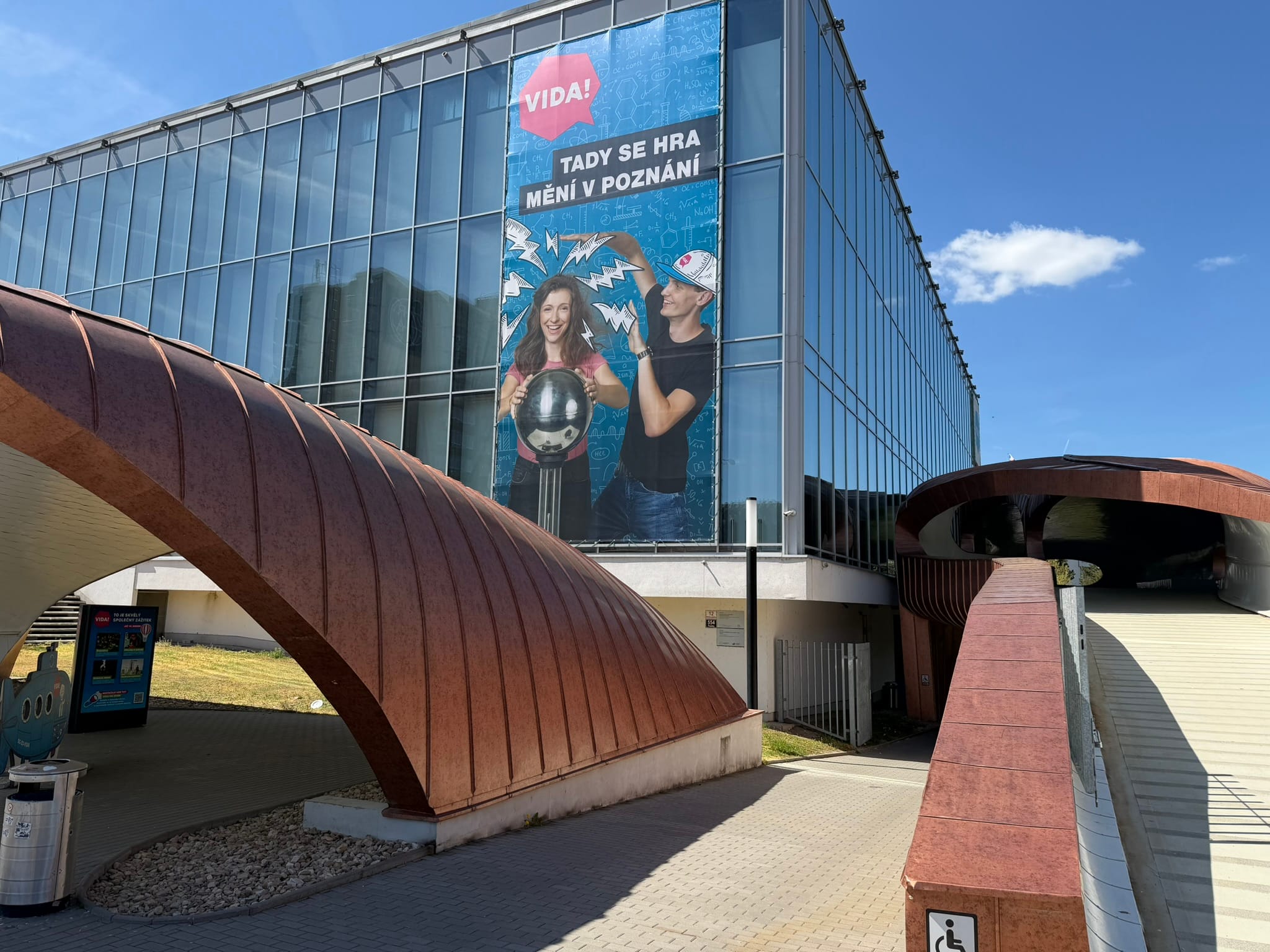
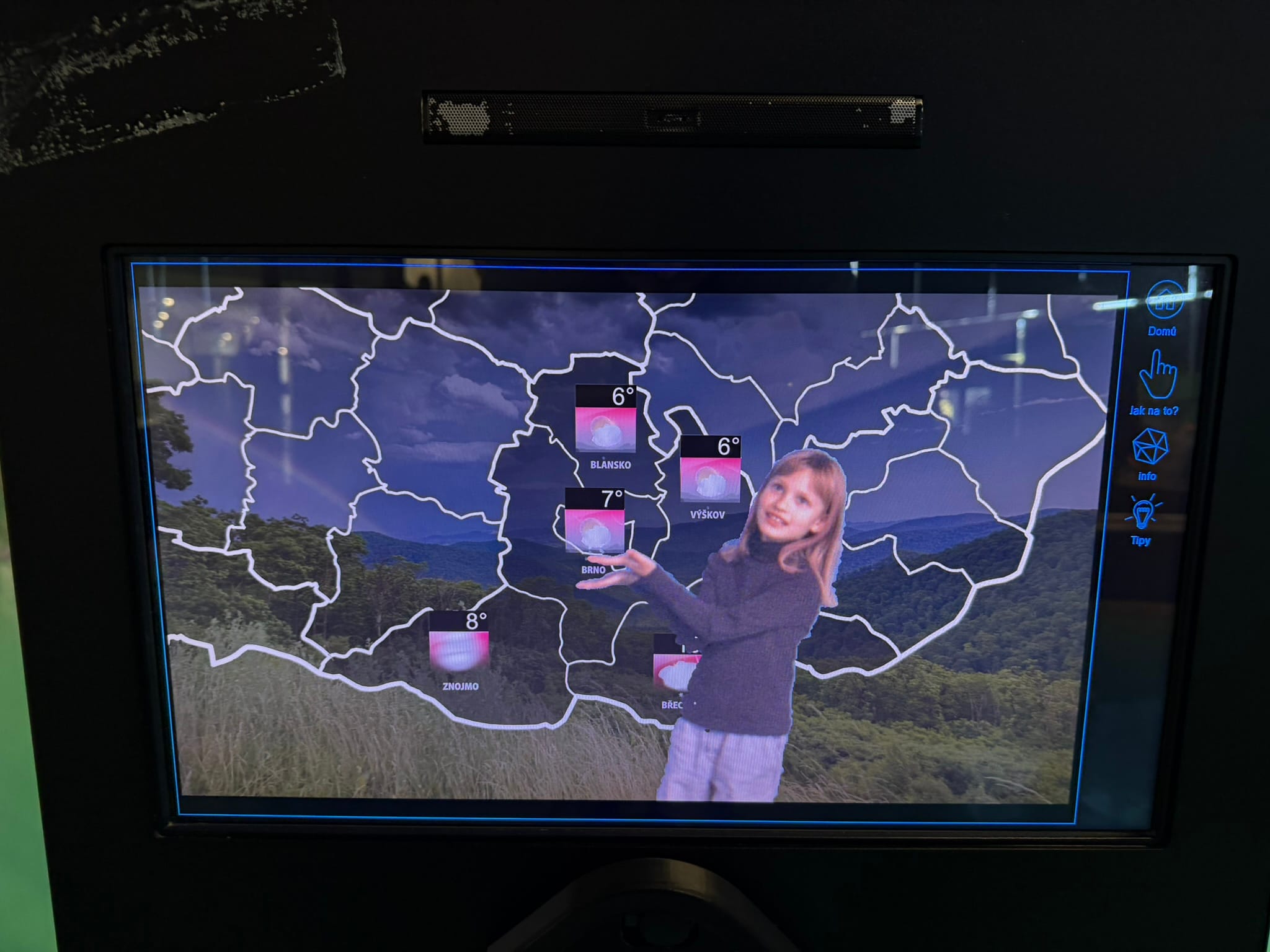
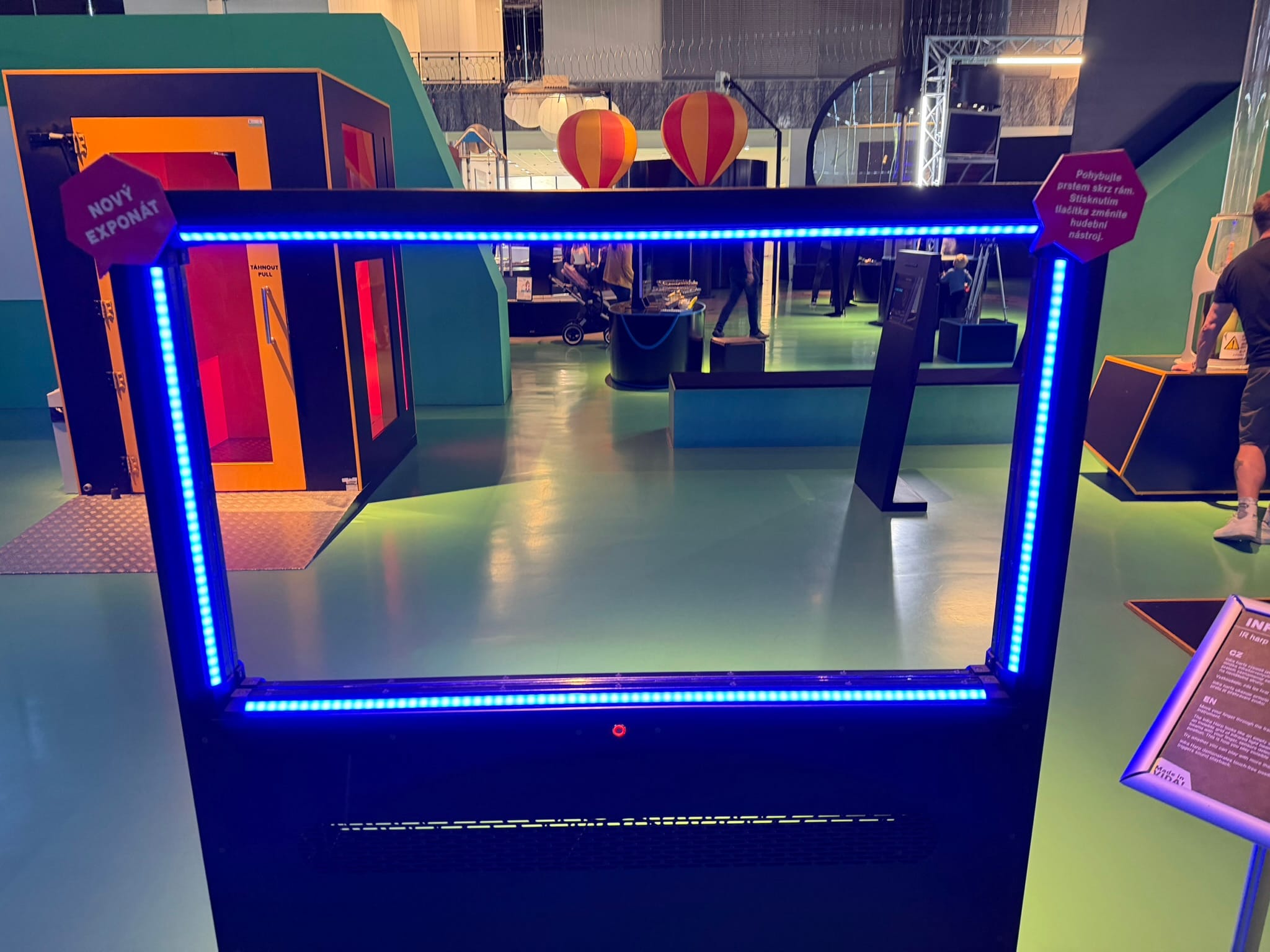
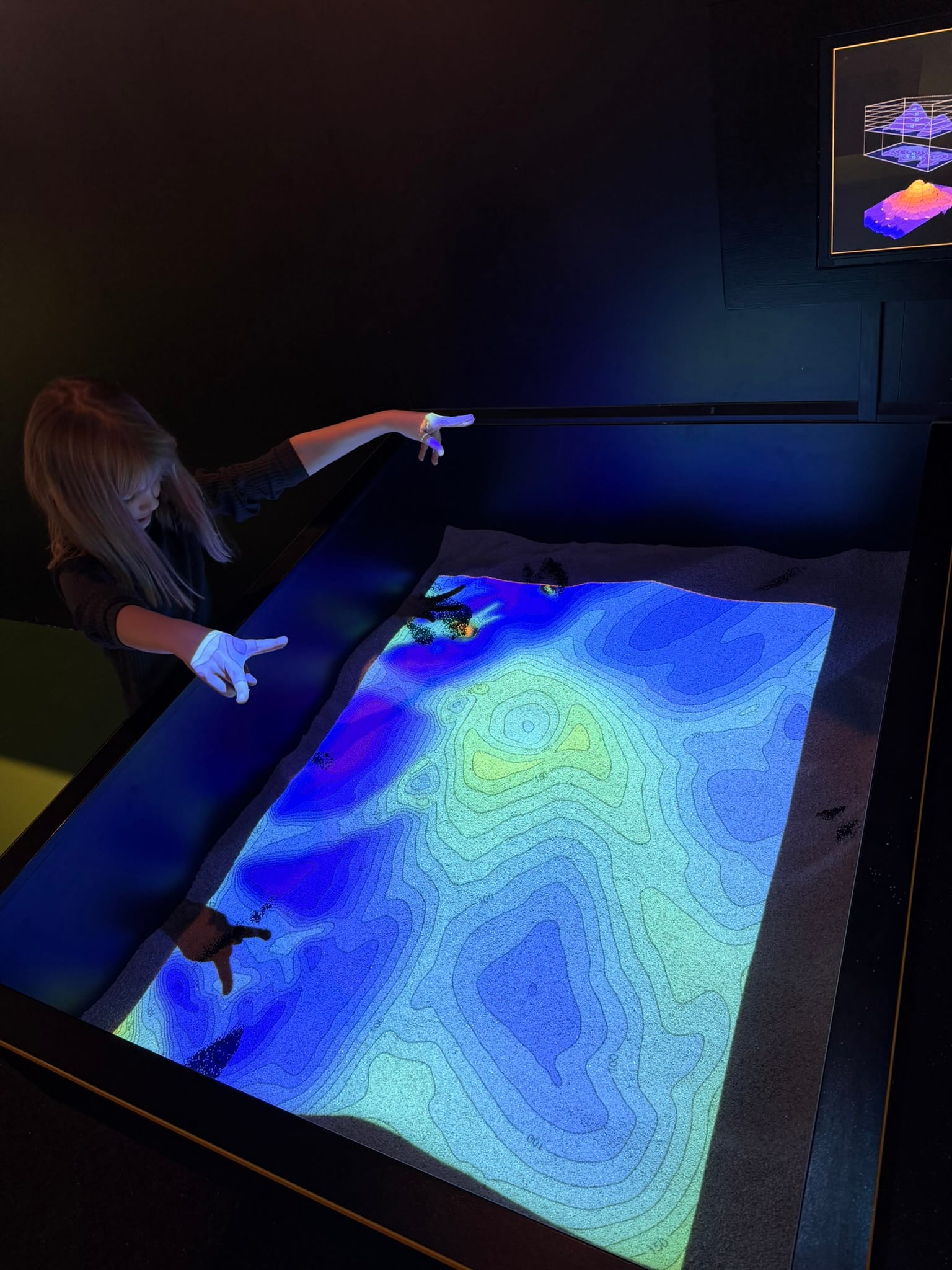
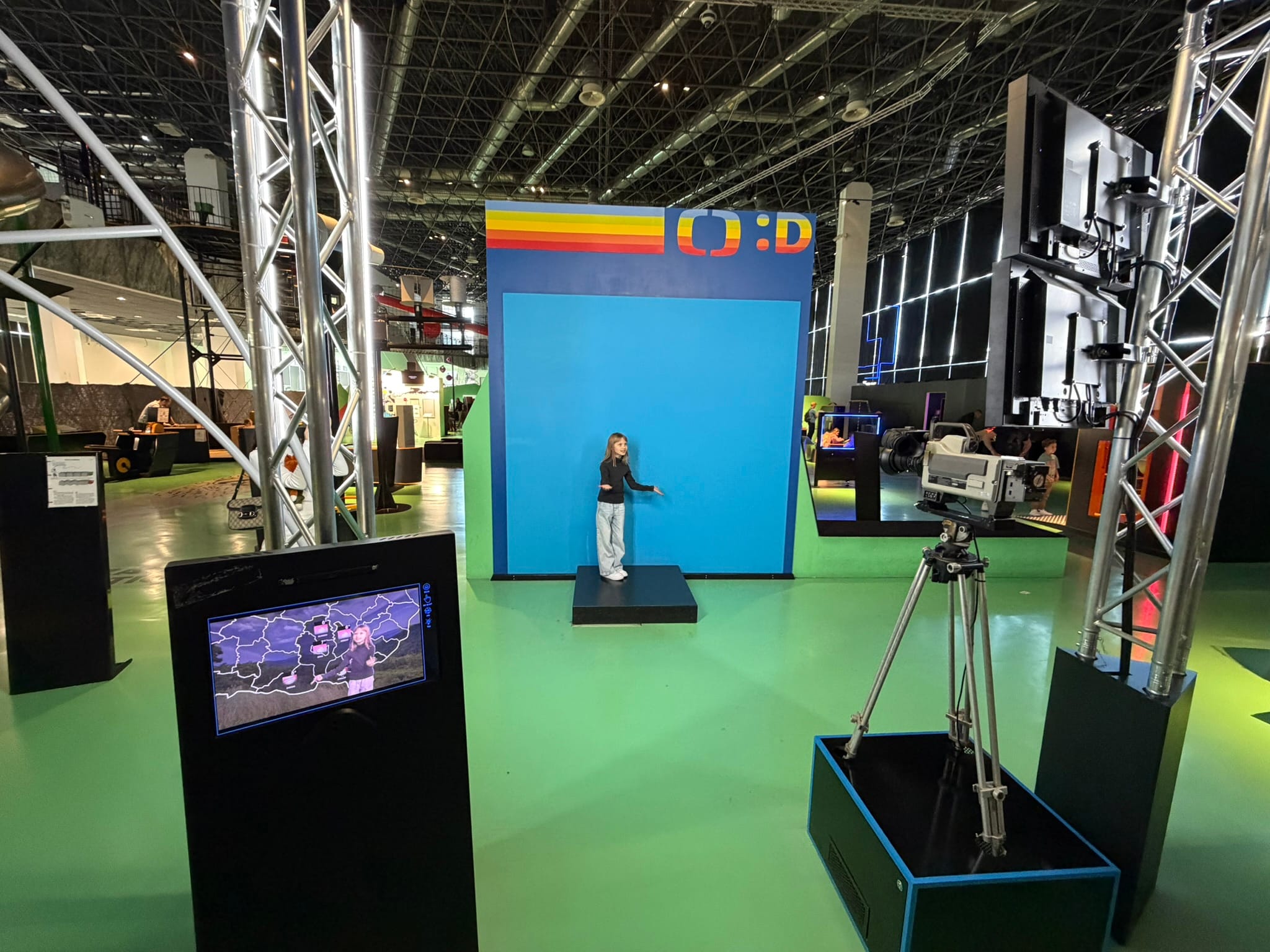
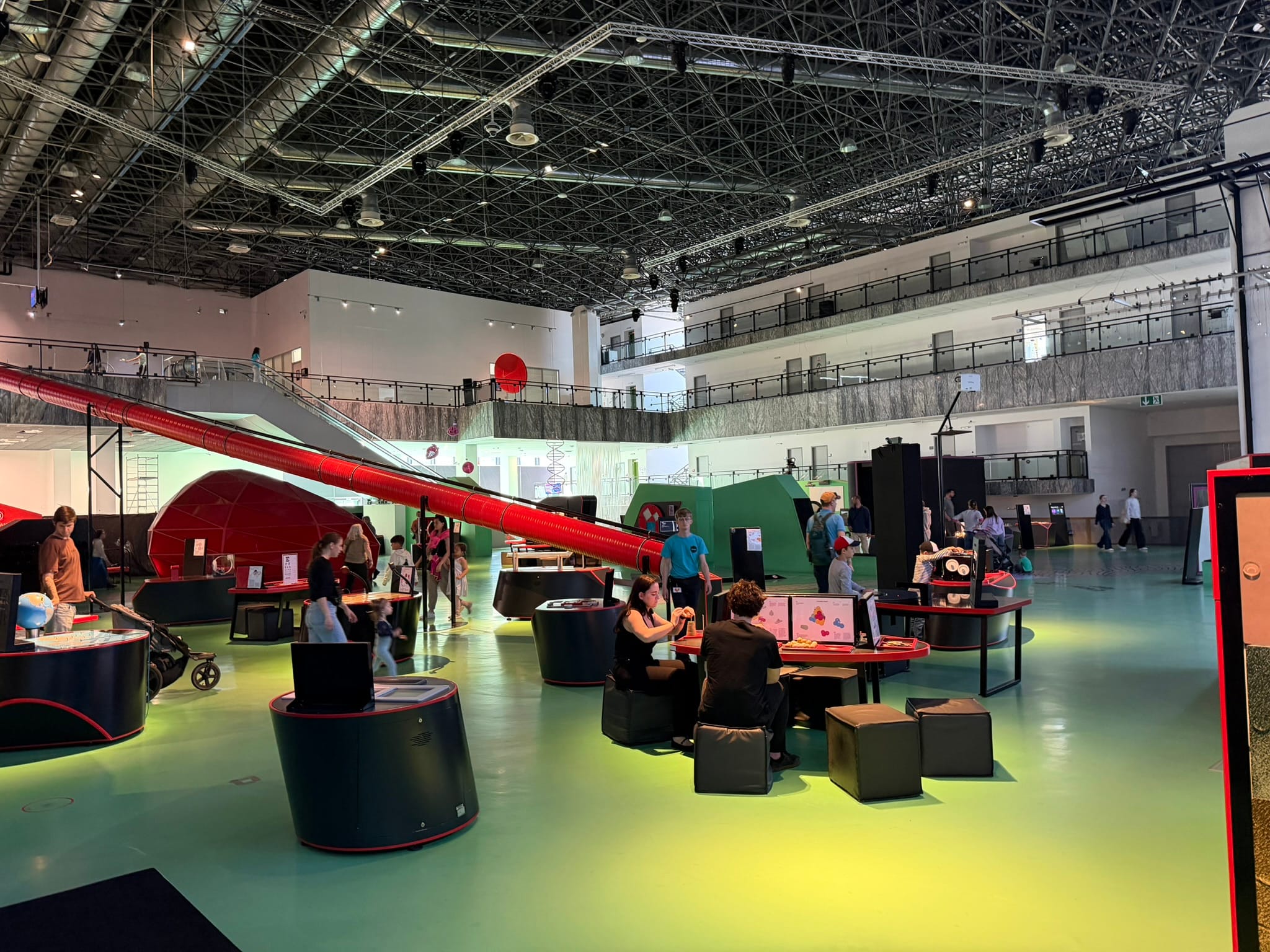
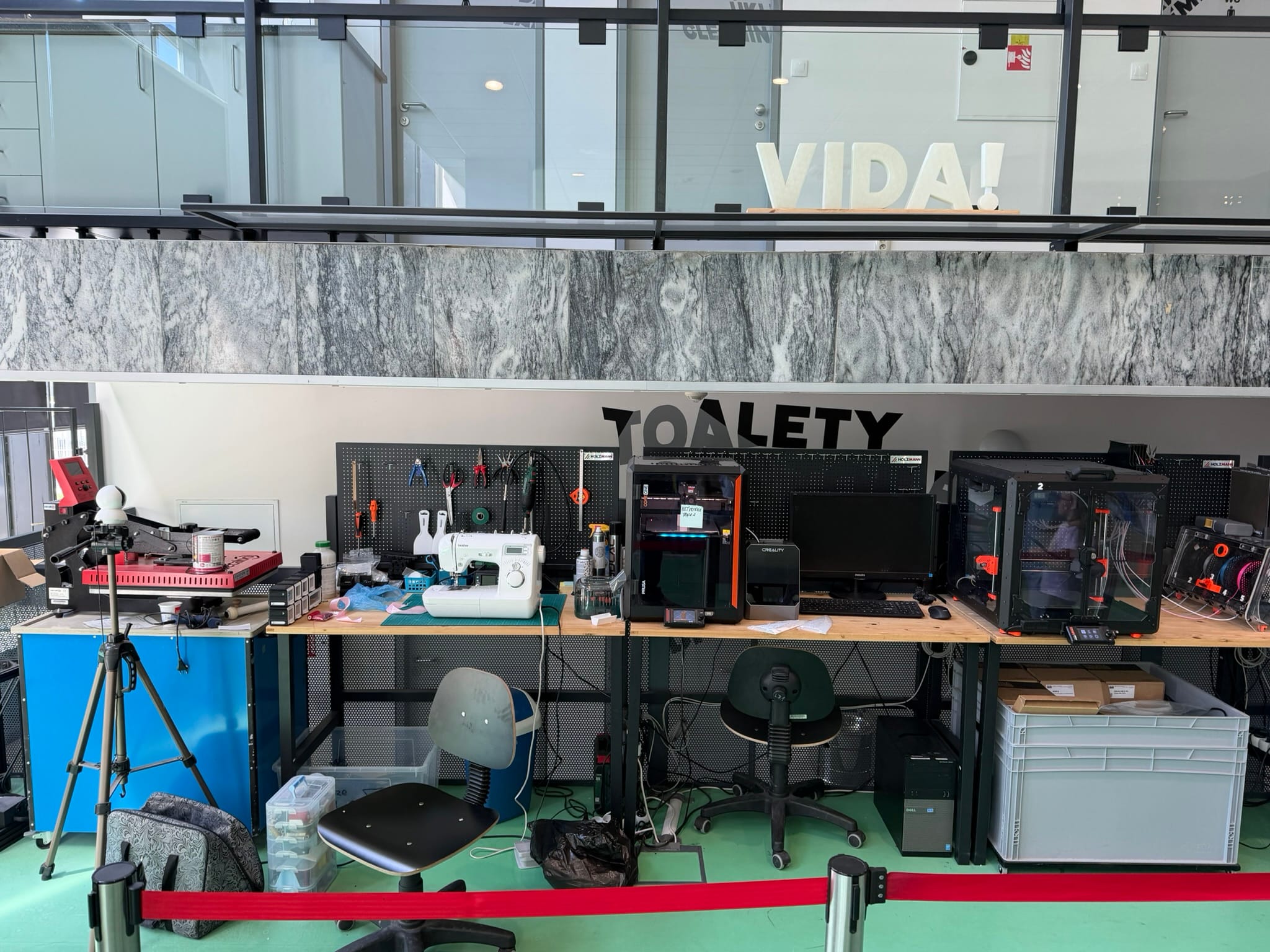
The single best day for our daughter. VIDA! is an interactive science center. She “anchored” a weather forecast in the TV studio (in front of a chroma-key screen), played in the AR sandbox, plucked the IR harp, ran around 170+ hands-on exhibits. Four hours, €25 (~$27 USD) for the family. When we left, she didn’t want to leave.
Day 4 (April 27) — Brno → Vienna
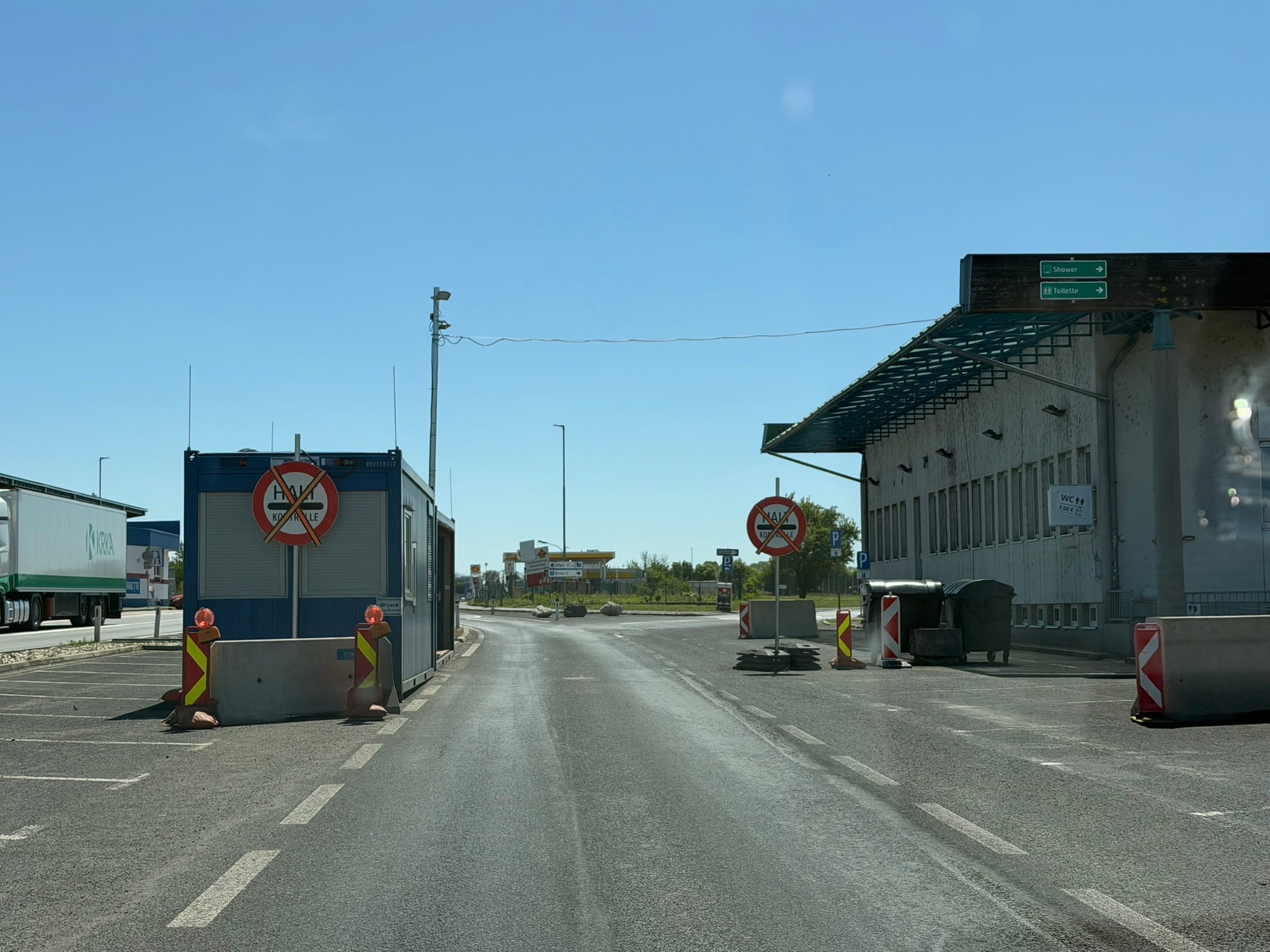
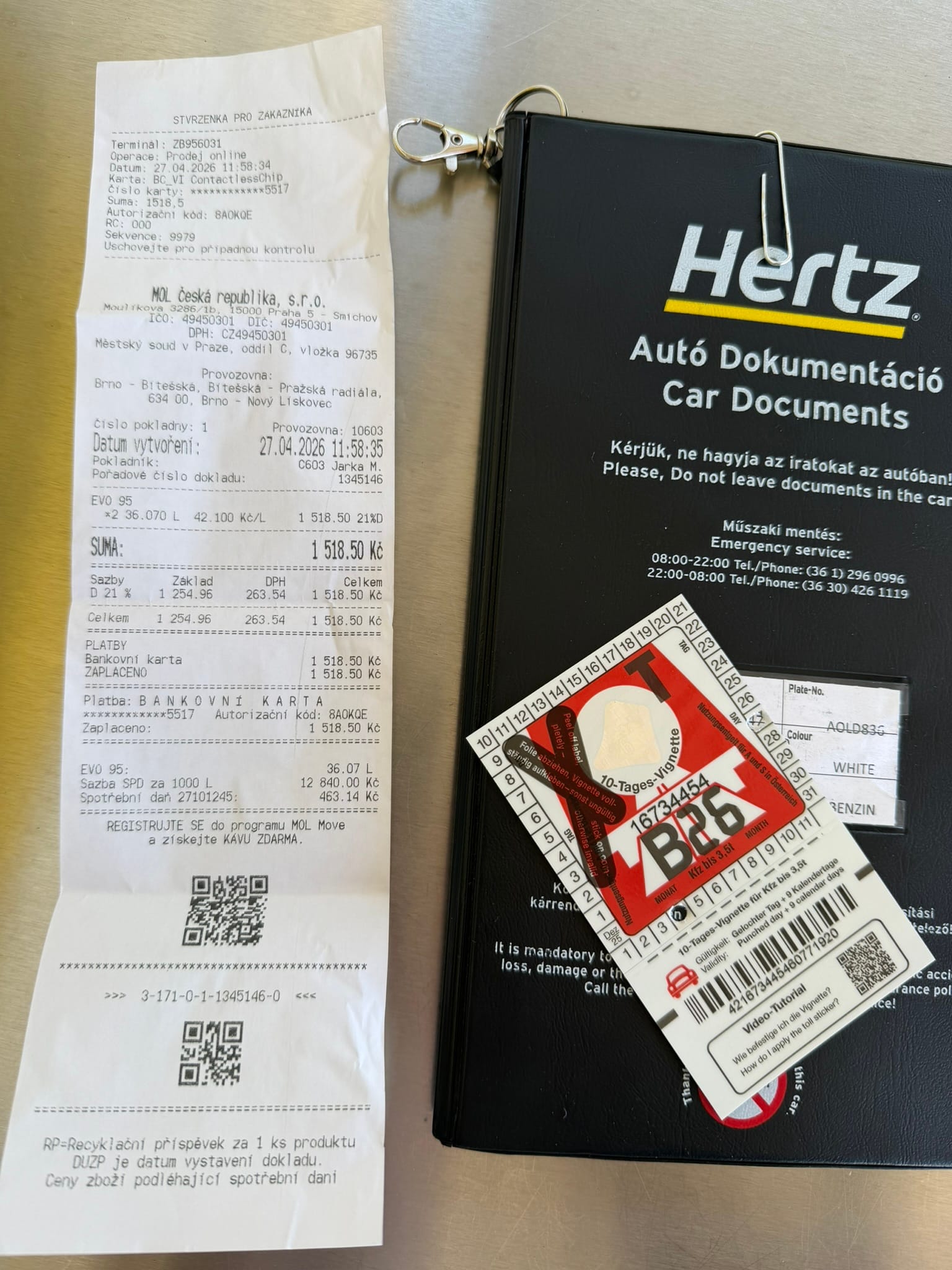
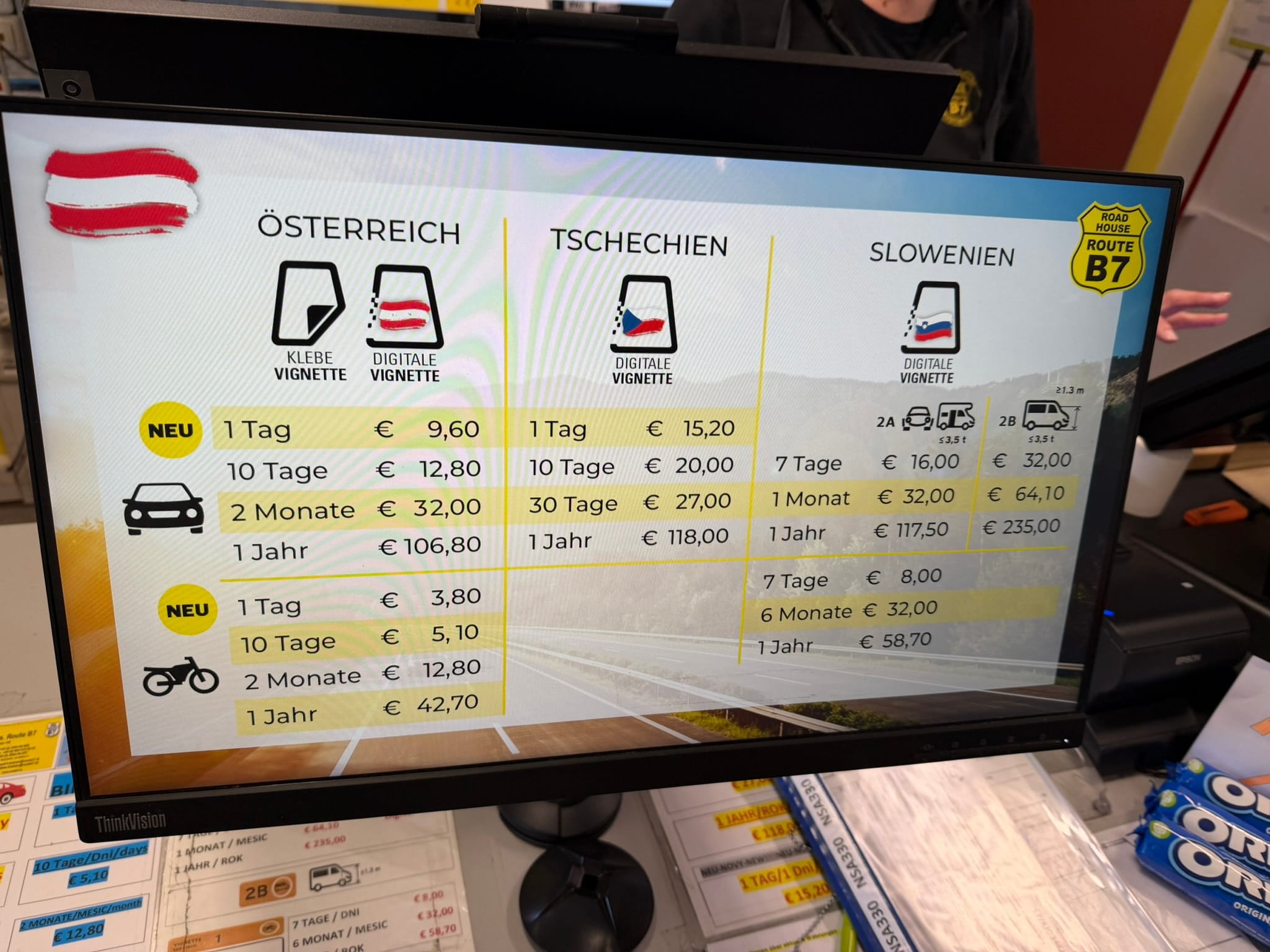
Checked out of OREA — total 20,309 CZK (~$884 USD) for 3 nights including spa, restaurants, souvenirs. Filled up at MOL Brno: 1,518 CZK (~$66 USD). Bought the Austrian vignette €12.80 (~$13.85 USD) (10-day sticker) at a Route B7 station in Drasenhofen.
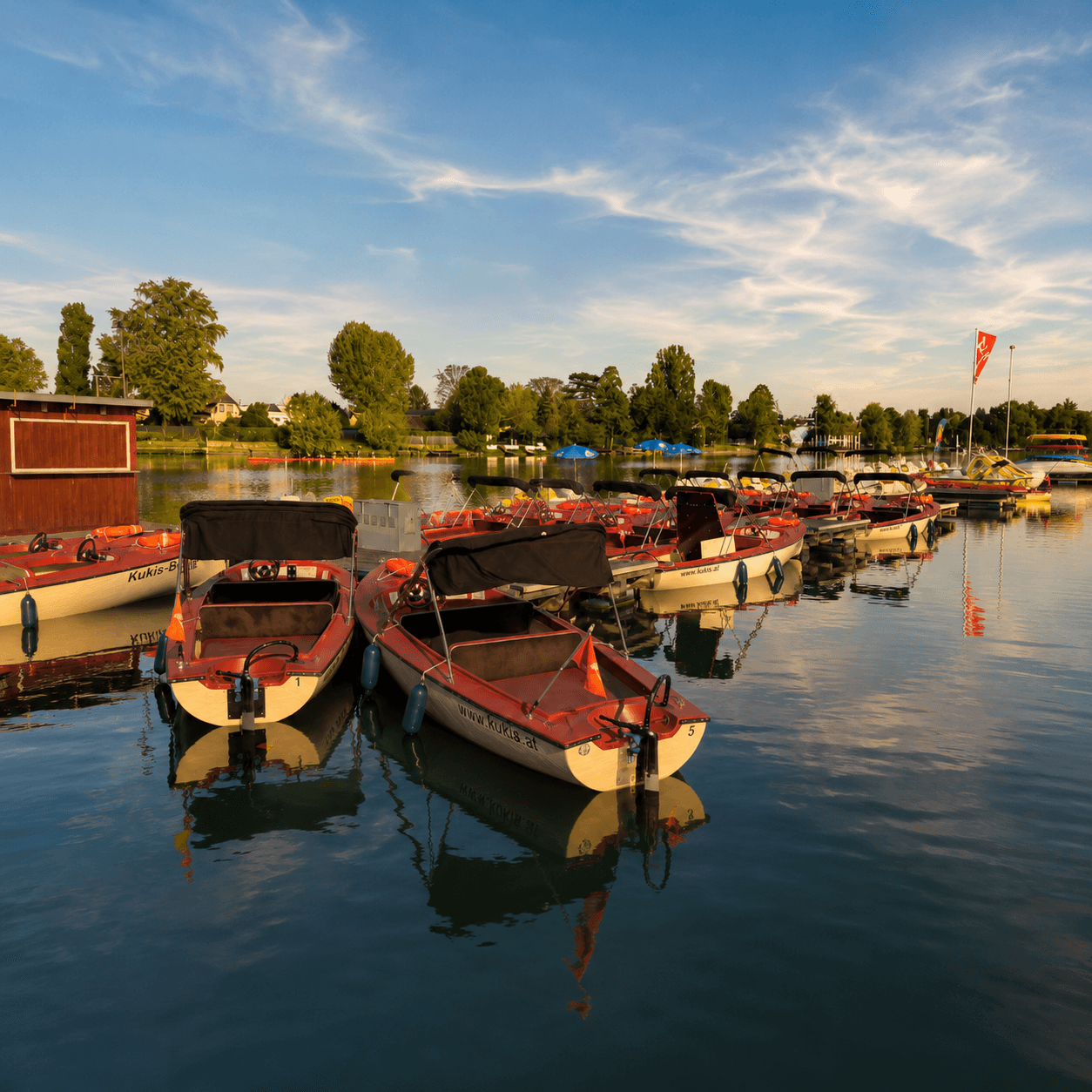
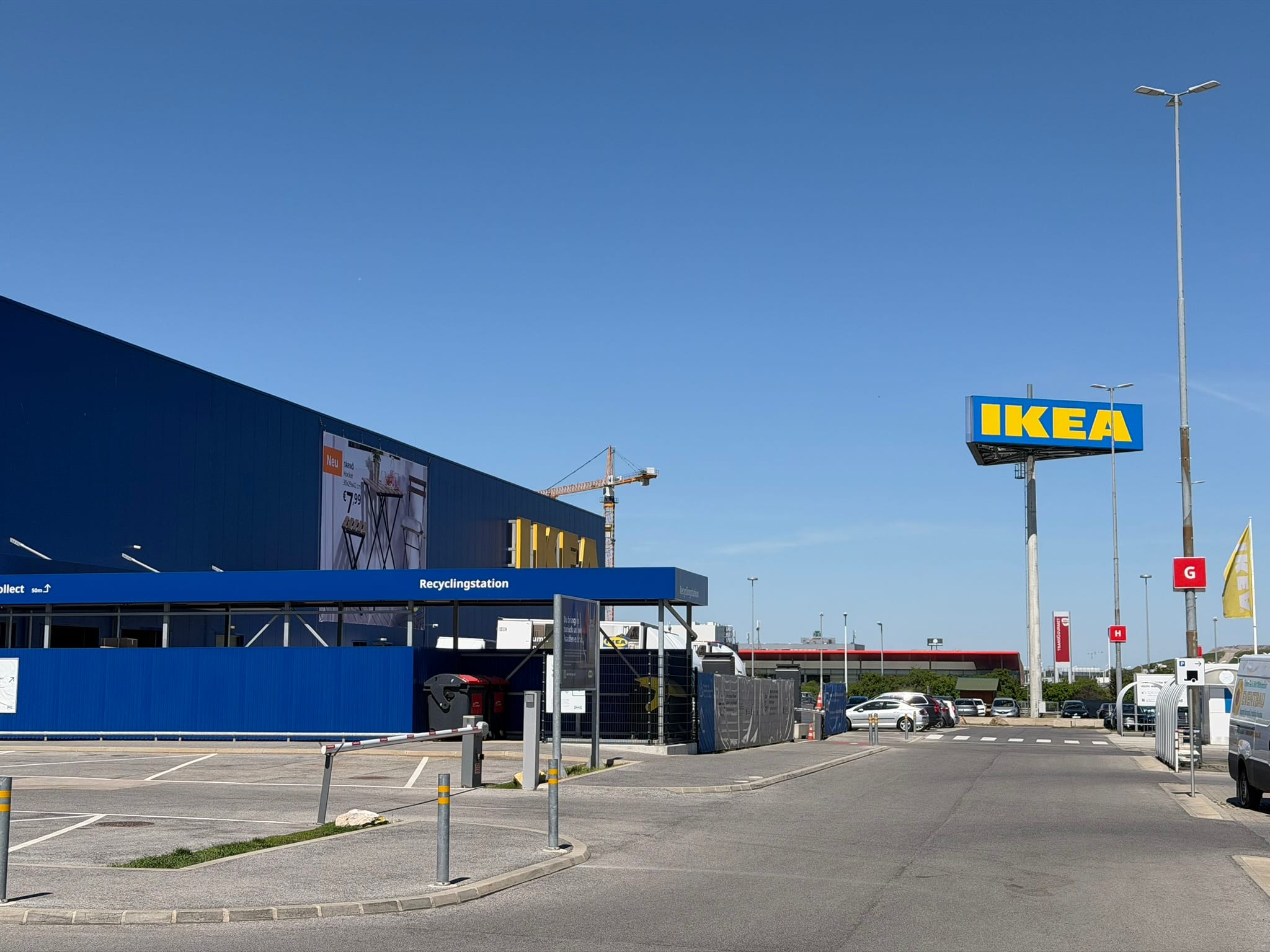
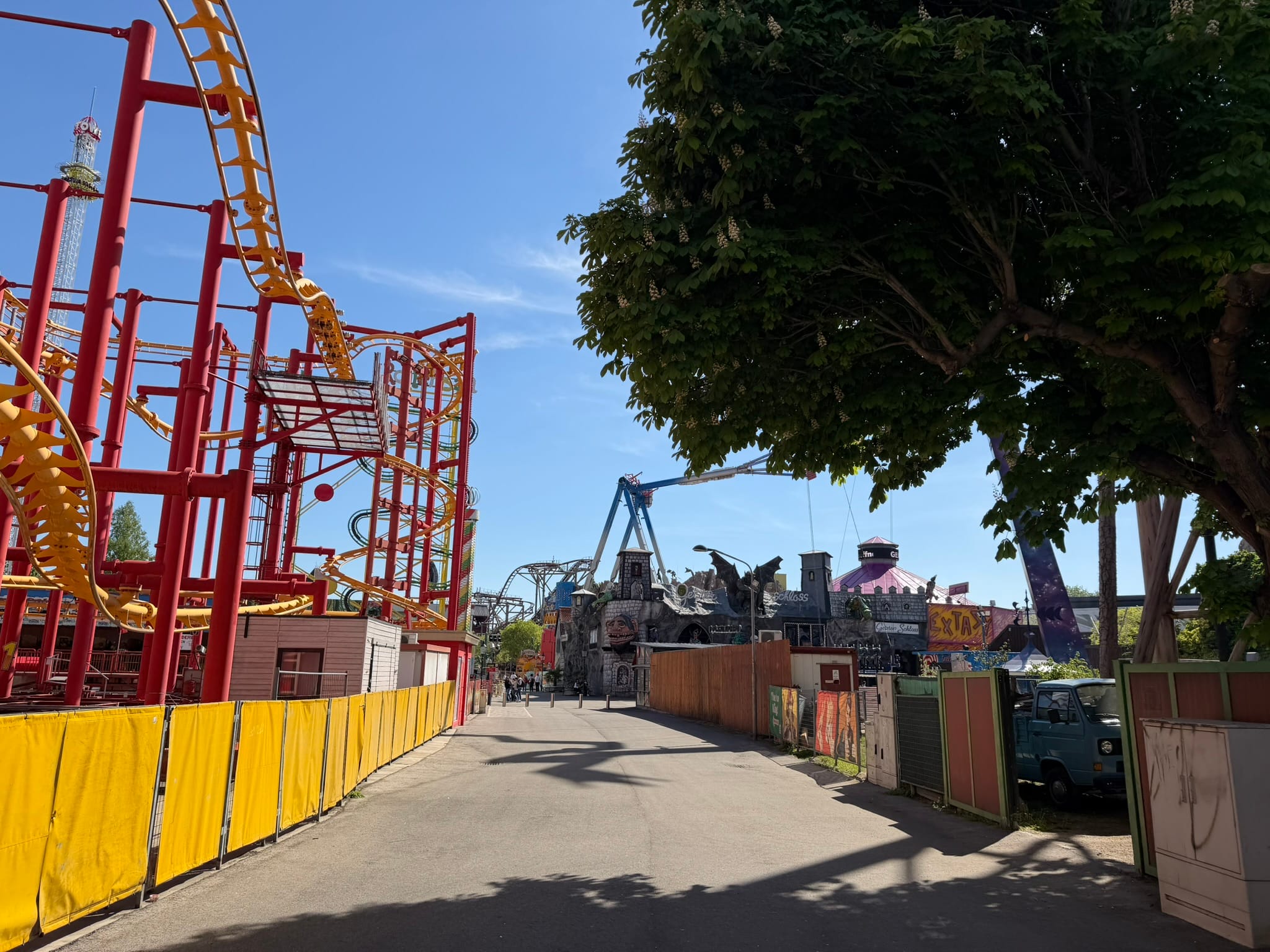
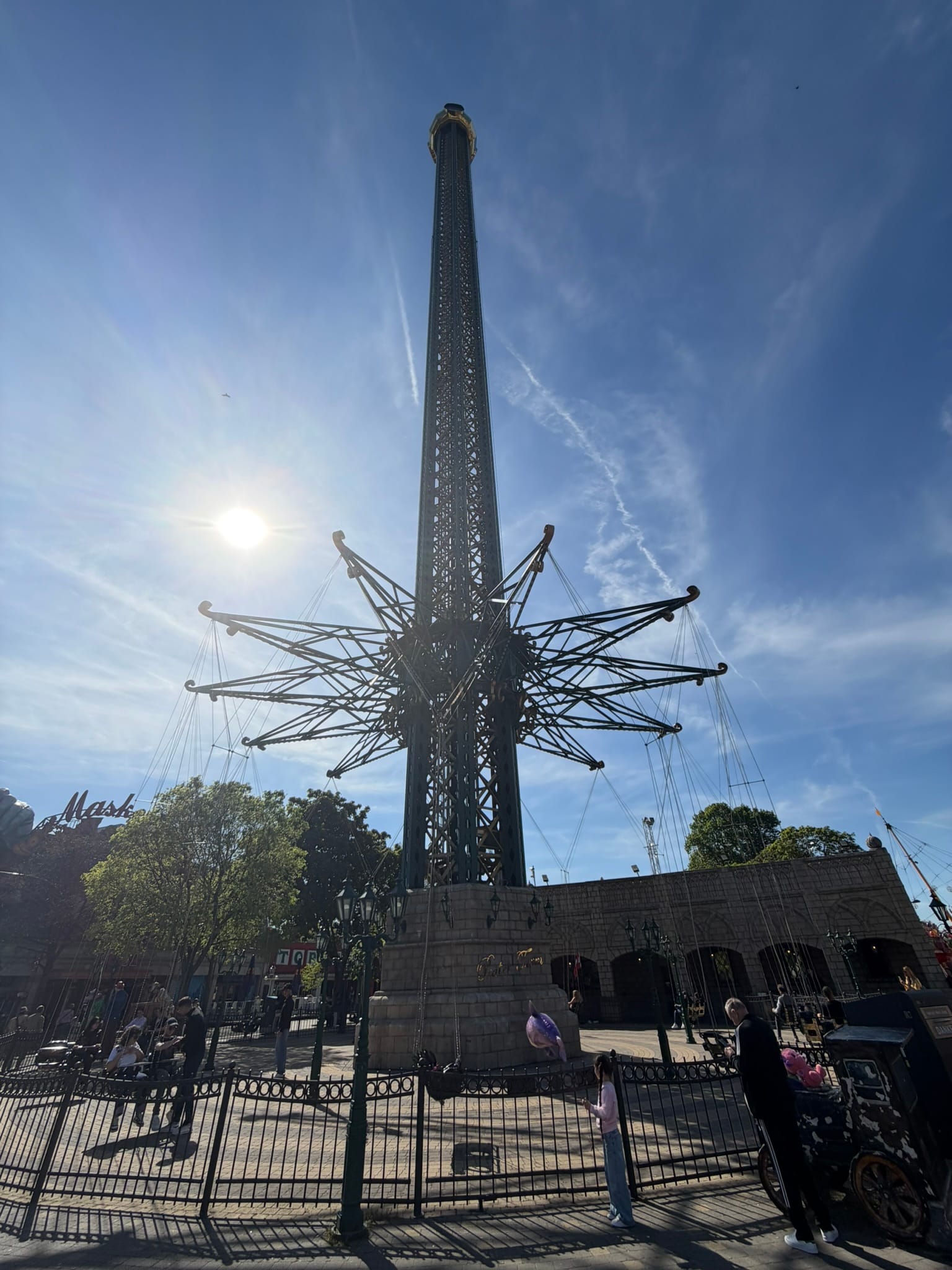
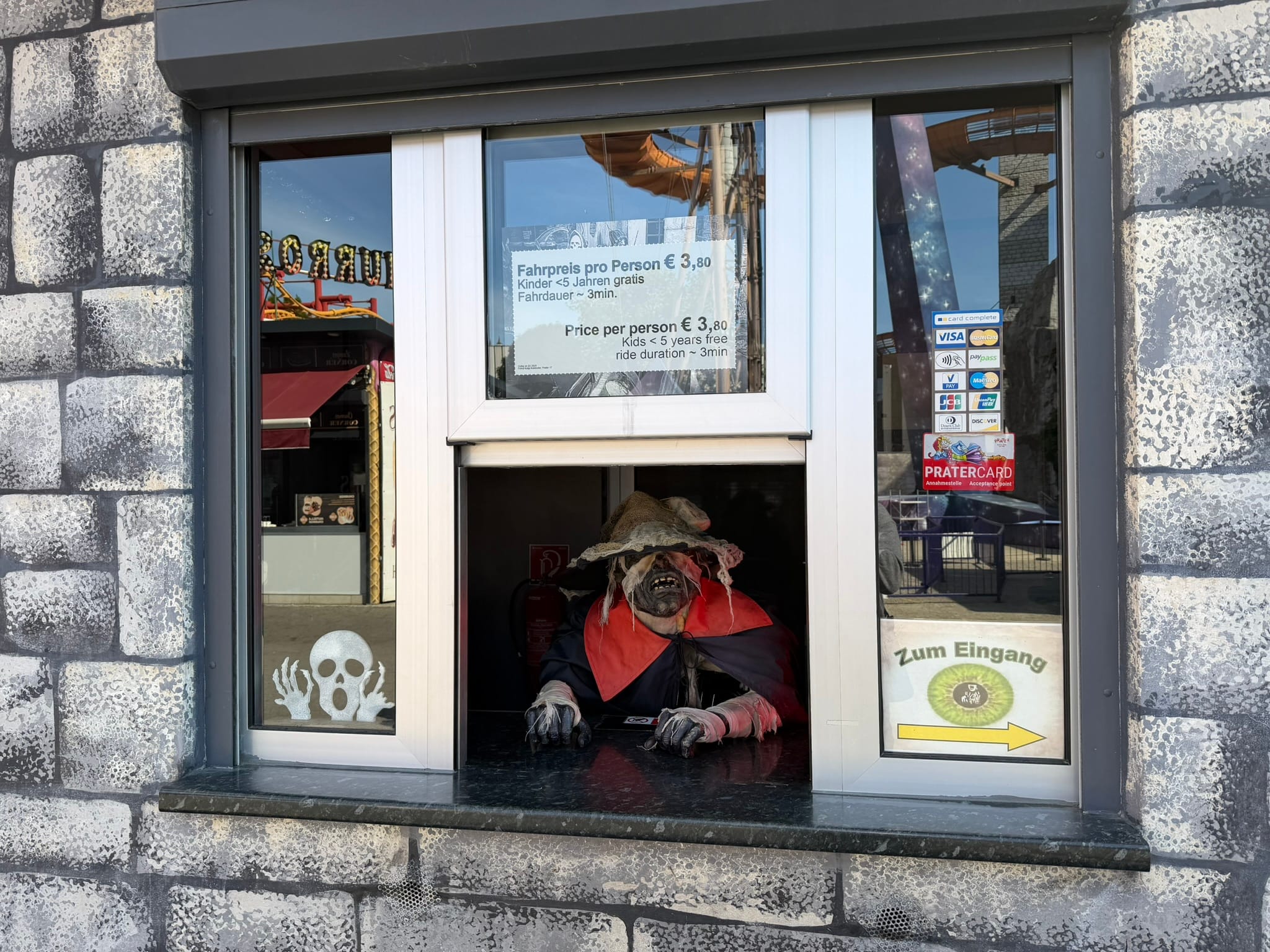
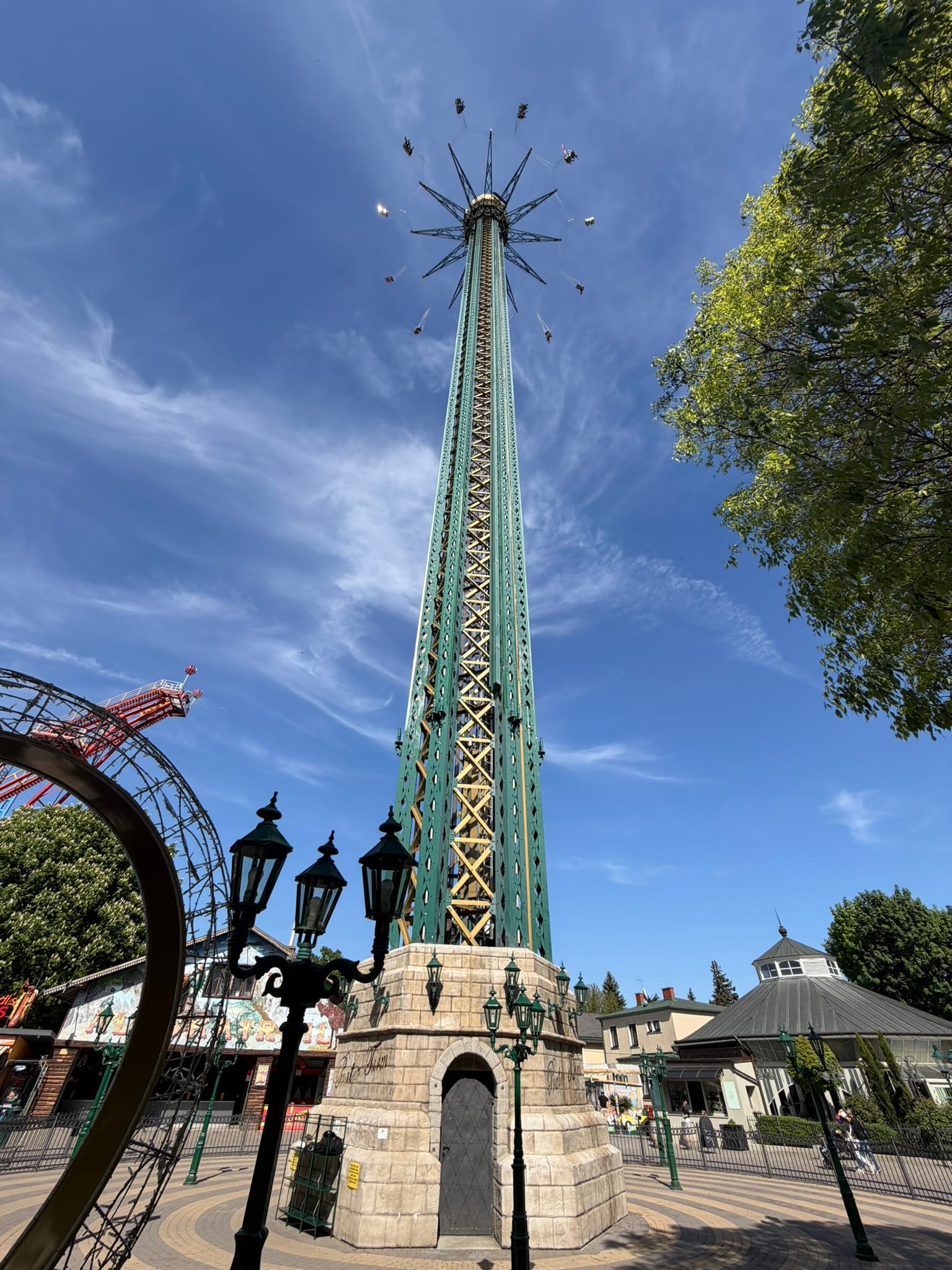
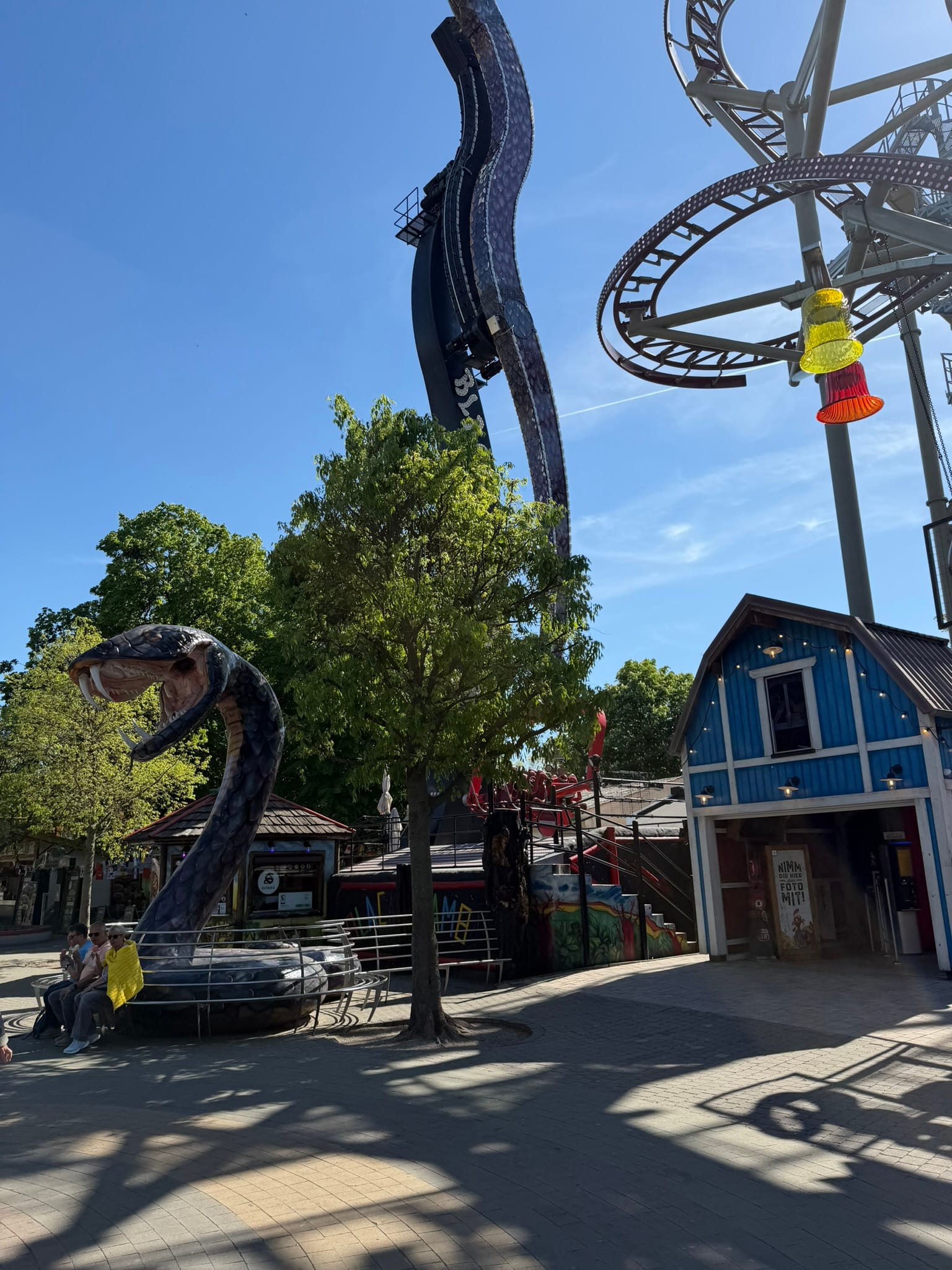
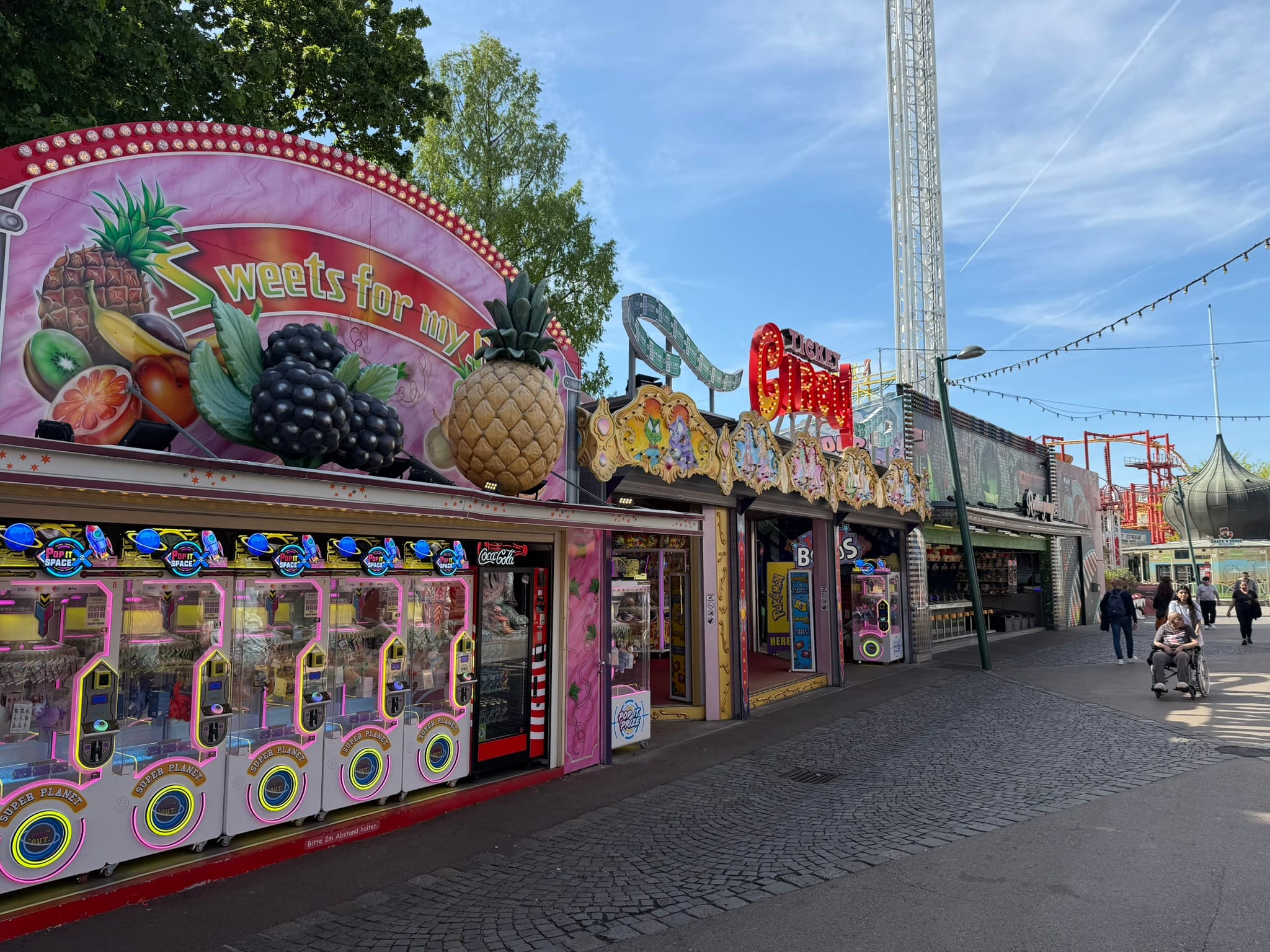
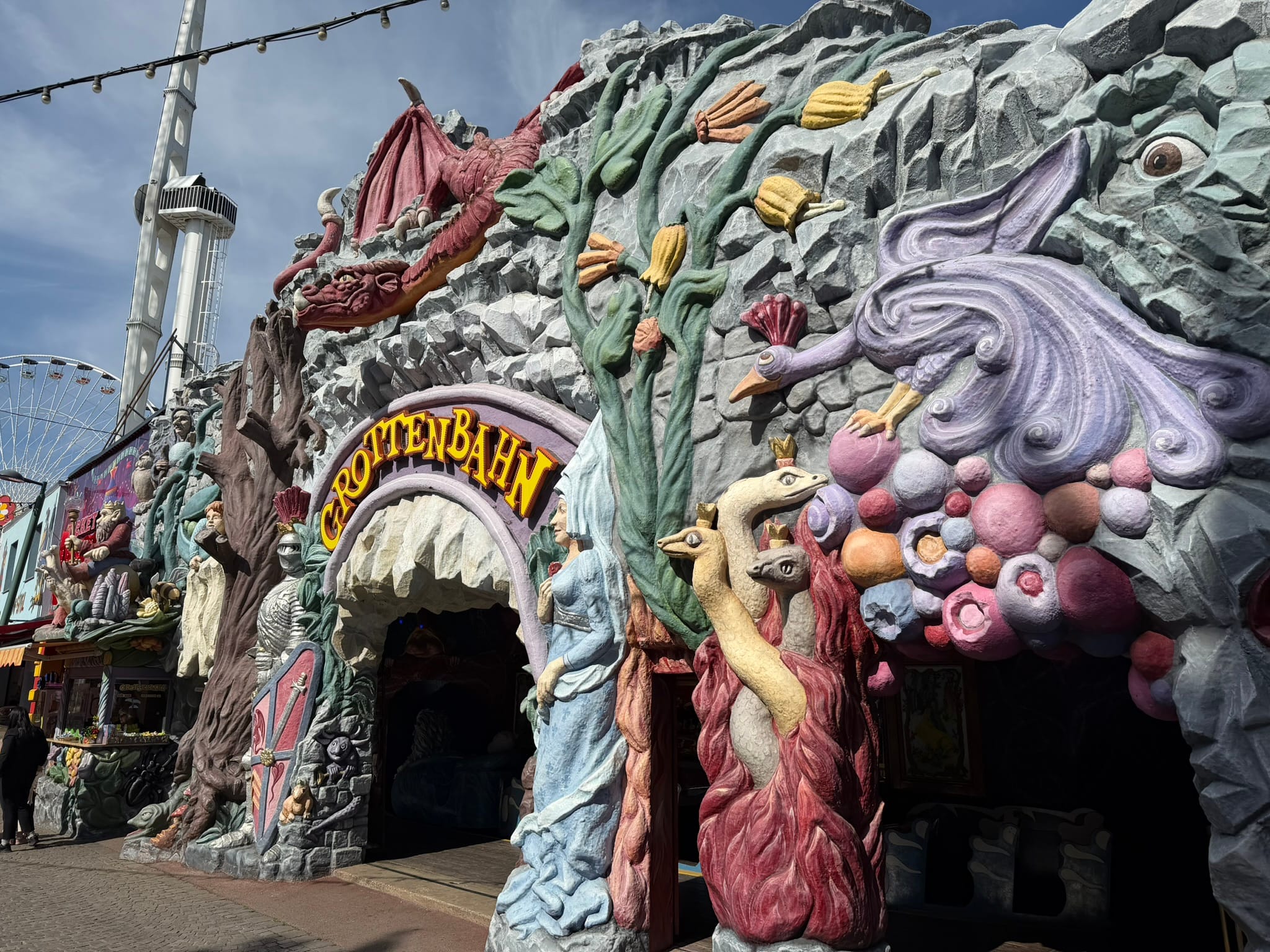
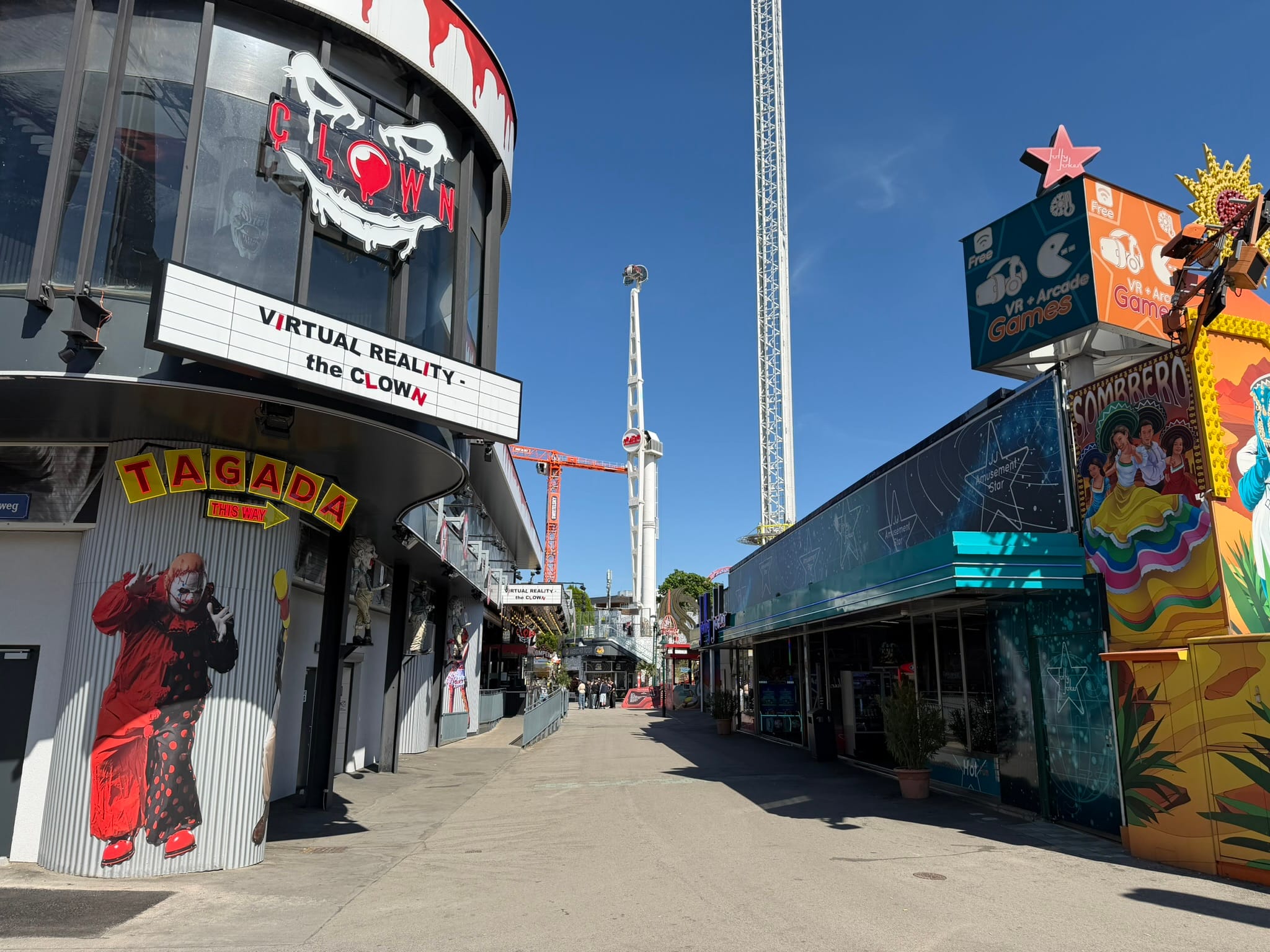
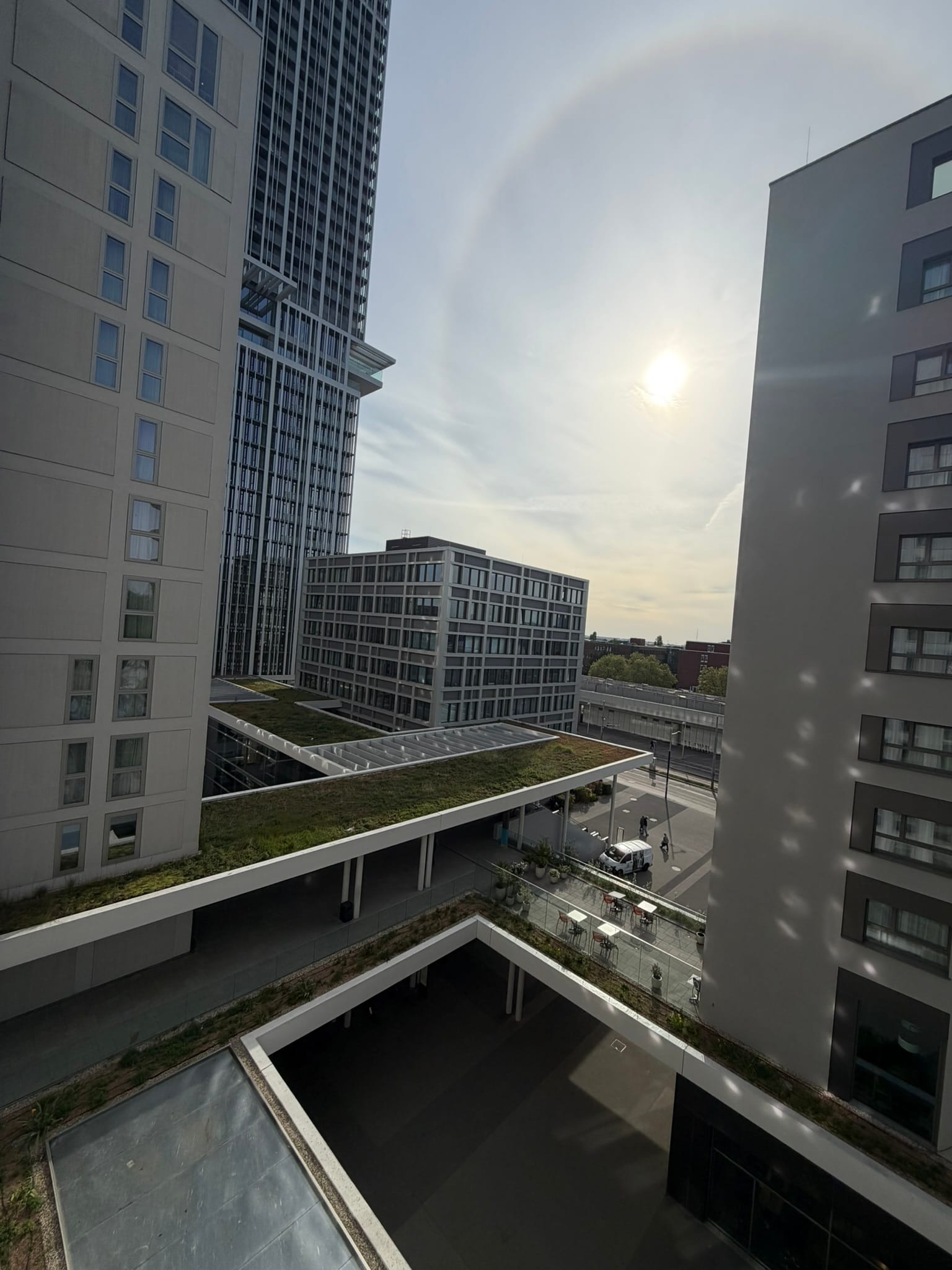
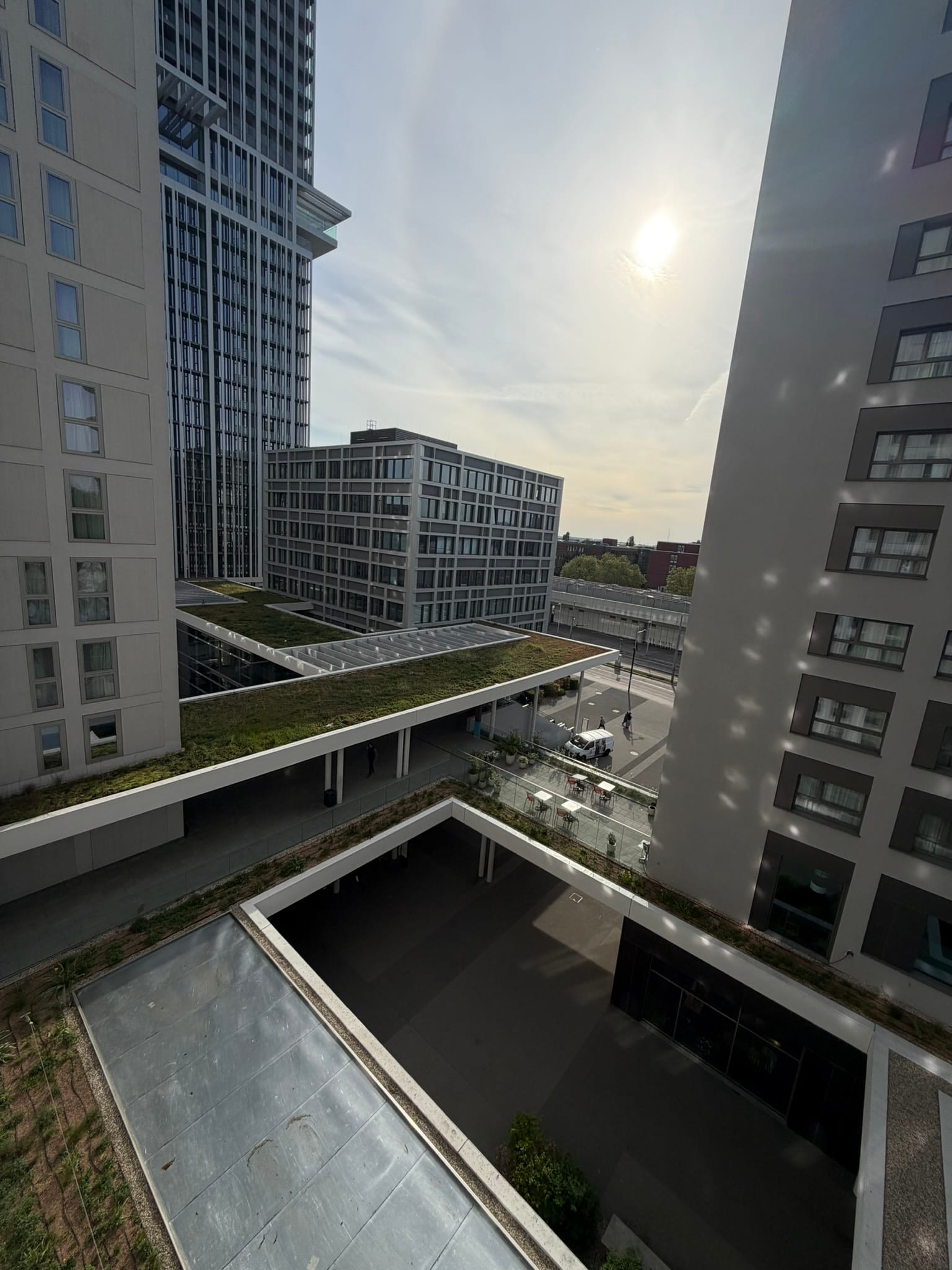
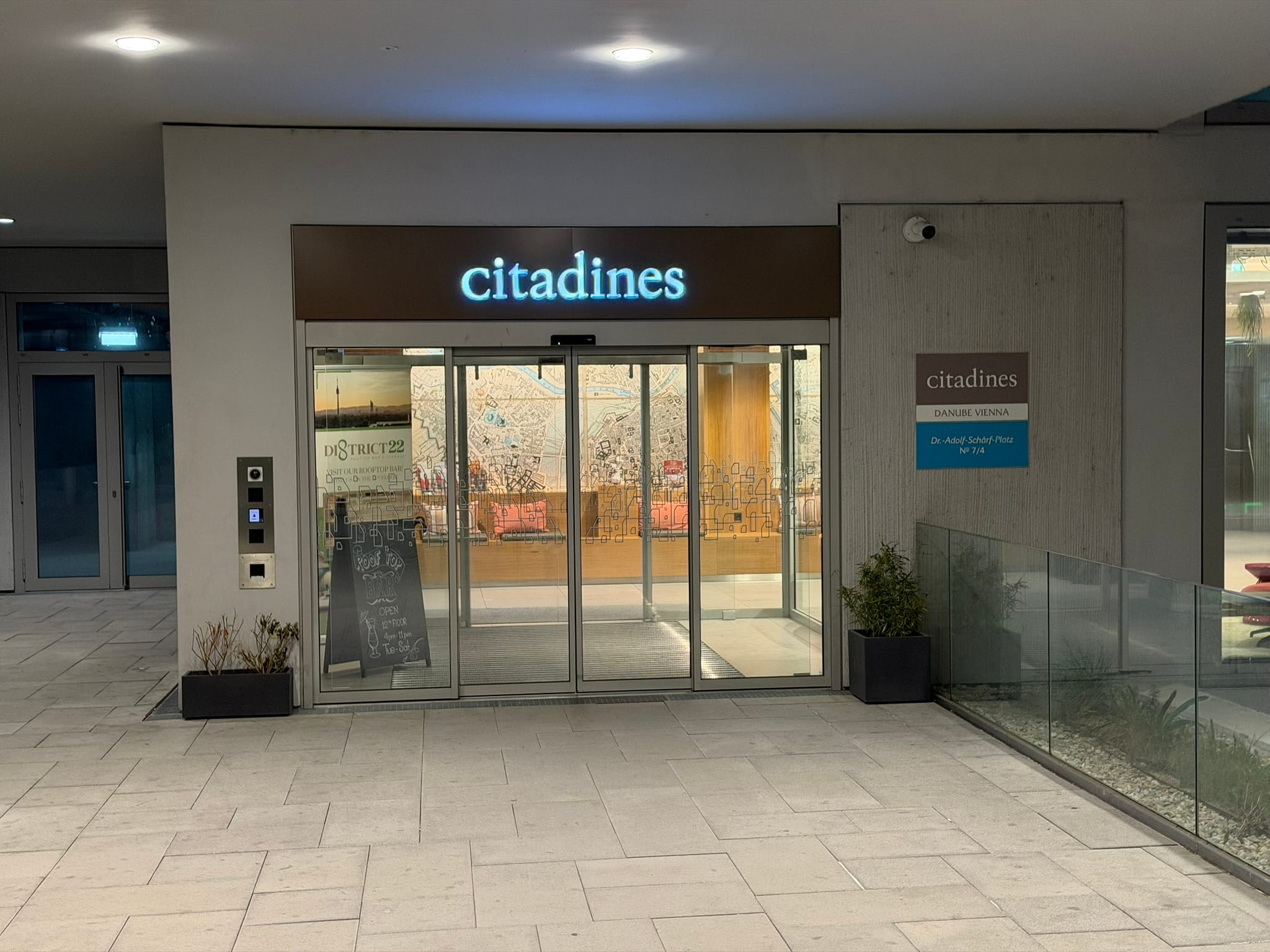
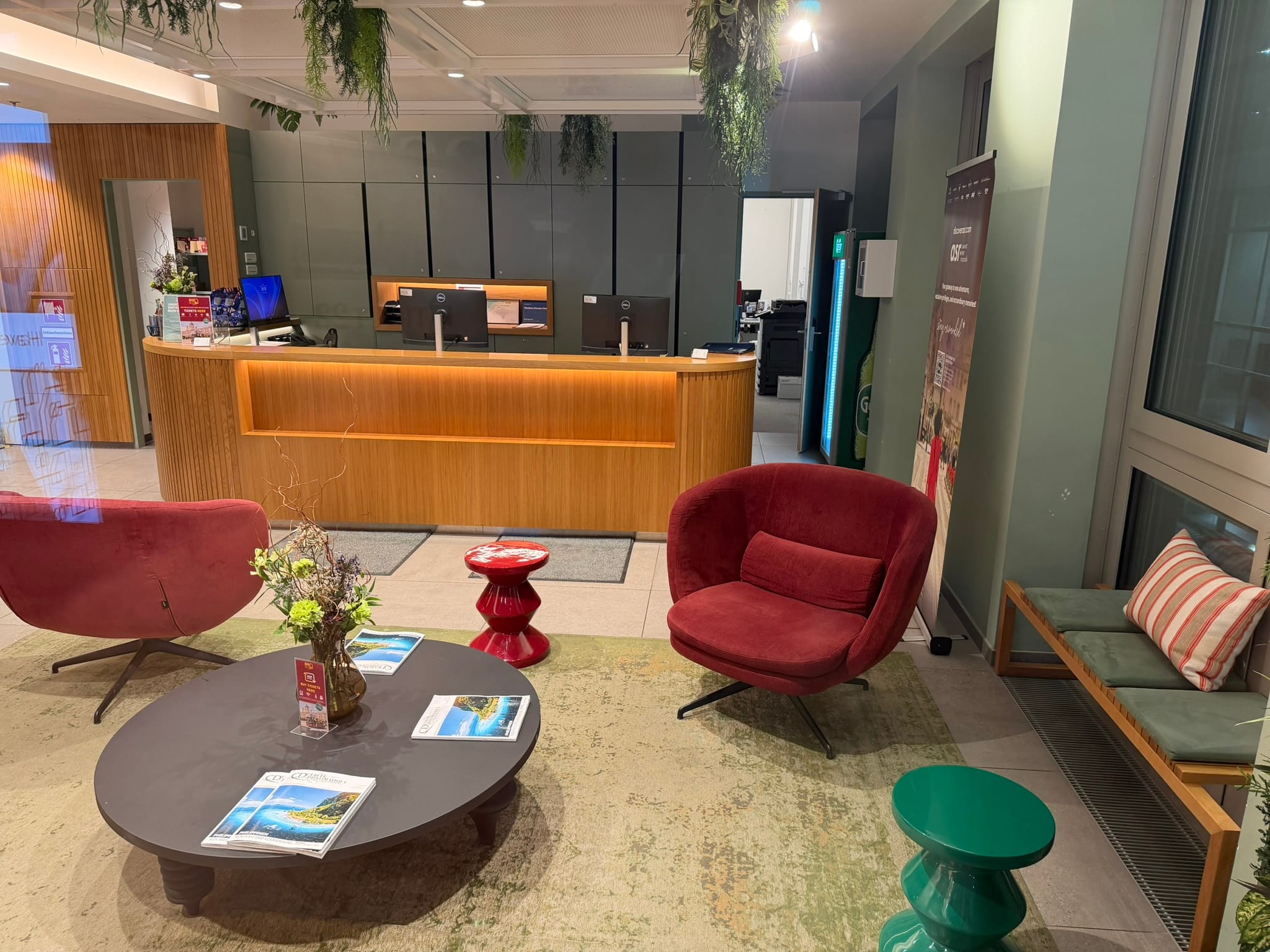
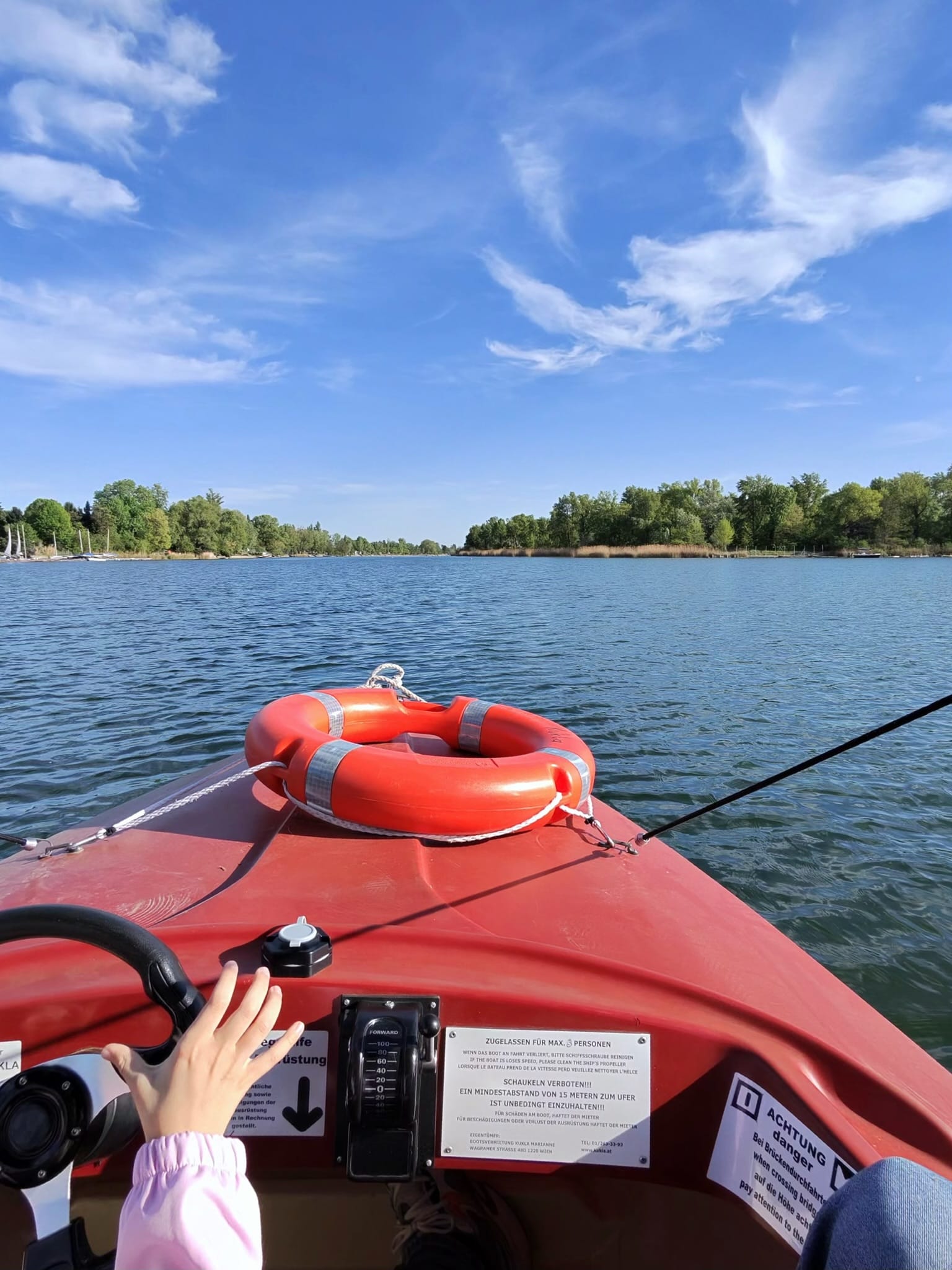
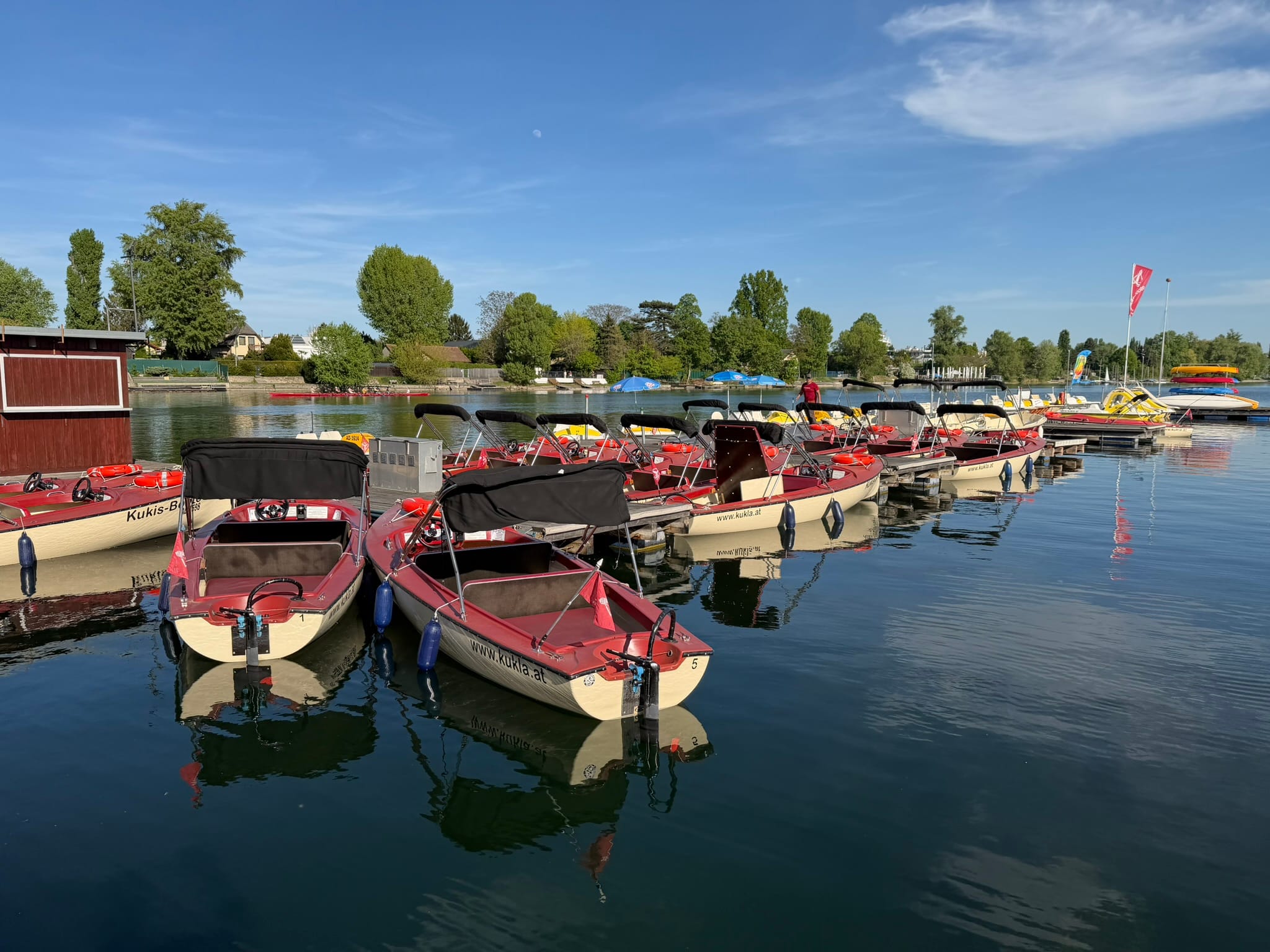
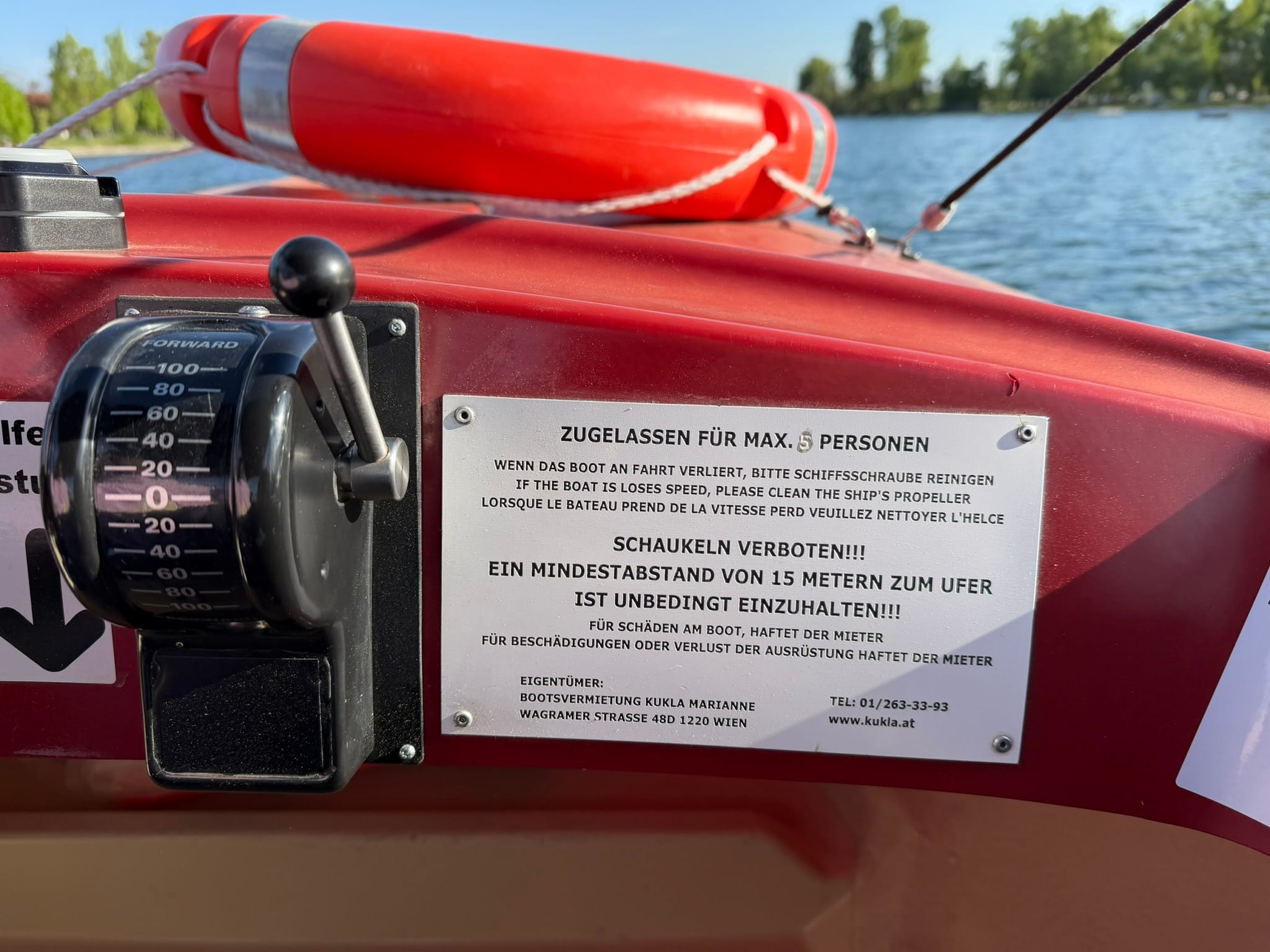
In Vienna — lunch at IKEA Wien Nord (€53 / ~$57 USD), half a day at Prater (~€30 / ~$32 USD on 7 rides), electric boat on Alte Donau (Bootsvermietung Kukis, 1 hour, €33 / ~$36 USD). Night at Citadines Danube Vienna right by the U1 Kagran metro. Dinner at Akakiko Donauplex (€39 / ~$42 USD).

Day 5 (April 28) — Vienna → Budapest via Parndorf
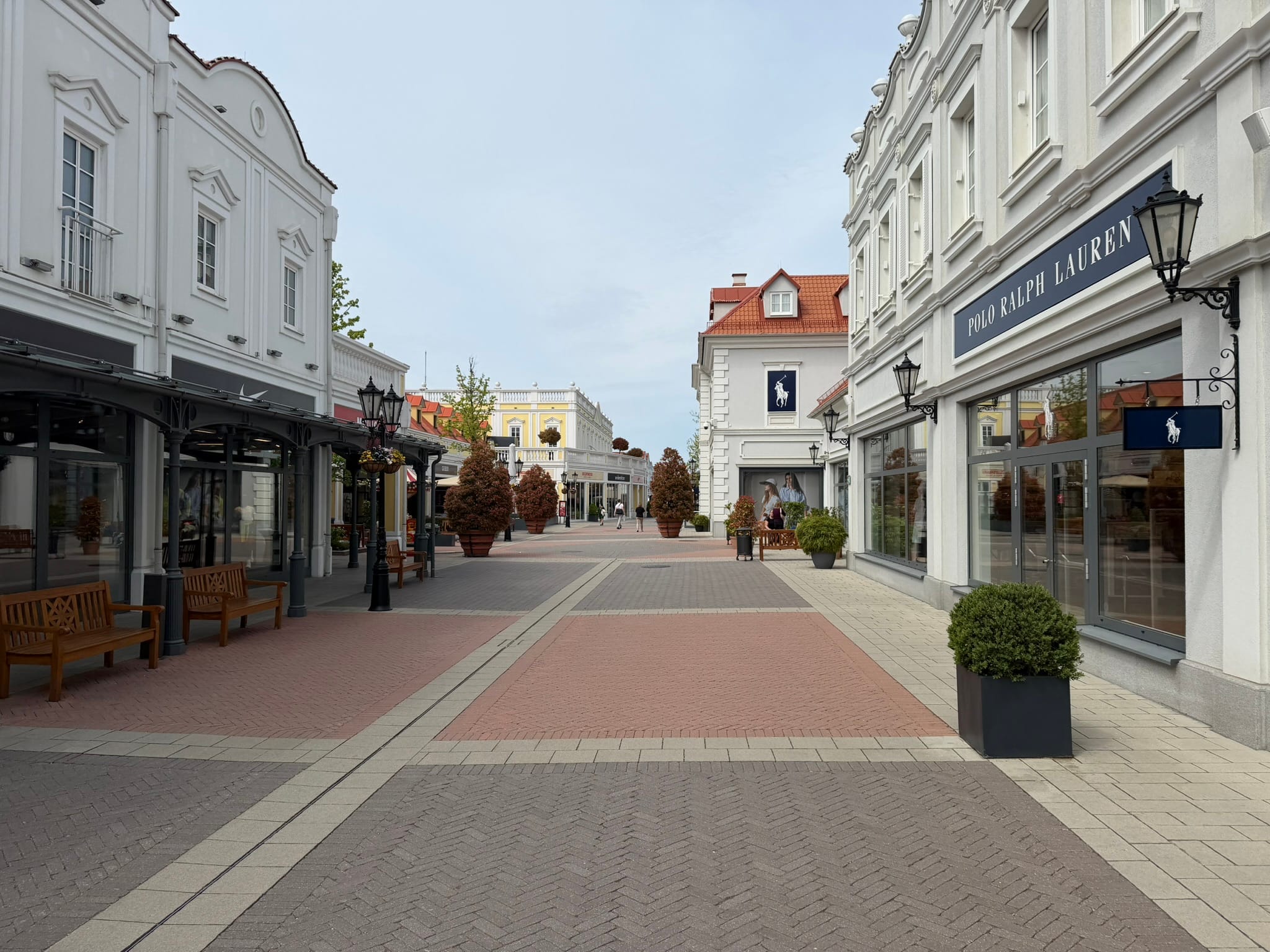
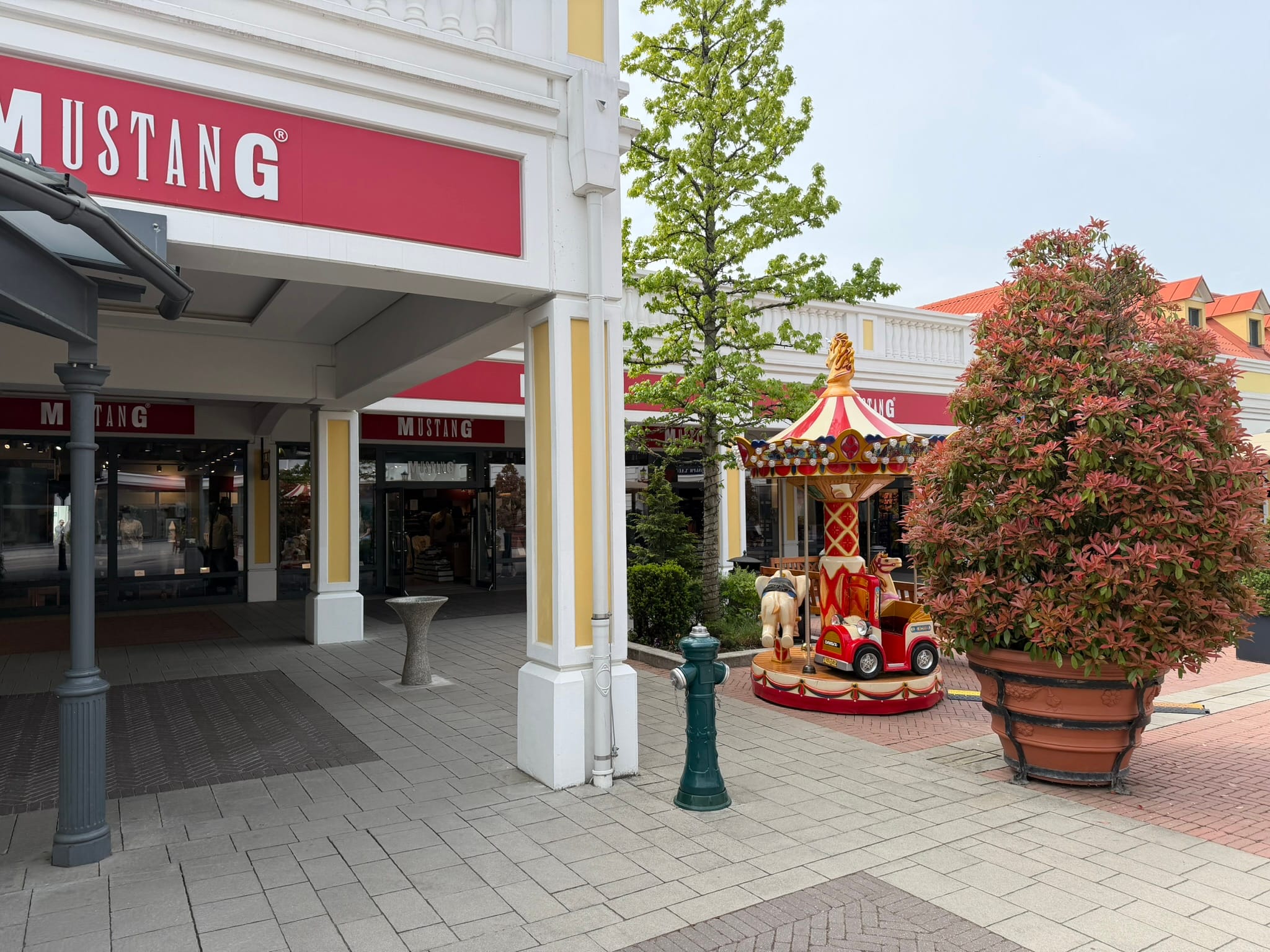
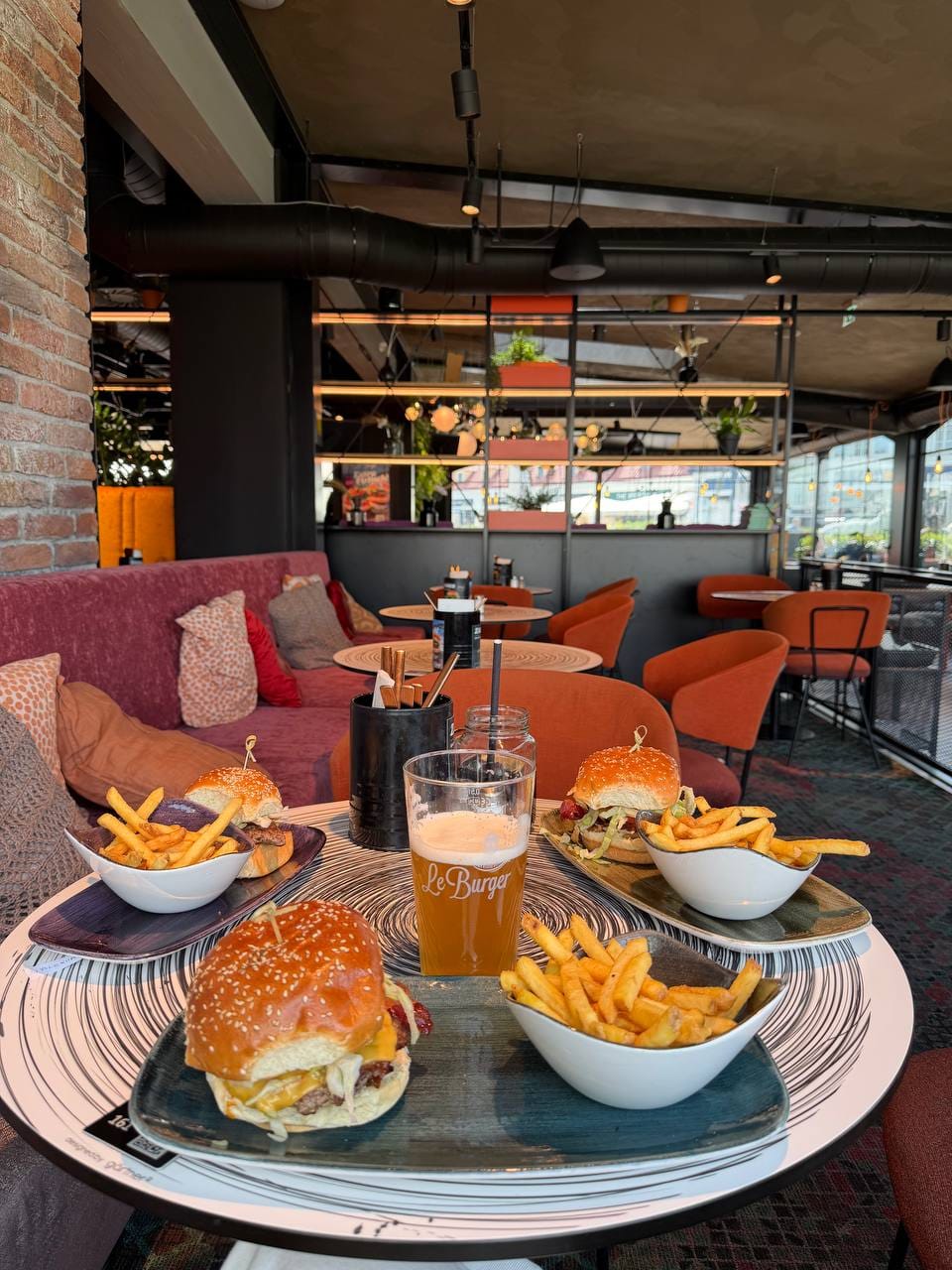
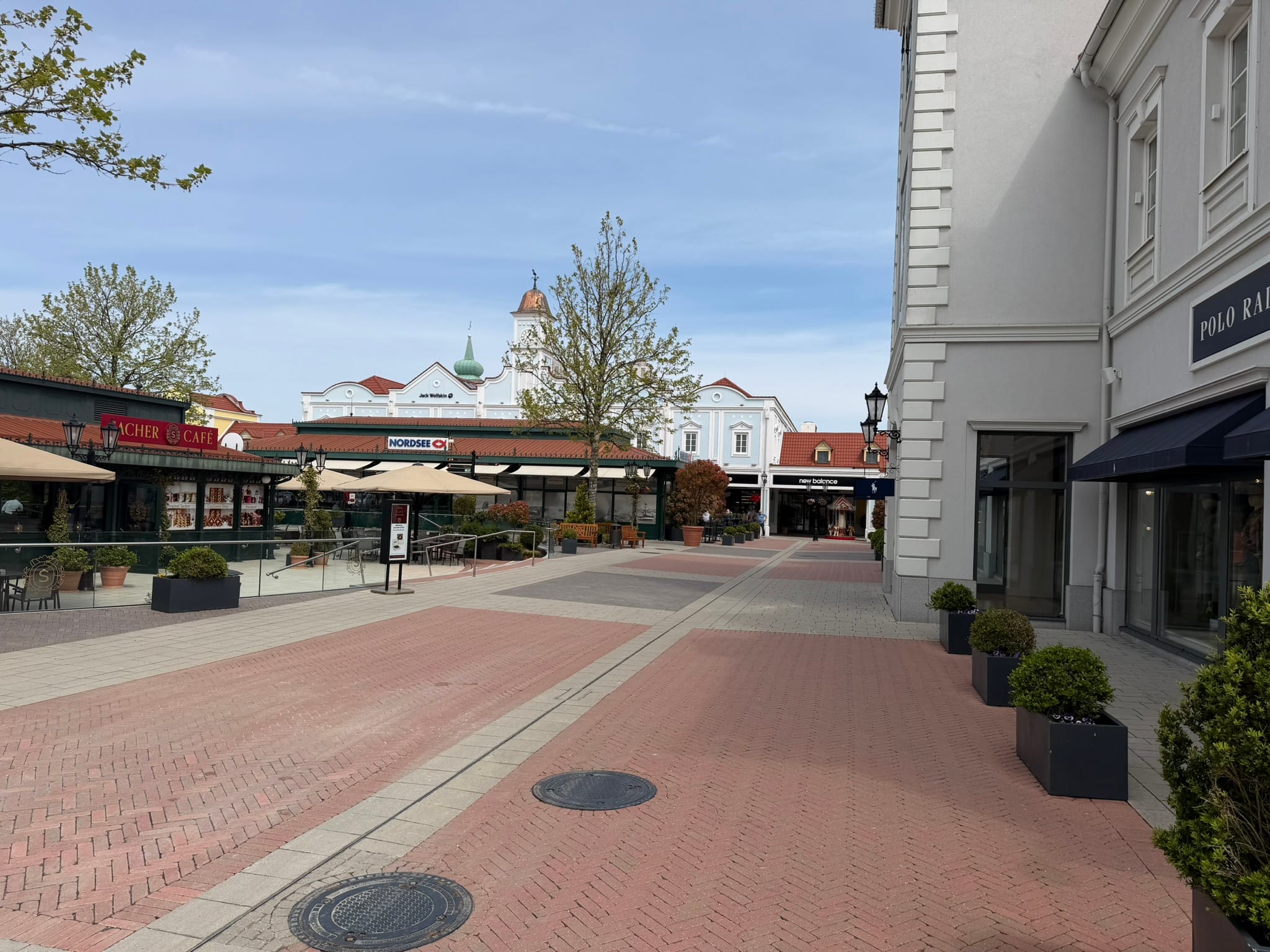
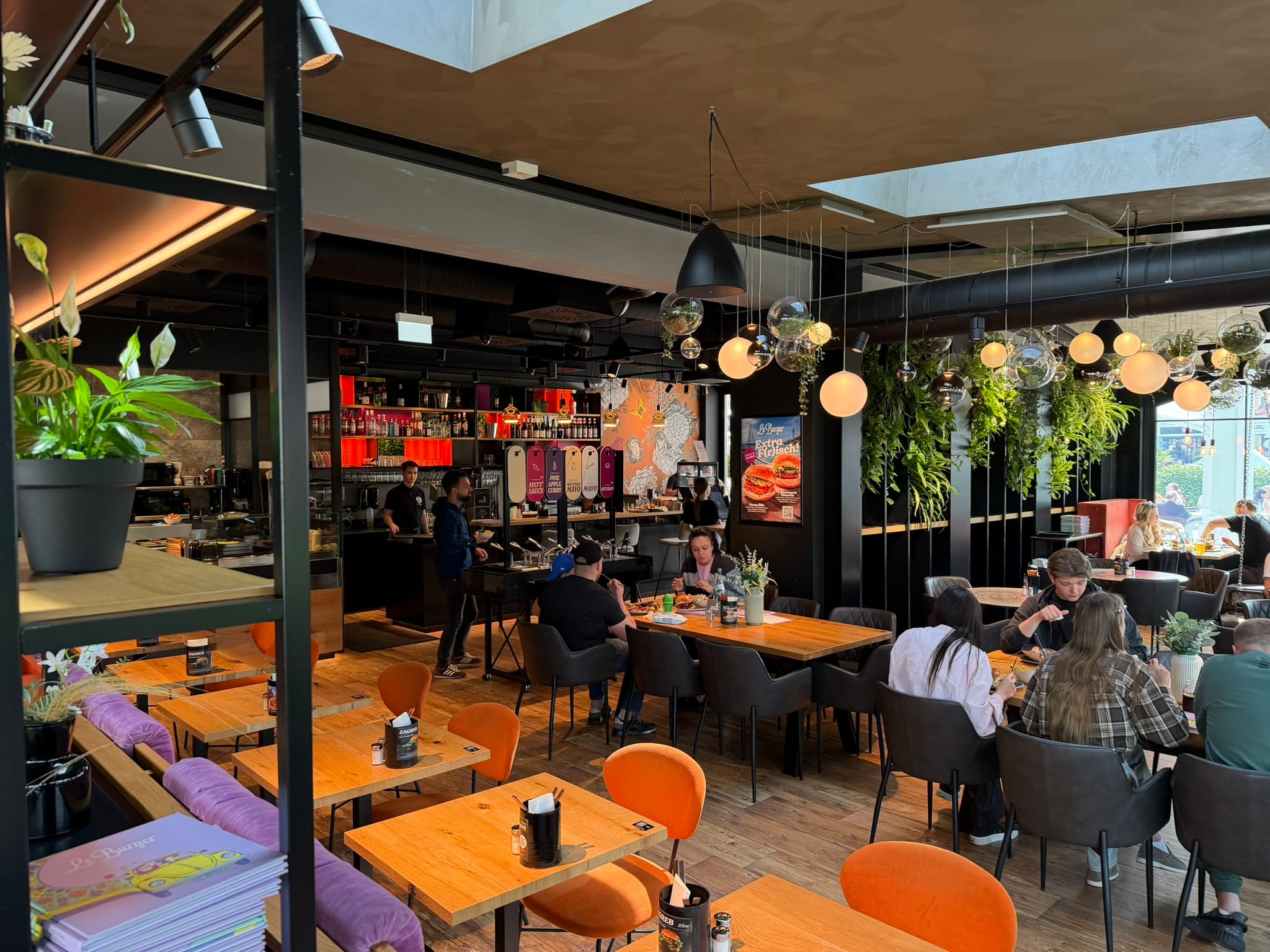
Drove out of Vienna, stopped at Parndorf Designer Outlet. Dropped our daughter at Dinoland — supervised play room for ages 3–10, small fee. My wife and I shopped together, just the two of us, which for family shopping is a rare luxury. Lunch at Le Burger — €63 (~$68 USD) for the family.
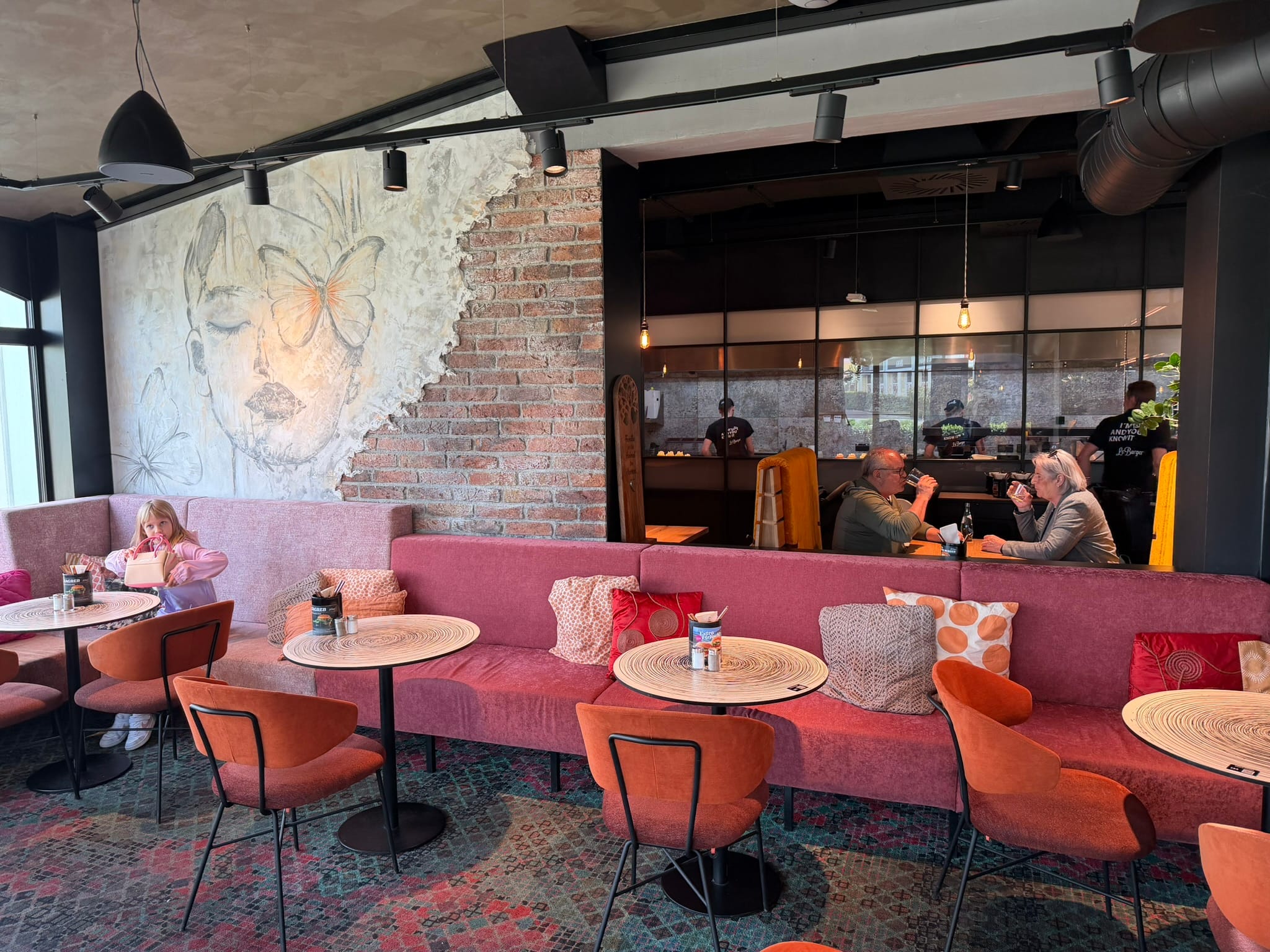
Made it to Budapest by evening.
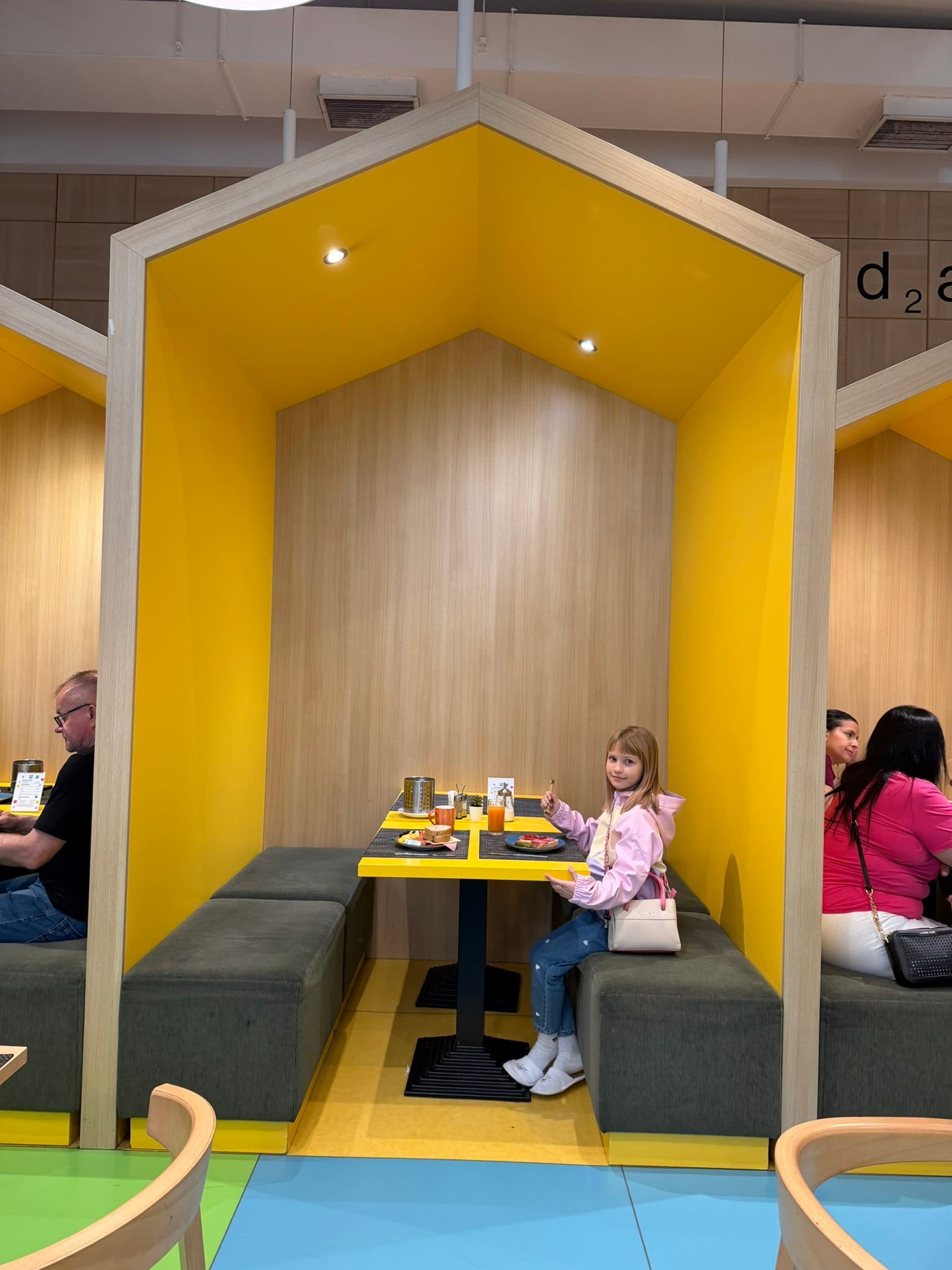
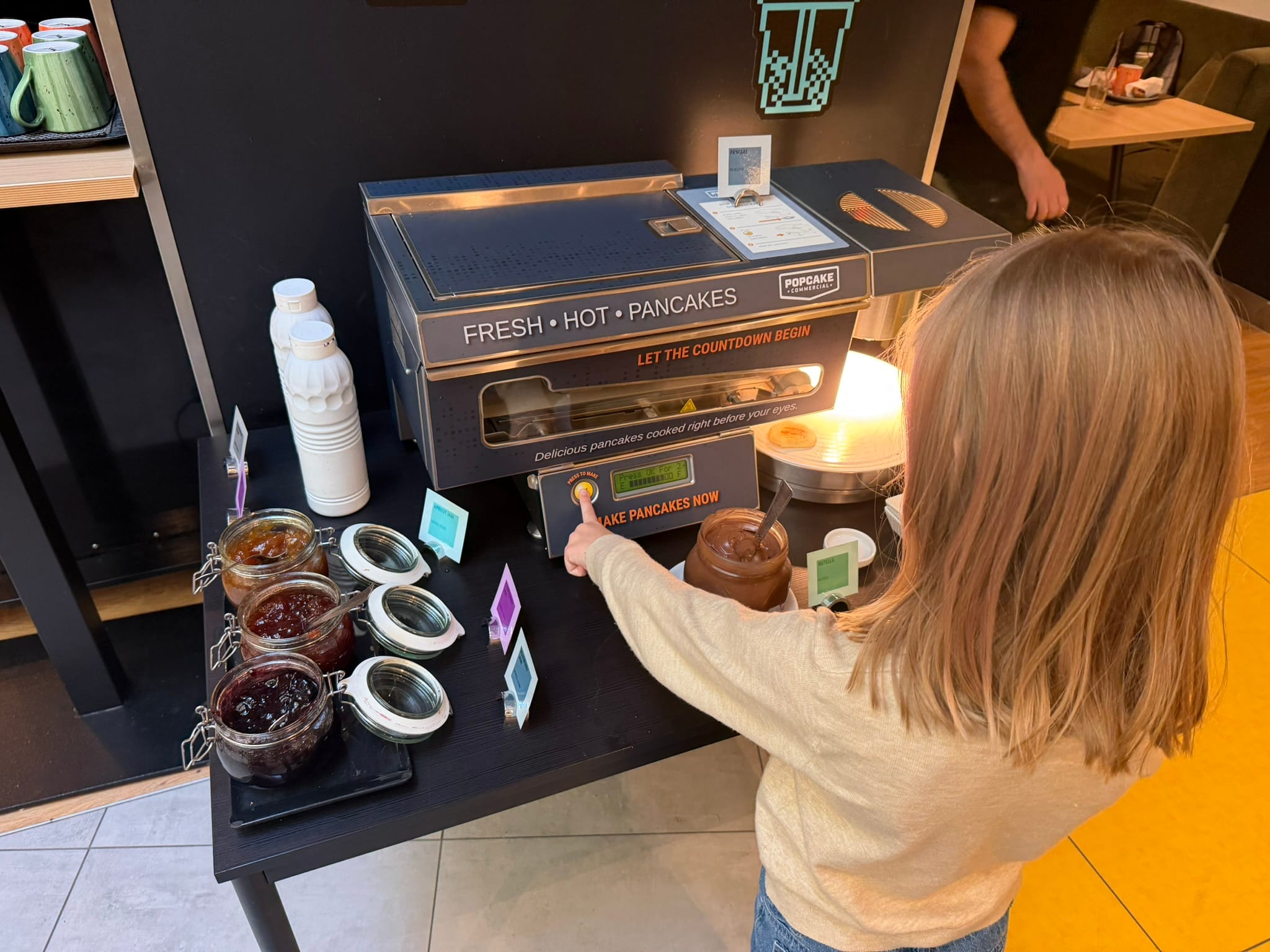
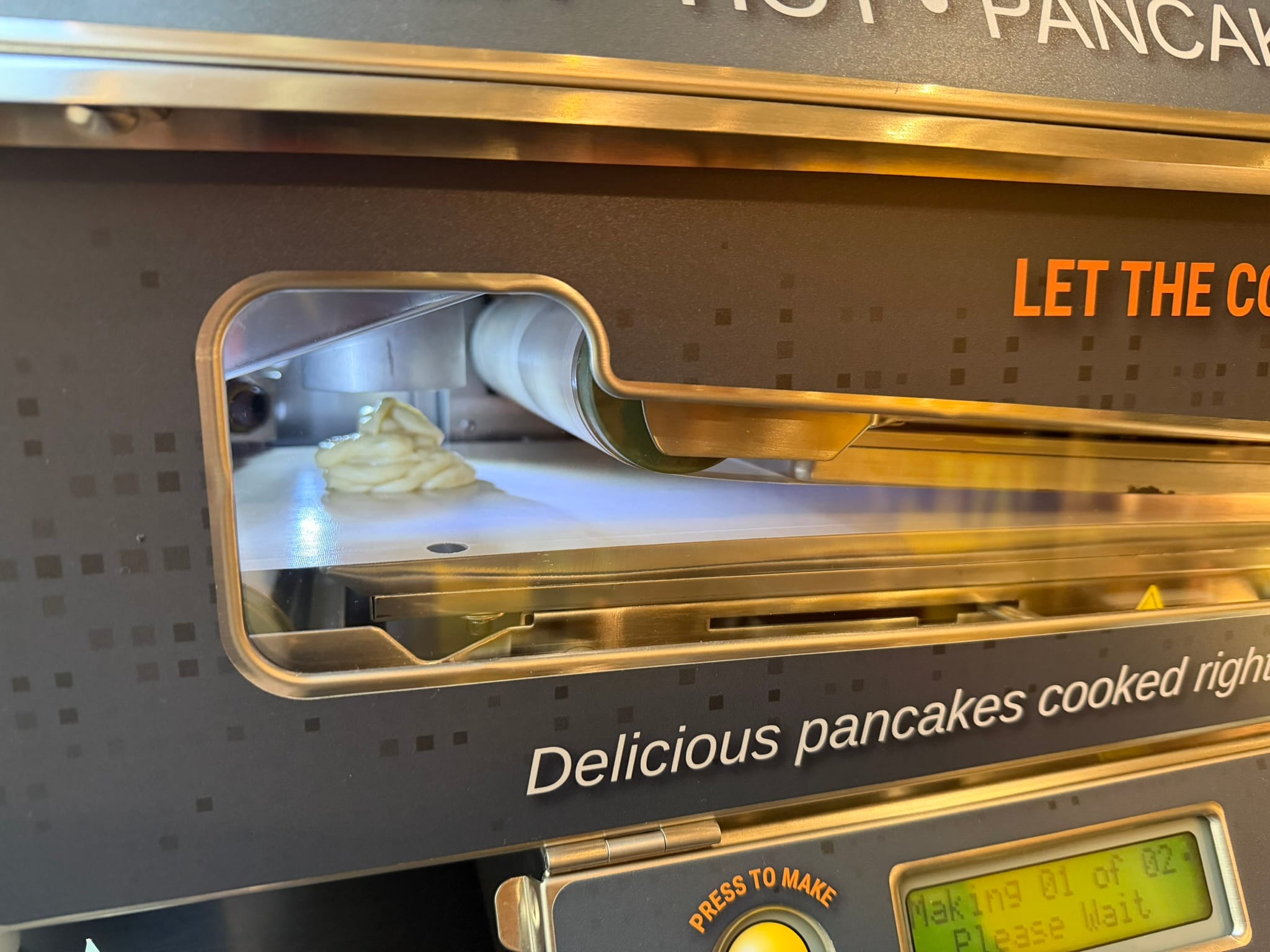
ibis Styles Budapest Center is a hipster-themed hotel — Space Invaders pixel-art carpet in the corridors, a Popcake automatic pancake machine at breakfast.
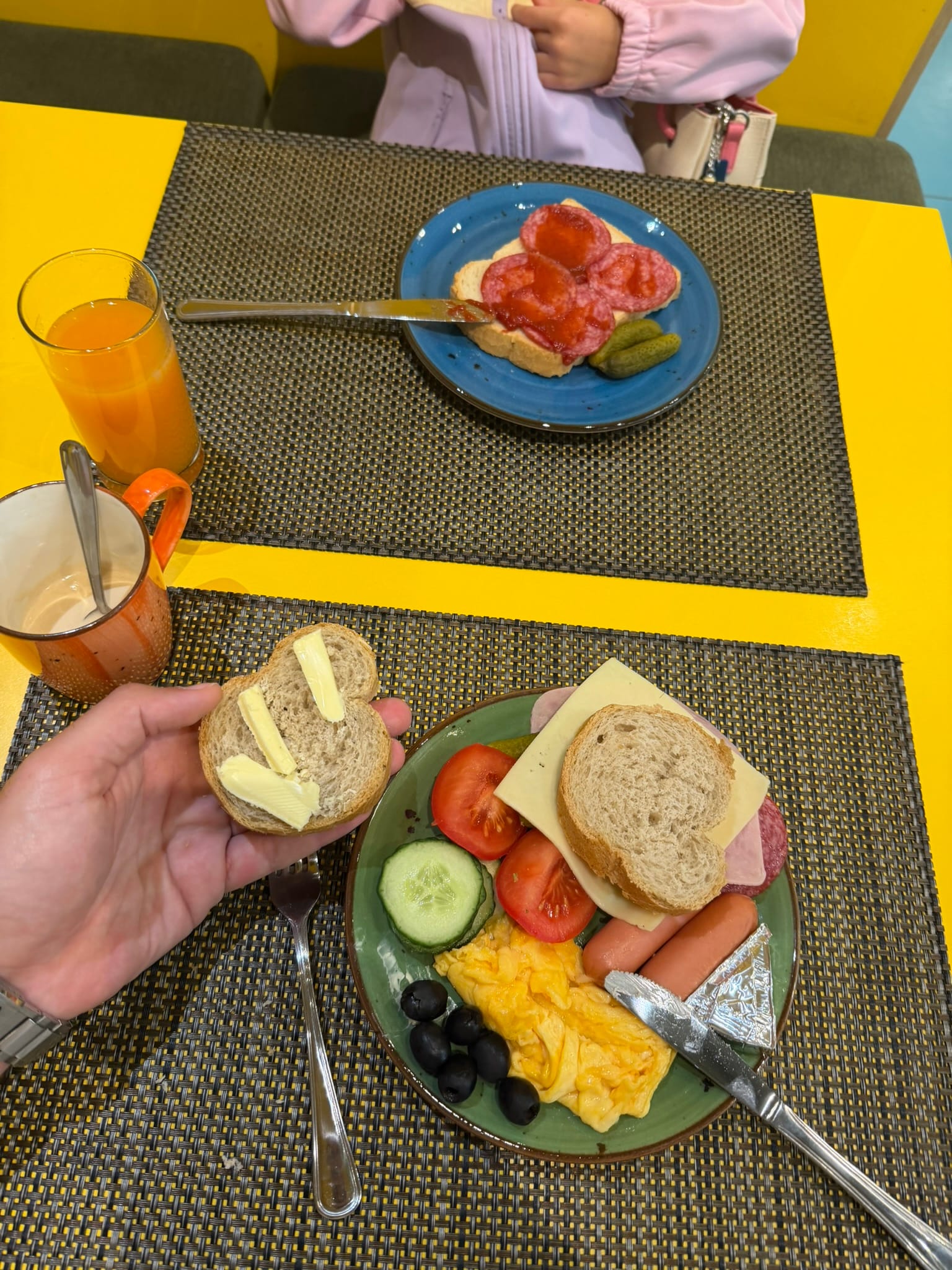
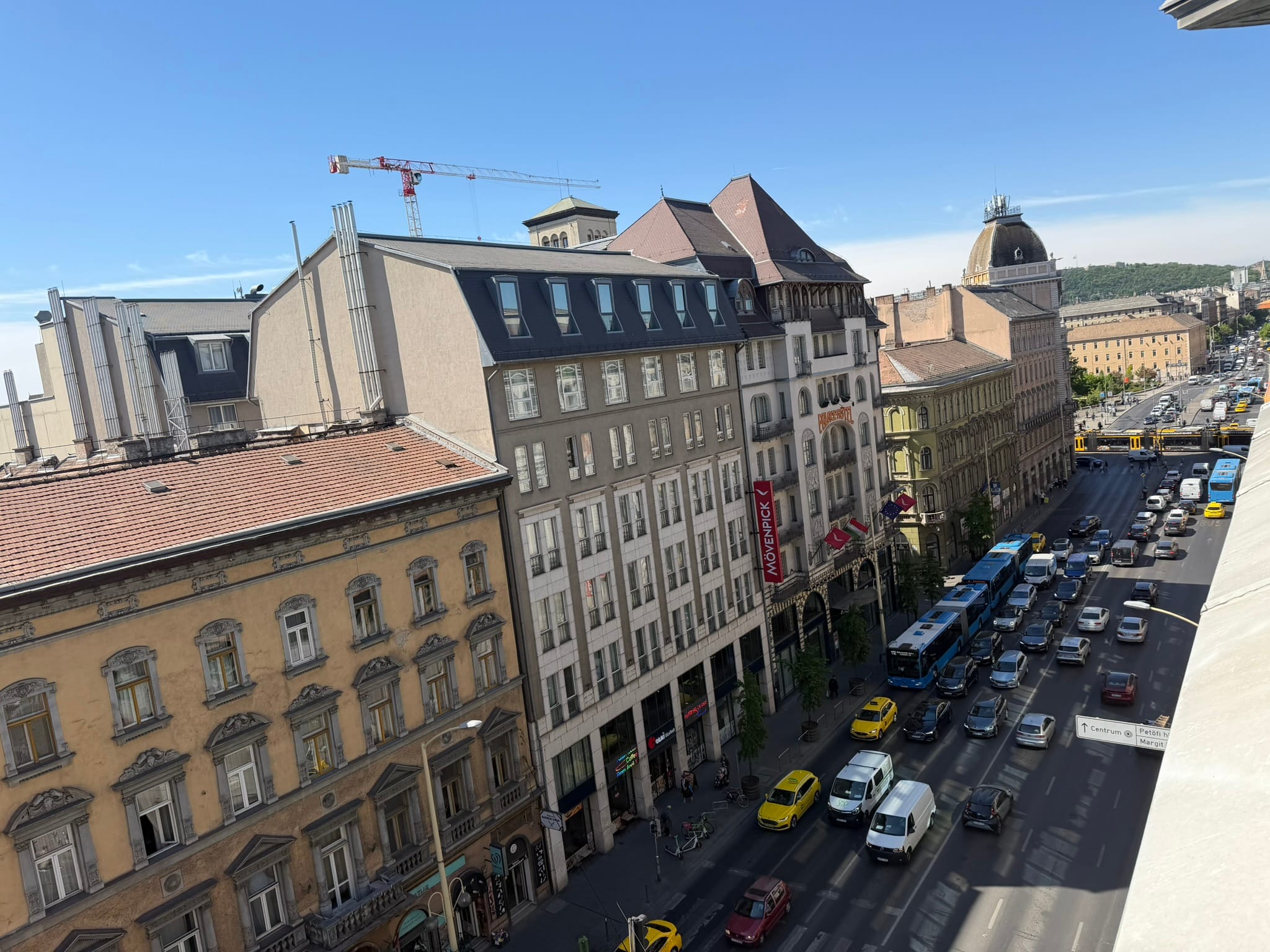
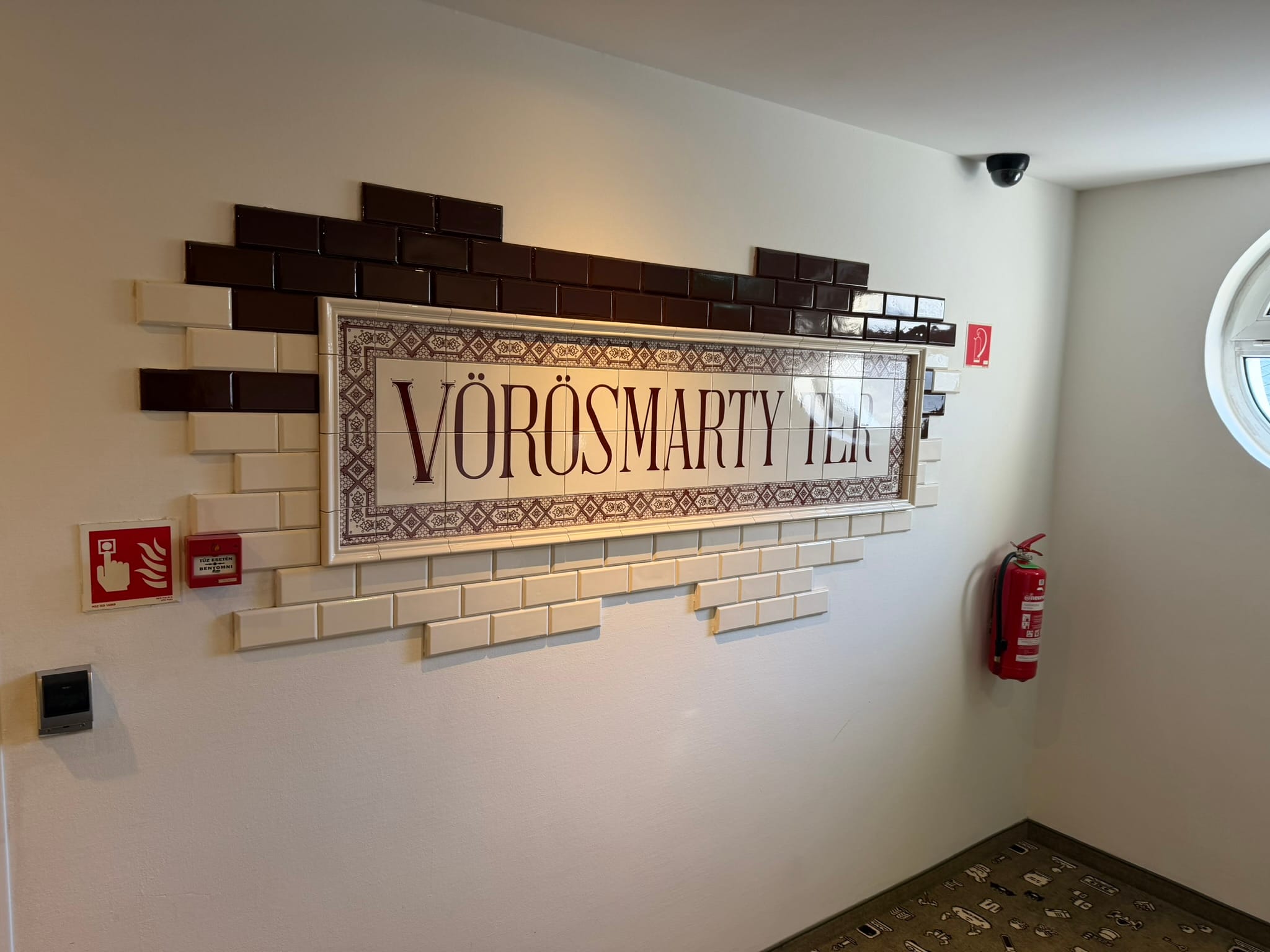
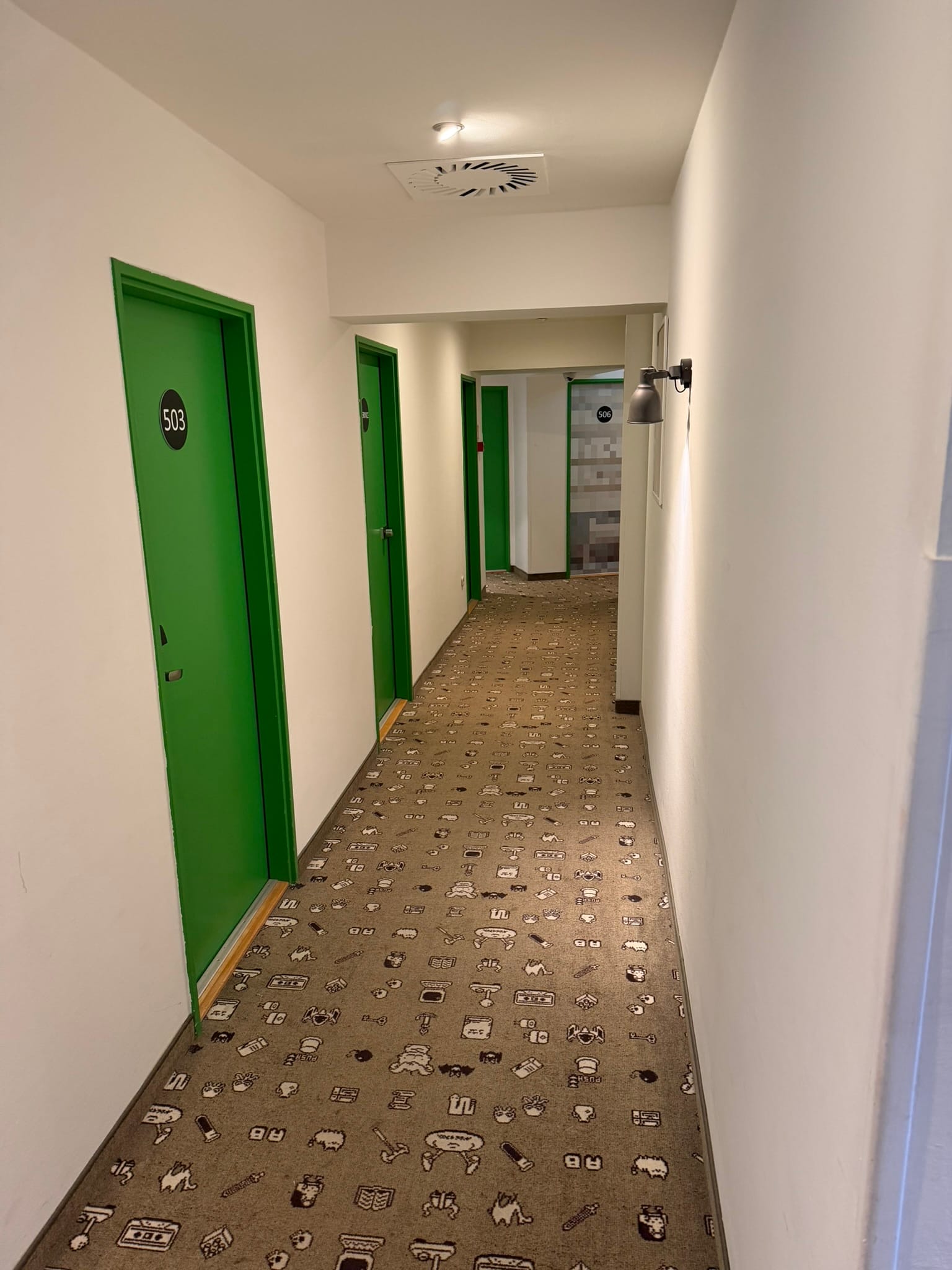
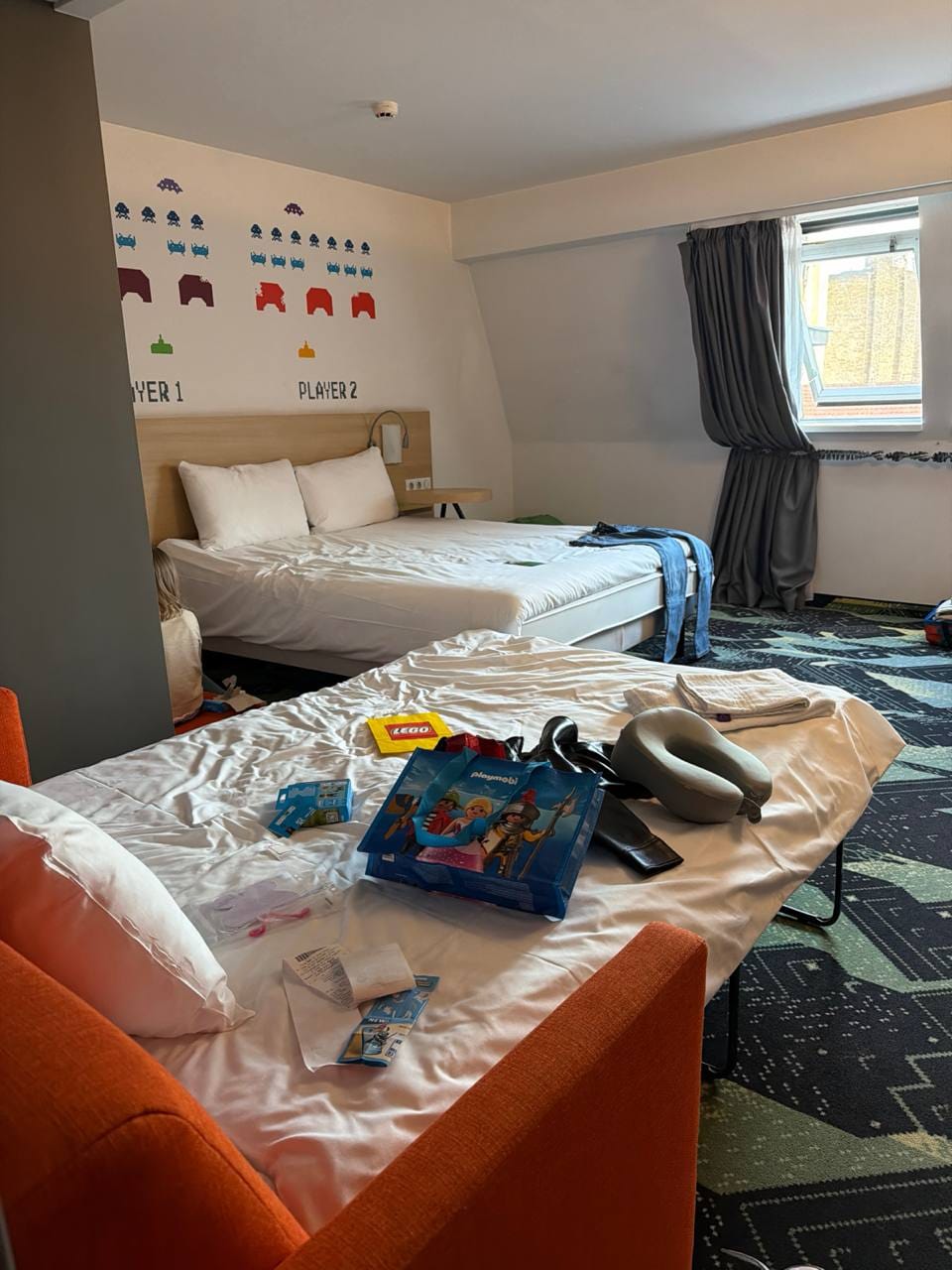
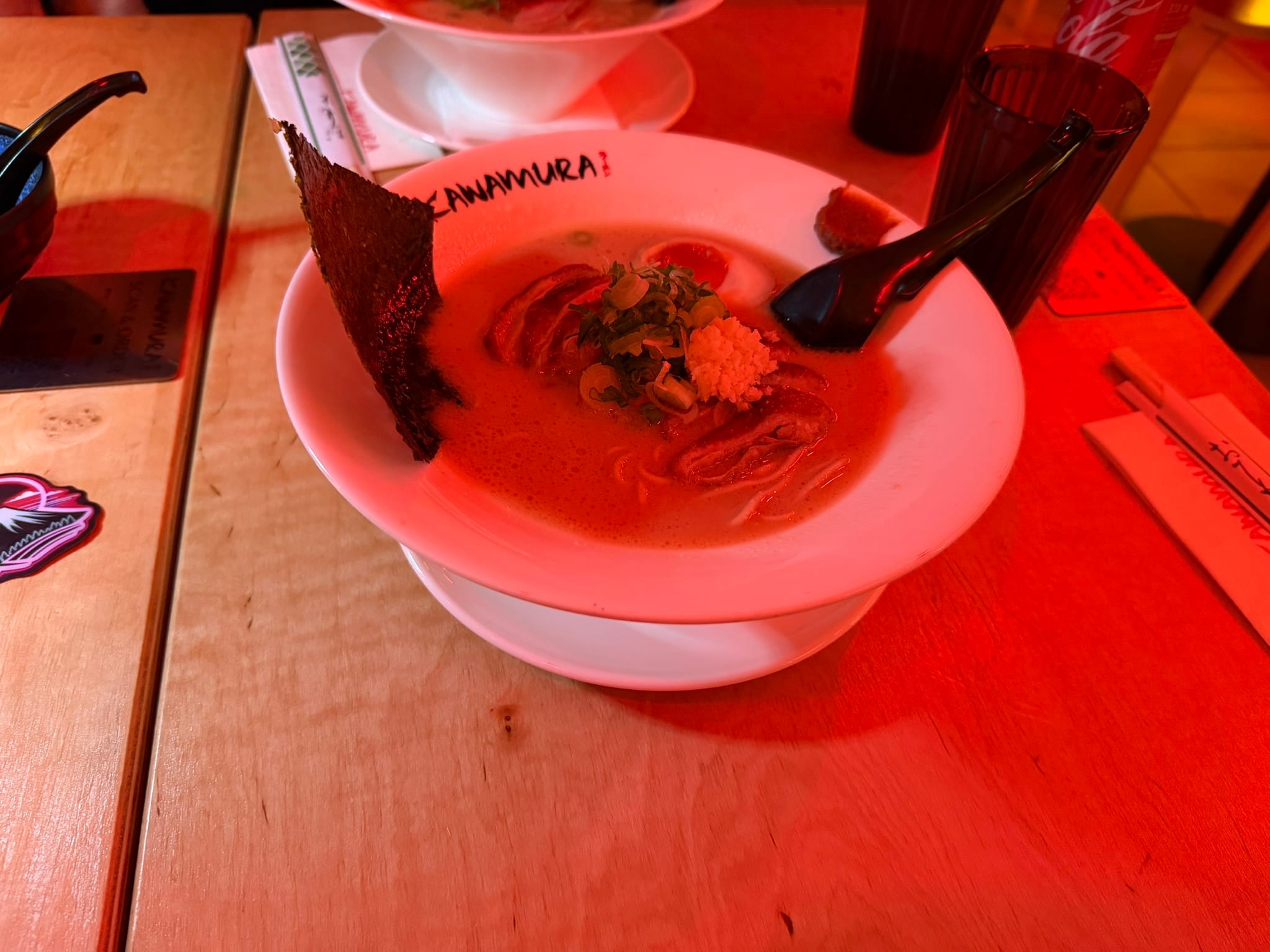
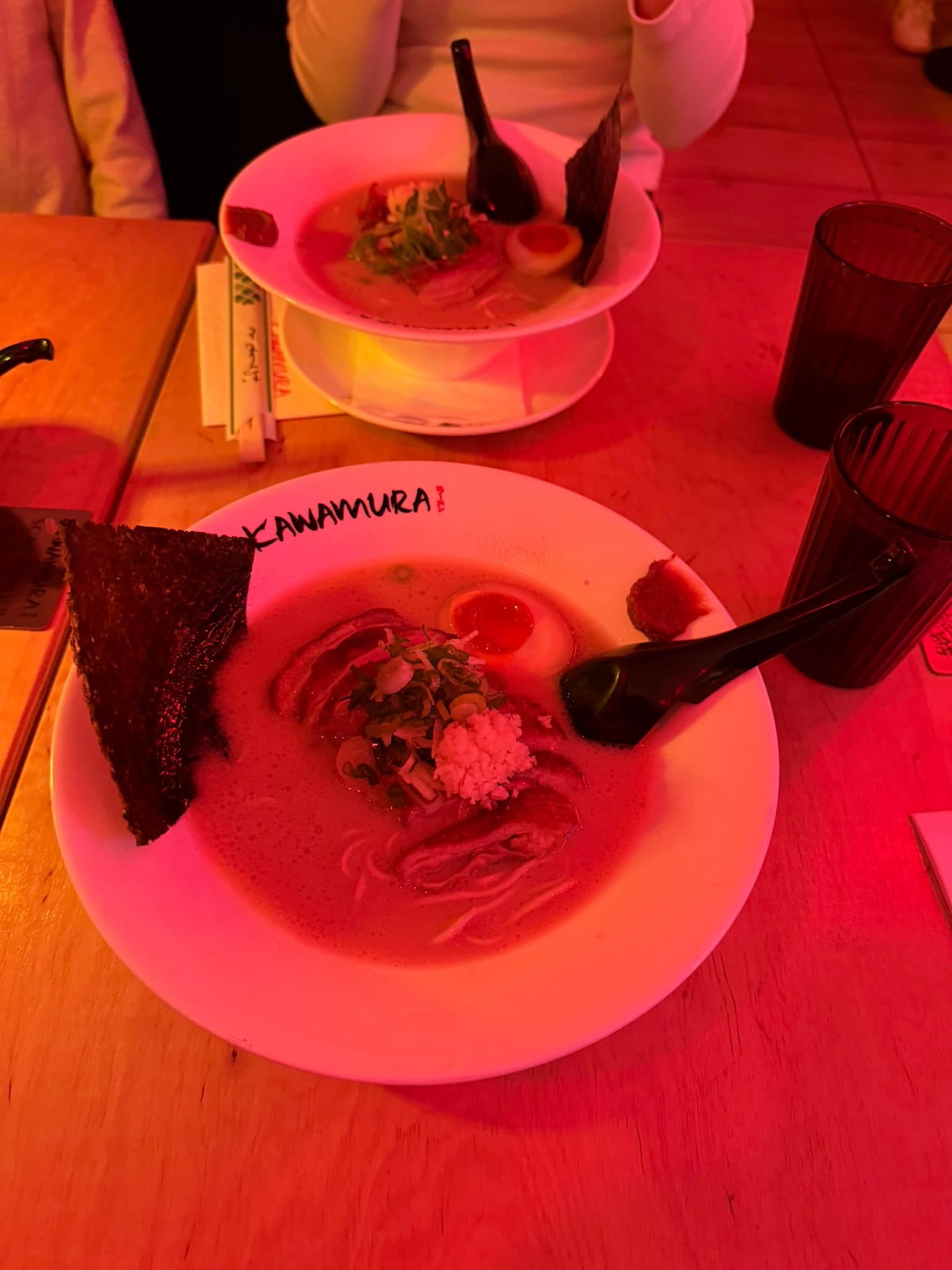
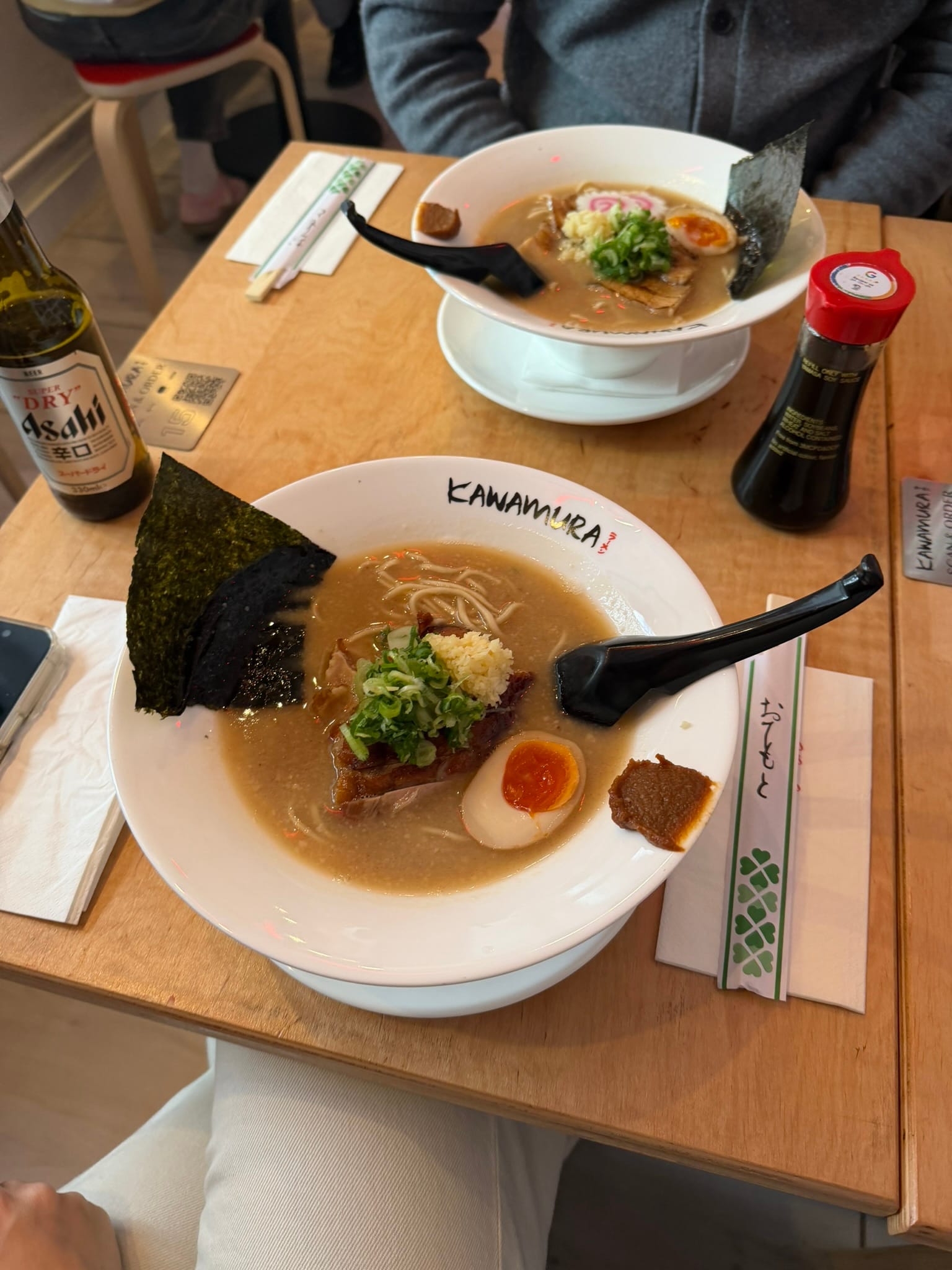
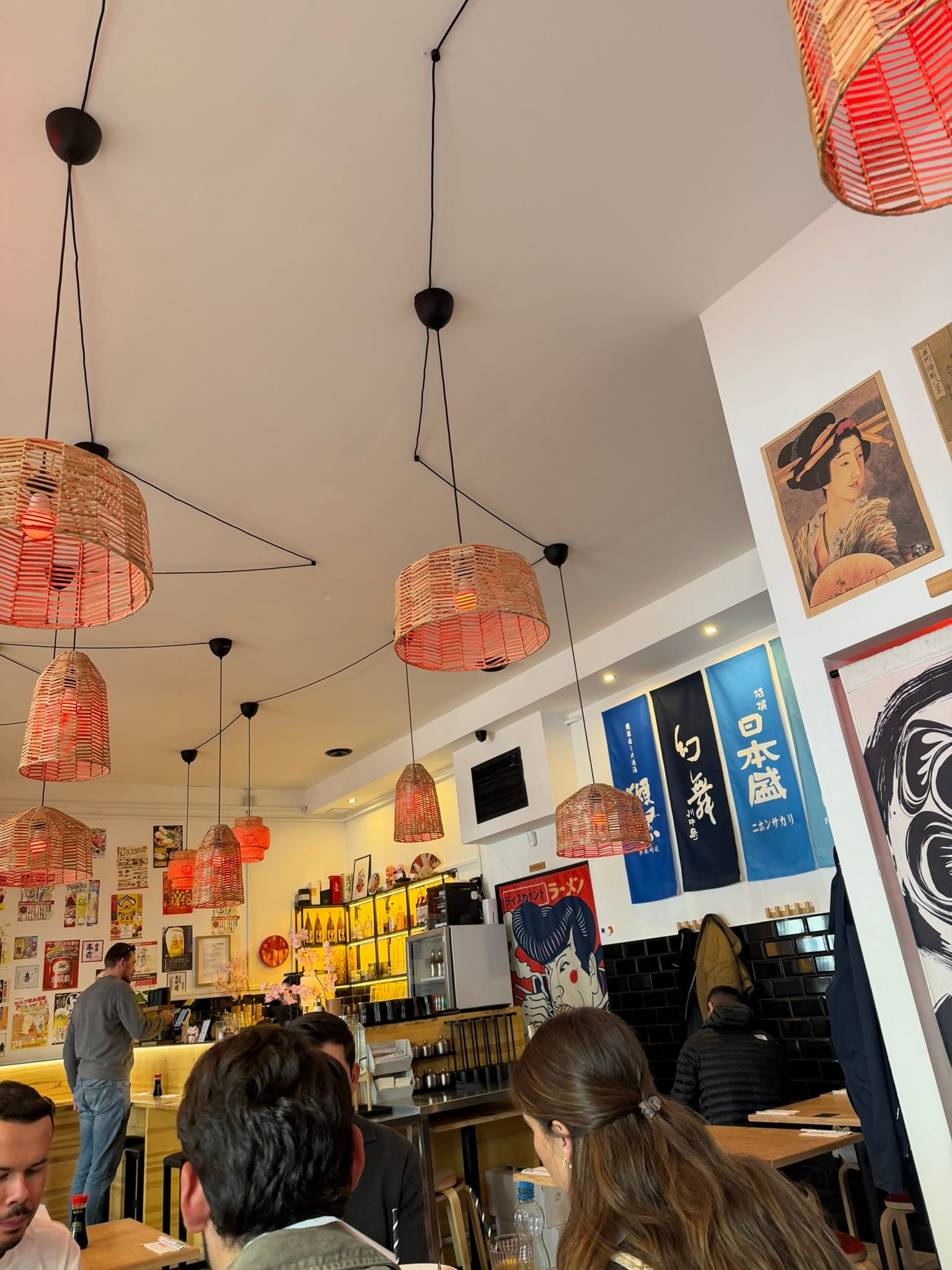
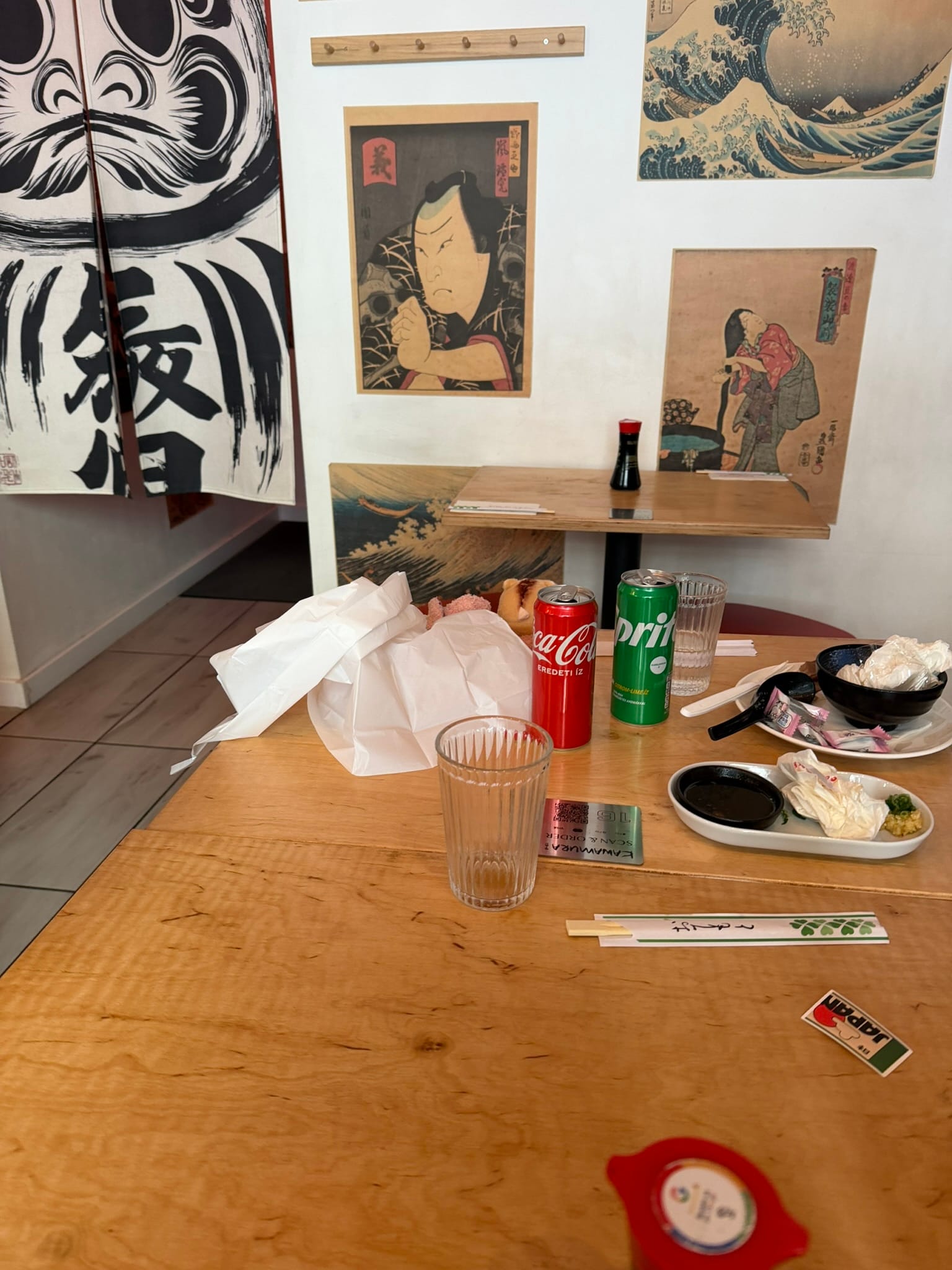
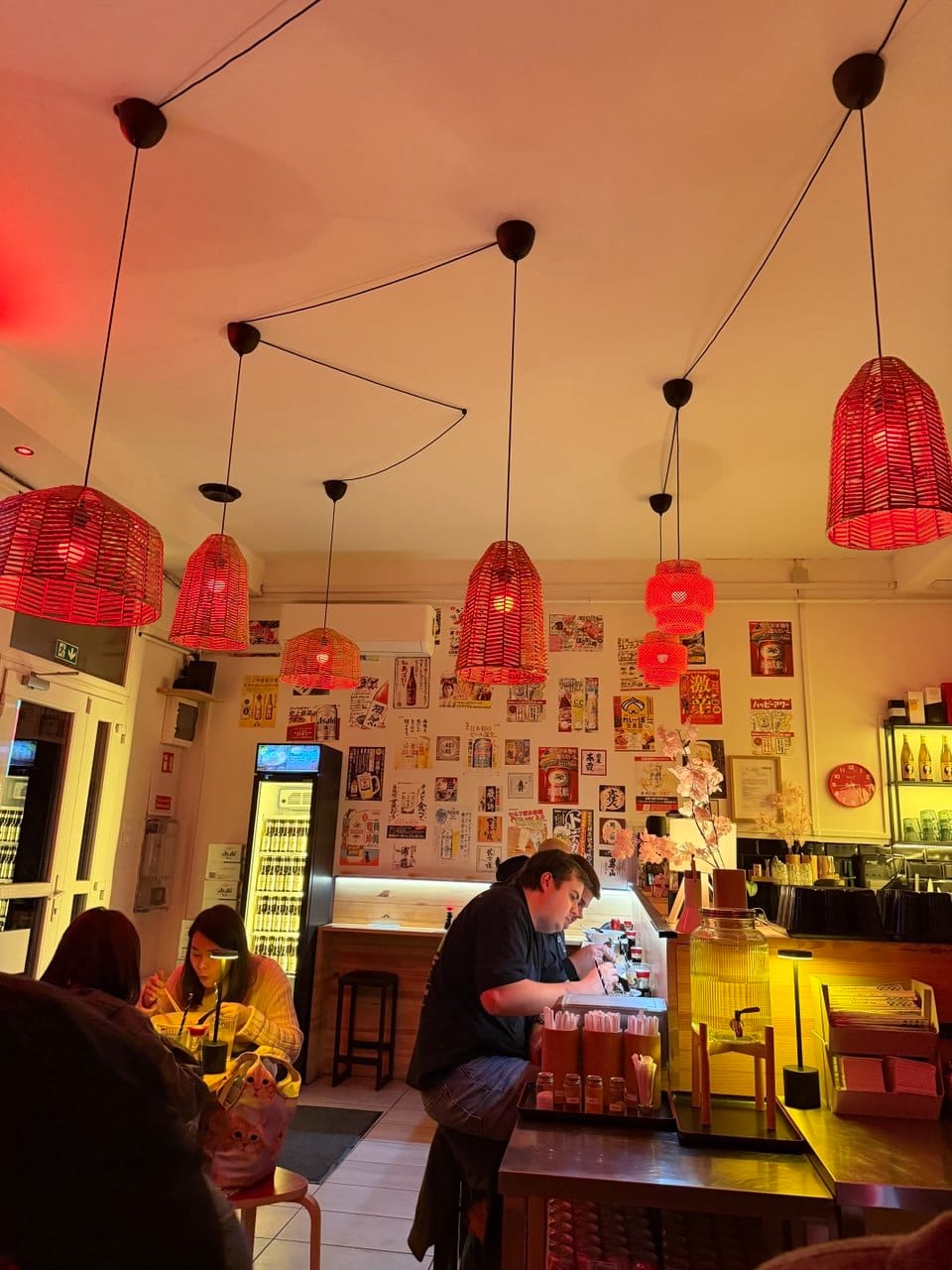
Dinner at Kawamura Ramen — 11,260 HUF (~$30 USD), ramen so good we put it on our return list.
Day 6 (April 29) — Tropicarium + CyberJump (the day every AI missed)

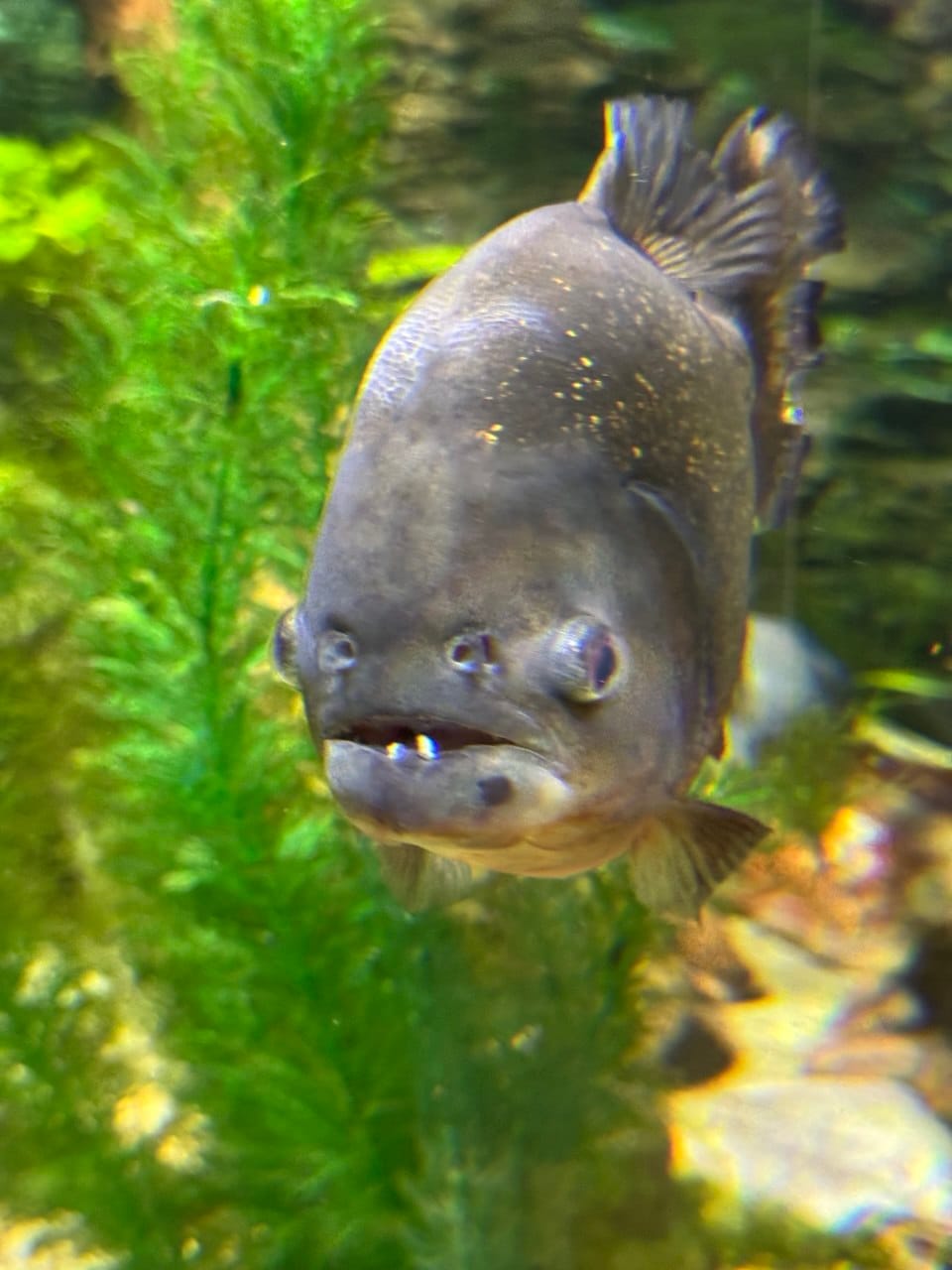
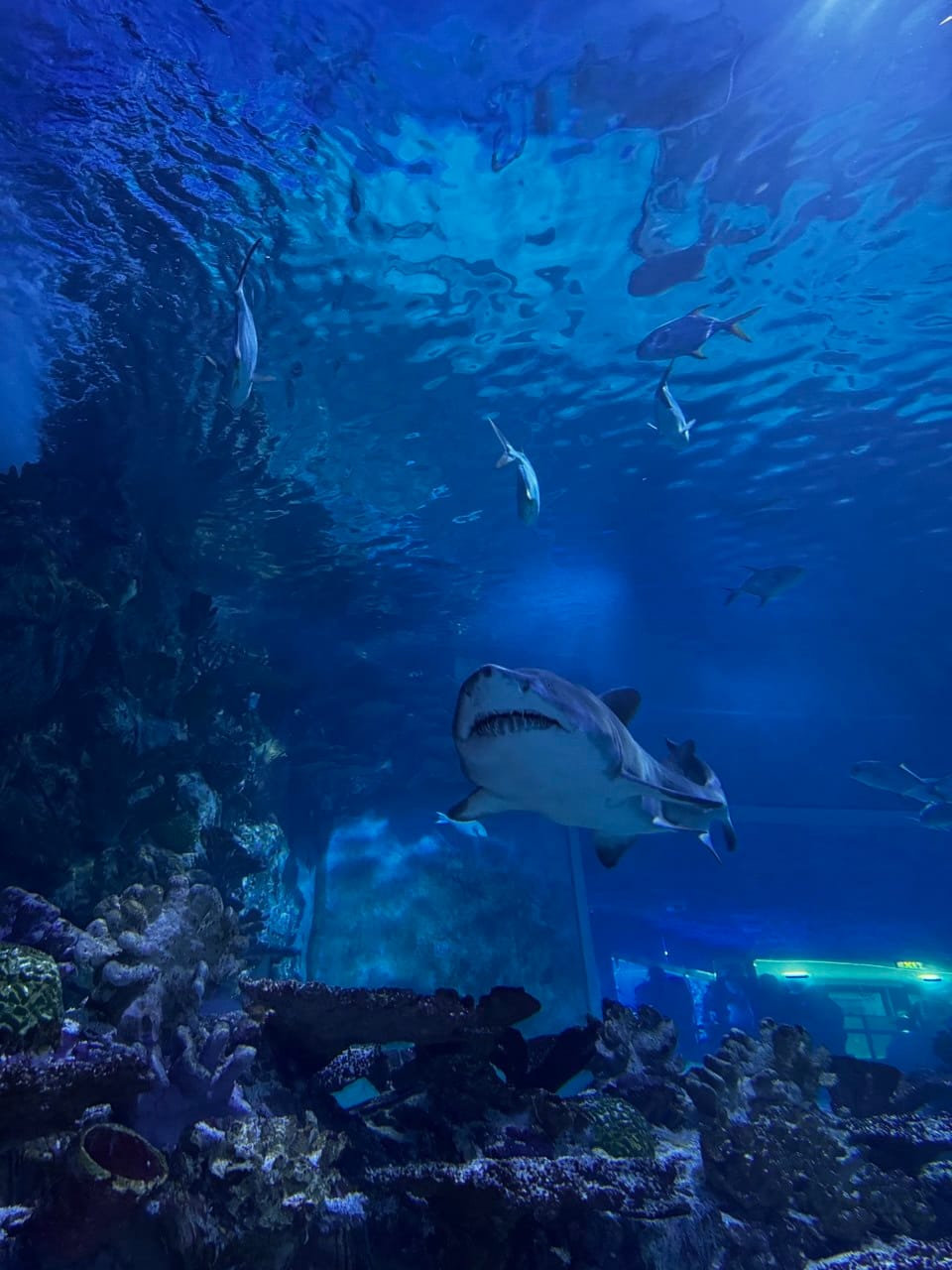
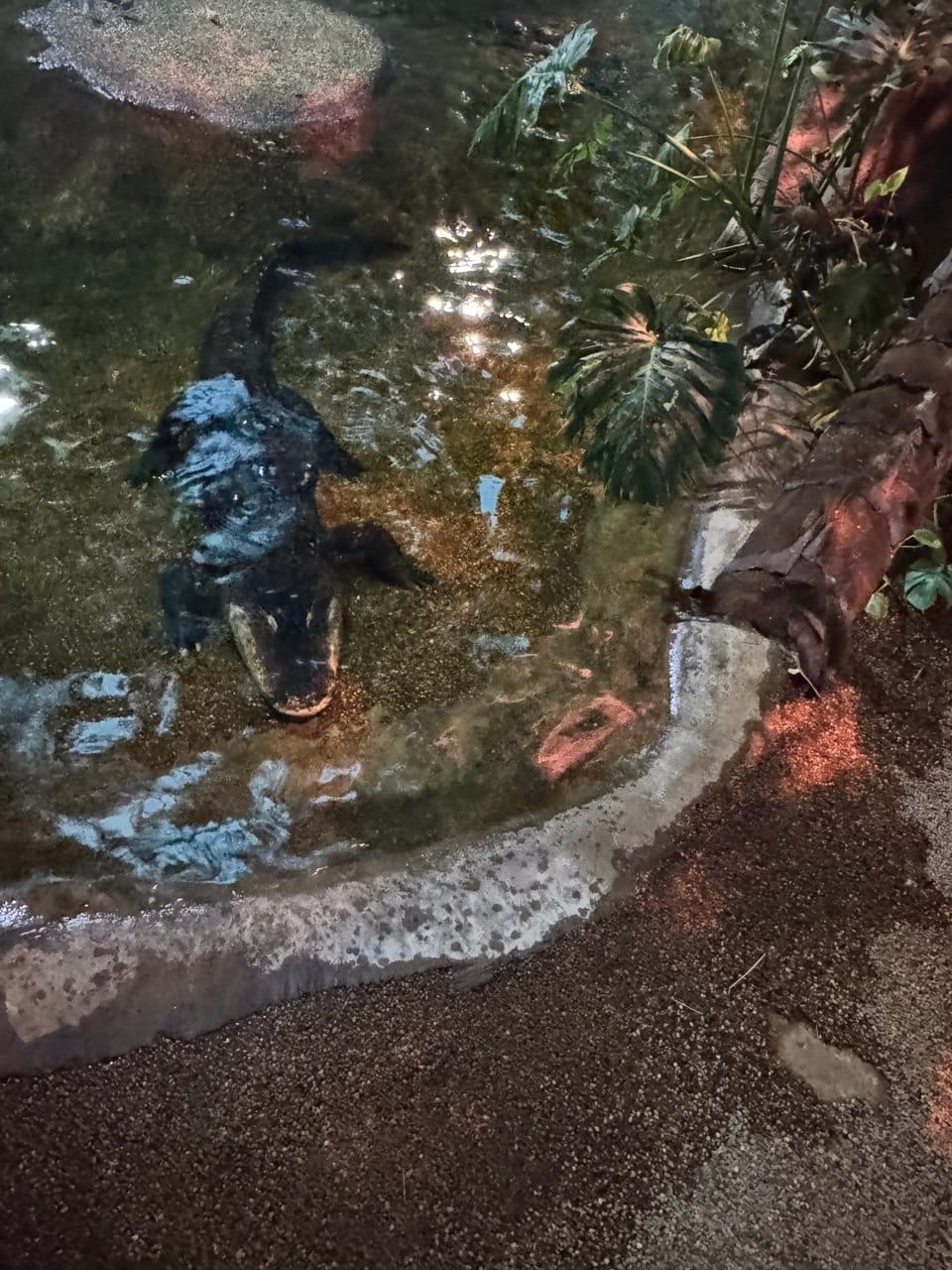
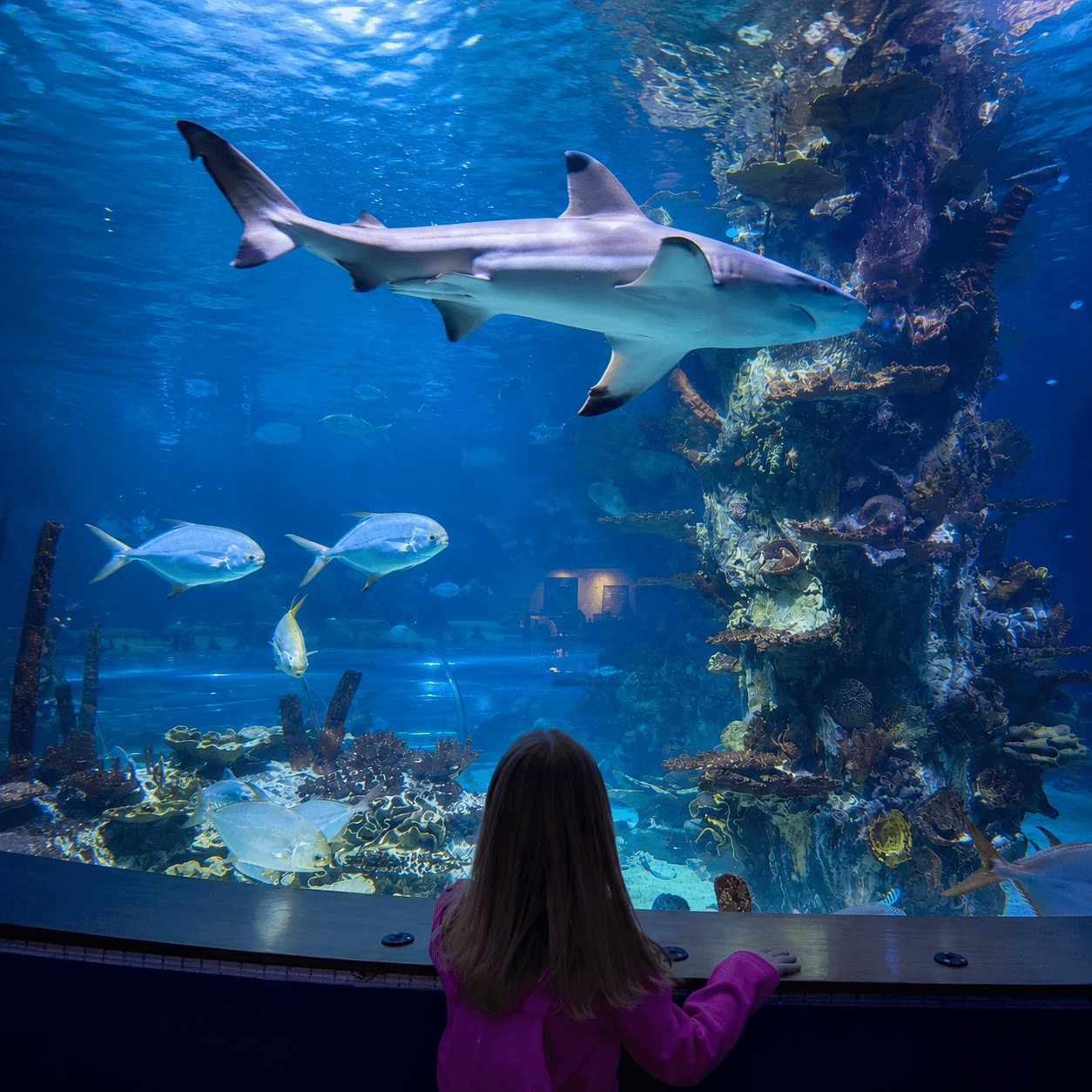
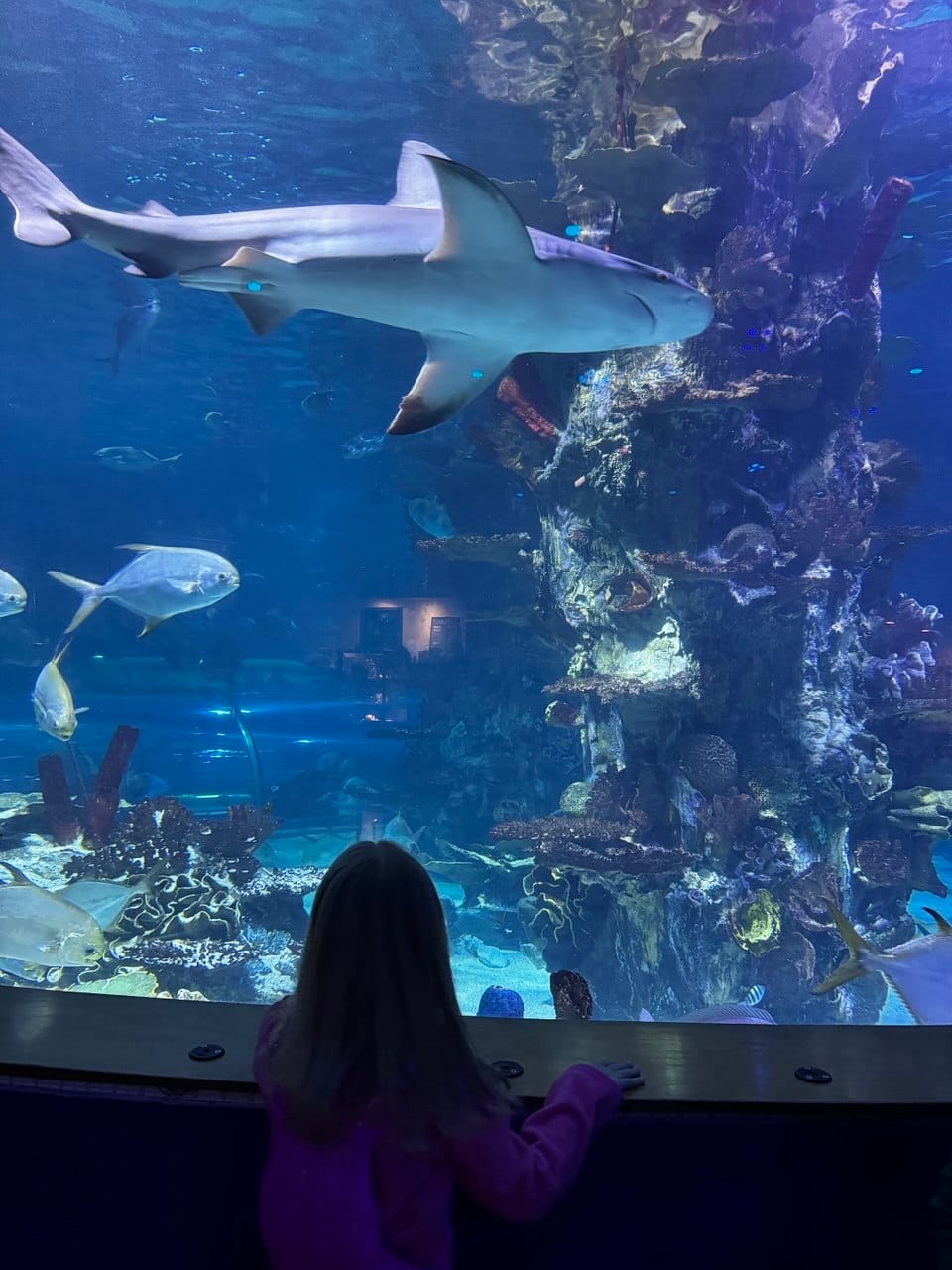
The most important day for the test. After breakfast we drove to Tropicarium-Oceanarium in the Campona shopping center — Europe’s largest piranha pool, a 36-foot shark tunnel, alligators, tropical birds flying free in an indoor jungle. 10,500 HUF (~$28 USD) for the family. Our daughter would not move from the glass, especially in the tunnel, where a shark passed directly over her head.
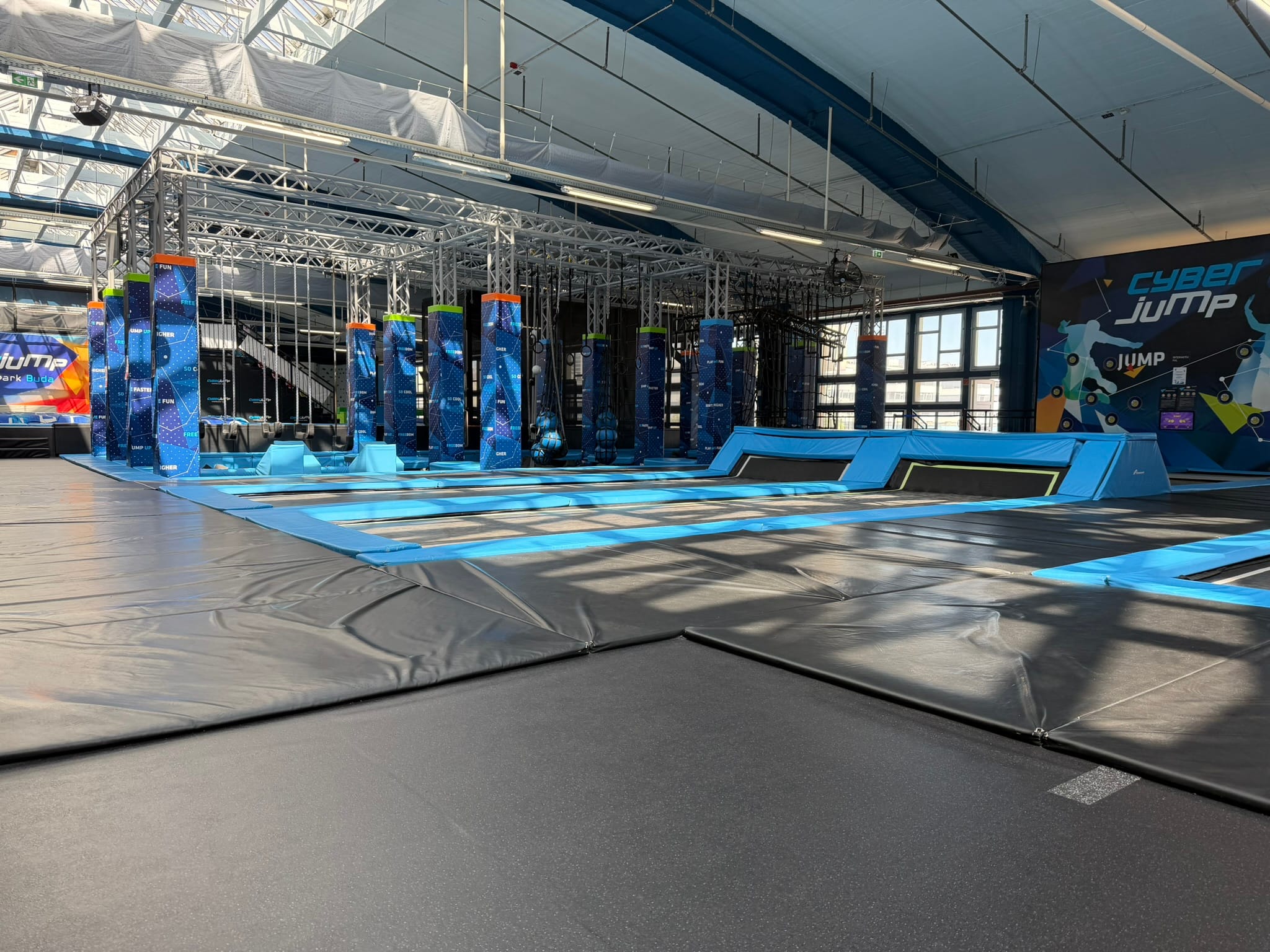
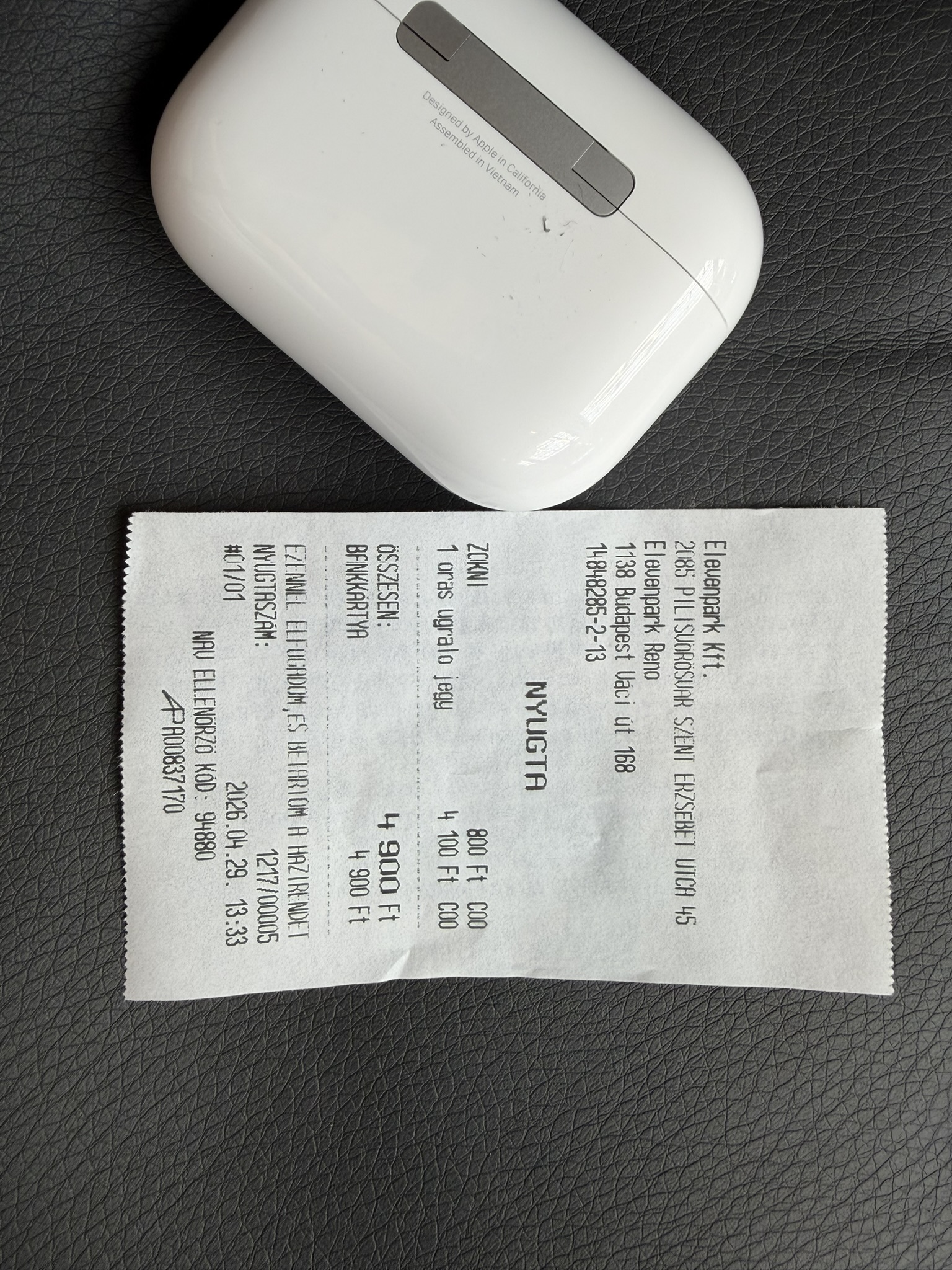
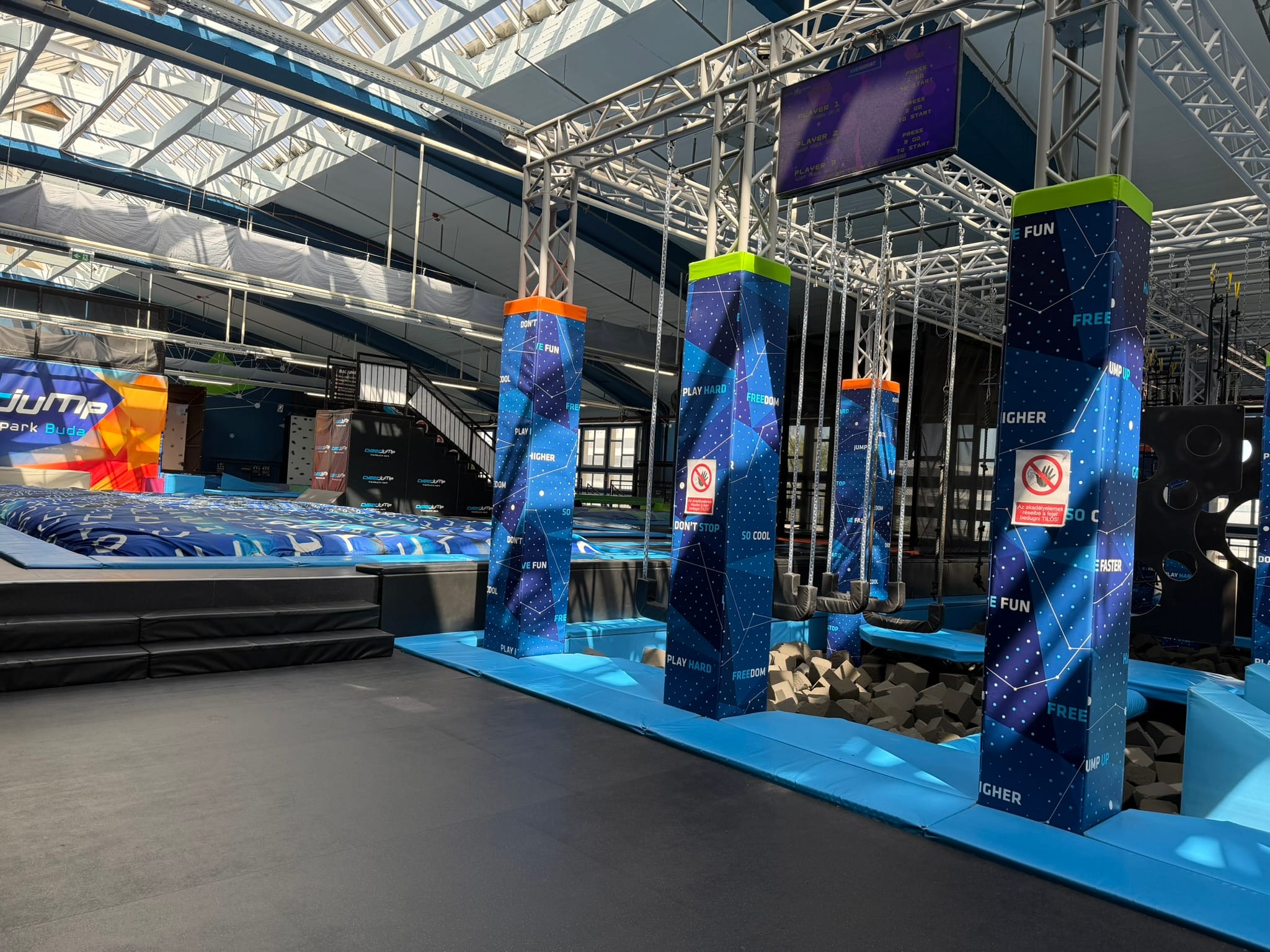
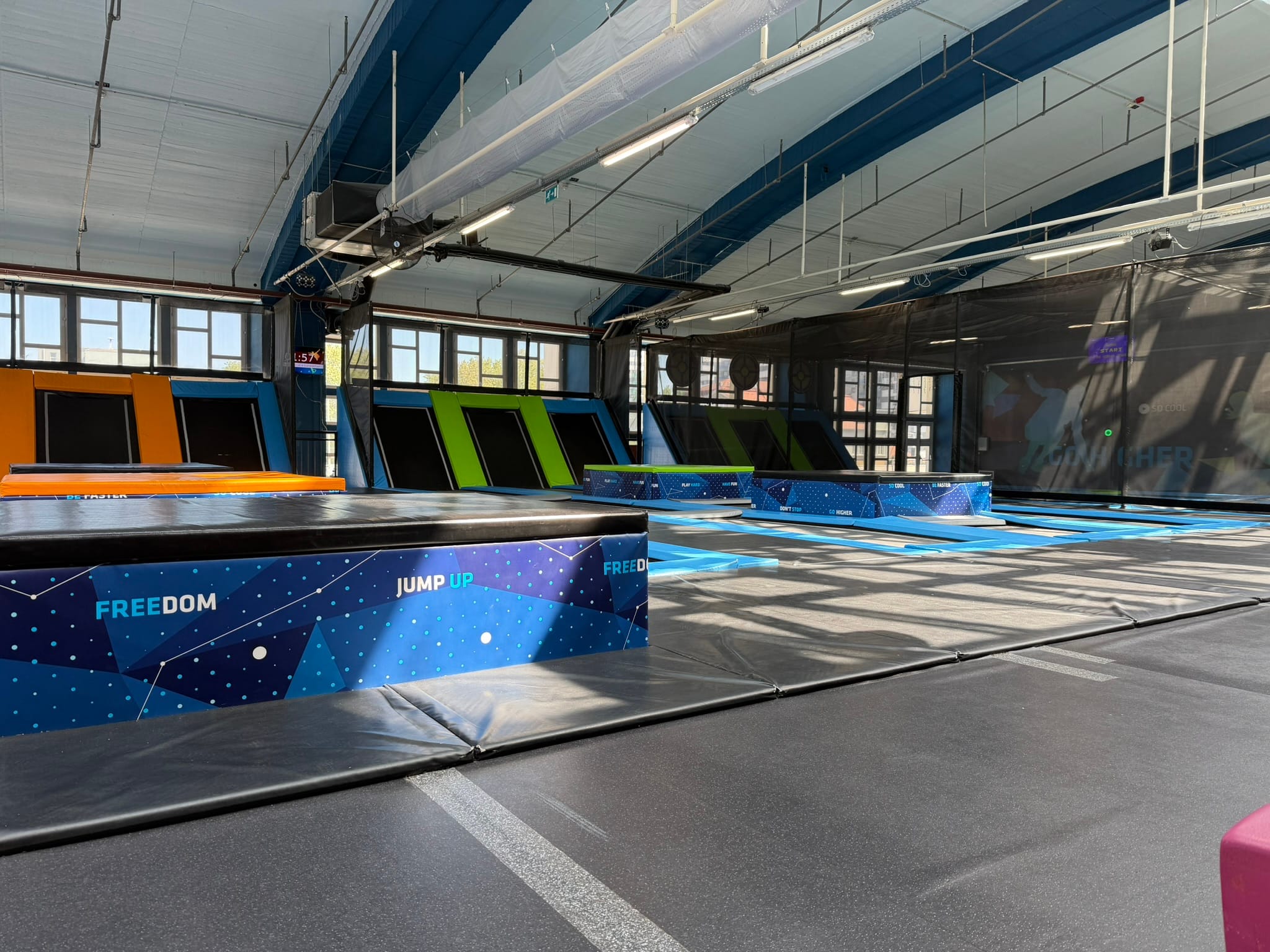
Then CyberJump Park Buda — trampoline park, 3 hours of letting her burn energy.
Lunch at La Turka — Turkish restaurant with proper Turkish tea in tulip glasses, kebab plates, mezze, 13,500 HUF (~$36 USD).
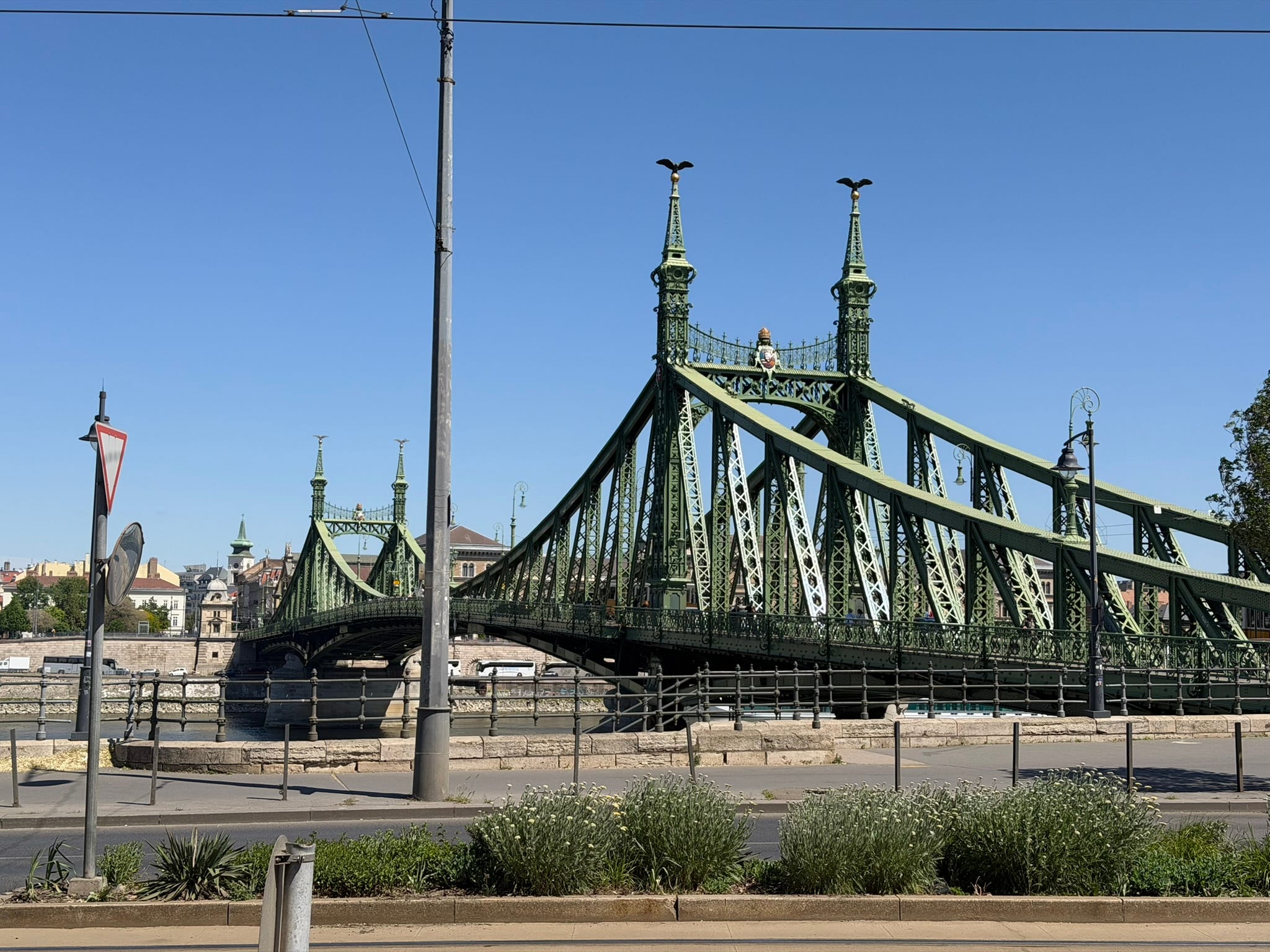
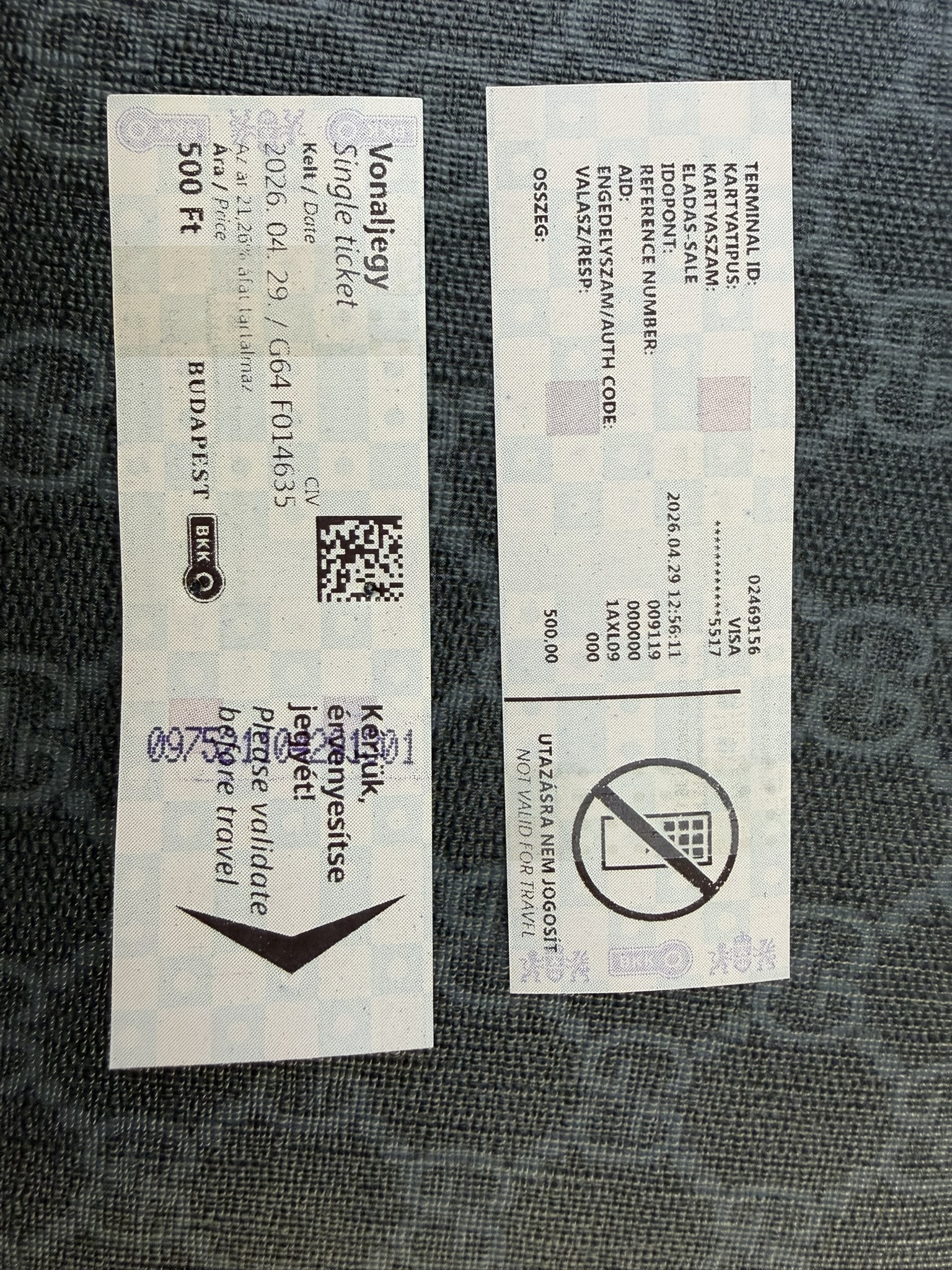
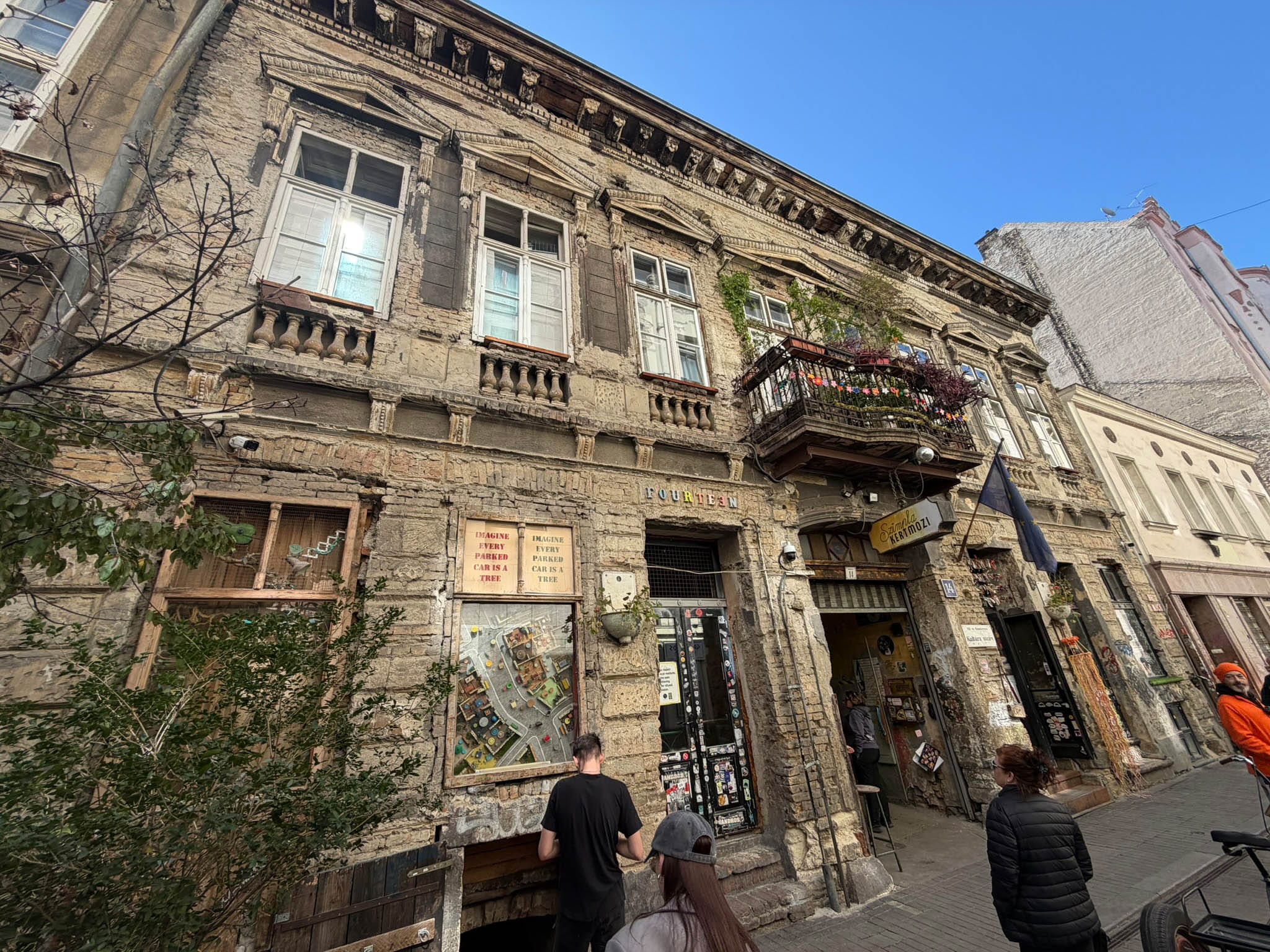
No AI suggested Tropicarium. All three AI agents told us to “skip the aquarium.” We found Tropicarium ourselves through prior knowledge.
Day 7 (April 30) — Slow Budapest
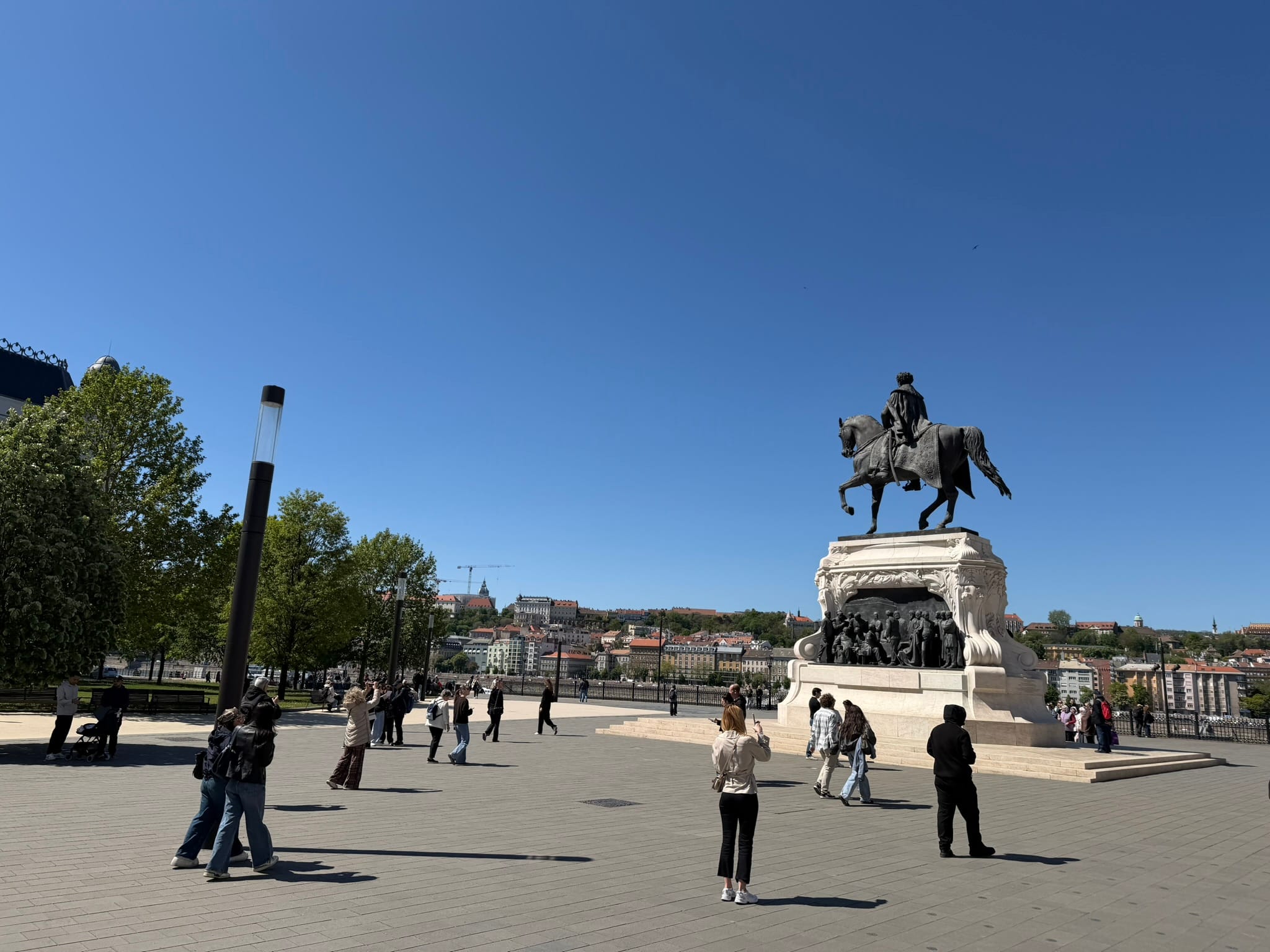
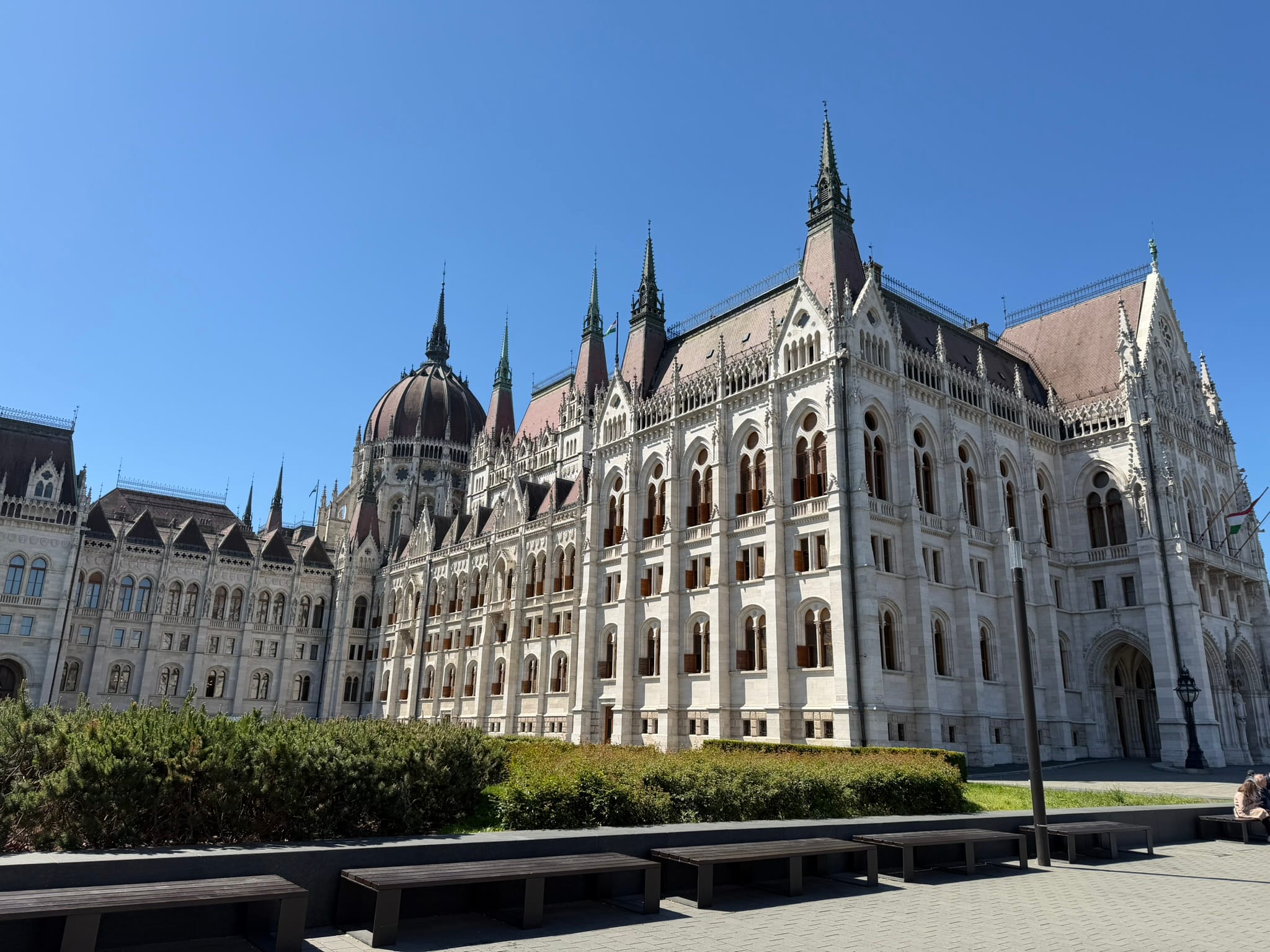
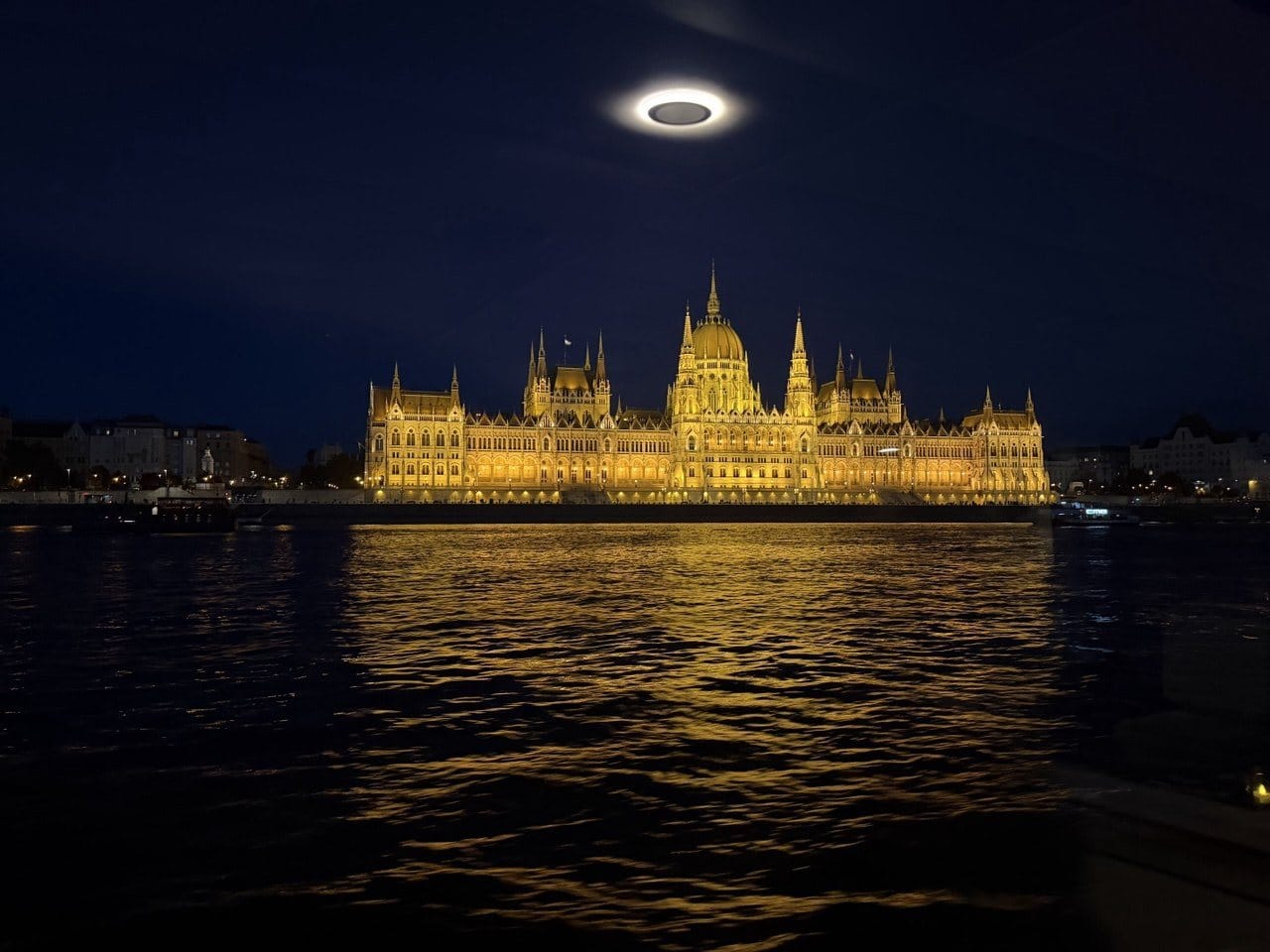
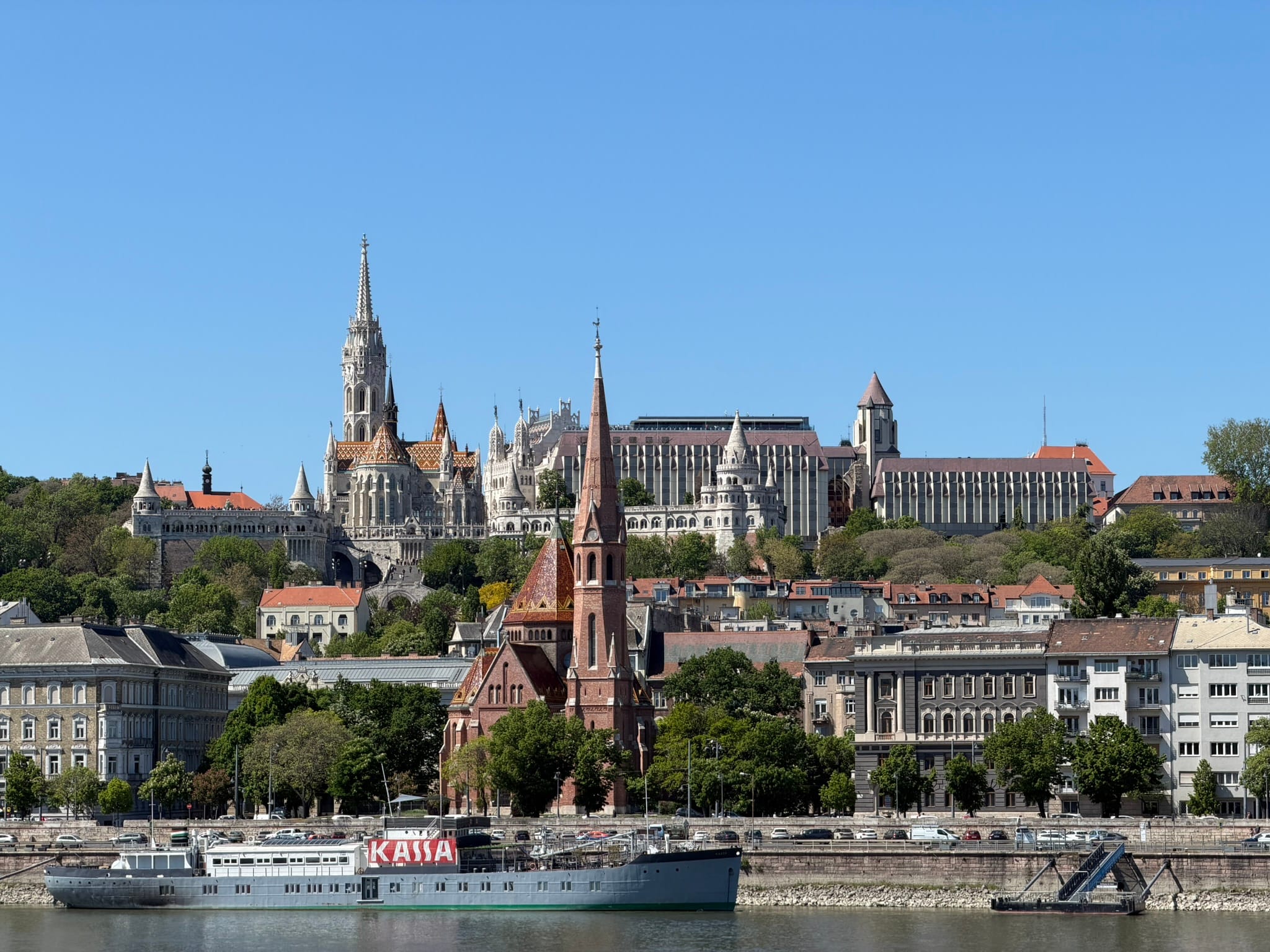
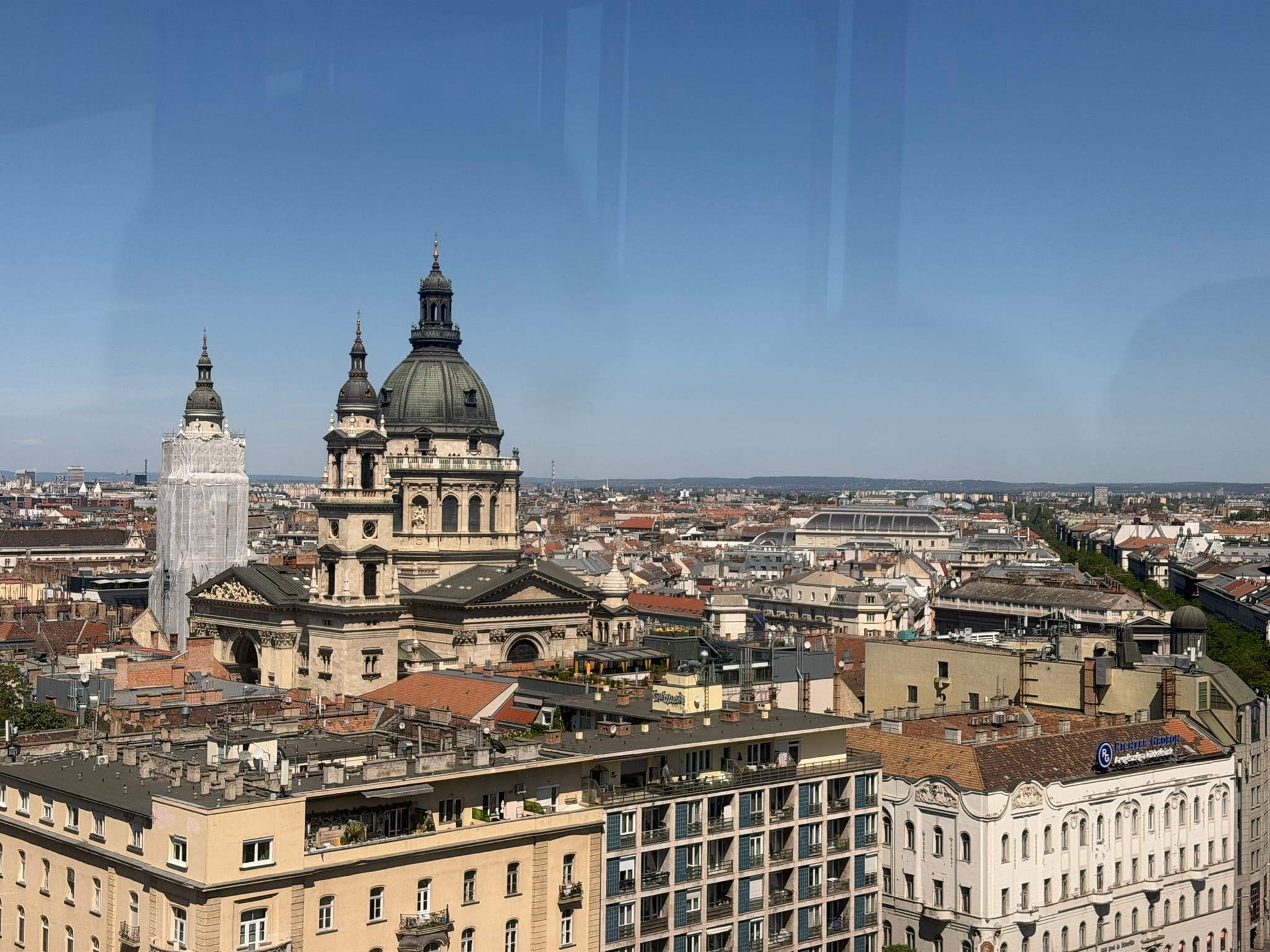
Parliament from the front, Danube promenade, St. Stephen’s Basilica, a duck and ducklings on the water.
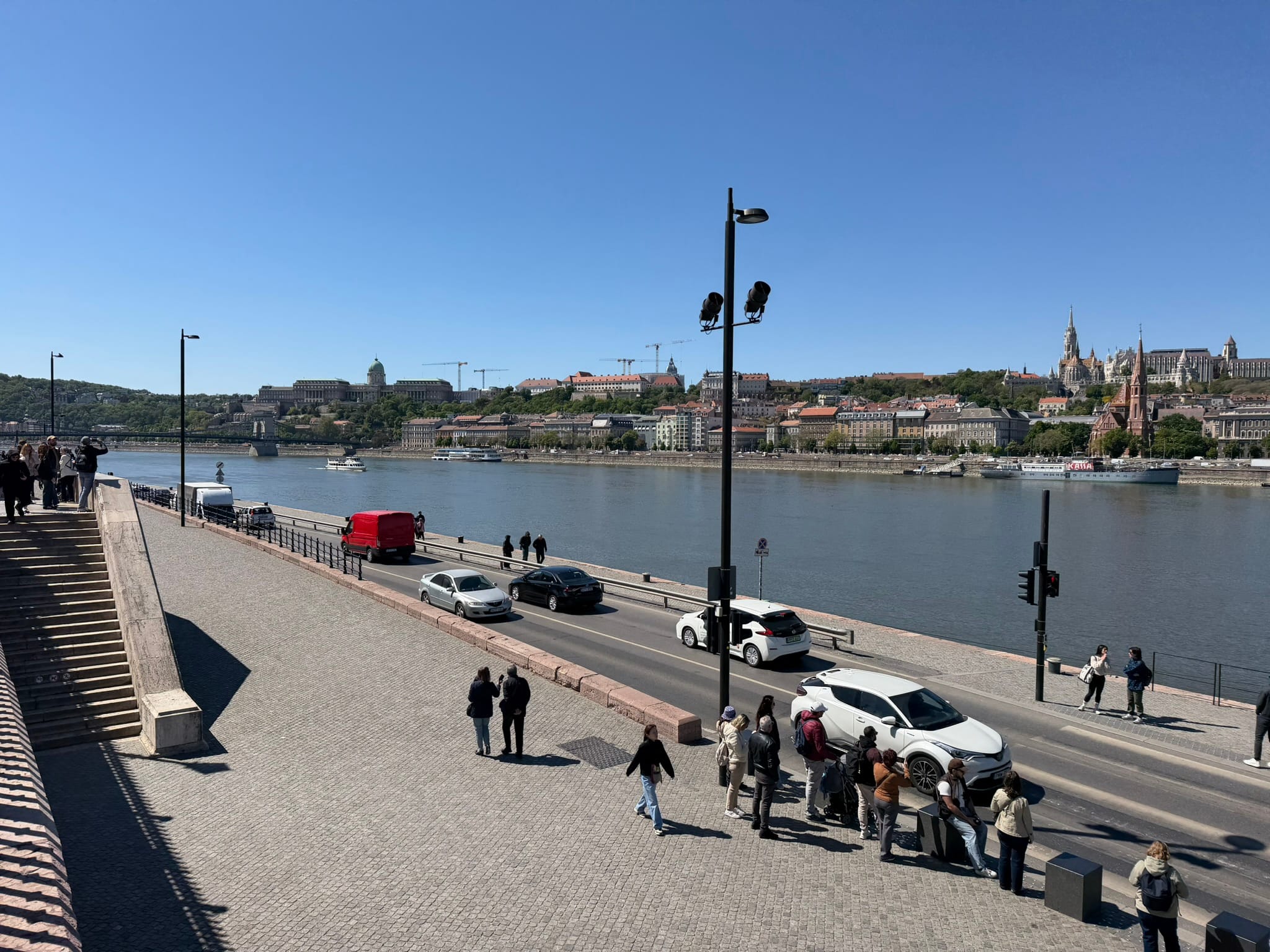

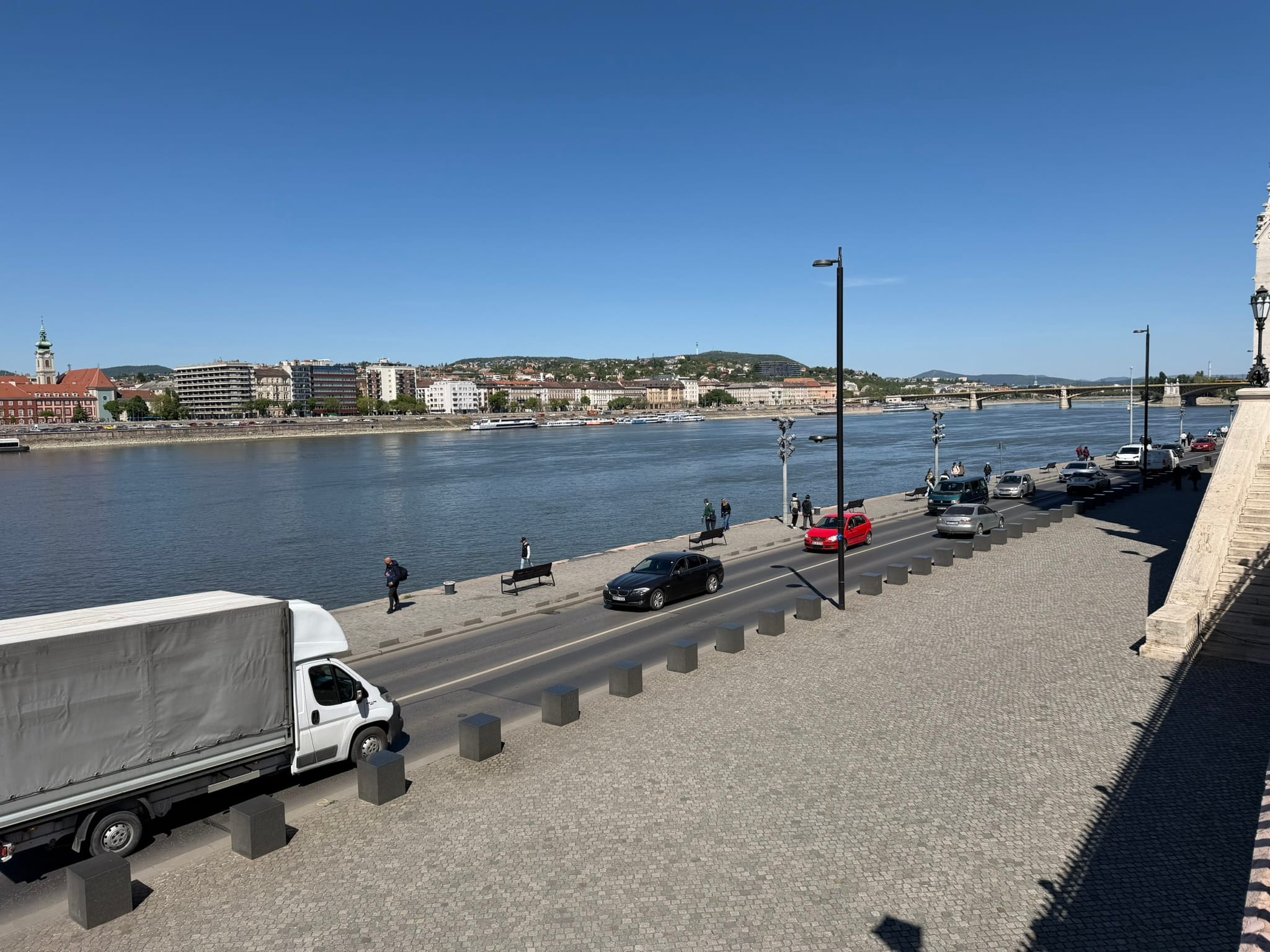
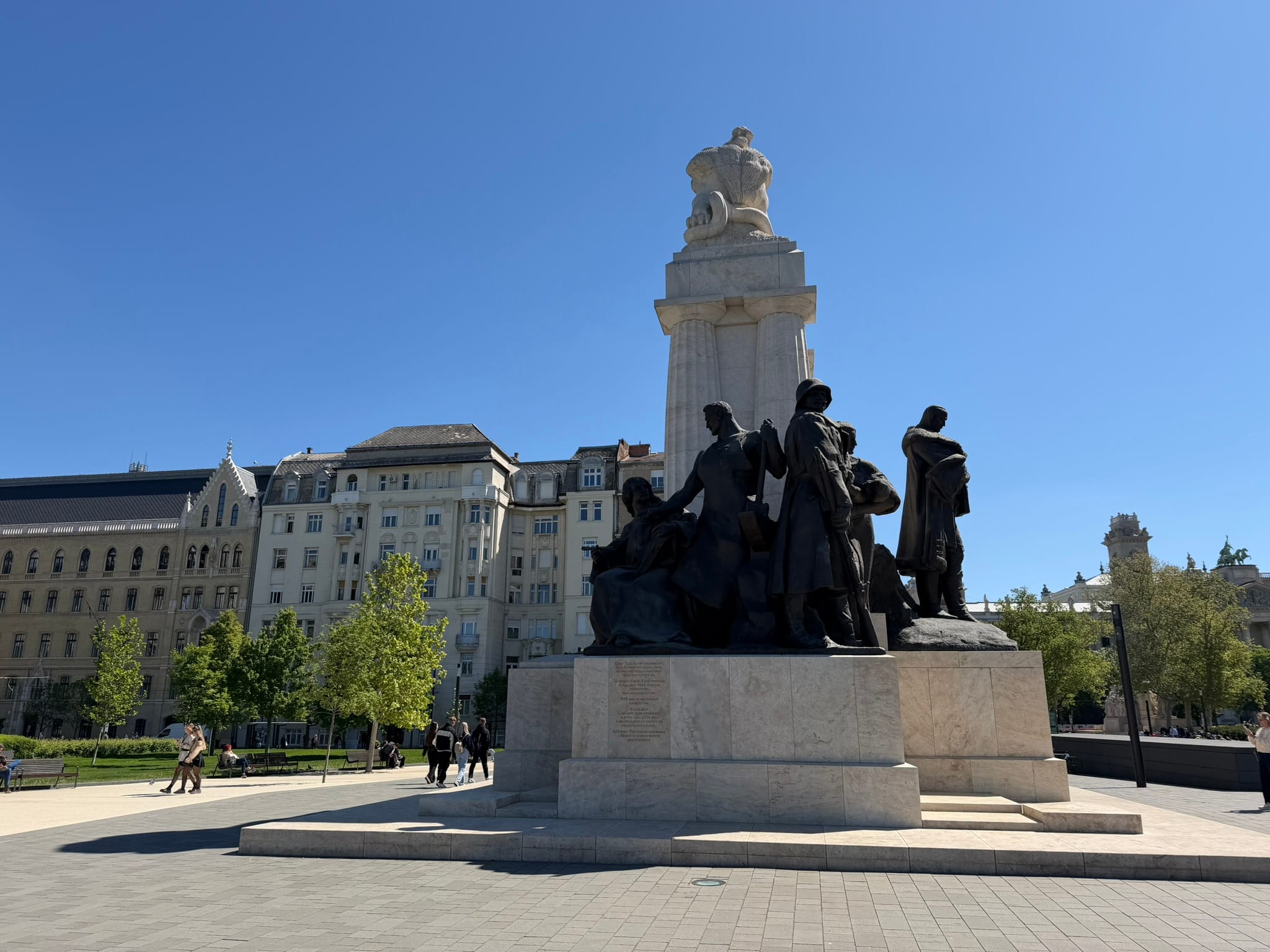
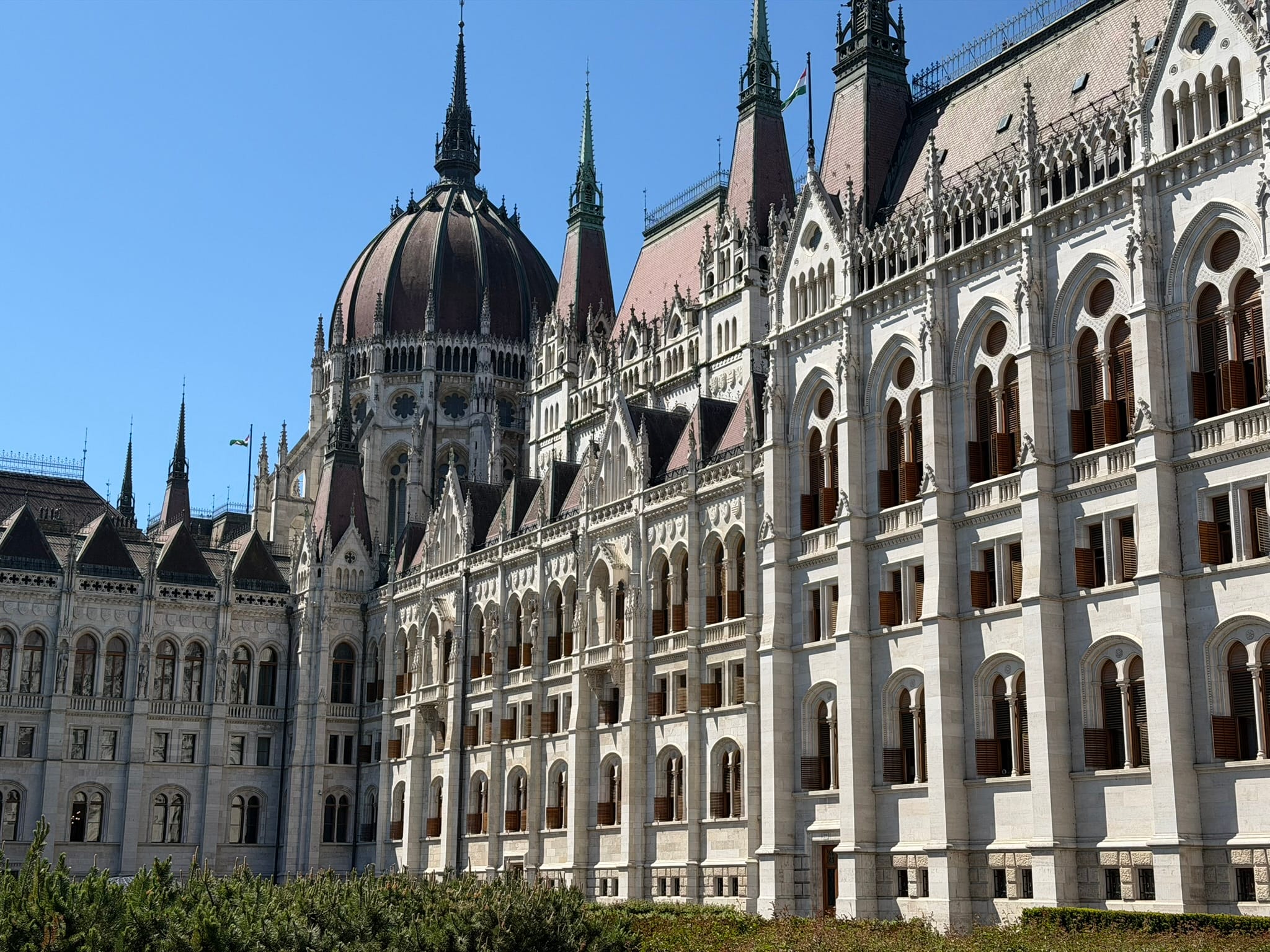
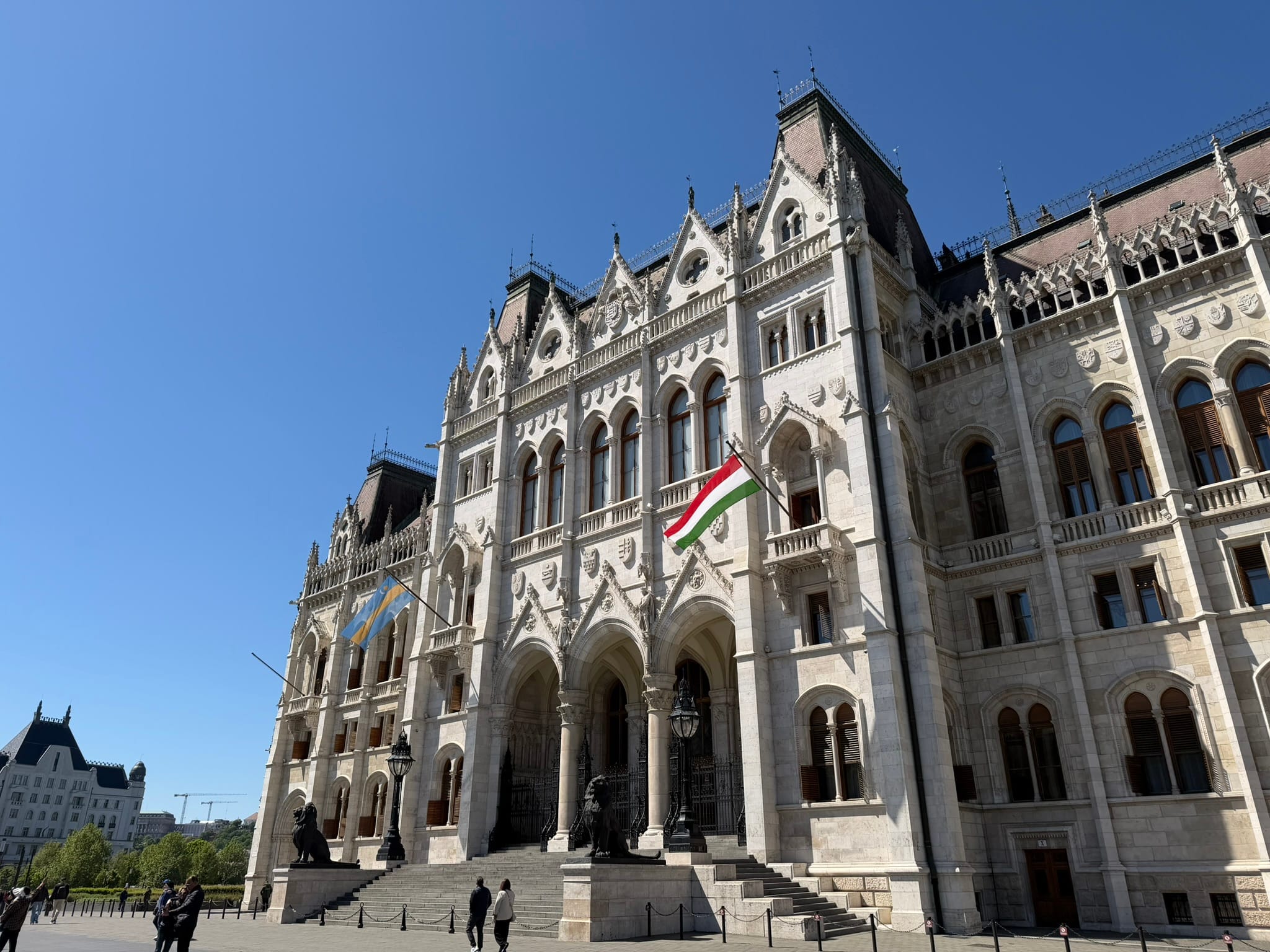
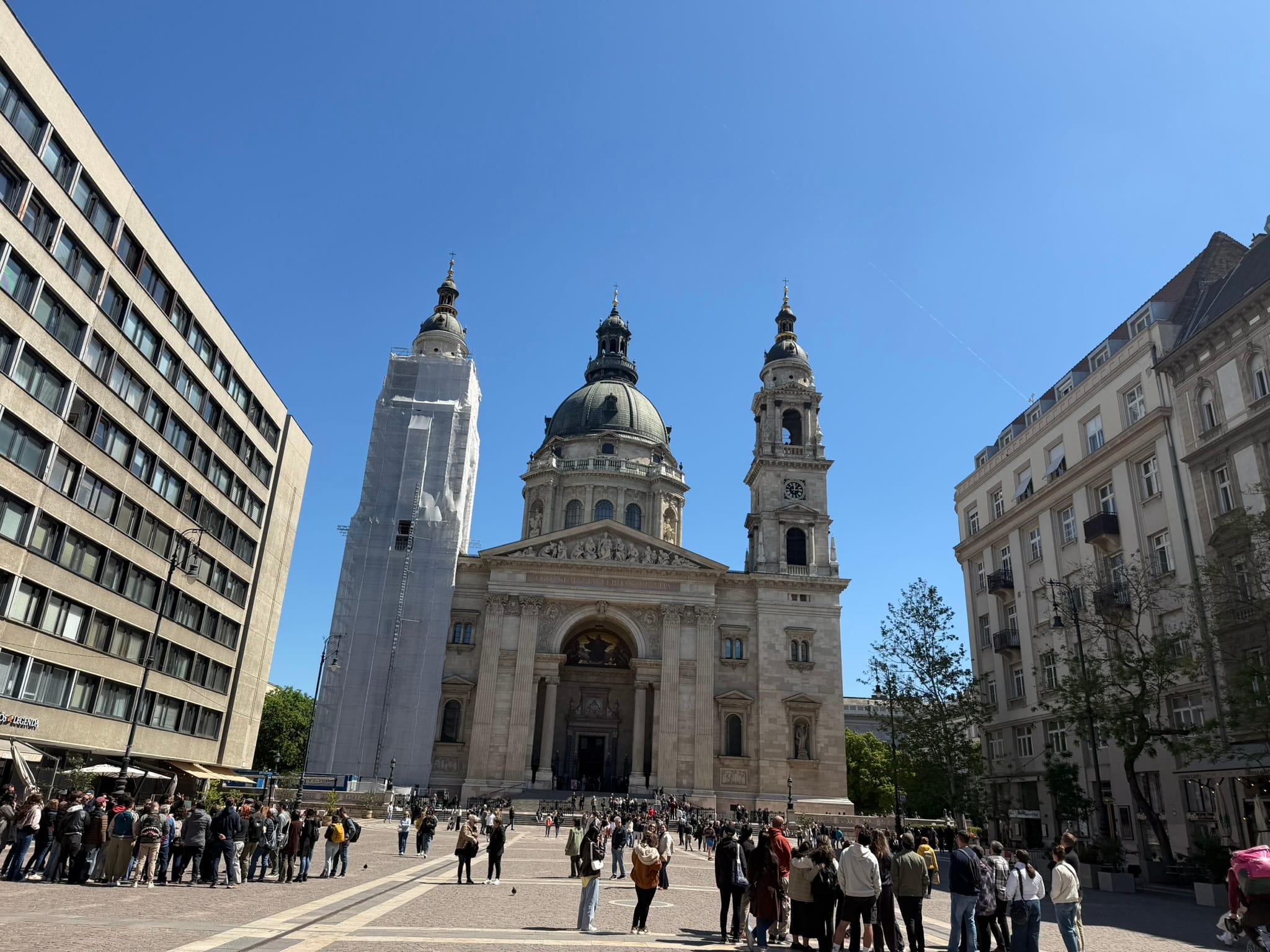
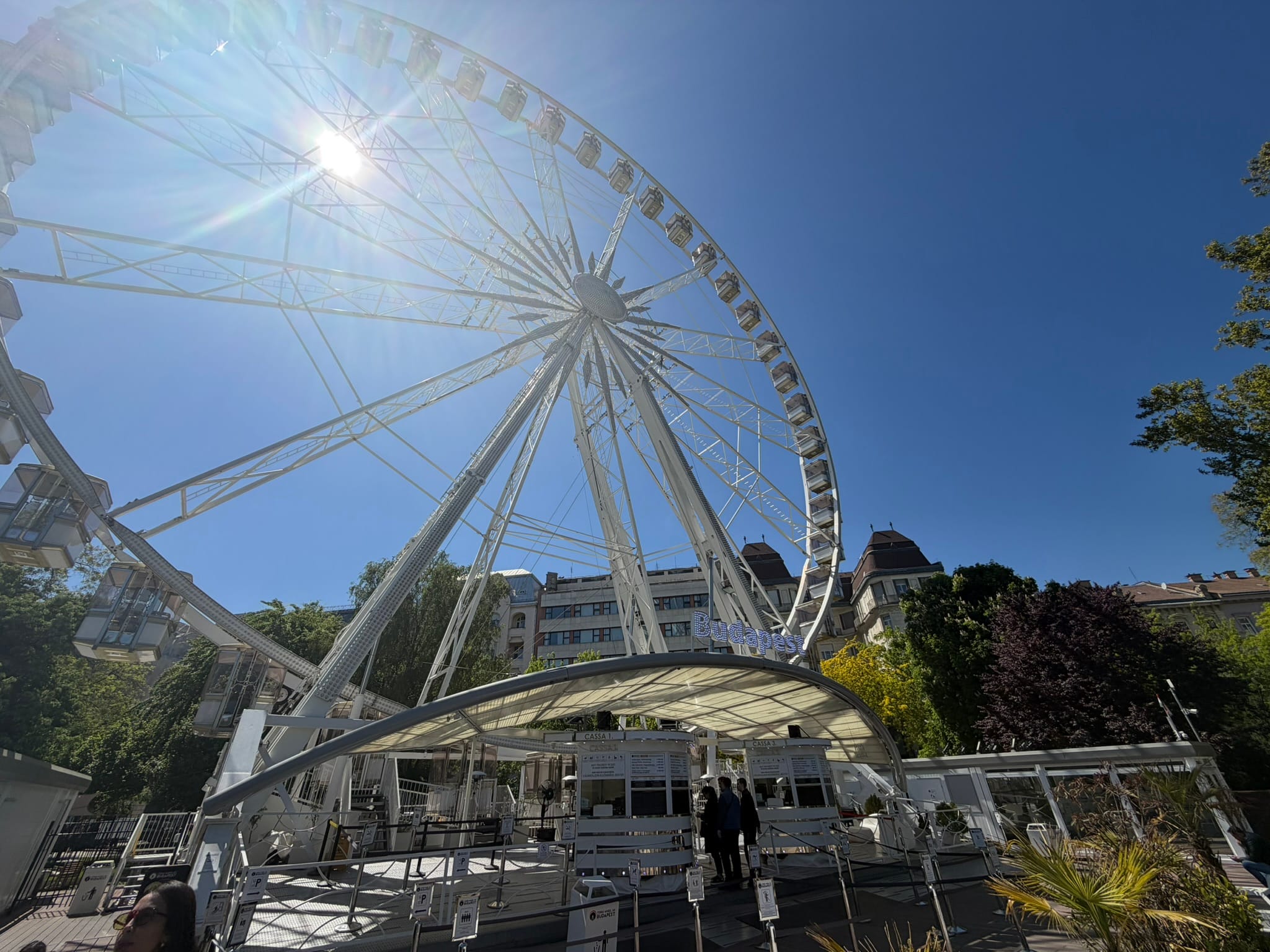
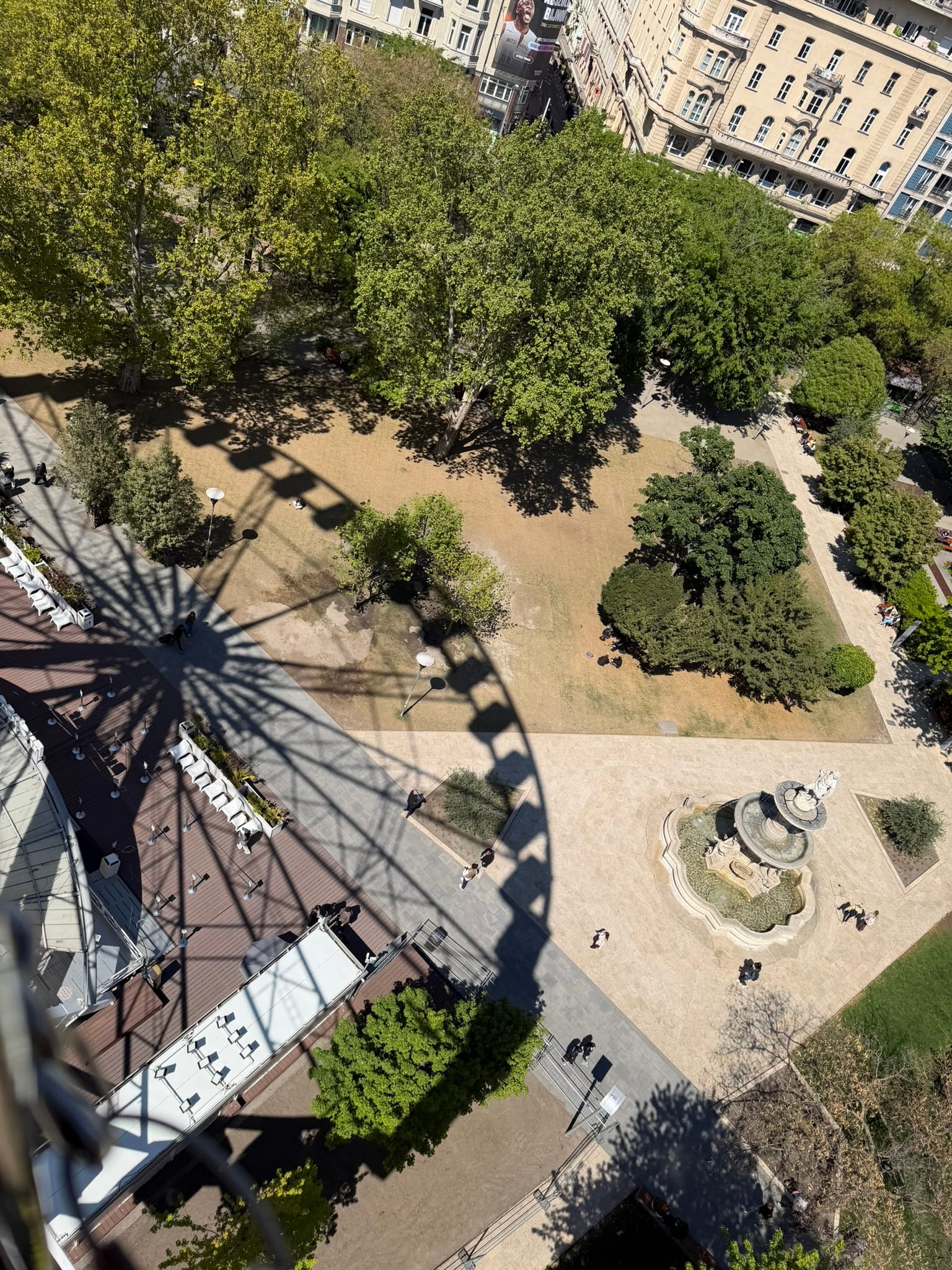
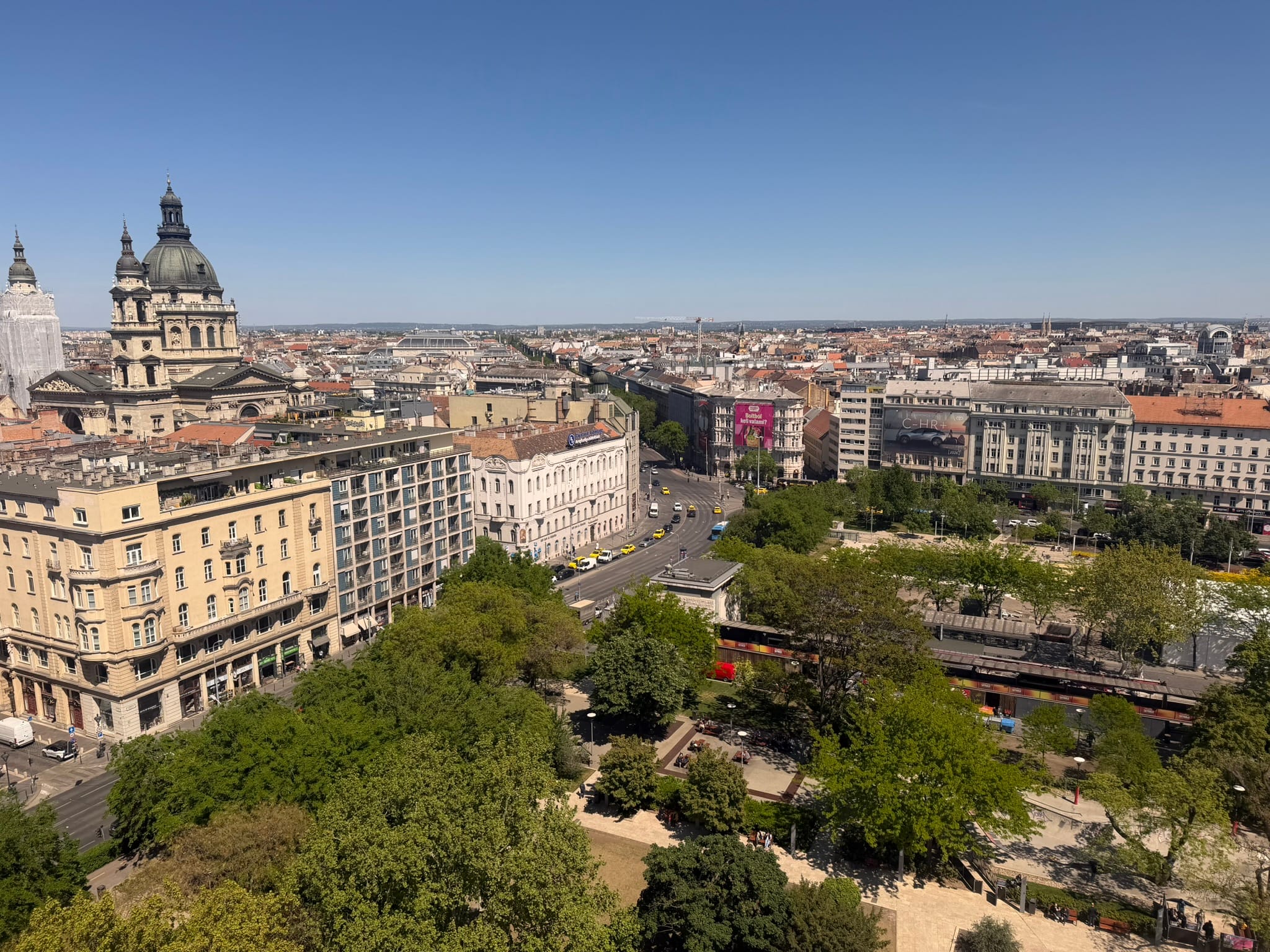
Budapest Eye — Ferris wheel, 7,800 HUF (~$21 USD) — gives you a photo-friendly view of the basilica from above. Starbucks on Fashion Street, walked through the Jewish Quarter.
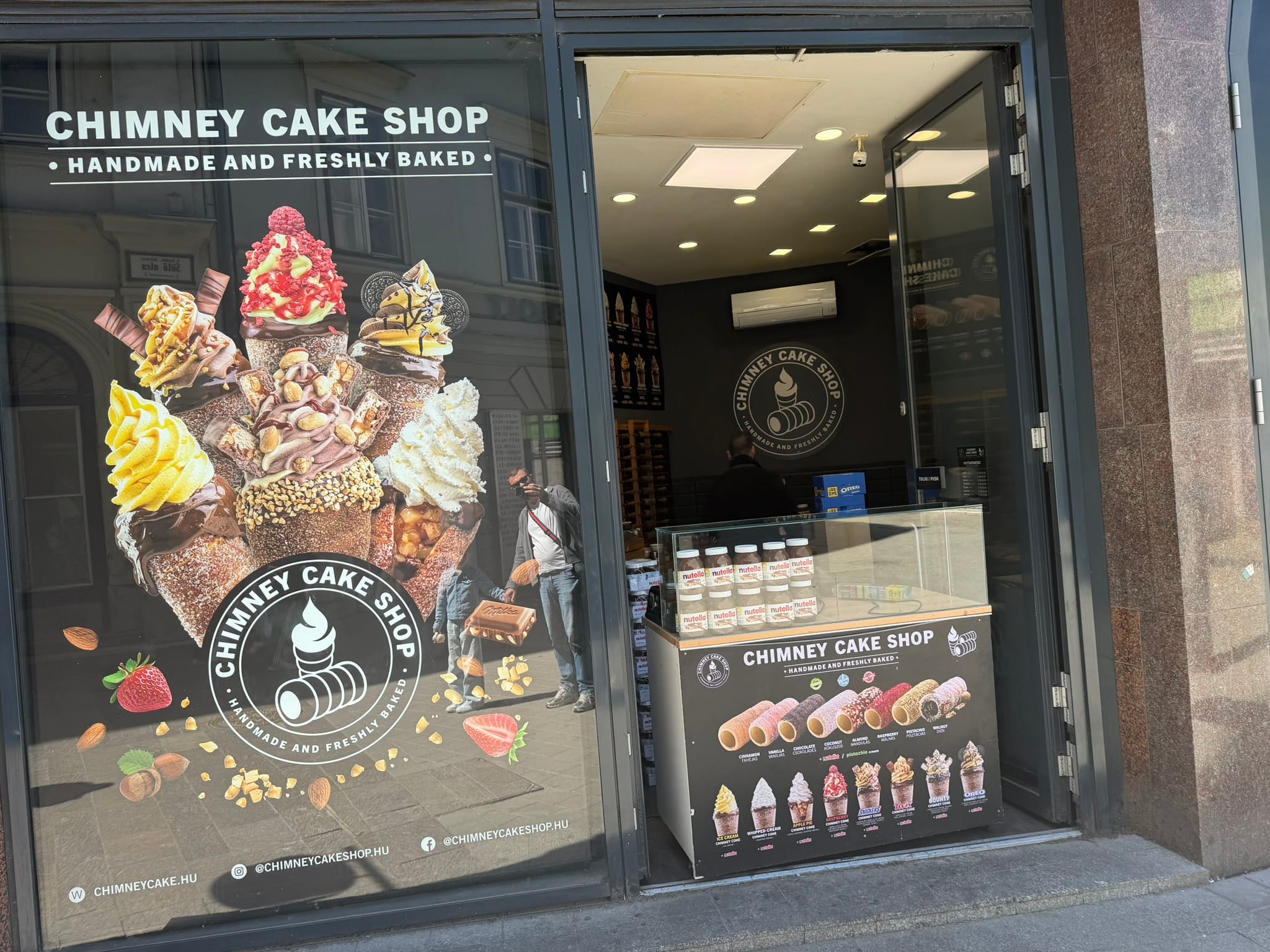
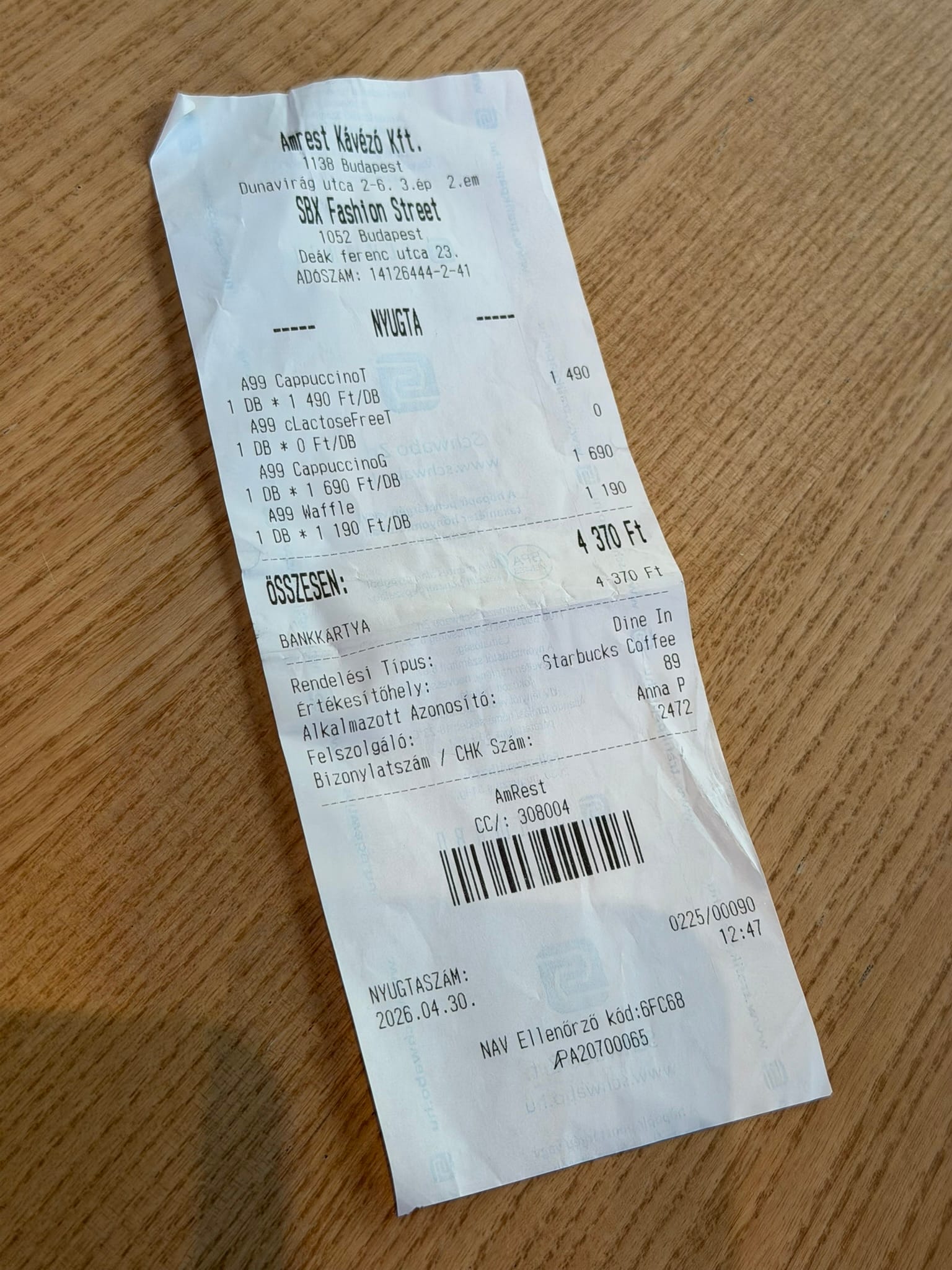
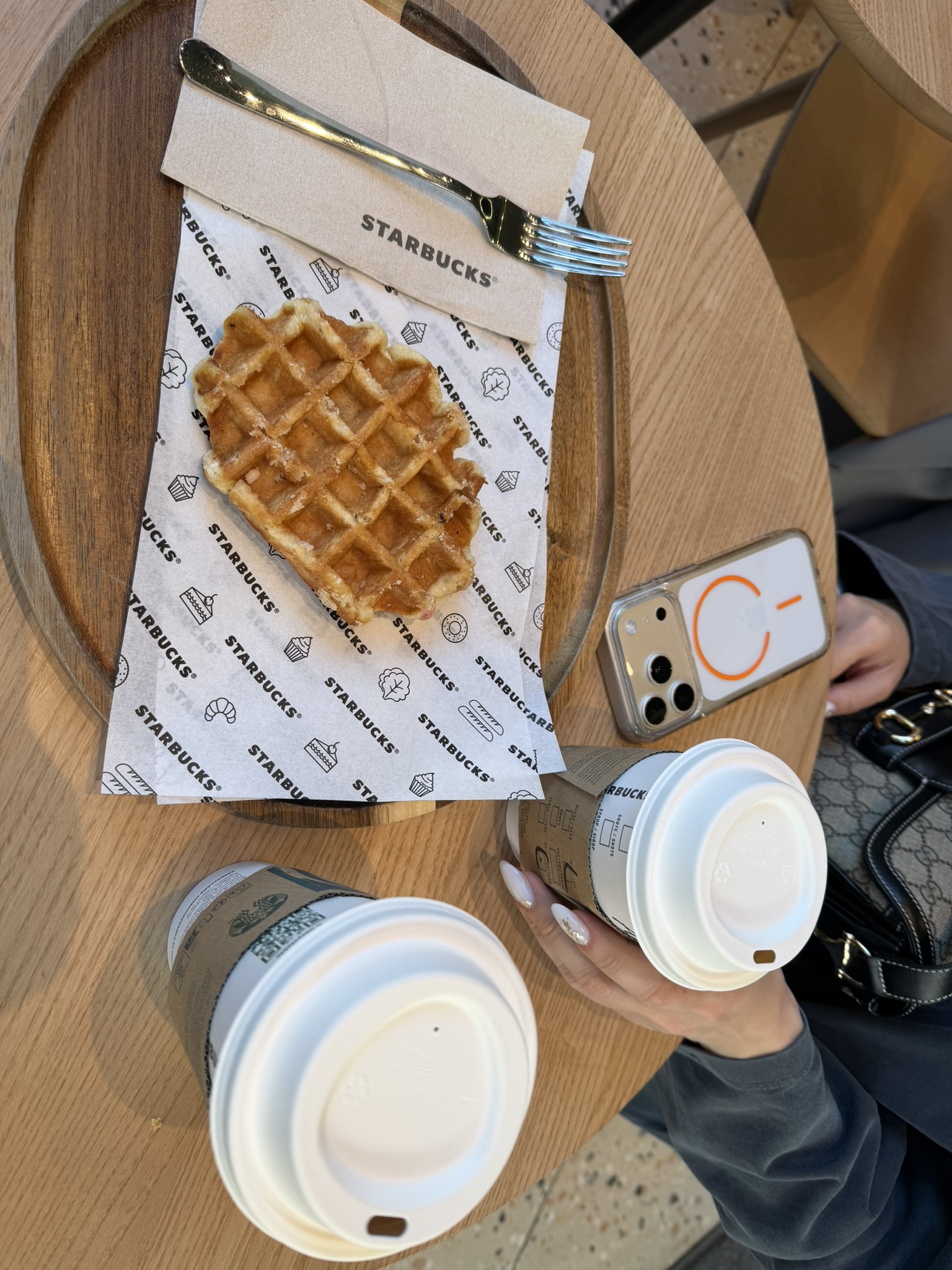
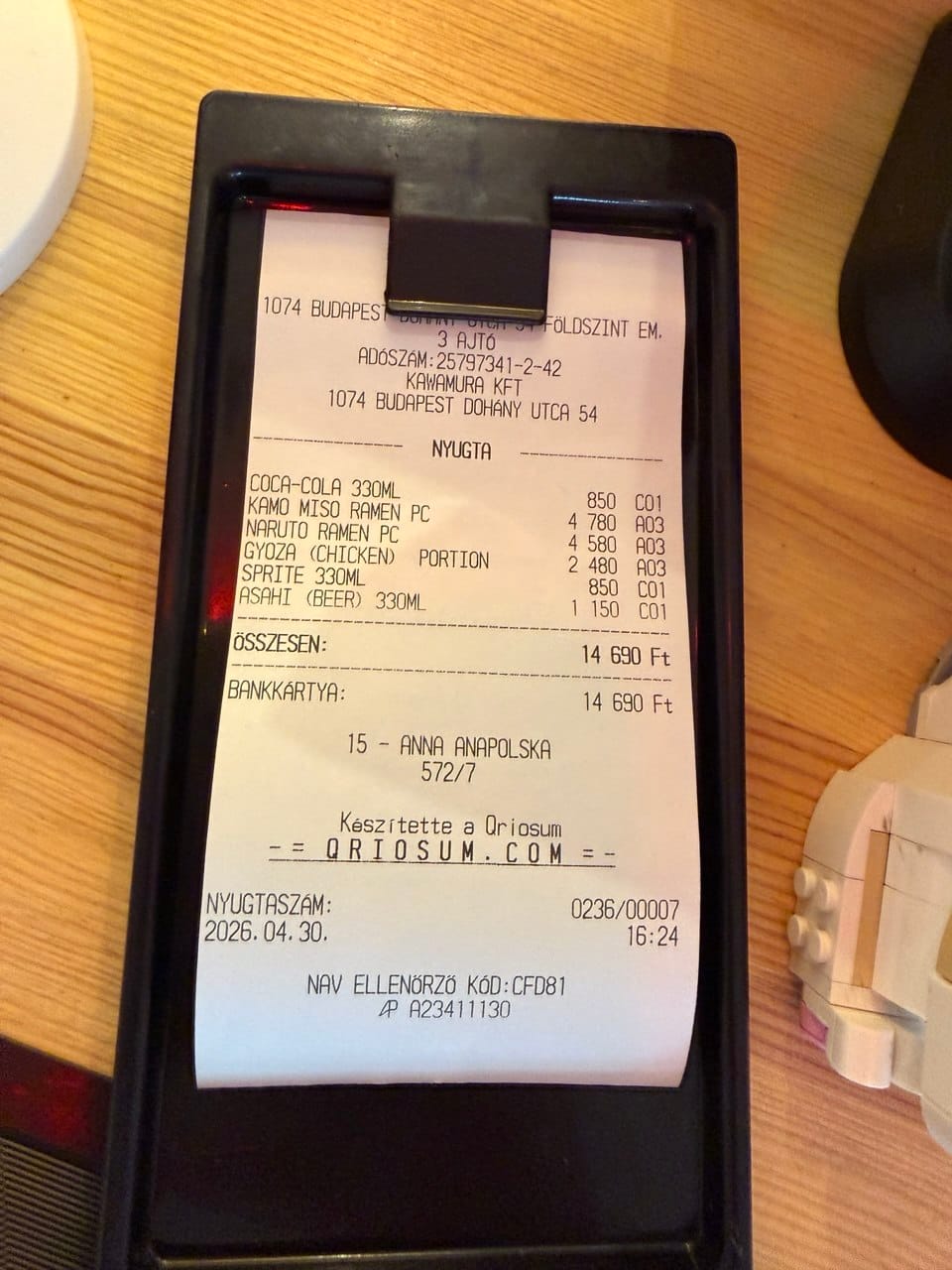
Dinner — Kawamura Ramen again (14,690 HUF / ~$39 USD), because it was that good the first time.
Day 8 (May 1) — Early-Morning Departure
Flight at 6:00 AM. Wake-up at 2:00, out of ibis Styles by 2:30, taxi about 30 minutes. We arrived at the airport at 3:00 AM — closed. Security line existed but wasn’t open yet. Water was confiscated even from our daughter (250 ml). Passport control opened around 3:45, fast through. EES procedure — biometric, working fine. Duty-free and shops closed until 5:00 AM.
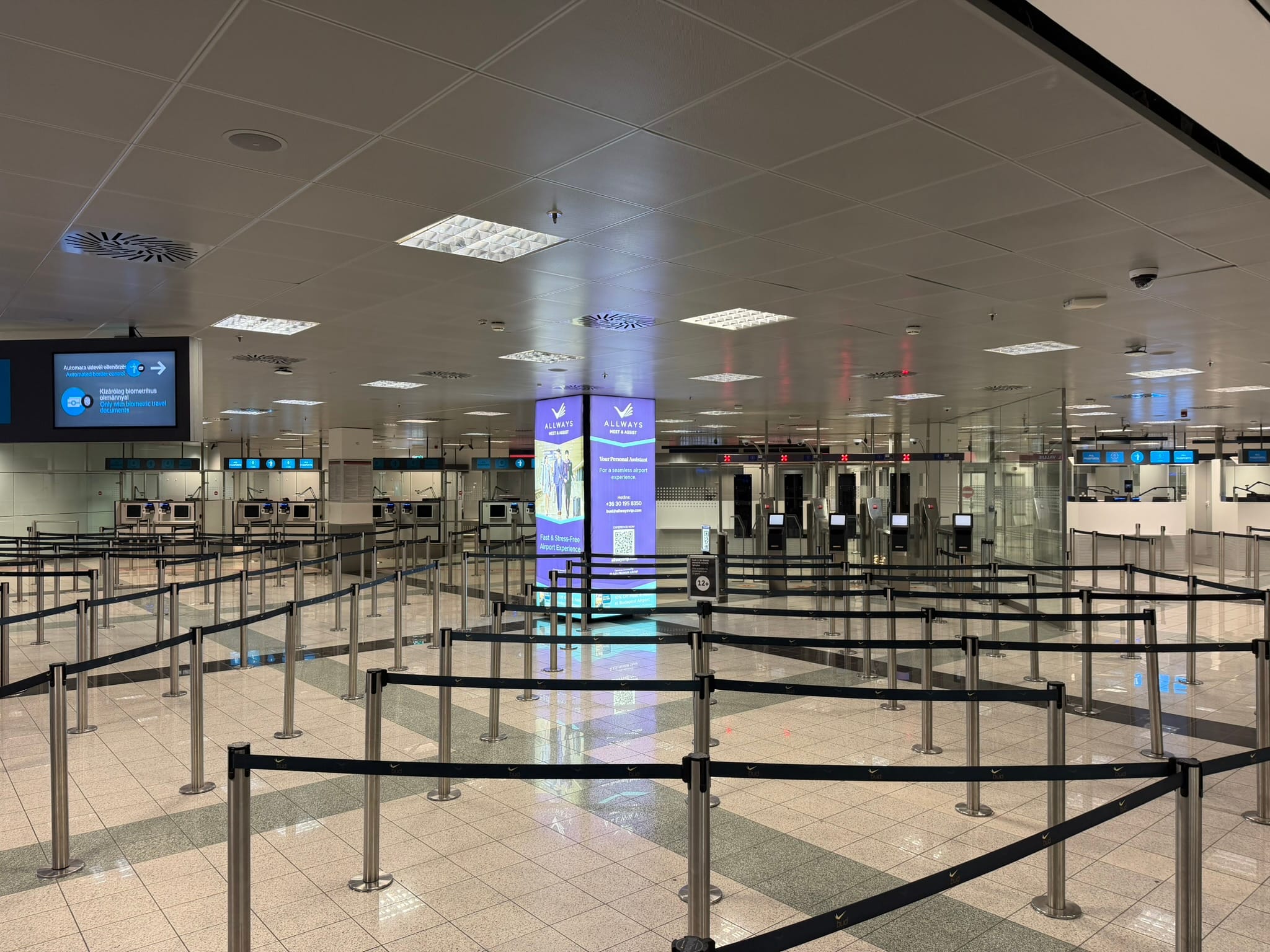
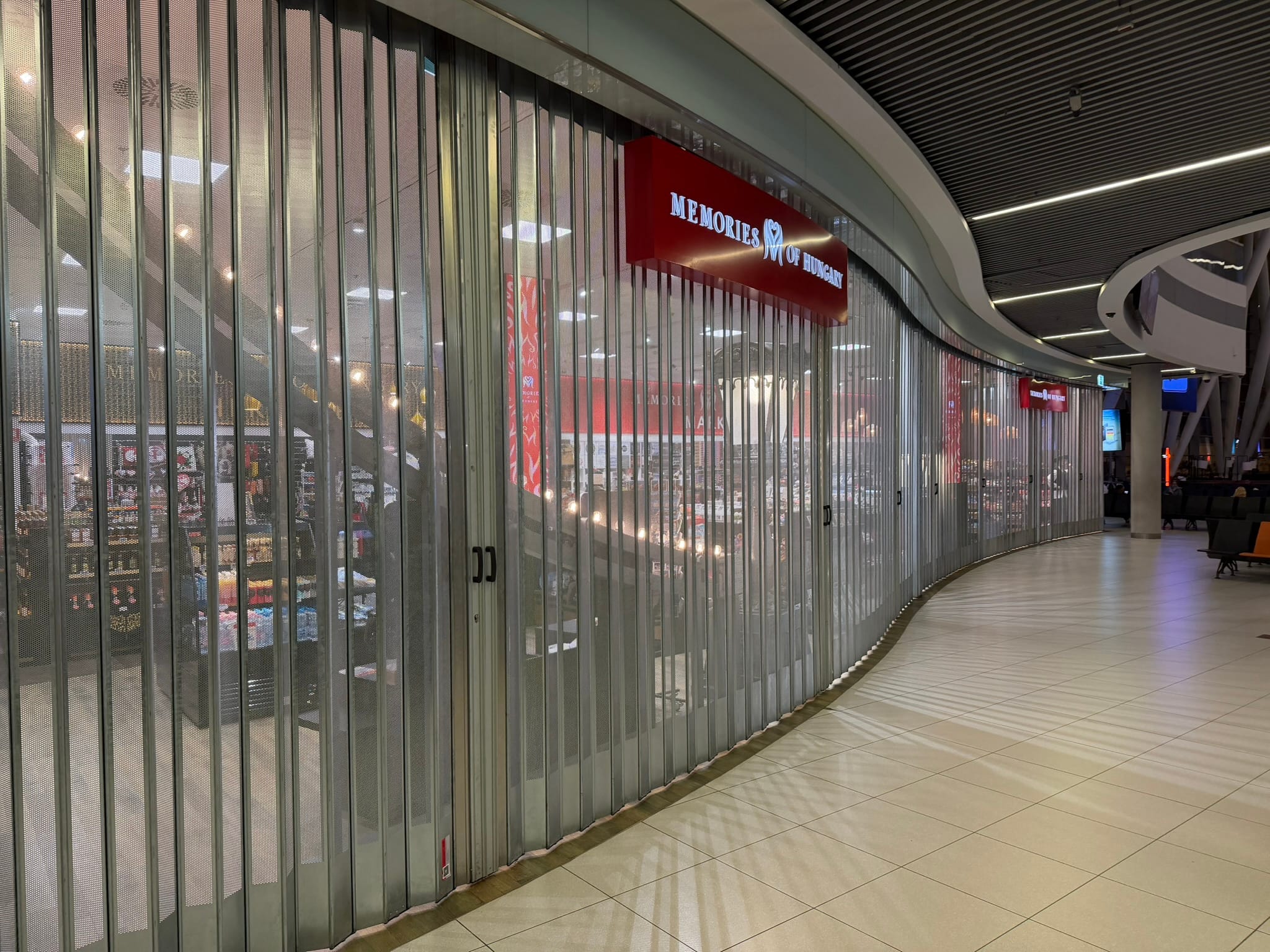
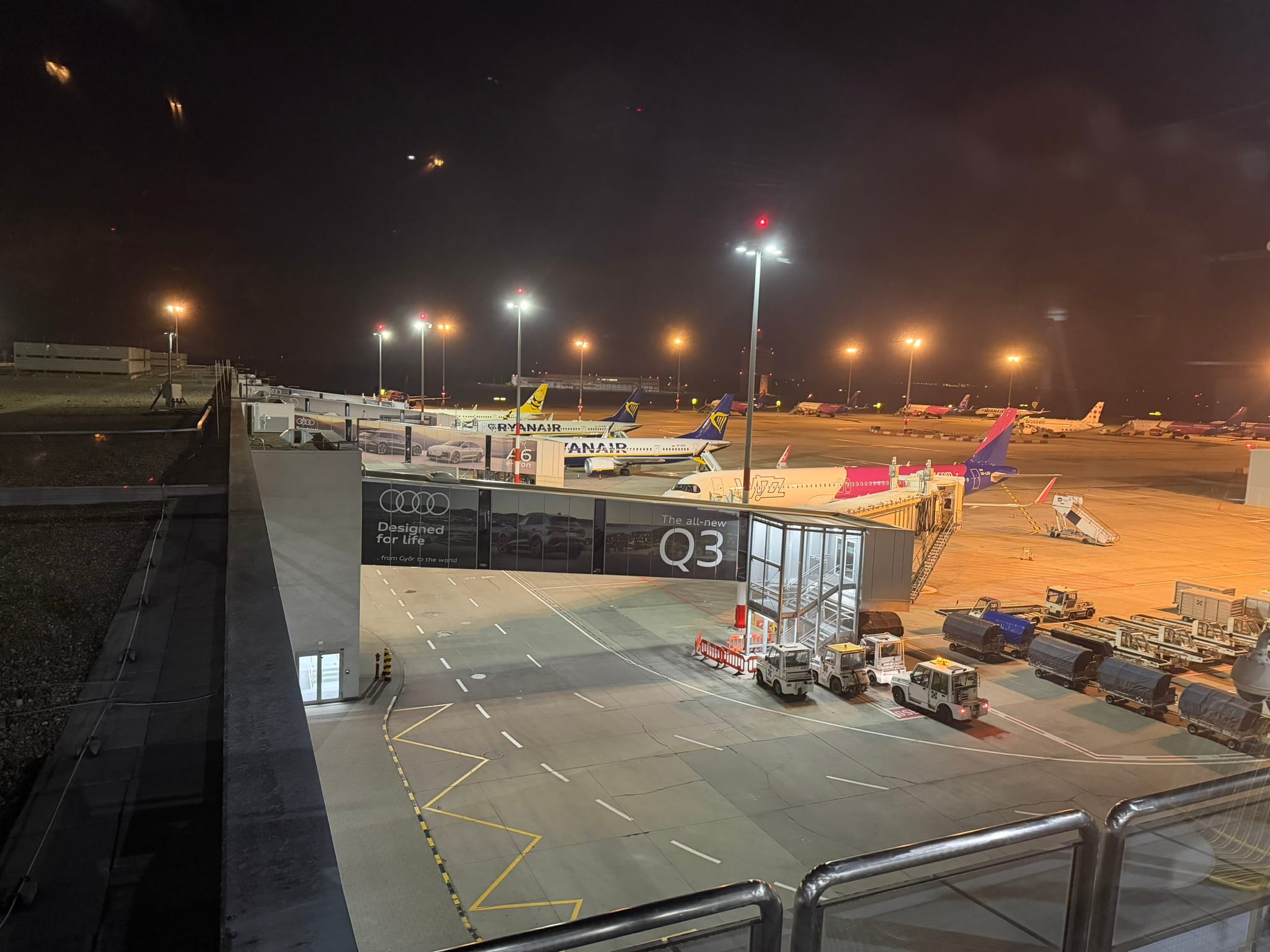
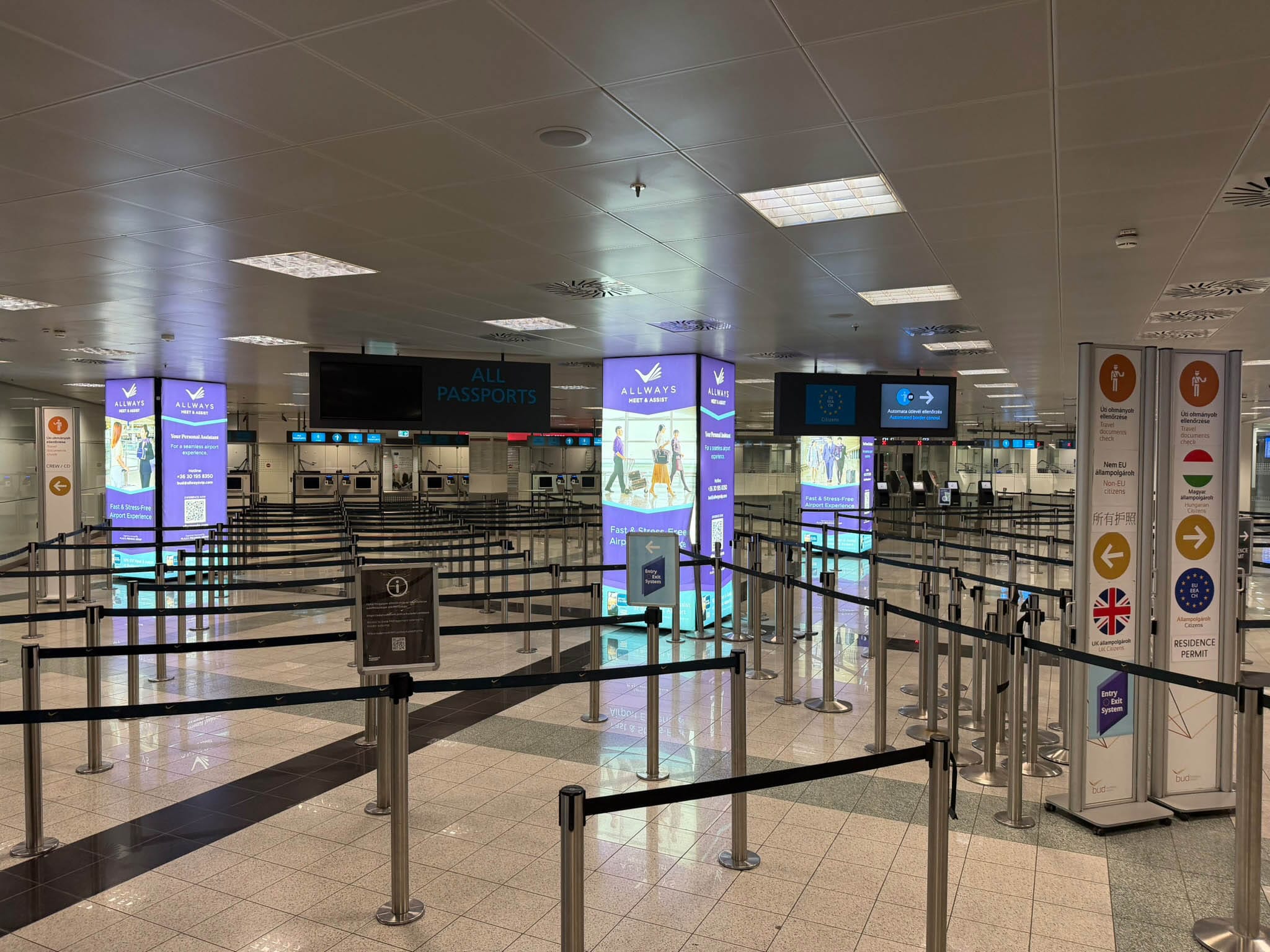
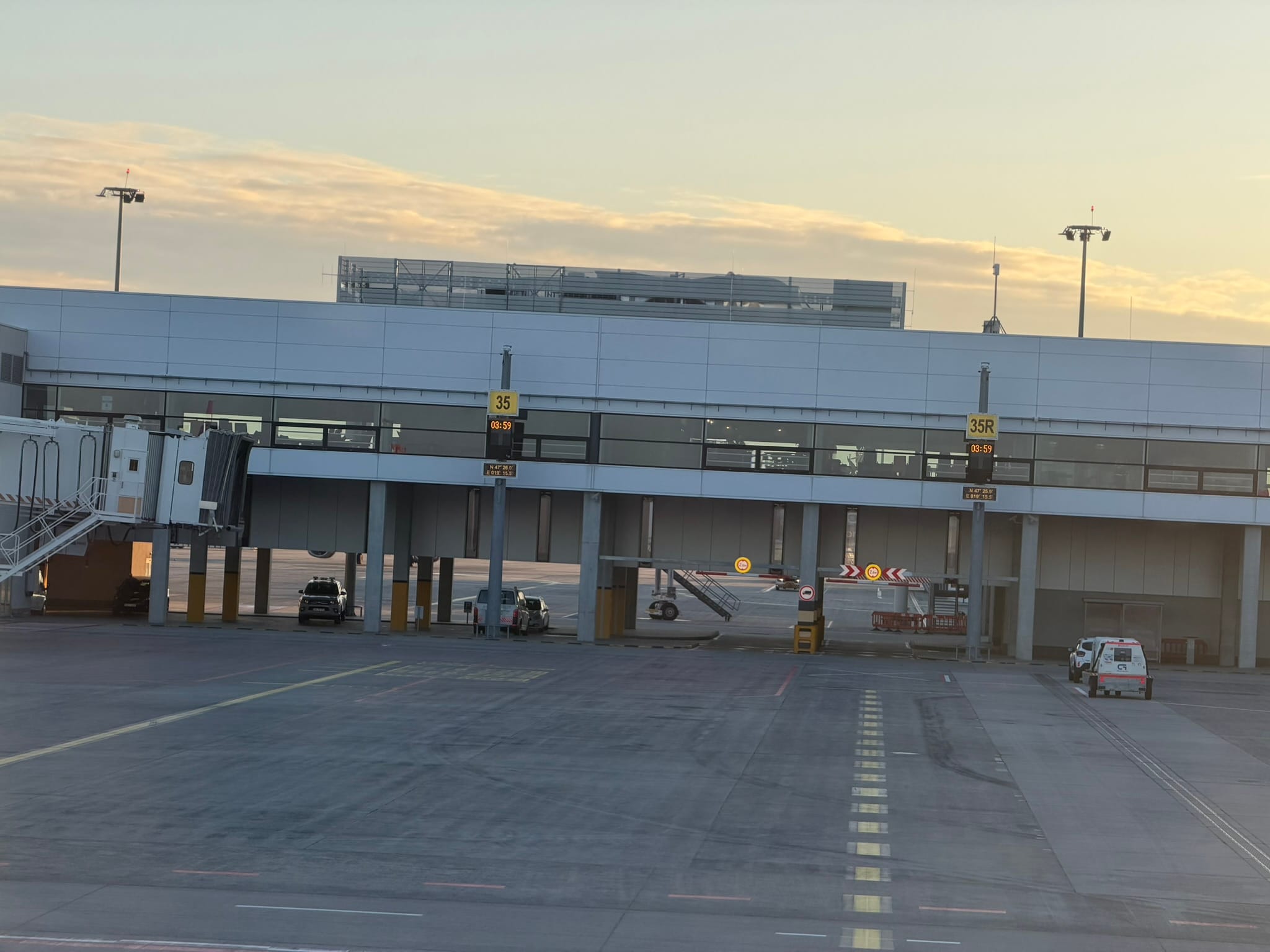
Tip for readers: if your flight is before 6 AM out of BUD, don’t arrive earlier than 3:30. Bring snacks and a refillable water bottle from your hotel. Earlier than 3:30 is pointless: nothing is open.
Trip Total in Numbers
| Category | Amount |
|---|---|
| Hertz (rental, Super Cover, all insurance, cross-border, child seat, VAT) | €718.54 (~$777 USD) |
| Vignettes (SK + AT — HU is included with Hertz Hungary rentals) | €23.60 (~$26 USD) |
| Fuel | ~€62 (~$67 USD) |
| Lodging (3 OREA + 1 Citadines + 2 ibis) | ~€1,200 (~$1,300 USD) |
| Restaurants (9 receipted meals) | ~€370 (~$400 USD) |
| Activities (VIDA + Tropicarium + Prater + CyberJump + boats + Eye) | ~€180 (~$195 USD) |
| Total for 7 nights, family of 3 | ~€2,600 (~$2,810 USD) |
With this context, here’s how each AI travel agent described — and would have described — the same trip.
Mindtrip Review — The Best AI Travel Agent for Hotels
What Mindtrip Got Right
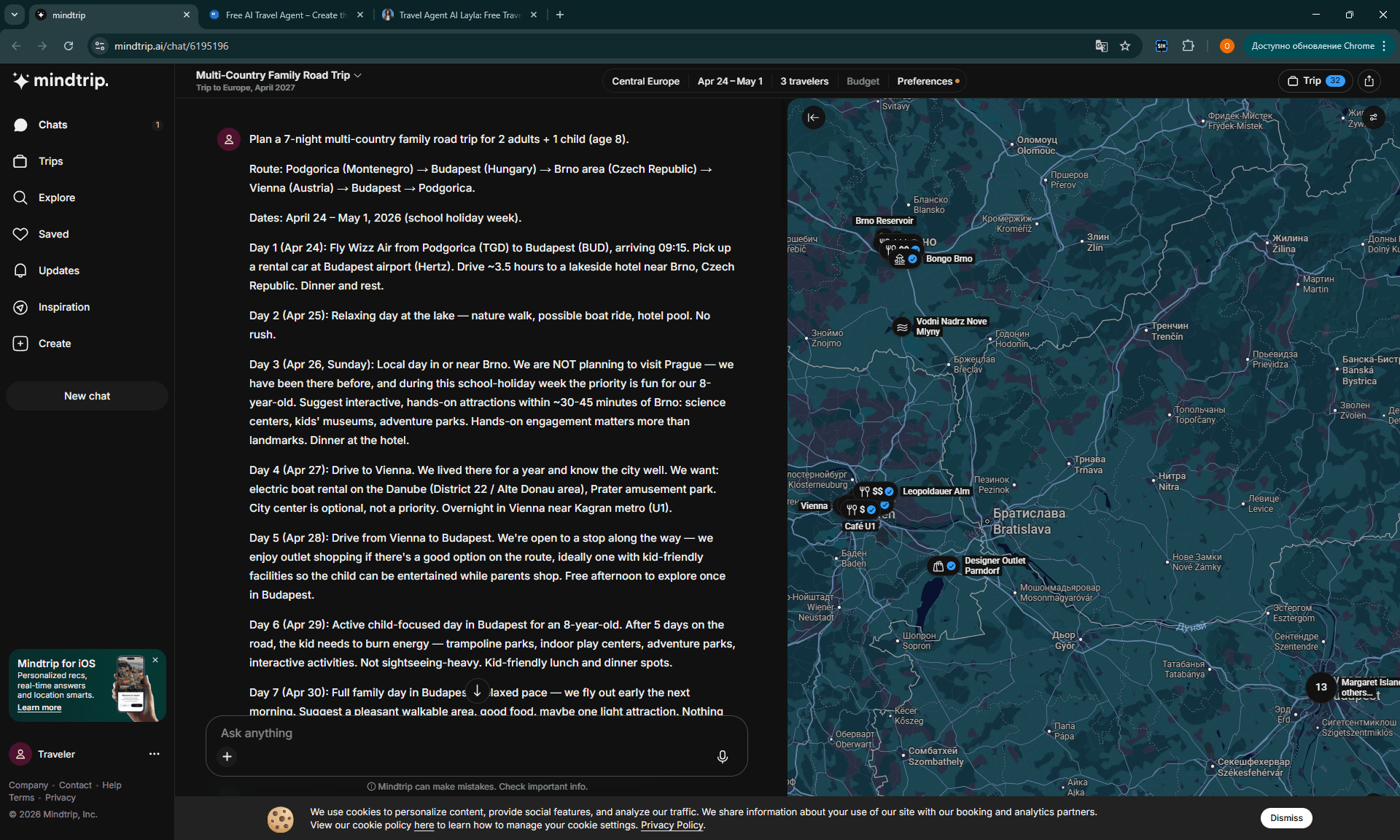
Mindtrip’s first response was the cleanest of the three. It built an interactive map of Central Europe with venues pinned, structured a 7-day plan, and offered “you might want to ask…” follow-up buttons. UX was clearly the best of the three.
After three follow-ups, it nailed two of three hotels we actually used:
- OREA Resort Santon, Brno — exact match
- Citadines Danube, Vienna — exact match
- ibis Budapest — close (suggested ibis Budapest Centrum, we stayed at ibis Styles Budapest Center, same hotel chain)
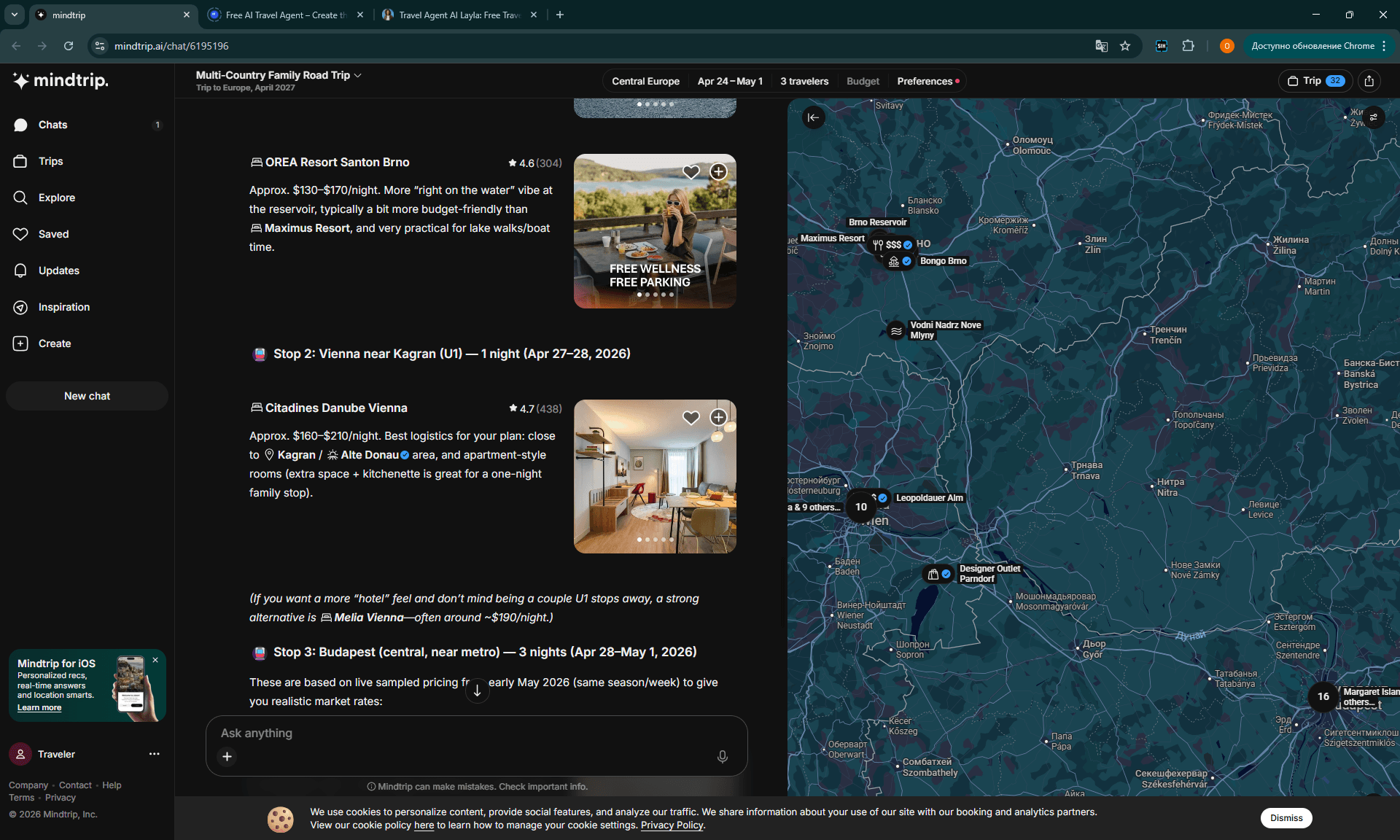
This is a strong win. Especially OREA Resort Santon — we’ve known this hotel since 2016, when we first ended up there by accident on a bus tour. We’ve kept coming back over the next 10 years, every time we drove through Czechia or Austria. When we lived in Vienna, we’d drive to OREA at least once a month for a spa weekend (1.5 hours from Vienna by car — a comfortable distance for a weekend escape). For Mindtrip’s database to come back with this specific hotel was the strongest “the AI is reading context correctly” signal of the test. Prices were correct too.
Mindtrip handled the cross-border vignette question with appropriate caution:
- ✅ SK eZnámka — pointed to eznamka.sk, gave the correct €10.80 price
- ✅ AT vignette — pointed to asfinag.at, gave correct €12.80
- 🟡 HU vignette — said “verify with rental company” (it’s actually included with Hertz Hungary rentals — see below)
- 🟡 CZ e-vignette — pointed to edalnice.cz with a warning about third-party reseller sites
It also flagged May 1 as Hungarian Labour Day with shop closures — a genuinely useful warning that none of the others gave first.
UX Bug: Map Parsing Abbreviations as Locations
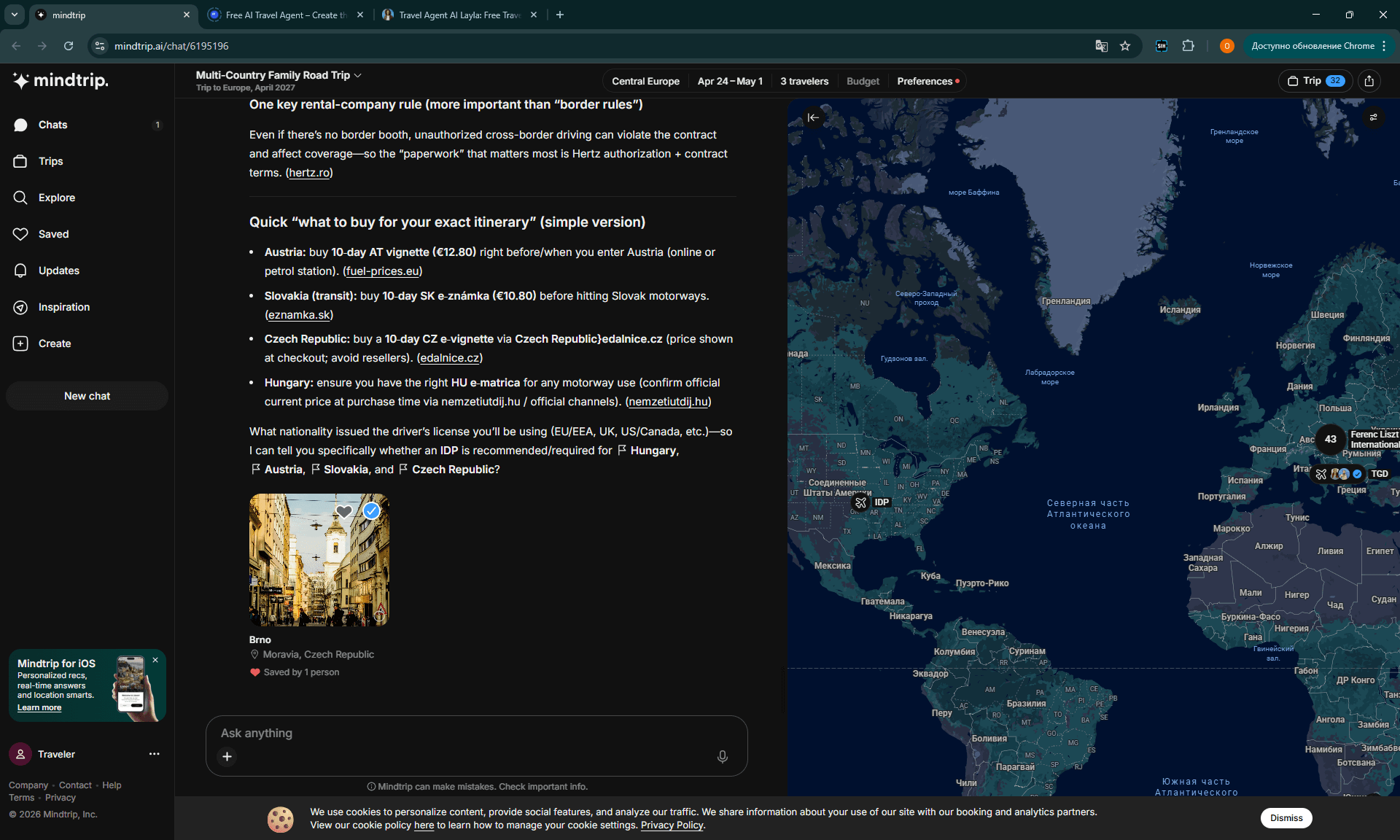
Mindtrip has a glitch: when the conversation discusses airport codes (TGD, BUD) or terms like “IDP” (internally displaced person — used to describe our Ukrainian residence permit), the map jumps to Greenland and the mid-Atlantic. It’s parsing 3-letter abbreviations as place names through a faulty NER → geocoding pipeline. Doesn’t break the final plan, but it’s a visible bug for a product positioning itself as an “AI travel agent.”
What Mindtrip Does Uniquely Well in UX
For all the data issues, Mindtrip’s UX is noticeably above competitors. Several things you won’t find on iMean or Layla:
Venue cards with “Save to Trip” — every recommended place (VIDA!, Designer Outlet Parndorf, Booteria, Citadines) appears as a clickable card with photo, rating, and an add-to-trip button. You build a custom list and sort it later. iMean shows places only in text, Layla — text only, no visuals.
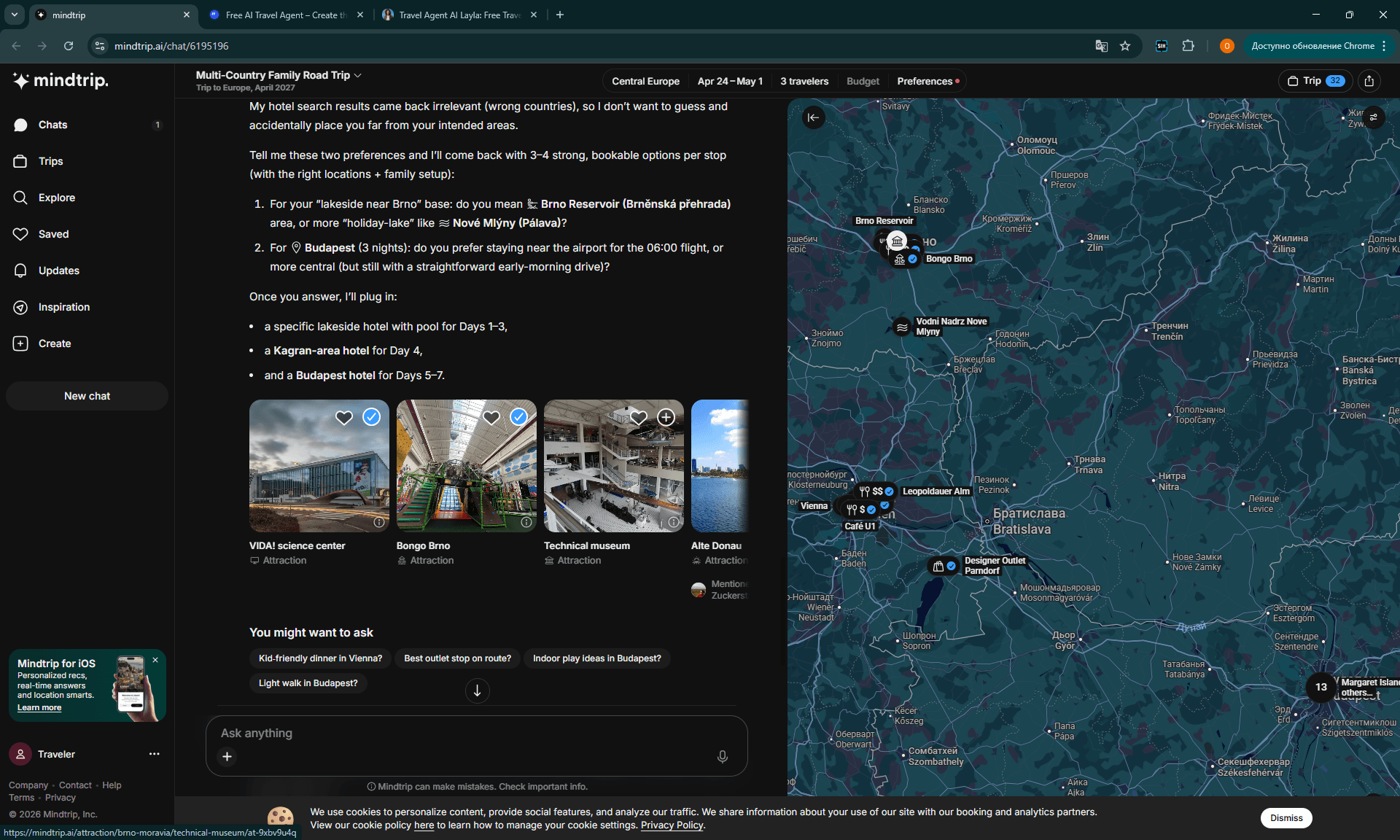
Persistent trip sidebar — a “Trip: 32 saved items” panel accumulates on the left as you and the AI add places. Click and you see a map with all pins. This is what conversational-only products lack.
Suggested follow-up questions — after every answer, Mindtrip offers 4 buttons: “Kid-friendly dinner in Vienna?”, “Best outlet stop on route?”, “Indoor play ideas in Budapest?”, “Light walk in Budapest?”. Excellent for the user who doesn’t yet know what to ask.
Thinking traces — Mindtrip shows you what it’s doing as it generates: “Searching for family-friendly hotels near Kagran…”, “Considering 3 hotels out of 1,155 that might fit your needs…”. This is both a plus (transparency) and a minus (it surfaced the 2027 date bug we mentioned).
Cross-promo with user-generated content — at the end of one answer, Mindtrip pointed me to “you might enjoy this guide: The Quintessential Central Europe Itinerary by @travelswval.” That’s an ecosystem play with affiliated bloggers — none of the competitors do that.
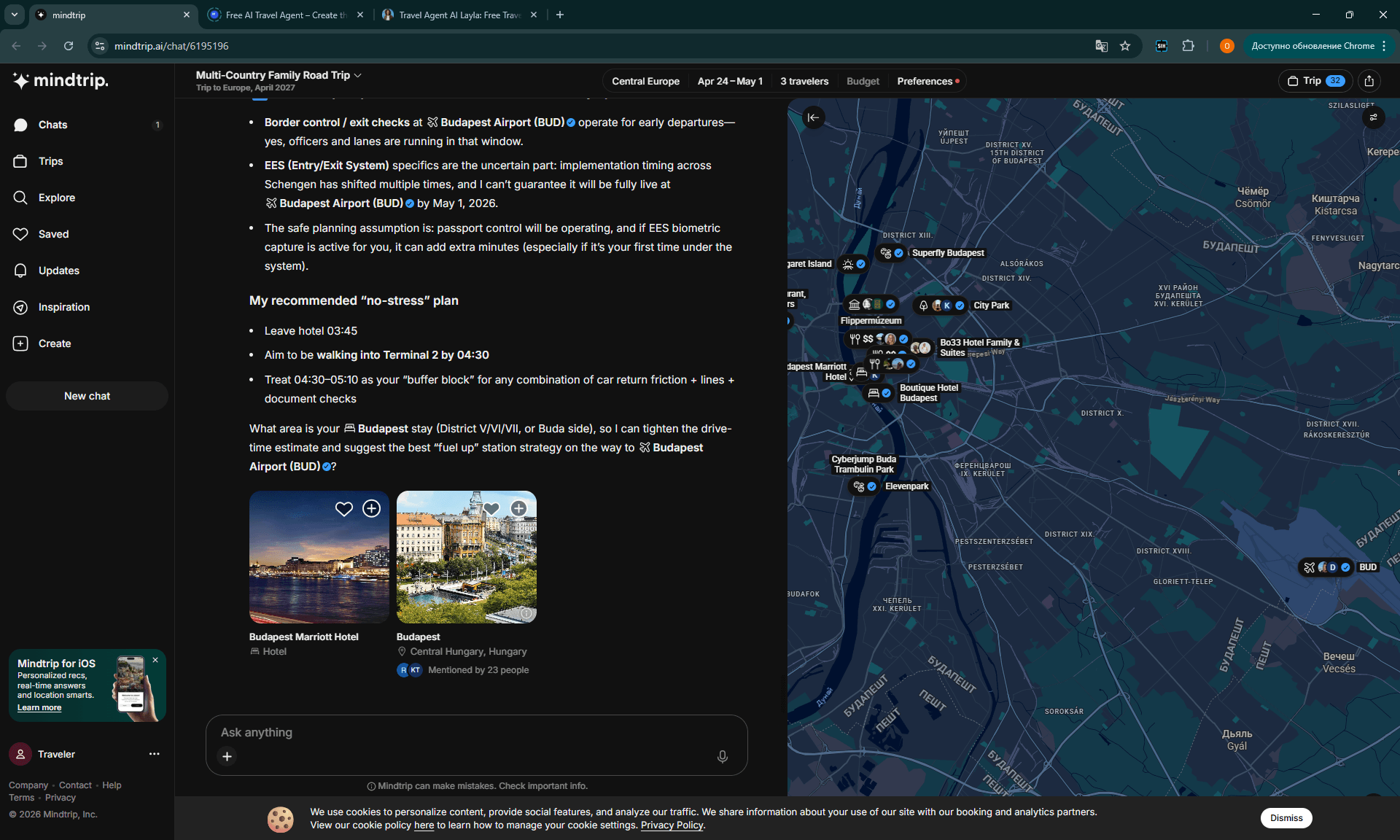
Mindtrip Review — Final Score
| Category | Score |
|---|---|
| First response | 6/10 (missed critical topics) |
| Follow-up depth | 9/10 |
| Hotel matching | 9/10 (2/3 exact) |
| Cross-border knowledge | 7/10 (precise SK/AT, honest deferral on HU/CZ) |
| UX (map, venue cards, suggested questions) | 8/10 |
| Bugs | 2027 date bug, map abbrev parsing |
| Overall | ★★★★☆ 4/5 |
When to use Mindtrip: if you need hotel matching and a venue map. Best in class for hotel matching among the three.
→ Related: Mindtrip Review 2026: Honest Test on a Real Family Trip
iMean AI Review — Best Structure, Worst Self-Consistency
iMean takes a more structured approach than Mindtrip — it segments output into clear sections: “Where to Go,” “Where to Stay,” “Where to Eat,” “Things to Know,” “Costs.”
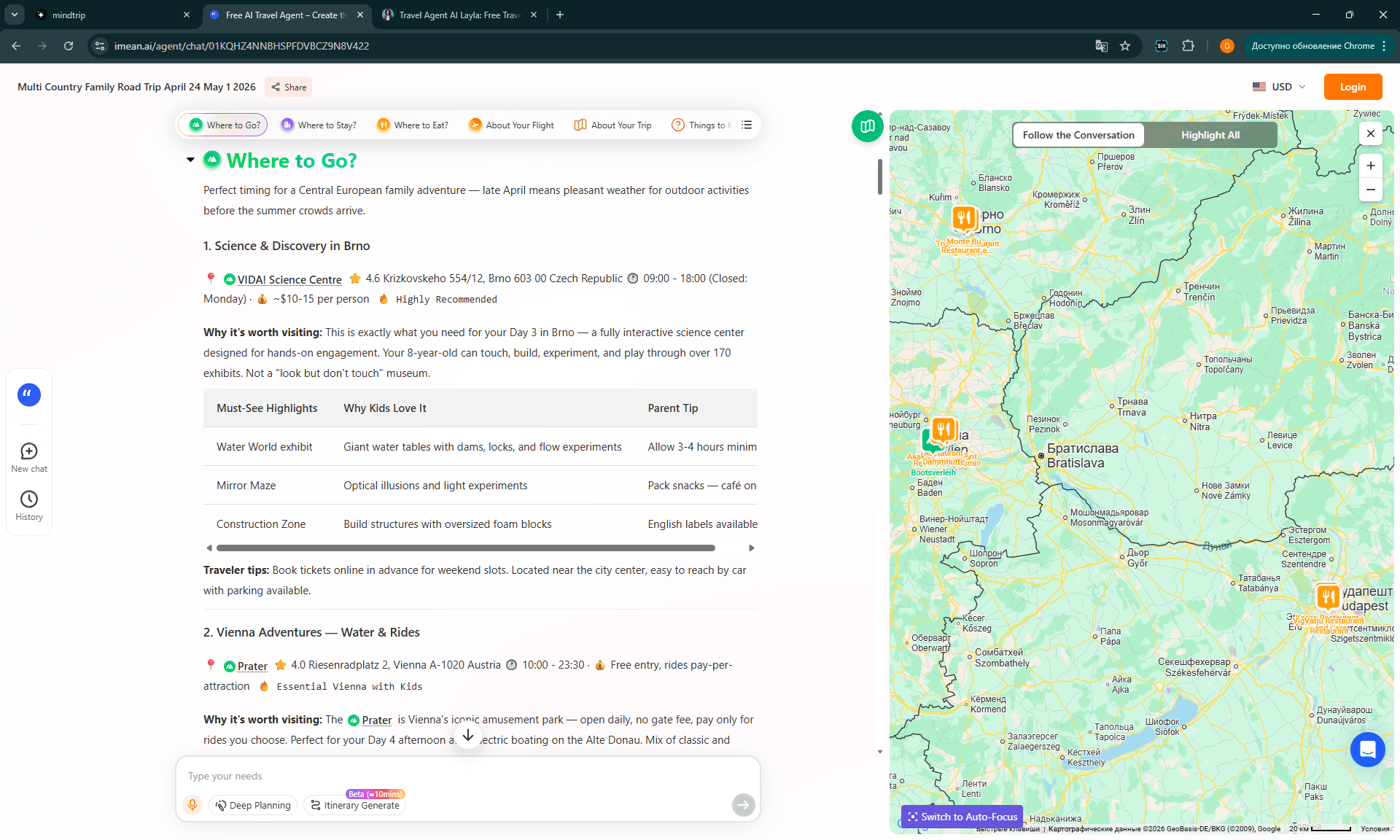
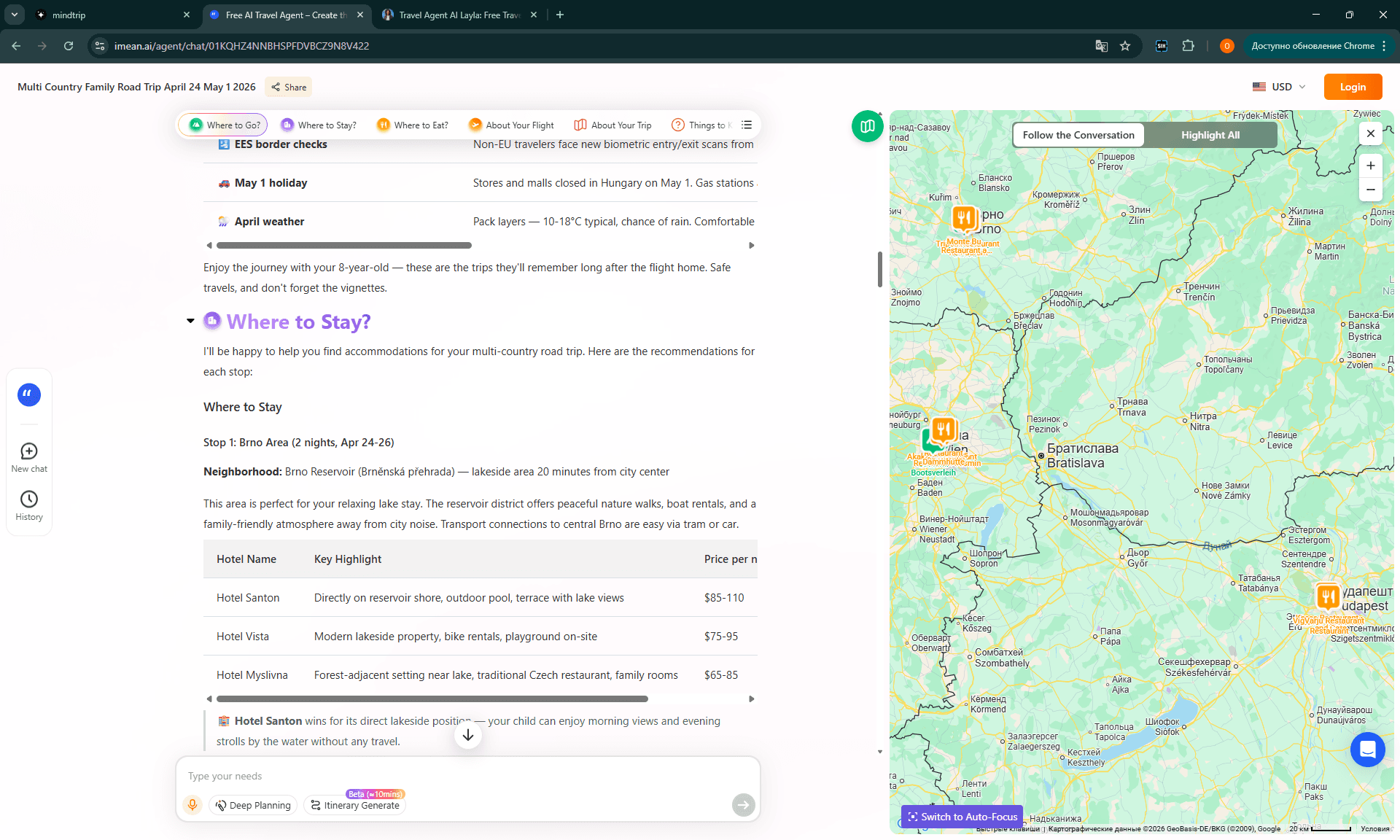
It also was the only AI of the three to know the Hertz Hungary vignette nuance:
“Hungarian highway vignette is typically included with rental car contracts originating in Hungary. Confirm with Hertz when picking up.”
This was correct. Hertz Hungary includes the HU vignette in the rental — saving us €18 we would otherwise have paid. No other AI knew this.
The Problem: iMean Hallucinates and Self-Contradicts
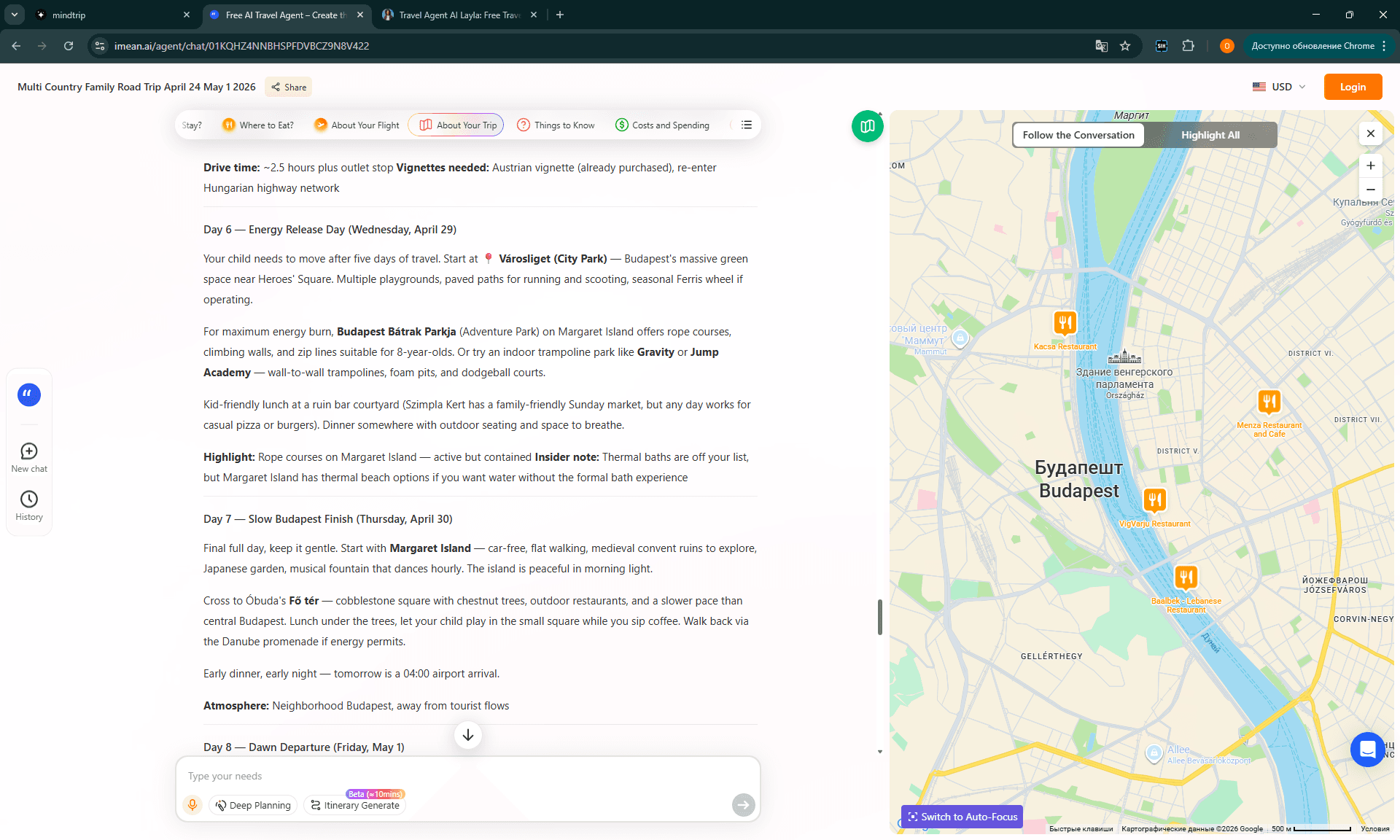
In the same response, iMean recommended:
“For an active day with kids in Budapest, visit Bátrak Parkja on Margaret Island — adventure park with rope courses and climbing structures.”
Bátrak Parkja does not exist. I checked Google Maps, Margaret Island’s official site, and three local sources. There is no park by this name on Margaret Island. iMean simply invented it.
It also self-contradicted within the same conversation:
- First answer: “Skip Tropicarium — too expensive for what it offers”
- Three messages later: “Tropicarium-Oceanarium is a great rainy-day option for kids”
It also produced Penguins at Tropicarium in one message (there are no penguins at Tropicarium), and gave different Vienna restaurants when I asked the same question two ways.
iMean Vignette Pricing Was Off
| Country | iMean’s price | Actual price |
|---|---|---|
| 🇸🇰 Slovakia 10-day | €11.50 | €10.80 (close) |
| 🇦🇹 Austria 10-day | €9.20 | €12.80 (significantly off) |
| 🇨🇿 Czechia 10-day | €11.00 | €12.50 (close) |
| 🇭🇺 Hungary D1 | €9.50 | €18.00 (off by half) |
The Hungary price is half the actual — this is a real-money error if you trusted iMean for budget planning.
Pseudo-Paywall
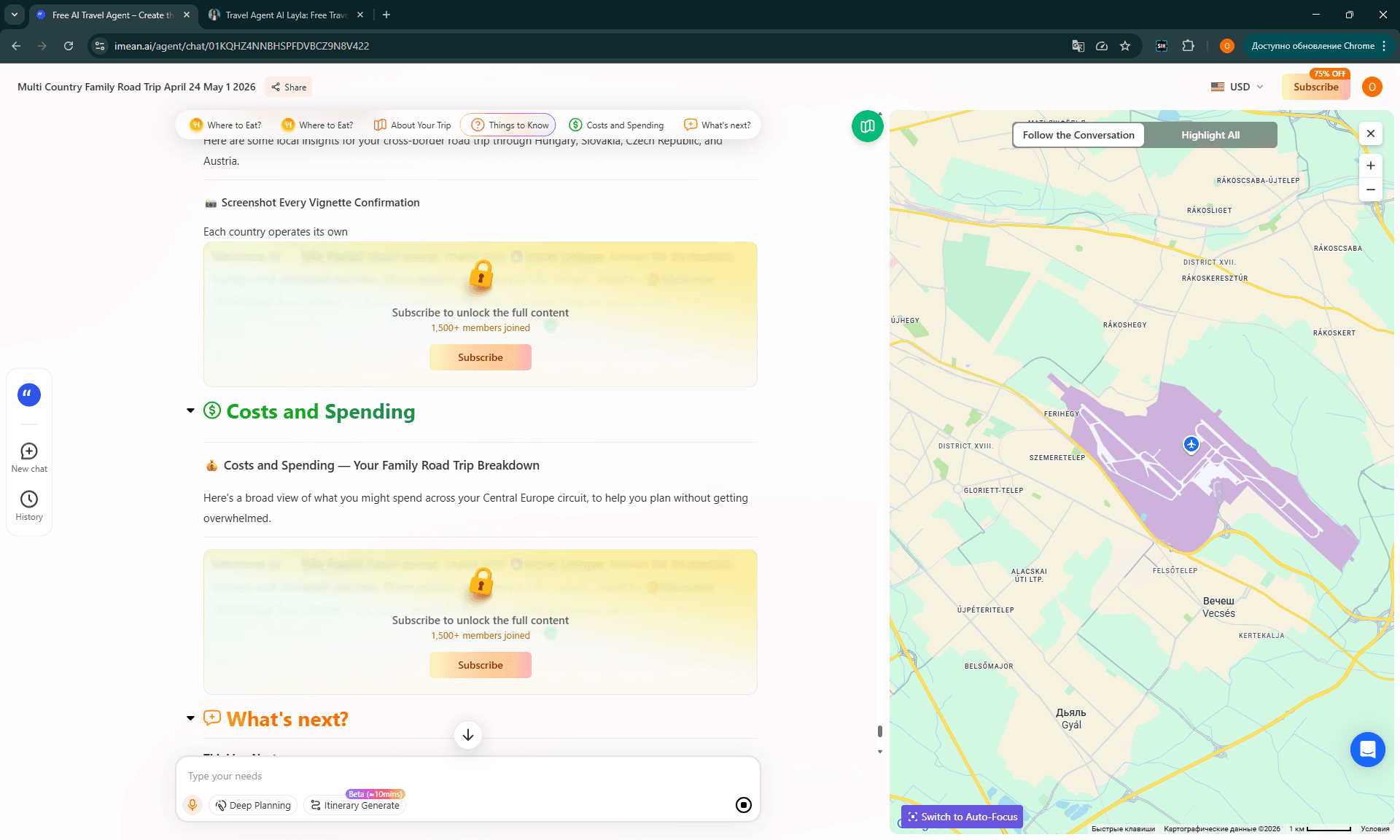
iMean has a soft paywall — “Things to Know” and “Costs” sections are blurred with a Subscribe button. But if you rephrase the same question in the chat (“What costs should I expect?”), you get the same content unblurred. The paywall is more of a nudge than a wall.
iMean Review — Final Score
| Category | Score |
|---|---|
| First response — breadth | 9/10 |
| Vignette price accuracy | 4/10 (HU is half-off) |
| Memory between turns | 9/10 |
| Self-consistency | 3/10 (multi-variant contradictions) |
| Hallucinations | 5/10 (Penguins, Bátrak Parkja) |
| Paywall ethics | 4/10 (content accessible by rephrasing) |
| Hertz HU vignette knowledge | 10/10 (only AI to know this) |
| Overall | ★★★☆☆ 3/5 |
When to use iMean: if you want the most structured output and don’t mind fact-checking specific claims. Treat it as a brainstorming tool, not a source of truth.
Layla AI Review — Best Insider Knowledge, Service Unavailable
I have a complicated history with Layla. In a previous test (Istanbul, February 2026), it was the standout — best live web search, best insider knowledge, real bookable flight tickets. It got a strong review from me then.
This time? It didn’t work.
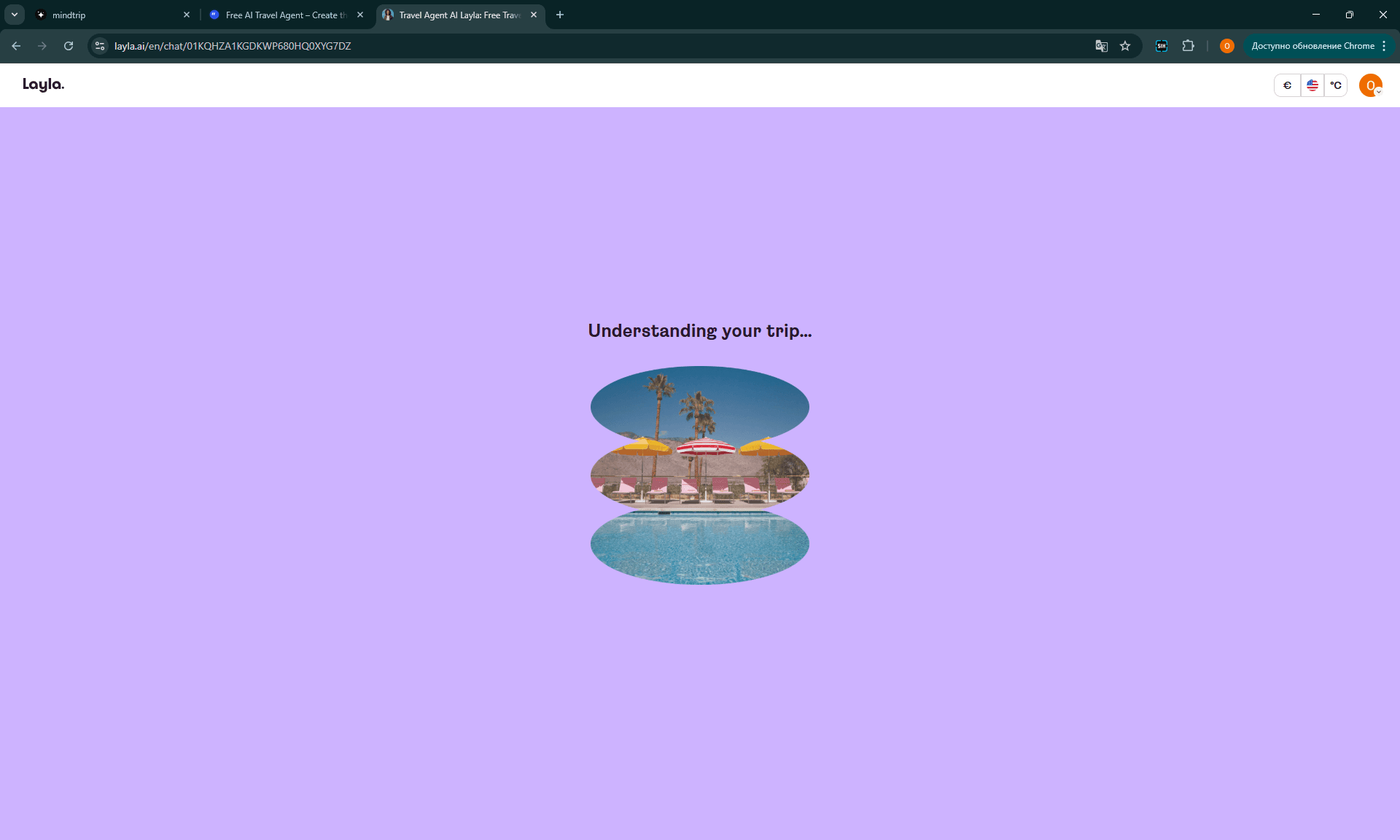
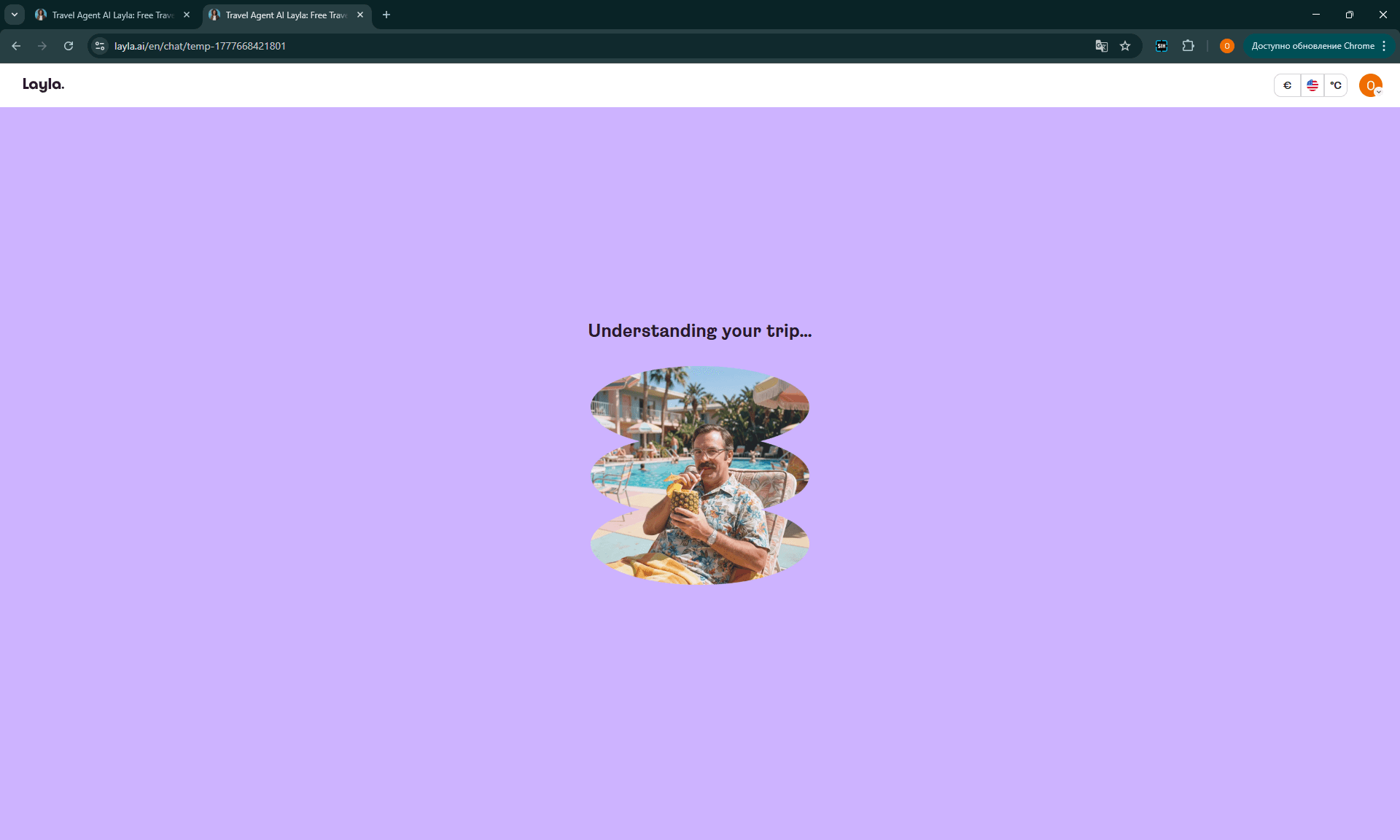
I sent the same prompt several times, from different conditions: from my home IP in Budva (Montenegro), in incognito, from a mobile device on a mobile network. Each time Layla showed the loading screen “Understanding your trip…” with rotating hero images (pool with palms, woman in sunglasses on a beach, guy with a pineapple by a pool) — and never returned an answer. After 24 hours, still no response.
When I switched to a VPS in Frankfurt (typical European datacenter IP), the prompt finally went through. Layla’s locale switched to EUR pricing (€9.99/month or €4.17/month annual) — confirming that Layla geo-fences by IP and runs cleanly only from “target market” IPs.
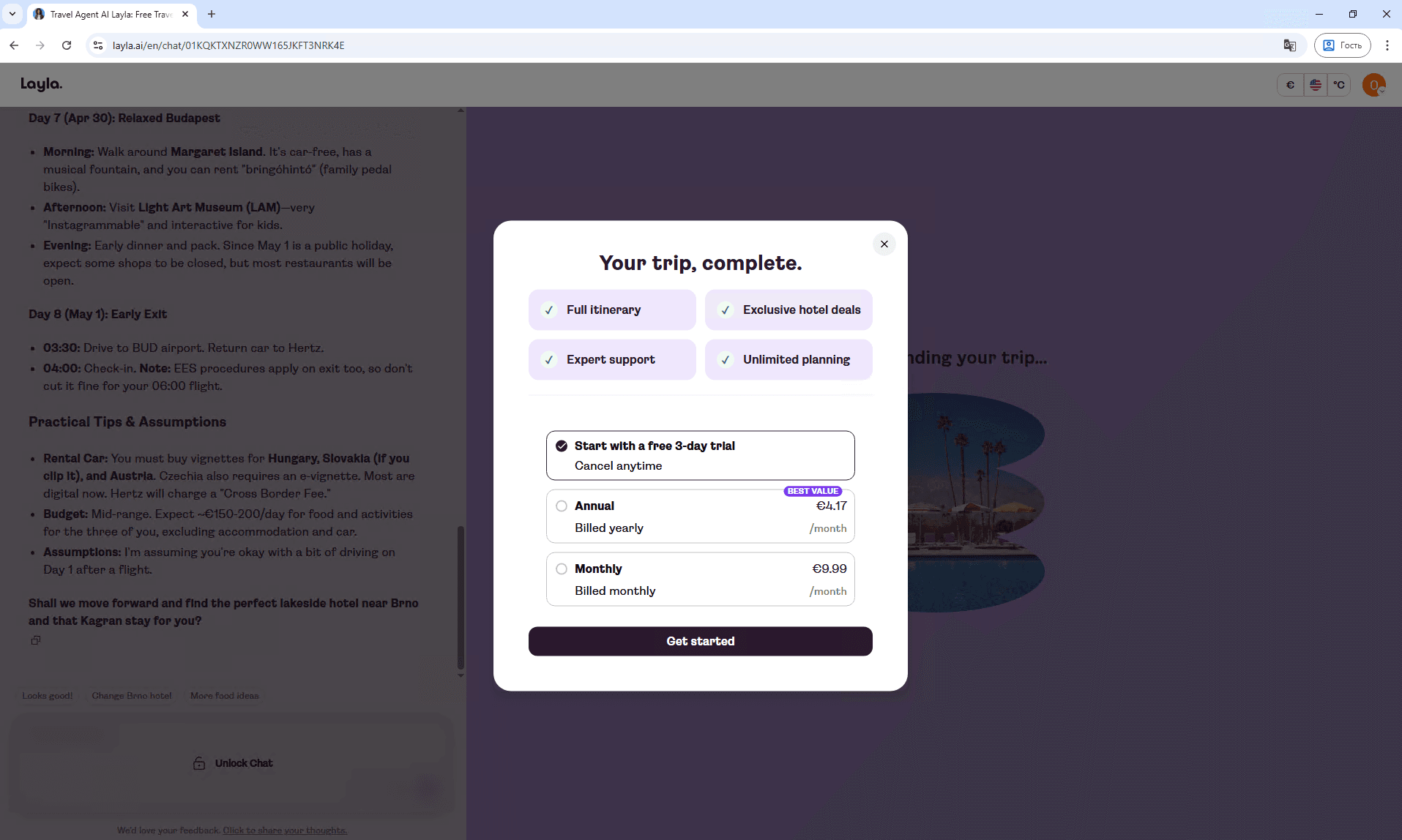
What Layla Got Right (Once It Worked)
The single response Layla gave was the best of the three by a wide margin:
Vignette pricing: 4 of 4 correct
- 🇸🇰 SK €10.80 ✓ (exact match to receipt)
- 🇦🇹 AT €12.80 ✓ (exact)
- 🇨🇿 CZ €12 ✓ (close to actual €12.50)
- 🇭🇺 HU €16.50 (close to actual €18, only minor)
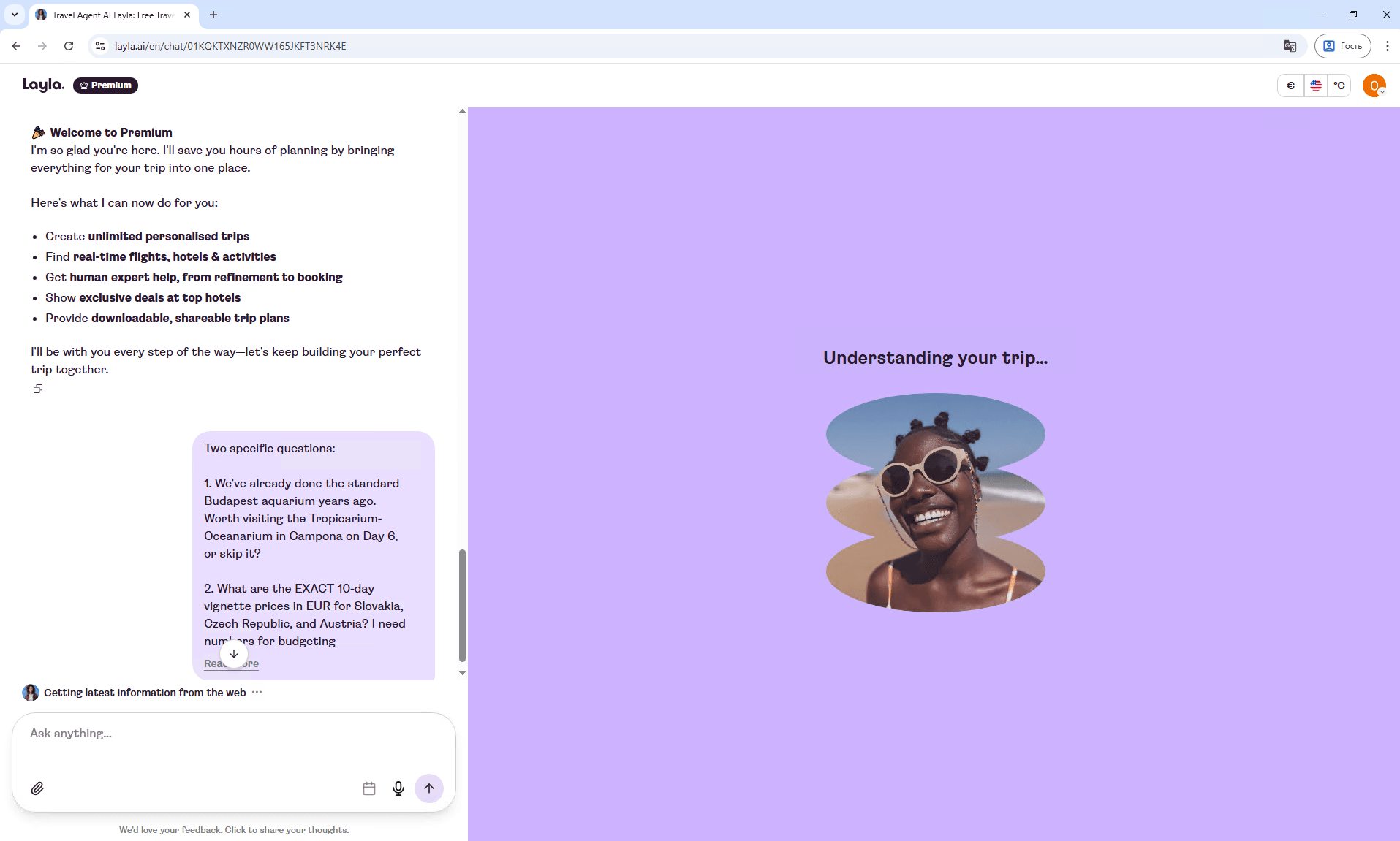
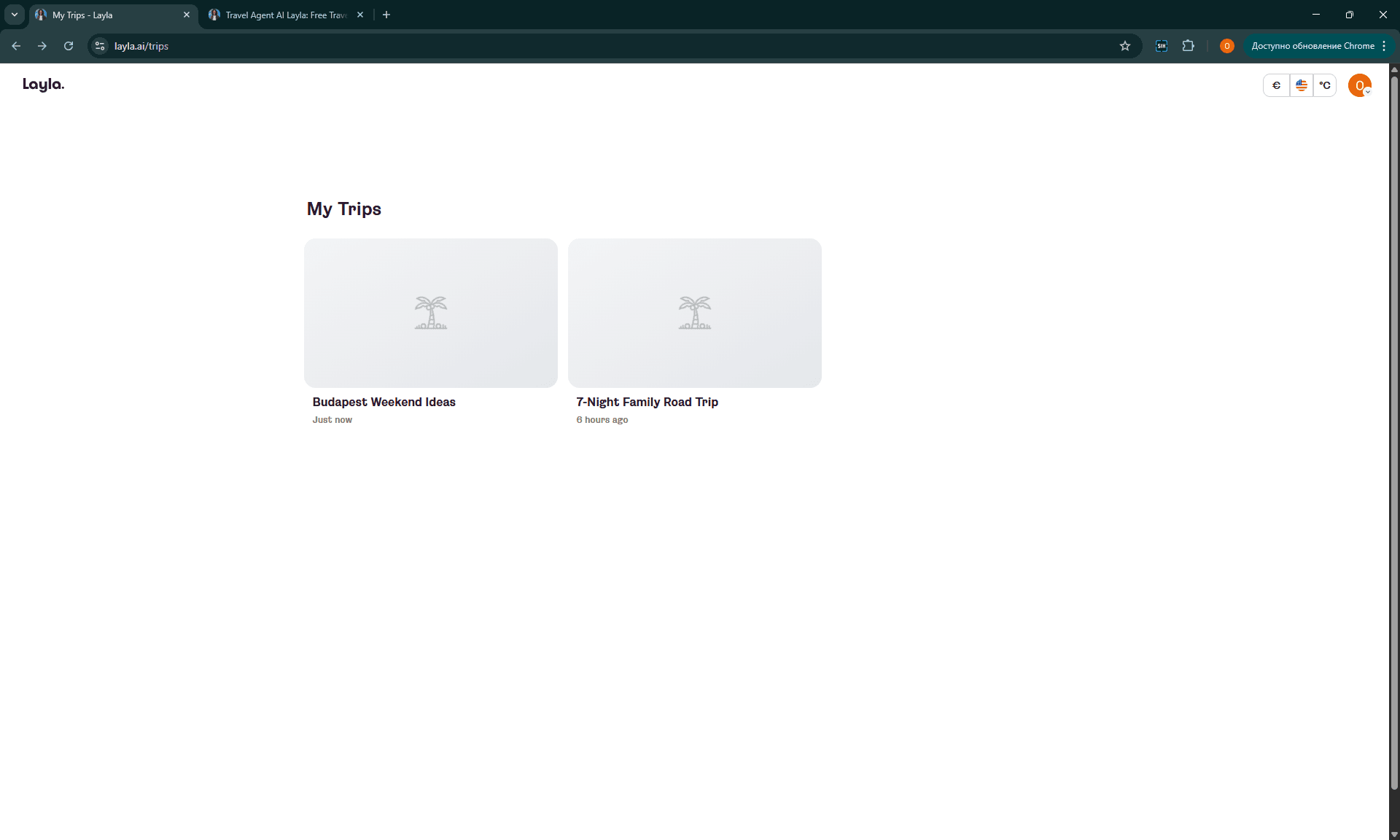
Insider tips no other AI gave:
- Slovak clip-route warning — between Hungary and Czechia, the GPS often routes you through a 12-mile (20km) sliver of Slovakia on D2 highway. Many travelers don’t notice they entered SK and get fined €100+ for missing the vignette. Layla flagged this. No other AI did.
- Meine Insel “sofa boats” — we didn’t end up on these (we used Bootsvermietung Kukis), but sofa boats are a real, distinctive product from a competing operator on Alte Donau (meine-insel.at) — floating “living rooms” with couches instead of regular boat seats. Layla knew about this niche. Mindtrip and iMean both gave generic “Booteria” without mentioning any operator’s signature product.
- Aldi/Lidl closed on May 1 — Layla flagged this specifically (Hungarian Labour Day). Mindtrip mentioned May 1, but didn’t say which stores would be closed. iMean missed it entirely.
- Children’s Railway Budapest — operated by kids in summer, runs through the Buda hills, niche kid attraction Layla knew about and the others didn’t.
- Bruno Family Park — indoor play park at Designer Outlet Parndorf, named directly. Layla knew the brand.
What Doesn’t Work About Layla
Service availability is fragile. From outside core target markets (US/EU primary IPs), Layla can be unreachable for 24+ hours. The product geo-locks aggressively.
Hard paywall after first answer. Trial gives one full response, then you must subscribe to continue. Cancel = immediate lockout (no grace period to finish your trip planning).
No interactive trip-building UI. Compared to Mindtrip’s venue cards and trip sidebar, Layla is just chat. Each new question is a new round.
Layla Review — Final Score
| Category | Score |
|---|---|
| Quality of single answer | 9/10 |
| Insider knowledge | 10/10 |
| Cross-border (vignettes) | 9/10 (best of all three) |
| Hertz hours / EES | 9/10 |
| UX (tone, conversation) | 9/10 |
| Hotel matching | 7/10 |
| Availability from non-target IPs | 2/10 |
| Aggressive paywall | 4/10 |
| Overall | ★★★★☆ 4/5 |
When to use Layla: if you have a US/EU IP and you can pay for the trial. The single response will likely be the most useful 90% of what you need to know — but you may not be able to access it depending on where you connect from.
→ Related: Layla AI Review: Honest Test on a Real Itinerary
What All Three AI Travel Agents Missed (4 Critical Fails)
Fail #1: Tropicarium
We told all three AI: “no zoos, no big museums” (we’d done those before). All three interpreted “no aquarium” too literally and steered us away from Tropicarium — which turned out to be the single best moment of the trip for our daughter.
Tropicarium is more than an aquarium. It’s an indoor jungle with tropical birds flying free, a 36-foot underwater shark tunnel, Europe’s largest piranha pool, alligators, caimans, snakes, monkeys. €26 (~$28 USD) for the family. It’s in the Campona shopping center in Budapest — easy to get to.
Why all three missed it: they were trained on tourist-facing content. Tropicarium is more of a family/locals destination. Generic AI-summarization of “best Budapest with kids” → Budapest Zoo or Aquaworld. Tropicarium doesn’t make that list, even though it’s on Google Maps with 9,000+ reviews and a 4.4 rating.
Lesson: when AI says “skip X,” check it yourself. Especially for kid-specific recommendations.
Fail #2: The €2,000 Hertz Deposit Problem
This is the most painful fail of the four — because it would have cost us the trip if I hadn’t found a workaround on the spot.
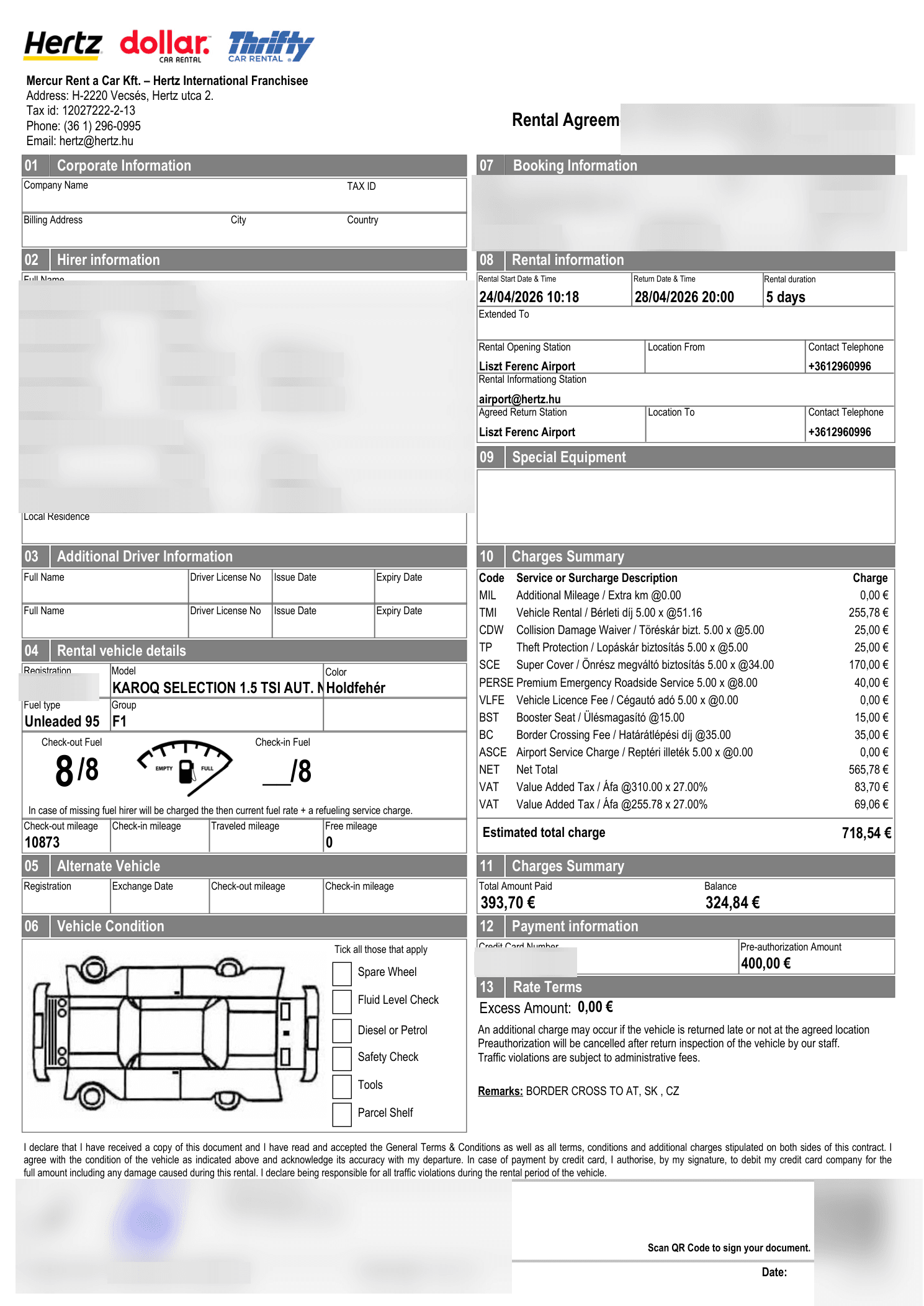
The situation: I arrived at Hertz Budapest Airport on April 24. Signed the contract, all good. At the final step the agent asked for a card for the €2,000 (~$2,160 USD) deposit.
Here’s the nuance no AI mentioned: as of the introduction of martial law in Ukraine, all Ukrainian banks are subject to a national-bank-imposed monthly transfer limit of about 100,000 UAH (~€1,930 / ~$2,090 USD). This limit is the same for every customer of every Ukrainian bank — it’s set by the National Bank of Ukraine, not by individual banks. I have a platinum card with all “premium” benefits, and my limit is the same as a regular customer’s. By late April, my available balance was around €400 — earlier expenses in the month had used up most of the limit.
Add to that: Hertz Budapest only accepts a physical plastic card for the deposit — virtual cards, Apple Pay, Google Pay are rejected.
This is a classic non-EU resident with European rental car problem, but for Ukrainian cardholders it’s amplified by the wartime cap. None of the three AI travel agents flagged it, even though my prompt explicitly said “We are non-EU travelers” and “Ukrainian residence permit.”
| AI | What it said about deposit |
|---|---|
| Mindtrip | Nothing |
| iMean | Generic “Confirm with Hertz that your contract allows” |
| Layla | “Inform them you’re crossing into Czechia and Austria (expect a cross-border fee of ~€30-50)” — nothing about deposit |
Comparison: Hertz Budapest vs Hertz Beauvais (France)
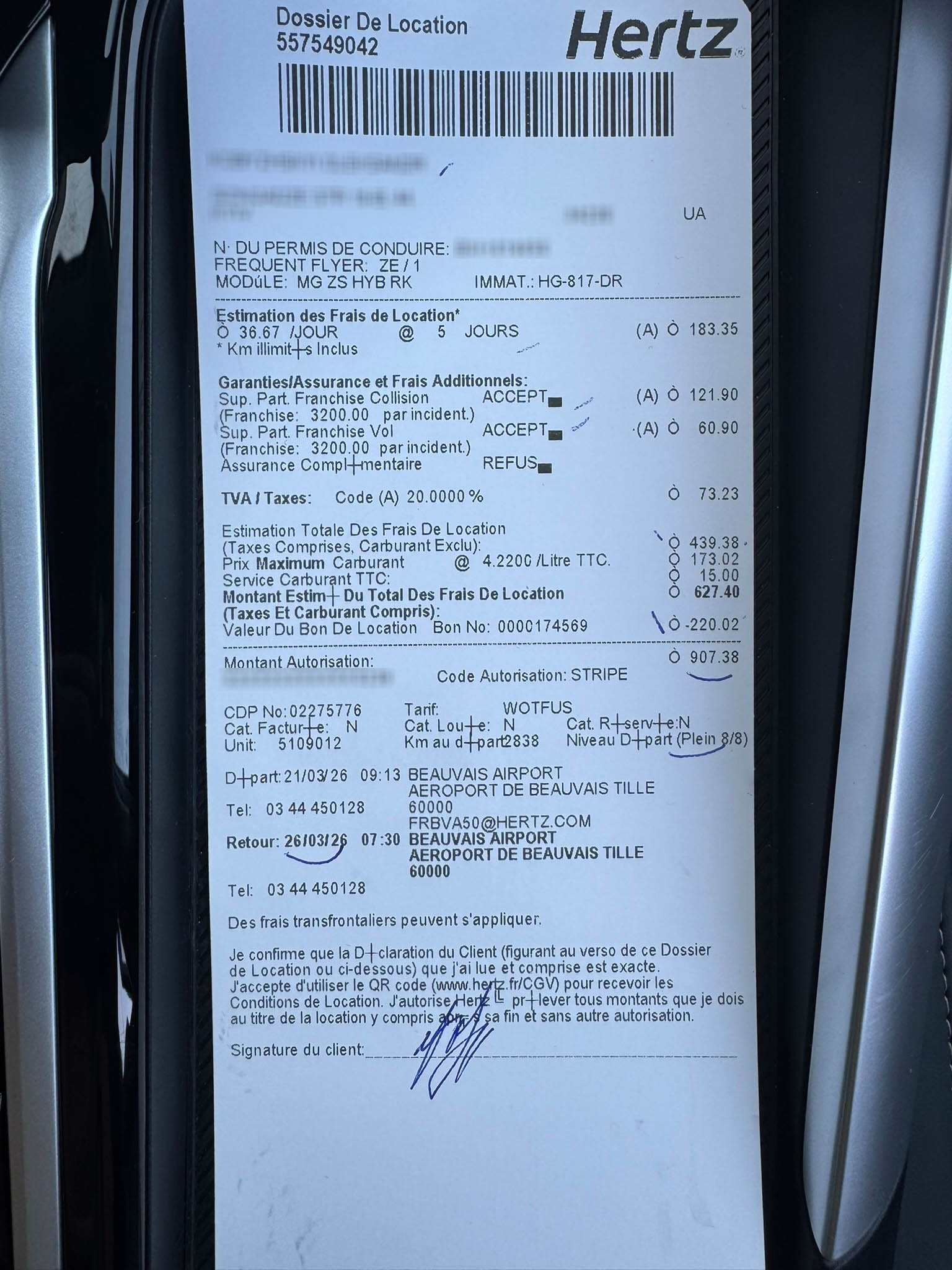
In March 2026 I rented a car at Hertz Beauvais Airport (France) for a Normandy family trip — same person, same documents, same length of trip. The differences:
| Parameter | Hertz Beauvais (France) | Hertz Budapest |
|---|---|---|
| Vehicle | MG ZS Hybrid | Skoda Karoq |
| Length | 5 days | 5 days |
| Card type for deposit | Virtual cards accepted | Physical plastic only |
| Total rental cost | €627 (~$677 USD) (fuel, insurance, taxes) | €718.54 (~$777 USD) (Super Cover, cross-border, insurance) |
| Pre-authorization (held on card) | €907 (~$980 USD) (full cost + fuel reserve) | €400 (~$432 USD) (reserve over rental cost after Super Cover) |
| Net deposit beyond rental cost | ~€280 (~$303 USD) | €400 (~$432 USD) |
| Cross-border fee | Not applicable (single country) | €35 |
Same multinational company, same contract type — different rules in different countries. This is provider-specific and country-specific simultaneously. AI can’t know this without direct access to Hertz’s internal country rules.
In reality, the deposit is the most painful expense category for travelers from countries with limited cards: Ukrainian debit (with the wartime cap), Belarusian, Georgian, Moldovan cards, and non-resident accounts in the Balkans.
The Solution I Found On the Spot
The Hertz agent offered Super Cover insurance — extended coverage for €170 (~$184 USD) over 5 days. With Super Cover, the deposit drops from €2,000 to €400. €400 was what I had on my card.
Technically it worked like this:
- Rental cost + Super Cover + fees (€718.54) I paid with a virtual card through Hertz’s system — virtual cards work for the main transaction
- Deposit €400 went on a physical plastic card — Hertz requires plastic for the hold
In other words, you need both cards: virtual for the main transaction and physical exclusively for the deposit. If you arrived with only one card — even with two cards on different accounts but both virtual — the deposit wouldn’t go through.
Without Super Cover, I would have:
- Not gotten the car
- Lost the prepaid Hertz booking (€718.54)
- Lost the first night at OREA Resort Santon
- Cancelled the whole 8-day trip
This is specificity AI can’t know without access to internal rental-company rules. Hertz doesn’t publish this scheme openly — only the agents at the counter know. AI is trained on open sources, which don’t have this.
Tips for Readers with Limited Cards
- Email the rental company before booking: ask what the deposit is and whether extended insurance reduces it. Get the answer in writing with specific location.
- Bring two cards to the counter — at least one physical plastic. Virtual cards may not be accepted for deposits.
- Compare requirements by country: Hertz France and Hertz Hungary have different rules. A booking in one country ≠ same conditions in another, even from the same brand.
- Have a cash buffer — €200-300 (~$215-325 USD) cash to cover insurance if needed.
- Super Cover / Premium Insurance / Full Coverage — different names across companies, same logic: more insurance, smaller deposit. Avis and Sixt have similar options.
- For multi-country trips, declare all countries at pickup. Hertz charges cross-border fee (€35 in our case) once, but the countries must be in the contract.
- For Ukrainians and travelers from countries with currency restrictions — factor in your country’s national-bank limits. Card tier doesn’t override them.
This is not advice from AI — this is advice I can give from personal experience. AI will generate it only if you specifically ask “what about deposit problems with limited cards?” — but most users don’t, because they don’t know the problem exists.
Fail #3: 2027 Date Bug (Mindtrip + iMean)
When you ask Mindtrip or iMean for flights for “April 24, 2026,” about 30% of the time they show you flights for April 24, 2027. Same dates, same route, same airline names — but the year is wrong.
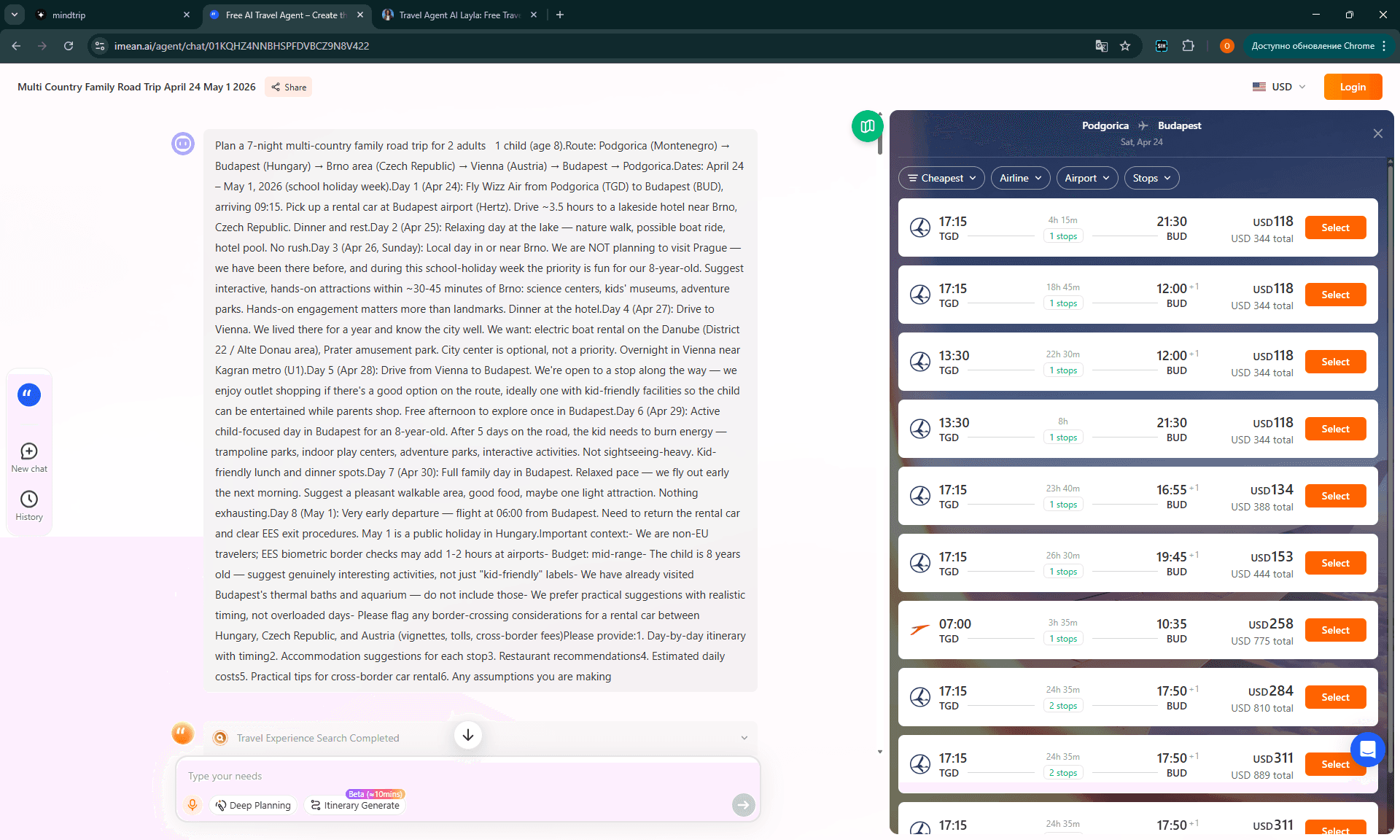
This is the retrospective query problem: when you ask about a trip that’s already past, or about dates close to the cutoff, AI flight search jumps forward a year. Layla didn’t have this bug because Layla doesn’t search live flights this way.
Fail #4: Budapest Airport Pre-6-AM Departures
All three AI told us: “Arrive 2 hours before your 6 AM flight.” Reality: the airport doesn’t open until 3:30 AM. We arrived at 3:00 AM and stood in front of locked doors with our daughter for 30 minutes. None of the three flagged early-morning closures.
Alte Donau — A Test Case AI Can’t Pass
In our prompt I specified that we wanted an electric boat on Alte Donau in Vienna’s District 22. All three AI dutifully gave us Booteria or Meine Insel — these are correct. But none of them explained why this water is different.
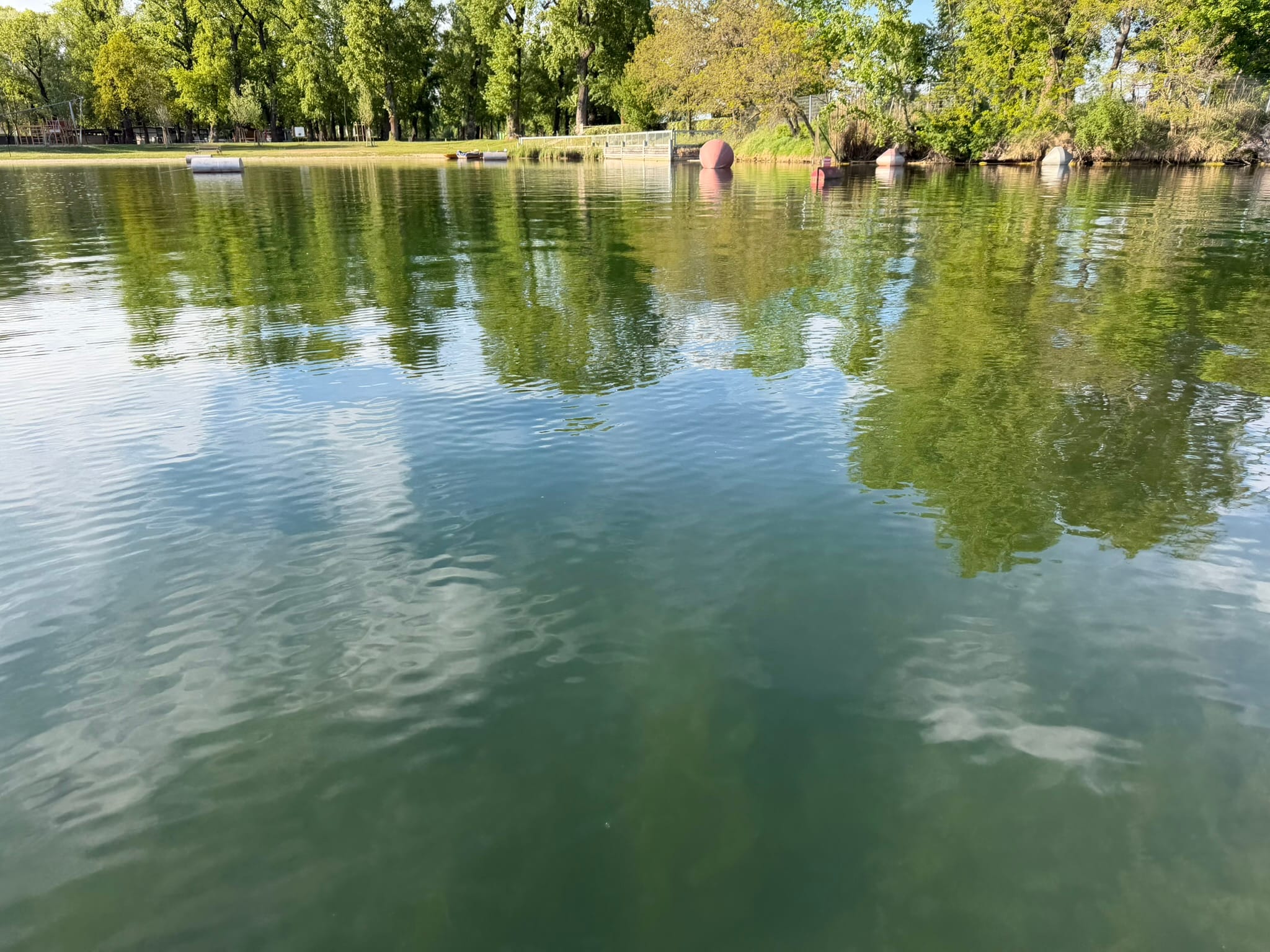
Alte Donau (“Old Danube”) is a river-lake oxbow, separated from the main channel of the Danube during the 19th-century Danube regulation works. On a map it looks like an ordinary river-lake. But if you open Google Maps in satellite mode, the striking difference in water color is visible:
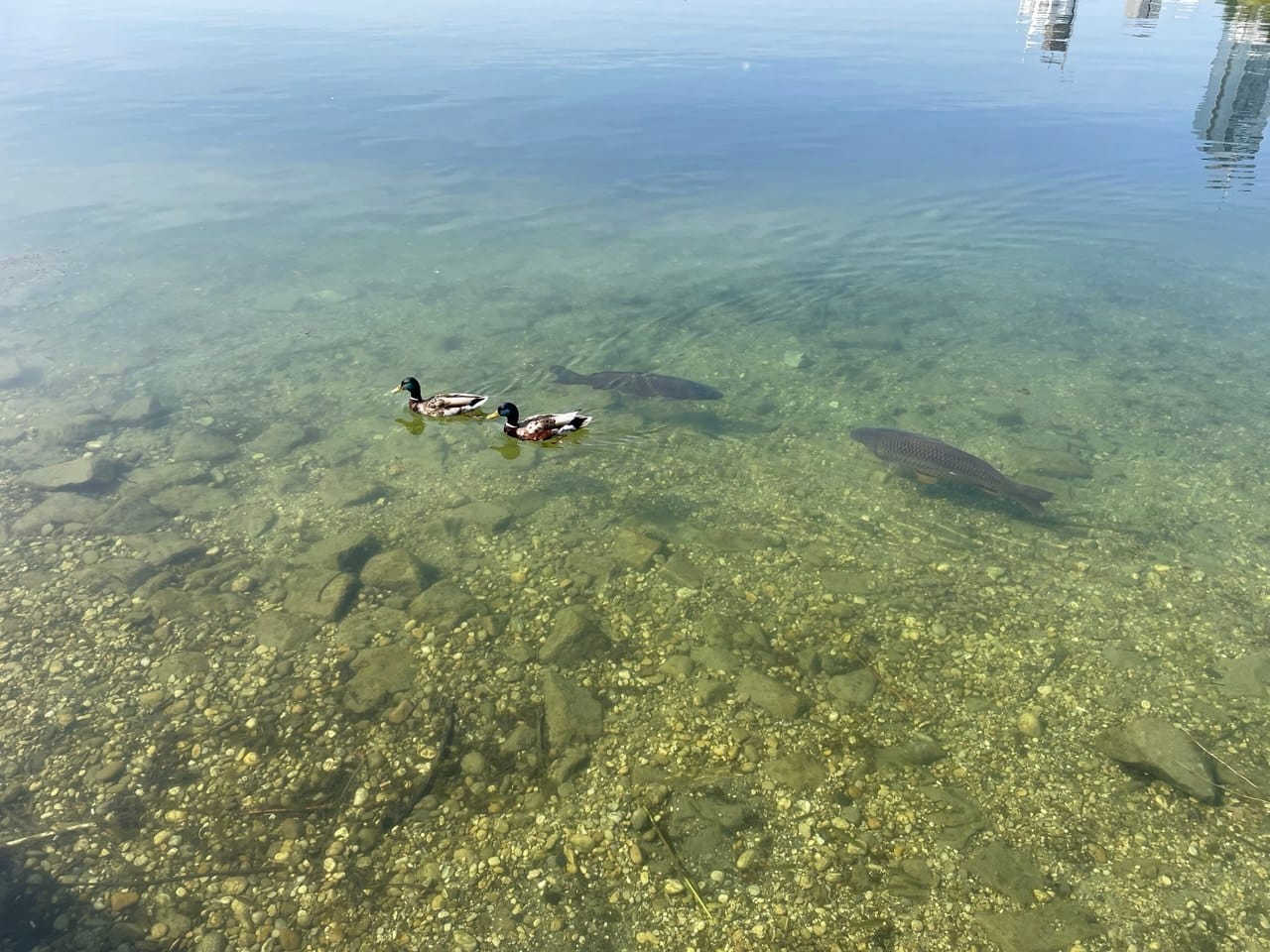

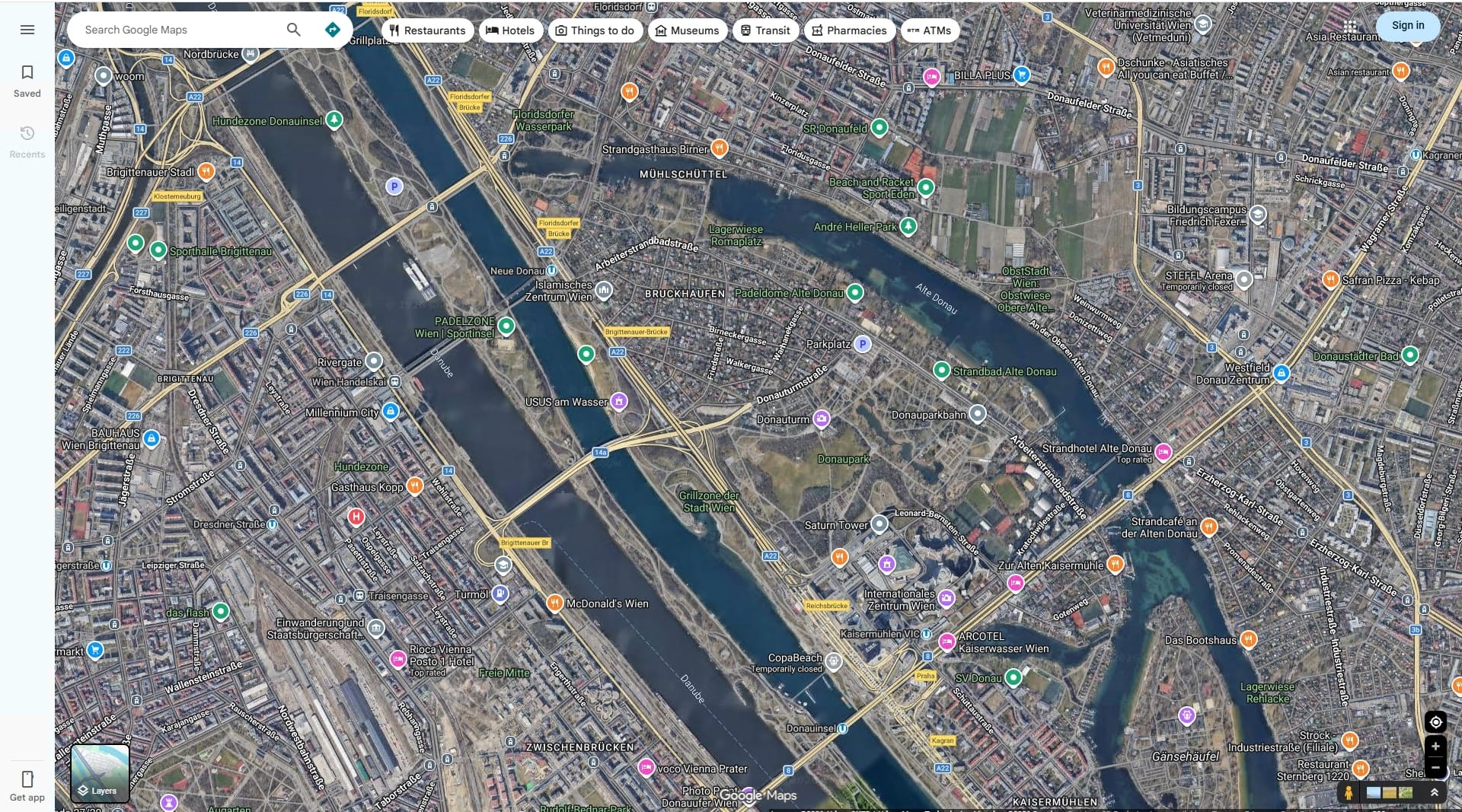
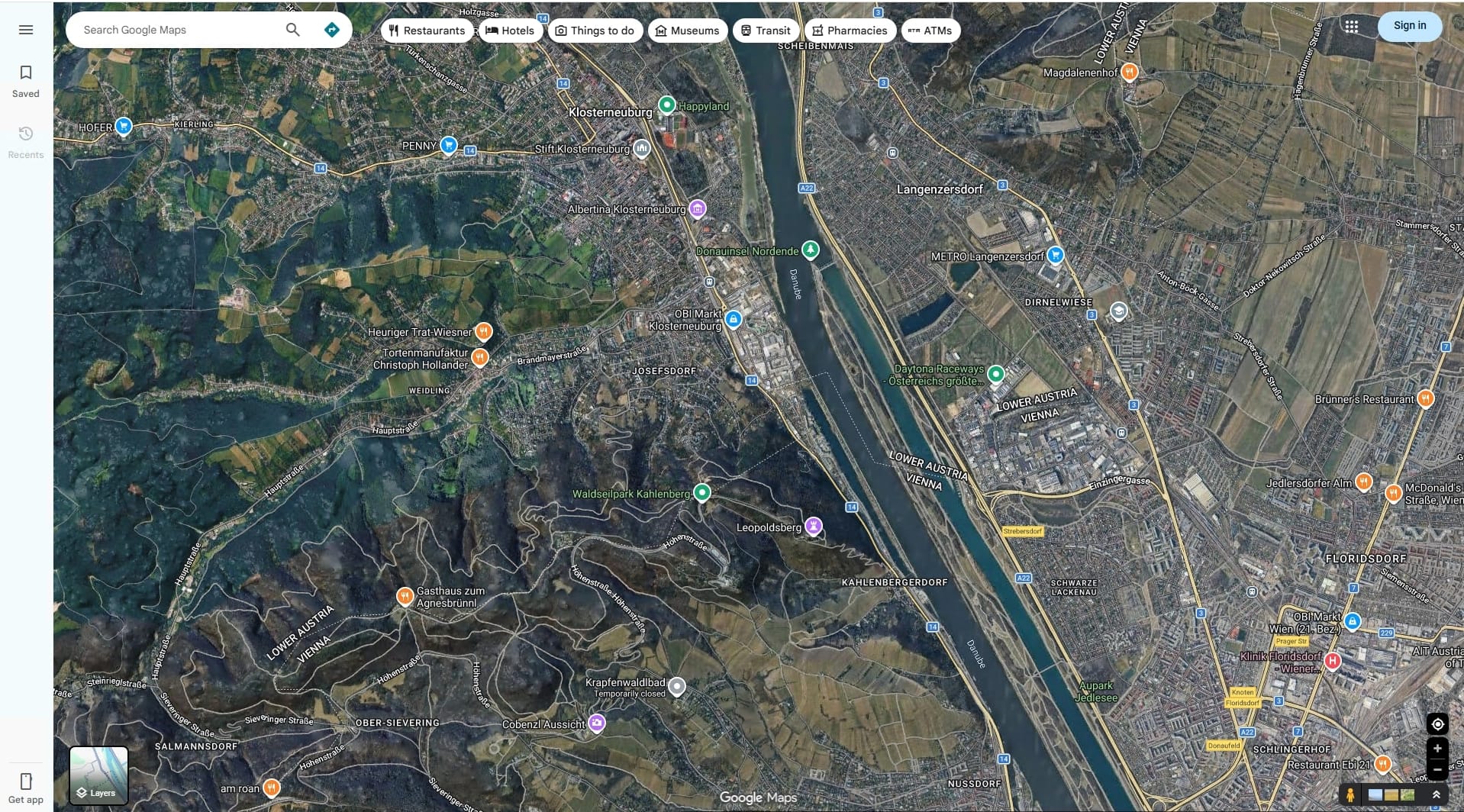
On one side — muddy brown-grey Danube. On the other — clear turquoise-green water through which you can see the gravel bottom and carp swimming alongside ducks. The boundary between the two colors is literally visible from orbit.
Why Alte Donau Is Cleaner Than the Main Danube
This isn’t about “one filtration plant,” as I first thought. The actual reason is a combination of five factors, and understanding it explains why AI can’t get this right:
1. It’s an oxbow lake, not an active river. The main Danube has constant cargo traffic stirring up sediment, current, waves. Alte Donau has almost no current and no boat traffic. Physically it behaves like a lake.
2. Vienna manages Alte Donau as bathing water. The city tests water quality regularly during swimming season, and official data has rated it “excellent” for many years running — on par with Austria’s best lakes.
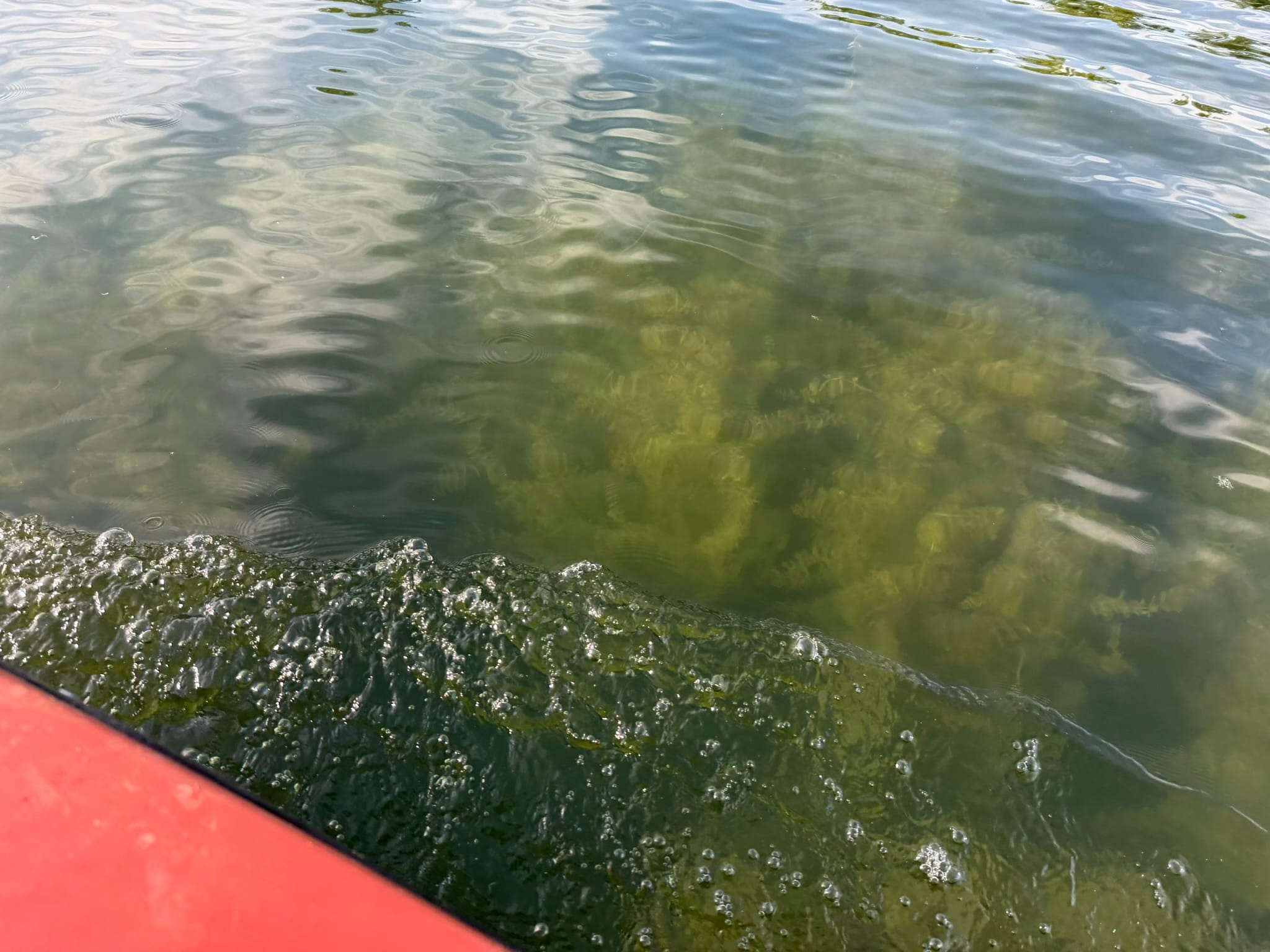
3. Underwater plants act as a natural filter. They bind nutrients, reduce turbidity, and oxygenate the water. The plants sometimes bother swimmers and boats, but the city doesn’t remove them — instead, it manages them, because they’re key to water quality.
4. Recovery from the 1990s eutrophication crisis. In the 90s, Alte Donau experienced an algae bloom from excess phosphates. After that, Vienna systematically restored the water body: reduced phosphate input, improved sewage treatment around the area, managed vegetation. Clean water here isn’t natural — it’s the result of deliberate work.
5. Einlaufbauwerk Langenzersdorf is a flood-defense structure, not a filter. This is a 1975 engineering object north of Vienna, at the entrance to Neue Donau (don’t confuse with Alte Donau — it’s a different channel). Its function is flood defense for Vienna: when the Danube runs high, the gates open and divert part of the flow into Neue Donau, so the city doesn’t flood. Normally the structure is closed, and Neue Donau behaves like a still water body. Notably, this dam doubles as a pedestrian and bike bridge connecting the Langenzersdorf district with Donauinsel — useful for cyclists along the Danube.
Important: after major floods, Neue Donau may be temporarily closed for swimming, because flood water from the Danube has entered the channel. Quality recovers, but not immediately.
What This Means for the Traveler
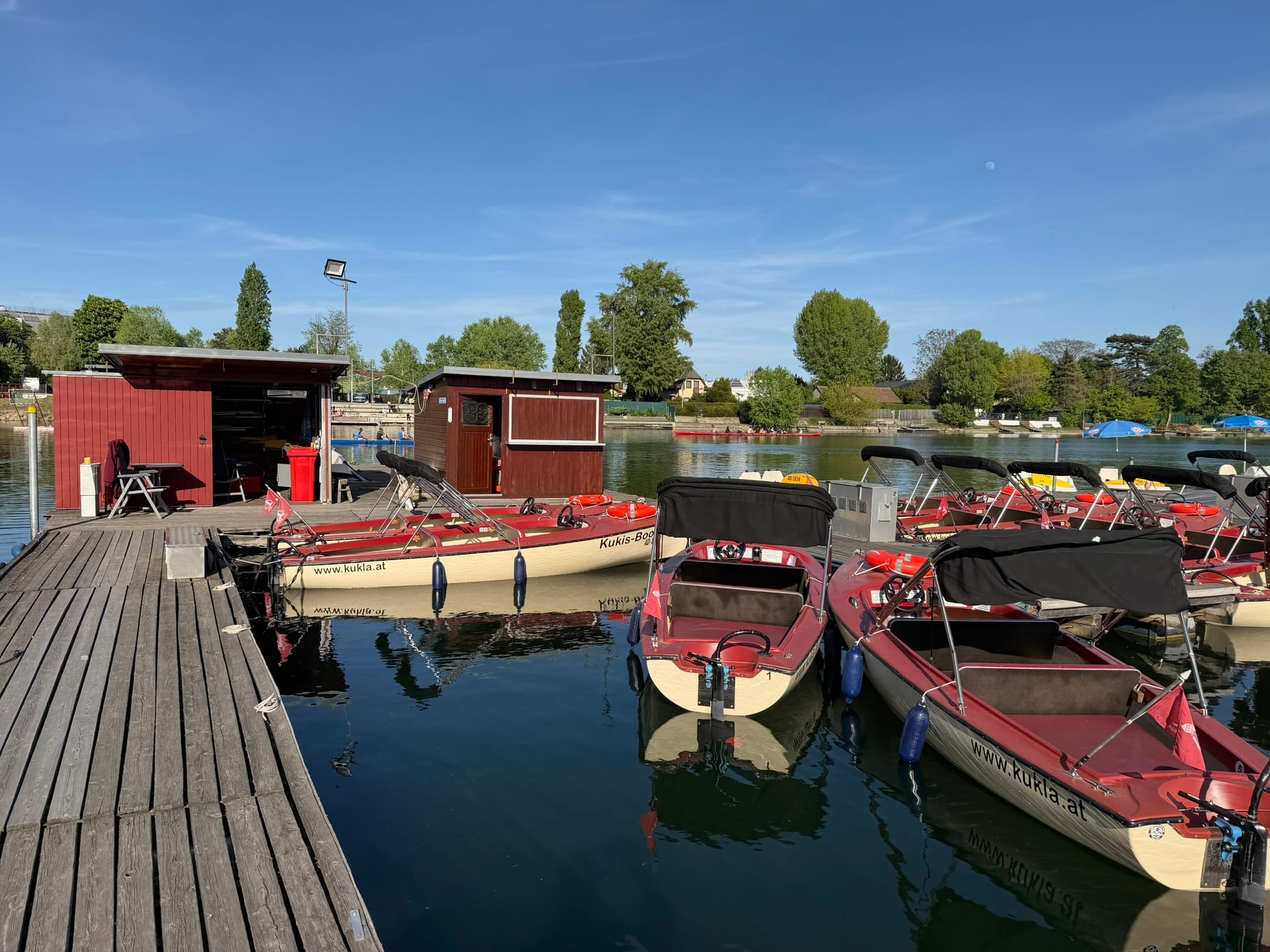
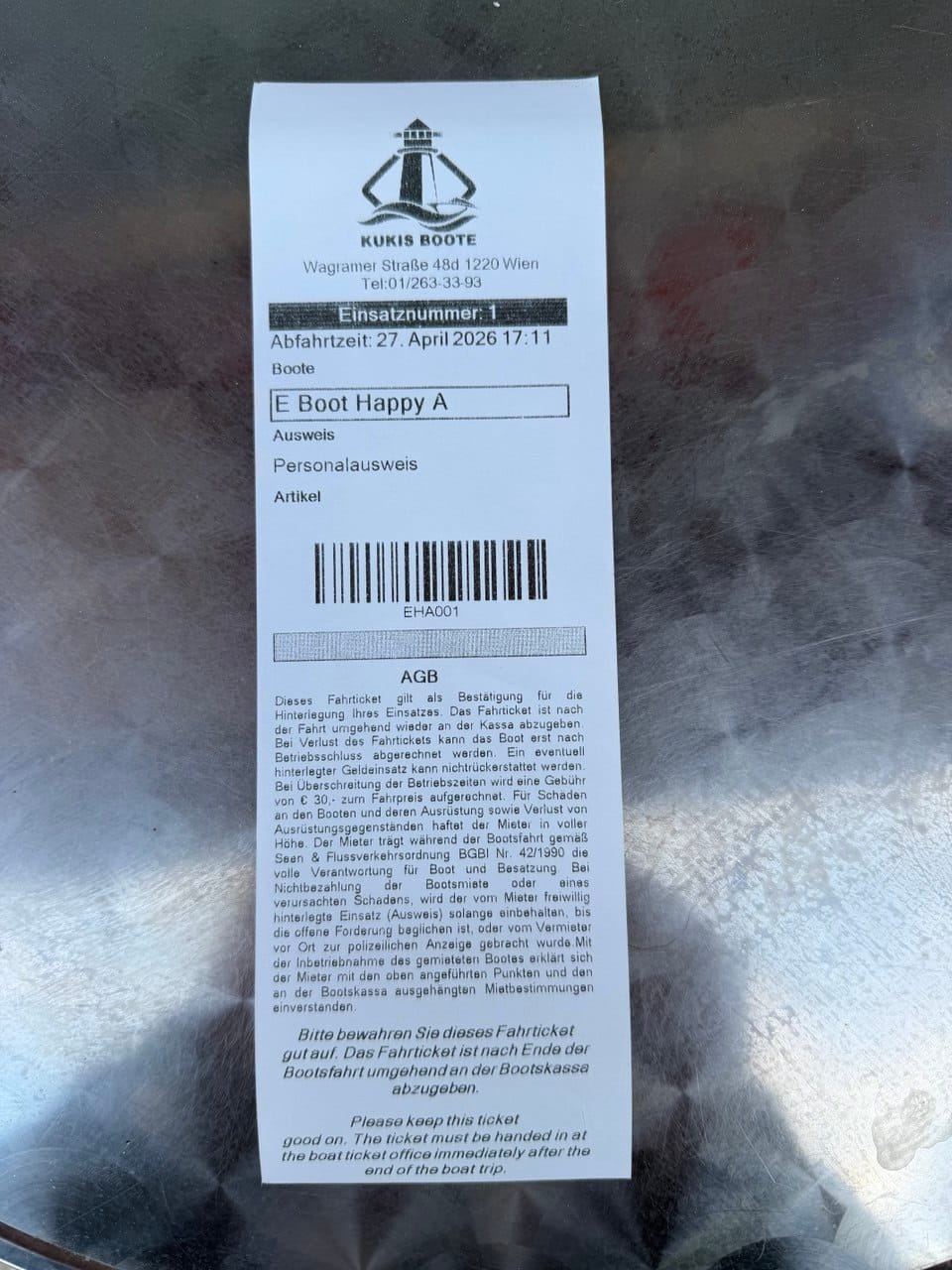
If you’re planning a family day on the water in Vienna — choose Alte Donau, not Neue Donau, and definitely not the main channel. Boat rental stations are clustered together: Bootsvermietung Kukis (we rented an “E Boot Happy A” for €33/hour), Bootsverleih Eppel, Schinakl, Booteria. All within walking distance of U1 Kagran.
For swimming: Strandbad Gänsehäufel and Strandbad Alte Donau. Water quality in summer is consistently “excellent.” This is a 2-kilometer recreation zone in a major European city with water at literal drinking-quality clarity.
Why This Matters for an Article About AI Travel Agents
This is the perfect example of knowledge depth that doesn’t appear in standard travel guides. To explain why Alte Donau is so clean, you need to know about 19th-century Danube regulation, the difference between Alte and Neue Donau, the 90s algae crisis, the management of underwater plants. All this exists in German-language sources and the local press — but AI on a typical tourist prompt won’t surface it.
Layla mentioned “sofa-boats” from Meine Insel — already getting toward “local friendly tip” territory. But no AI explained why Alte Donau is special. And that’s the key difference between an AI travel agent and a human travel agent: a human explains context; an AI gives facts.

AI Travel Agent vs Reality — Comparison Table
I tracked every AI claim against actual receipts and reality. Here’s the head-to-head:
| Claim | Mindtrip | iMean | Layla | Reality |
|---|---|---|---|---|
| Hotels match | ✅ 2/3 | 🟡 1/3 | 🟡 1/3 | OREA + Citadines + ibis |
| OREA Santon | ✅ exact | ✅ exact | ❌ different hotel | What we used |
| Citadines Vienna | ✅ exact | ❌ missed | ✅ close | What we used |
| HU vignette price €18 | ❌ missed | 🟡 €9.50 (off) | ✅ €16.50 (close) | Actual: €18 |
| SK eZnámka €10.80 | ✅ exact | 🟡 €11.50 | ✅ €10.80 | Actual: €10.80 |
| AT vignette €12.80 | ✅ | ❌ €9.20 | ✅ | Actual: €12.80 |
| Hertz HU vignette inclusion | ❌ | ✅ knew | ❌ | Reality: included |
| Hertz cross-border fee €35 | 🟡 | 🟡 €30-50 | ✅ €30-50 | Actual: €35 |
| May 1 holiday warning | ❌ first | ✅ first | ✅ first | Reality: shops closed |
| EES exit realistic estimate | “uncertain” | “30-90 sec” | “1-2 hours” | Actual: booths closed, 10-15 min |
| Aldi/Lidl closed May 1 | ❌ | ❌ | ✅ specific | Reality: yes |
| Total budget estimate | ❌ none | $1,670-2,430 | ❌ none | Actual: ~$2,810 USD |
Quick Reference — Verified Data for Multi-Country Trips
If you don’t need the full AI analysis but want the verified data for trip planning — here are five boxes you can copy-paste:
📋 Vignette prices 2026 (verified)
| Country | 10-day | Where to buy |
|---|---|---|
| 🇭🇺 Hungary D1 | 6,900 HUF (~€18 / ~$19.50 USD) | nemzetiutdij.hu (included with Hertz Hungary rentals) |
| 🇸🇰 Slovakia | €10.80 (~$11.65 USD) | eznamka.sk |
| 🇨🇿 Czechia | ~€12.50 (310 CZK / ~$13.50 USD) | edalnice.cz (only the official portal — never third-party sites!) |
| 🇦🇹 Austria | €12.80 (~$13.85 USD) | asfinag.at or sticker at gas stations |
🚗 Hertz Budapest Airport — practical notes
- Counter hours: approximately 7:00 AM – 10:00 PM
- After-hours return: ✅ available via key drop box at return area
- Cross-border fee: €35 (~$38 USD) one-time (not per crossing)
- Deposit: €2,000 (~$2,160 USD) with standard insurance, €400 with Super Cover (€170 over 5 days) — physical plastic card required
- HU vignette included — don’t buy separately
✈️ BUD Airport for flights before 6 AM
- Arrive no earlier than 3:30 AM — earlier than that, everything is closed
- Water 250+ ml will be confiscated even from your child
- Duty-free opens at 5:00 AM
- Passport control opens around 3:45 AM
- EES biometrics work, adds 30-60 seconds per passenger
🛍️ May 1 in Budapest (Labour Day)
- Closed: Aldi, Lidl, Spar, most shopping centers, many pharmacies
- Open: gas stations, restaurants (with tourist demand), airport operates normally
- Tip: stock up on water and food the evening of April 30
👶 Verified family-friendly spots with an 8-year-old
- VIDA! Brno — €25 (~$27 USD) family, 4 hours of interactive science
- Tropicarium-Oceanarium Budapest — €26 (~$28 USD) family, 1.5–2 hours
- CyberJump Park Buda — trampoline park, ~€10–12/hour (~$11–13 USD)
- Designer Outlet Parndorf — Dinoland for kids 3–10
- Electric boats Alte Donau (Vienna) — from €15/hour (~$16 USD)
- Electric boats Brněnská přehrada (Brno) — €24/hour (~$26 USD)
Should You Use an AI Travel Agent? My Honest Verdict
After 4 hours of testing and 12 follow-ups across three AI agents — my answer is: use an AI travel agent as a starting framework, not as a finished plan.
1. Local knowledge. Tropicarium beating a standard aquarium recommendation, Meine Insel’s sofa-boats, the Slovak clip-route with mandatory vignettes — none of this came from AI (or came only from Layla, which was unavailable for 24 hours).
2. Provider-specific details. Hertz HU vignette inclusion, Super Cover insurance for reducing deposits, exact parking prices at Donau Zentrum — AI doesn’t know. This is business data, not public.
3. Cardholder-specific reality. The €2,000 deposit problem with Ukrainian cards under martial law isn’t in any open dataset. AI couldn’t know it without specific direct experience.
4. Edge-of-day timing. Pre-6 AM airport closure at BUD. The two-week window when shops are closed for Hungarian Labour Day. The fact that Tropicarium is best in the afternoon, when Campona is less crowded.
What AI does do well:
- Hotel matching (Mindtrip especially, in our test)
- Vignette pricing for major routes (Layla had the closest)
- Restaurant recommendations (all three found Kawamura)
- General timing for famous sights
- Cross-border legal basics
What AI fails at:
- Specific deposit/payment edge cases
- Local-knowledge “best” picks that aren’t in tourist guides
- Cancellation timing, weekend hour adjustments, holiday closures
- Provider-specific clauses in rental contracts
- Unstated assumptions in your prompt (you said “no zoo” — they translated to “no aquarium”)
My approach for the next trip: I’ll use Mindtrip first for hotel and venue matching (its UX makes the conversation efficient), then Layla for cross-border and insider-knowledge questions (when accessible), then fact-check everything with primary sources (asfinag.at, eznamka.sk, the rental company directly).
Don’t pay for AI travel agent subscriptions until you’ve fact-checked their free responses. The differences between $0 and $50/year are smaller than you’d think.
→ Related: Best AI Trip Planners 2026: 10 Tools Compared
AI Travel Agent FAQ
Q: What is the best free AI travel agent? A: From this test — Mindtrip, by a clear margin. It’s fully free, has the best UX (venue cards, persistent trip sidebar, suggested follow-ups), and matched 2 of 3 hotels exactly. iMean has a soft paywall but content is accessible by rephrasing. Layla requires a paid trial after the first response.
Q: Can I trust an AI travel agent for booking? A: Use it for ideas and structure. Always verify the actual price and availability on the official website before booking. AI hallucinates prices and dates — see the iMean Hungary vignette price (€9.50 vs actual €18) and the 2027 date bug.
Q: Which AI travel agent works best for cross-border road trips? A: Layla, when it works. It was the only AI that gave all four vignette prices accurately, flagged the Slovak clip-route between Hungary and Czechia, and warned about Hertz cross-border specifics. The catch: Layla can be unreachable for 24+ hours from non-target IPs.
Q: Do AI travel agents handle non-EU traveler edge cases? A: No. None of the three AI agents flagged the deposit problem for Ukrainian cardholders, or the physical-card requirement, or the €2,000 standard deposit. If you’re a non-EU resident or you have a debit card with country-specific limits, email the rental company directly before booking.
Q: Are there real differences between paid and free AI travel agents? A: Depends on the tool. Mindtrip is fully free — no paid subscription, all features available without paywall (monetized through affiliate partnerships with Booking, Priceline, Viator). iMean’s paywall is bypassable by rephrasing — most answers are still accessible. Layla — premium opens up multi-turn conversation after the first response, but with constraints (cancel = immediate lockout). If you’re choosing among the three, Mindtrip is the only one that doesn’t require any payment data at all.
Q: How do I avoid AI travel agent hallucinations? A: For specific facts (prices, addresses, opening hours), always verify with a primary source. iMean invented “Bátrak Parkja” — a park that doesn’t exist. Penguins were claimed at Tropicarium (none). Cross-check anything specific against Google Maps, the venue’s official site, or — for prices — the relevant government portal.
Tested: April 2026. Itinerary: 8 days, 4 countries (Montenegro → Hungary → Czechia → Austria → Hungary → Montenegro). All screenshots, receipts, and photos are real.