
Valentine’s weekend, February 2026. Budva → Dubrovnik. One prompt, three AI travel planners, one real road trip.
This AI travel planner review is based on a real road trip, not a demo.
Why I Did This
Every other AI travel planner review looks the same: someone opens a tool, screenshots the interface, writes “nice UI, recommended.” Nobody goes anywhere. Nobody checks if the restaurants are open, if drive times hold up, or what happens when February on the Adriatic brings days of nonstop rain.
This isn’t a UI review — it’s an AI travel planner field test on a real trip.

I took a different approach. I gave three tools — ChatGPT, Layla AI, and Wanderlog — the exact same prompt, then drove the route myself. Rockfall debris near a tunnel, gravel roads, a ferry, a quiet border, and rain so heavy we didn’t reach a single restaurant the AI tools recommended.
No sponsorships here. Just a trip report.
The Prompt (Same for All Three)
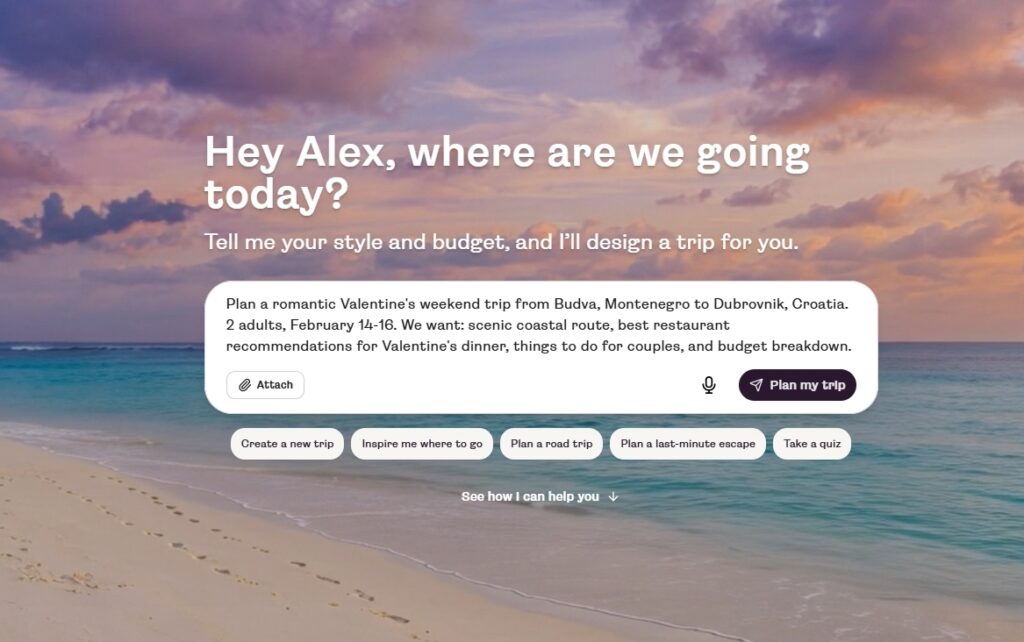
I sent each AI the same request. No hints, no follow-ups, no second chances:
“Plan a romantic Valentine’s weekend trip from Budva, Montenegro to Dubrovnik, Croatia. 2 adults, February 14-16. We want: scenic coastal route, best restaurant recommendations for Valentine’s dinner, things to do for couples, and budget breakdown.”
This prompt is a good stress test for any AI travel planner.
Whatever came back on the first try — that’s what I’m judging.

What Each AI Suggested
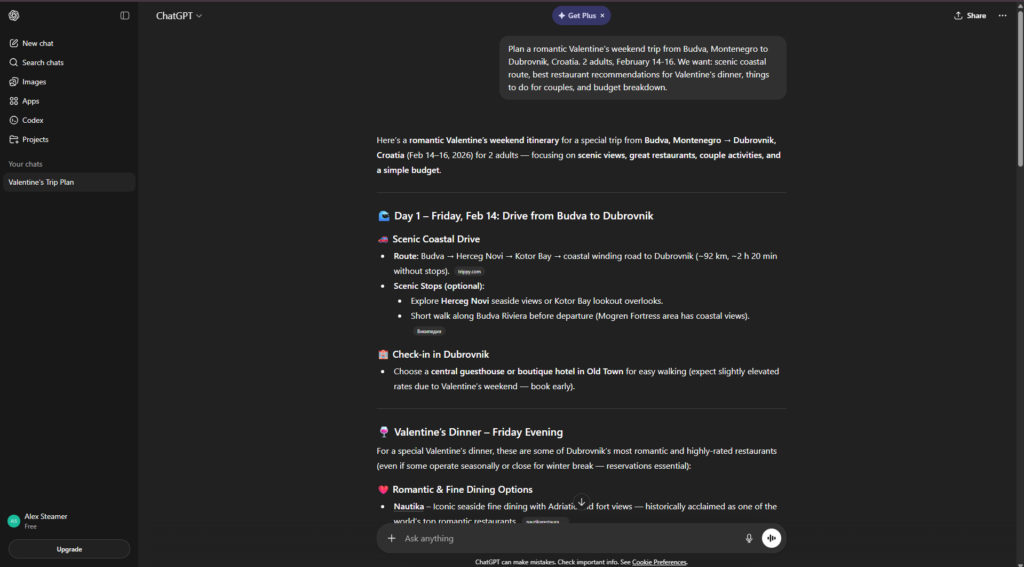
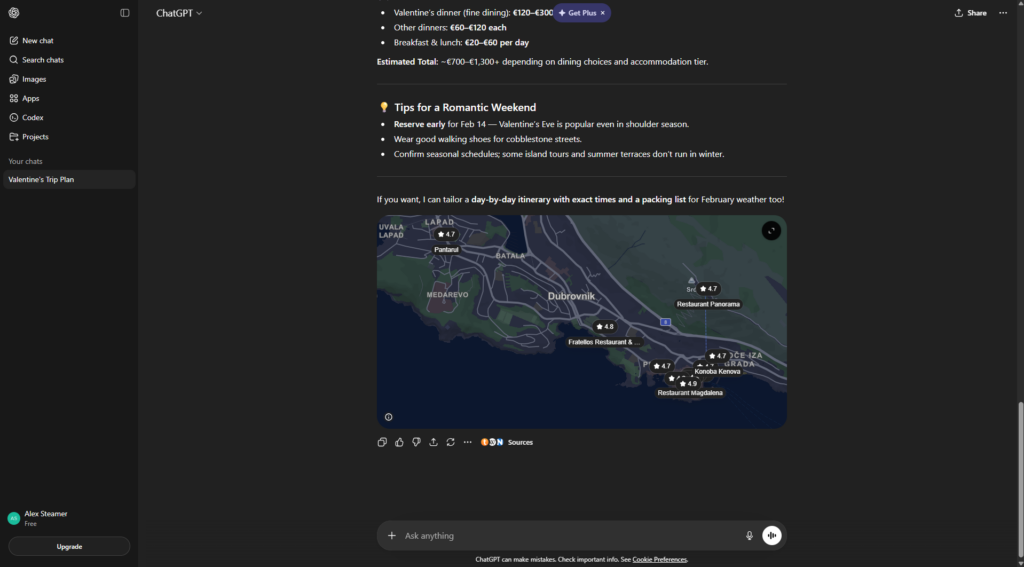
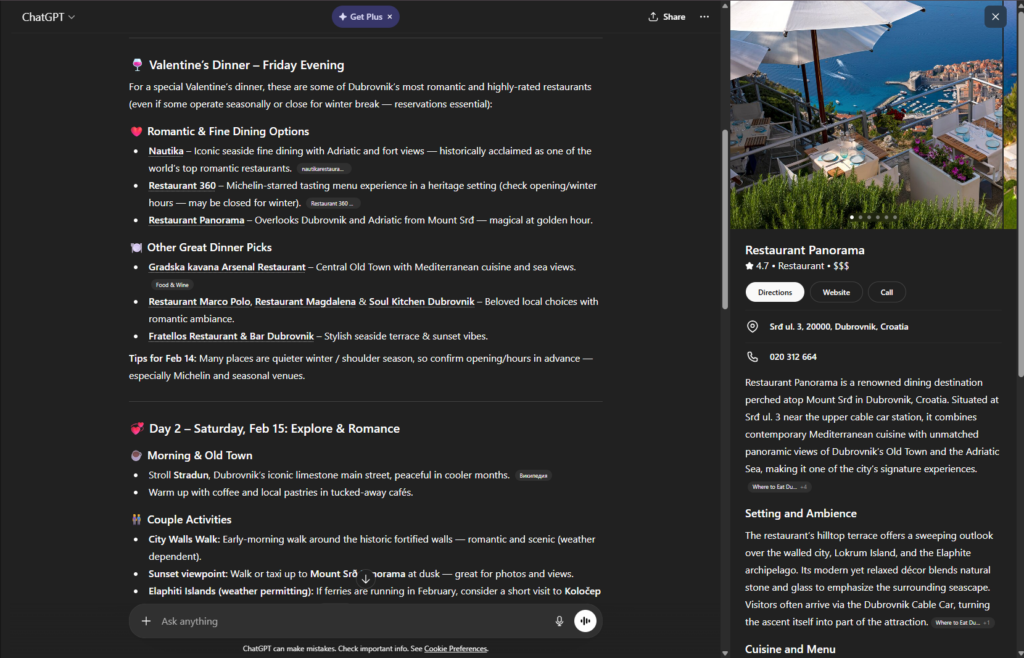
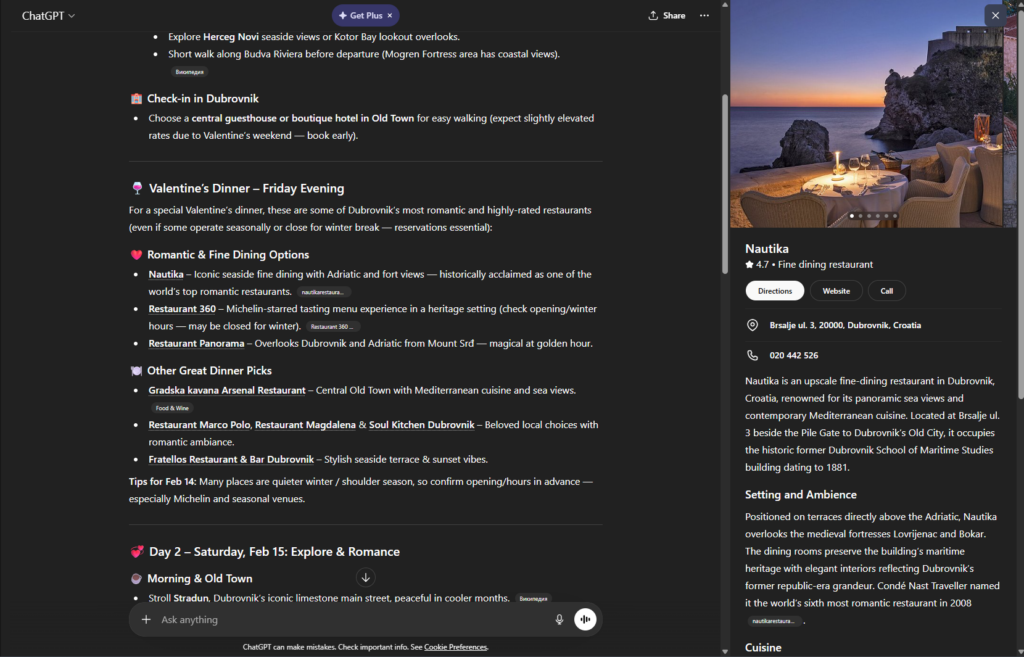
ChatGPT AI Travel Planner Output
ChatGPT returned a detailed text-only plan covering three days. Route through Herceg Novi and the Bay of Kotor. Estimated drive: 2h 20m. Restaurant picks: Nautika, Restaurant 360 (Michelin), Panorama on Mount Srđ. Budget: €700–1,300 for two.
What worked: Very thorough, broken down day by day, with source links. It was the only tool that flagged some restaurants might close for winter.
What didn’t: Text-only — no interactive map, minimal visuals. Didn’t name a specific hotel or price. Nothing about the ferry, the border crossing, parking, or road conditions in winter.
Layla AI Travel Planner Output (First Impressions)
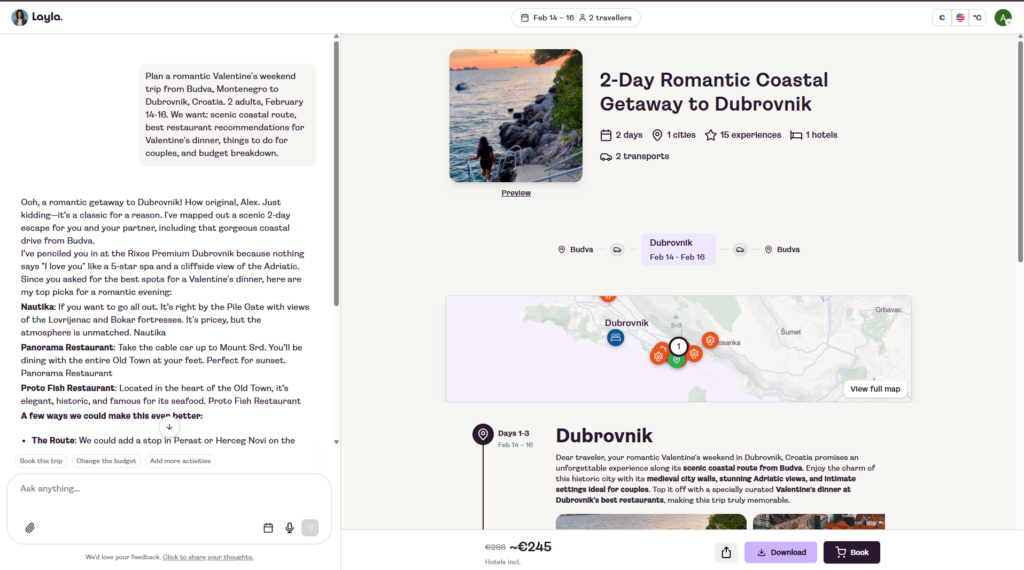
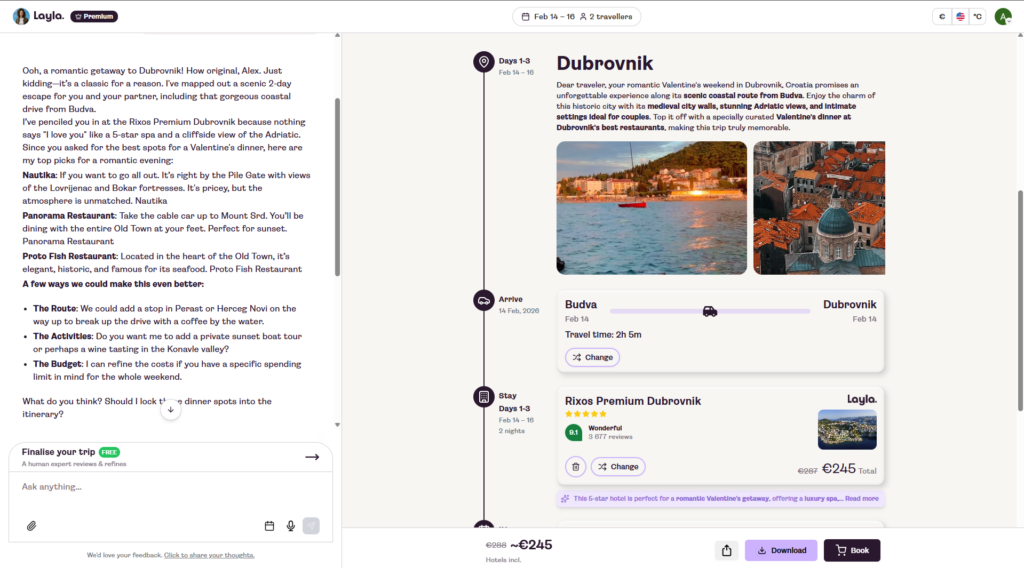
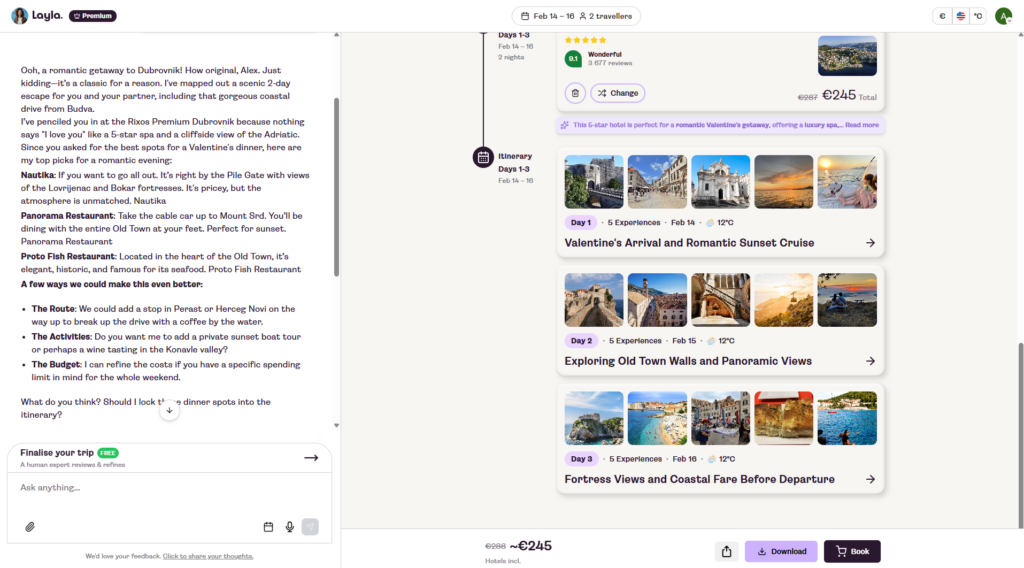
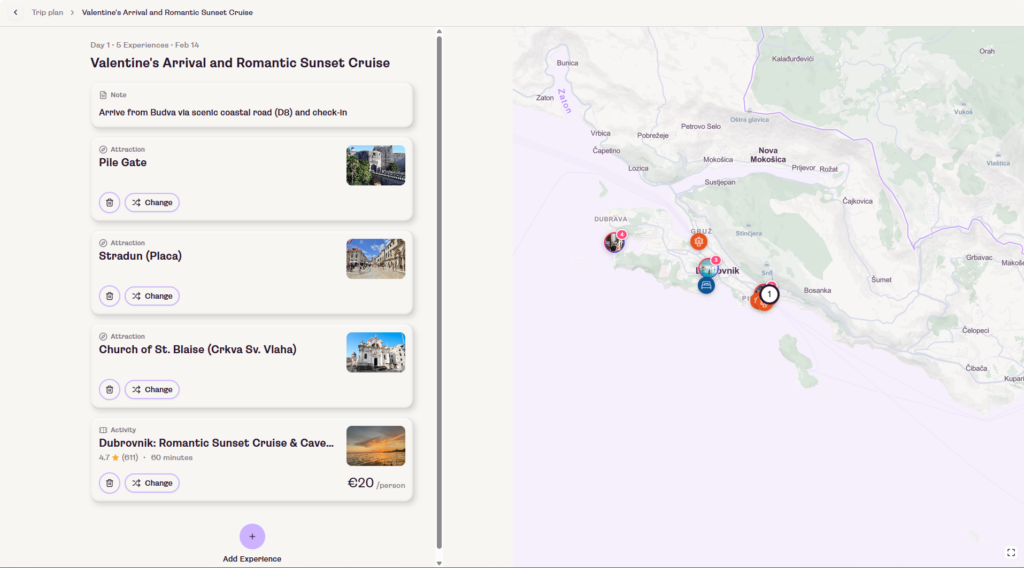
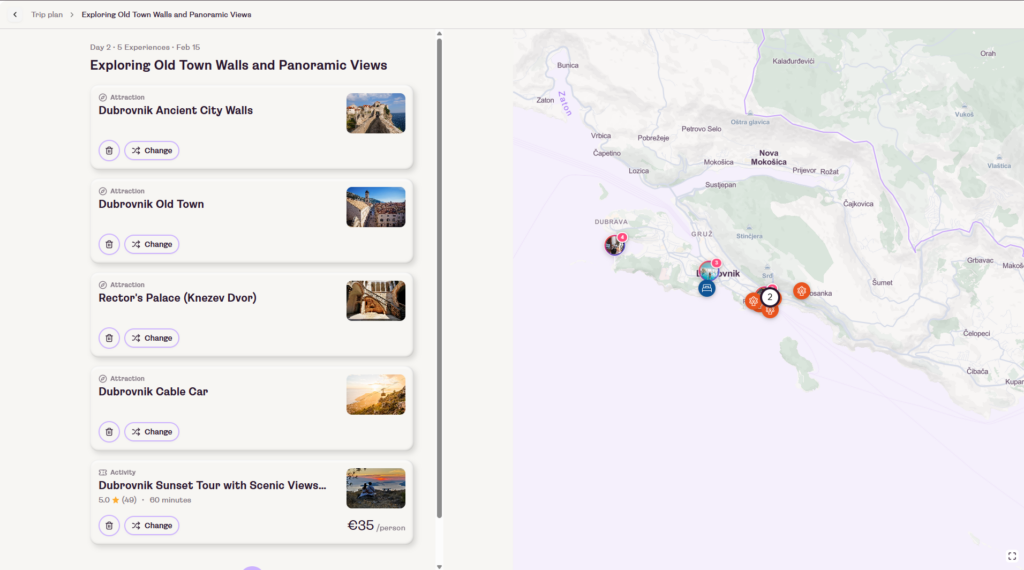
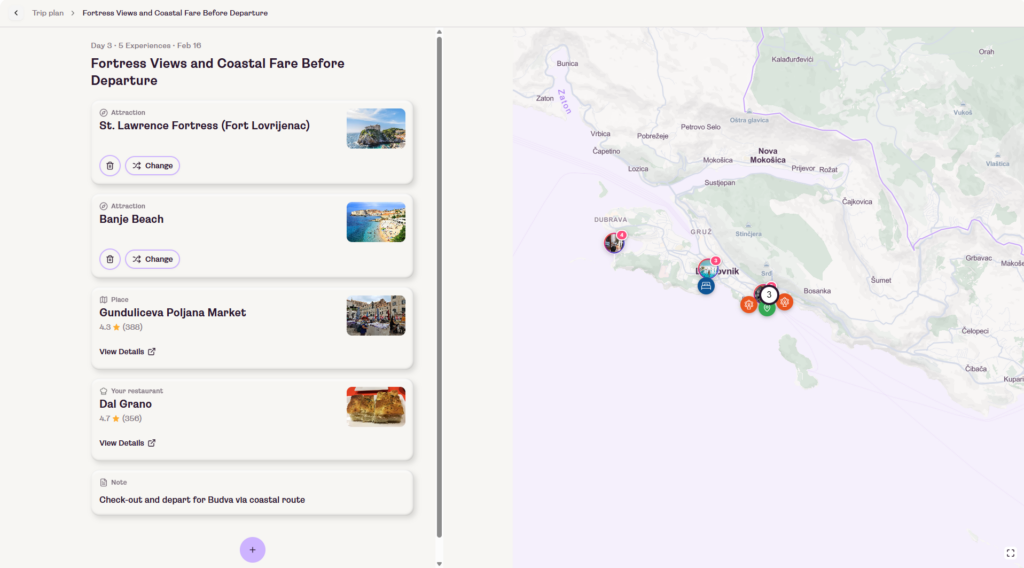
Layla stood out visually. Within a minute it built a full itinerary with a map, photos, and a specific hotel recommendation: Rixos Premium Dubrovnik, €245 for 2 nights, complete with a “Book” button and a 9.1 rating.
Restaurant picks: Nautika, Panorama, Proto Fish Restaurant. Drive time: 2h 05m. The tone was casual, almost joking (“How original, Alex. Just kidding”).
What worked: Clean visual itinerary, a real hotel with a real price, booking button, route on a map.
What didn’t: Budget only covered the hotel (€245) — no full cost estimate. Nothing about the ferry, border, weather risk, parking, or winter driving. The €245 turned out to be a standard room with breakfast only.
Wanderlog AI Travel Planner Output (First Impressions)
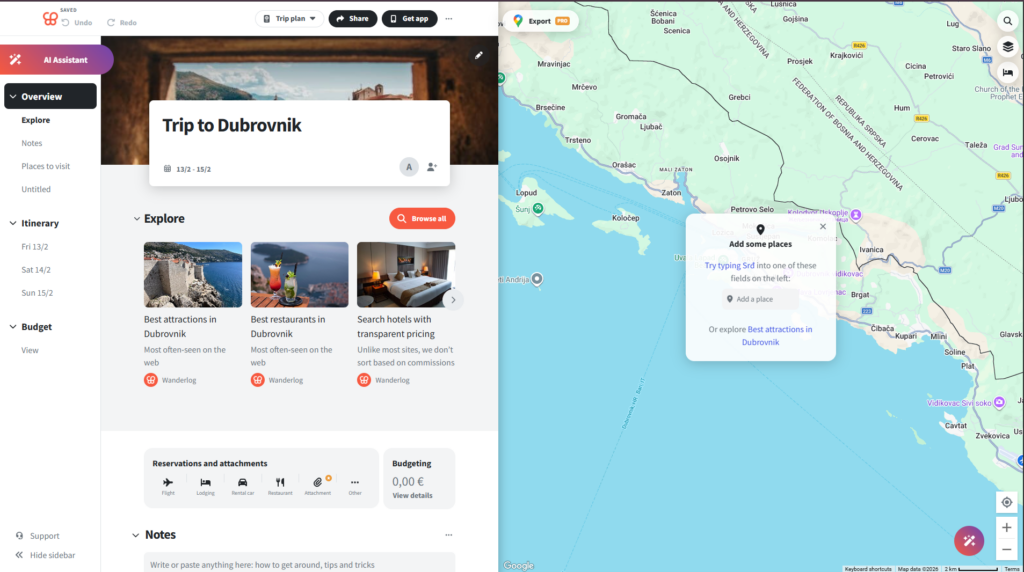
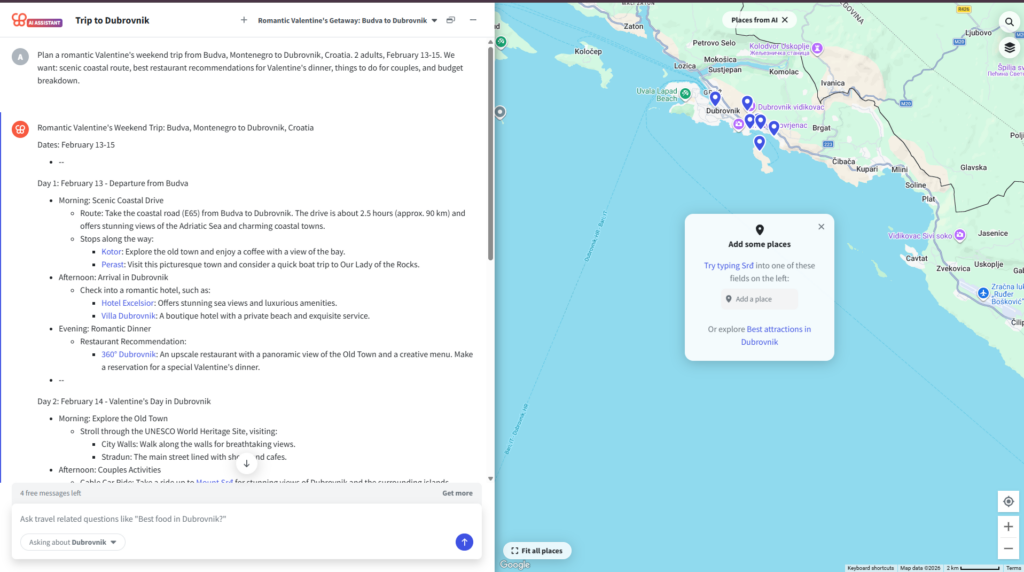
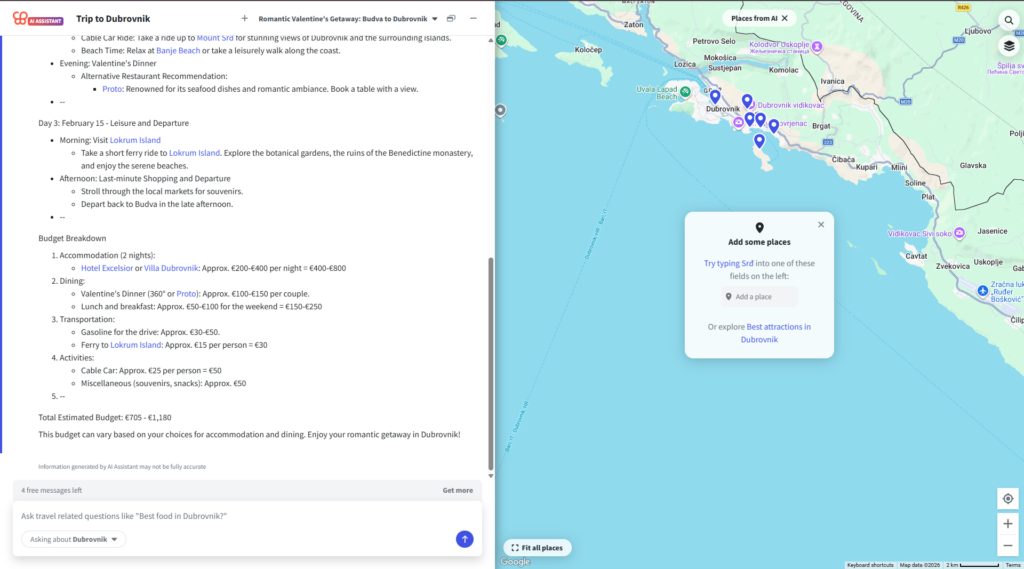
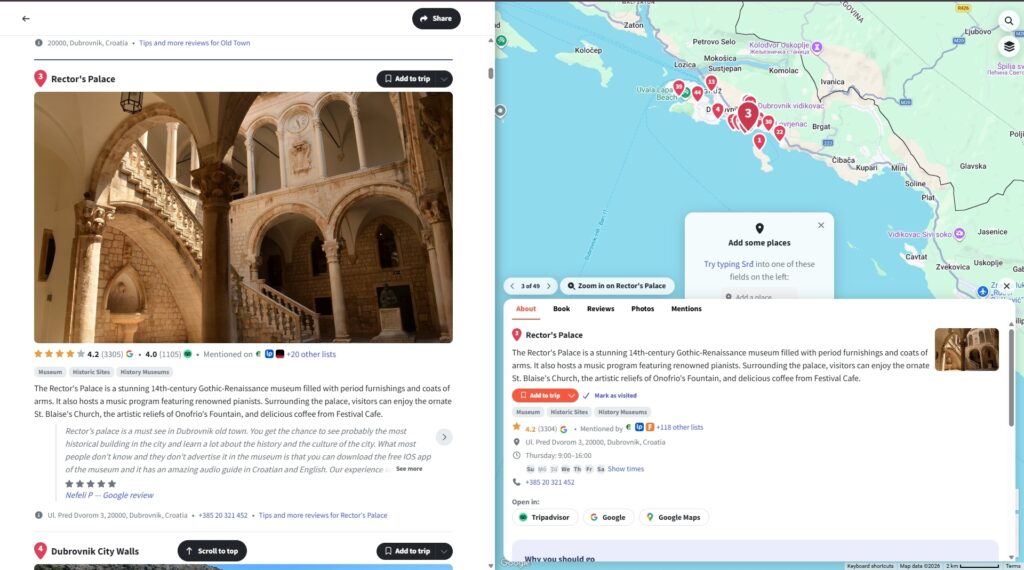
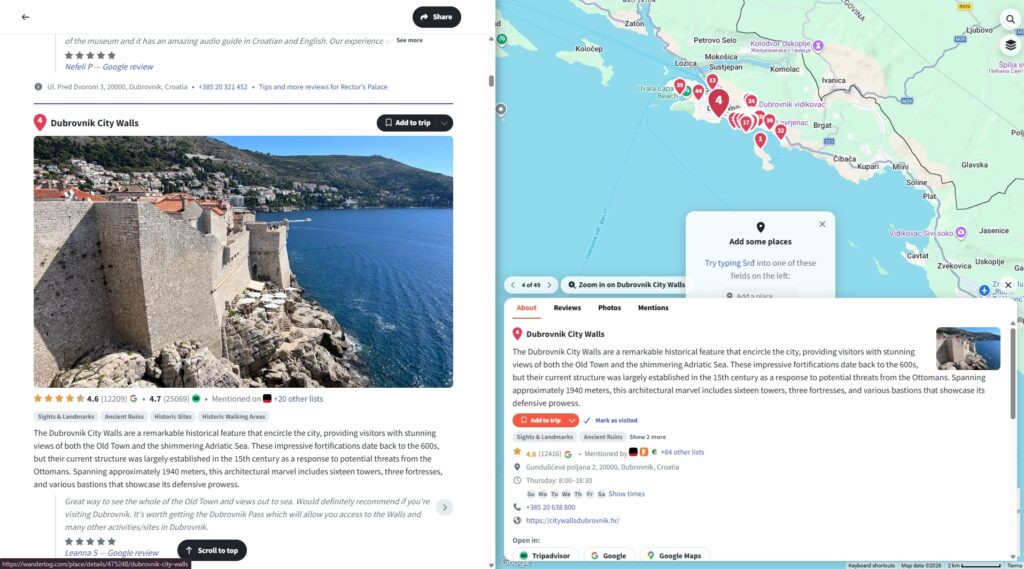
Wanderlog built an interactive trip with a map and pins. Its built-in AI Assistant laid out a 3-day plan: Restaurant 360, Proto, Lokrum Island, the cable car up to Srđ. Budget: €705–1,180.
Worth noting: the free version caps the AI Assistant at 5 messages. By my fourth message, I was already seeing “4 free messages left.” Something to keep in mind if you’re looking for a free AI trip planner.
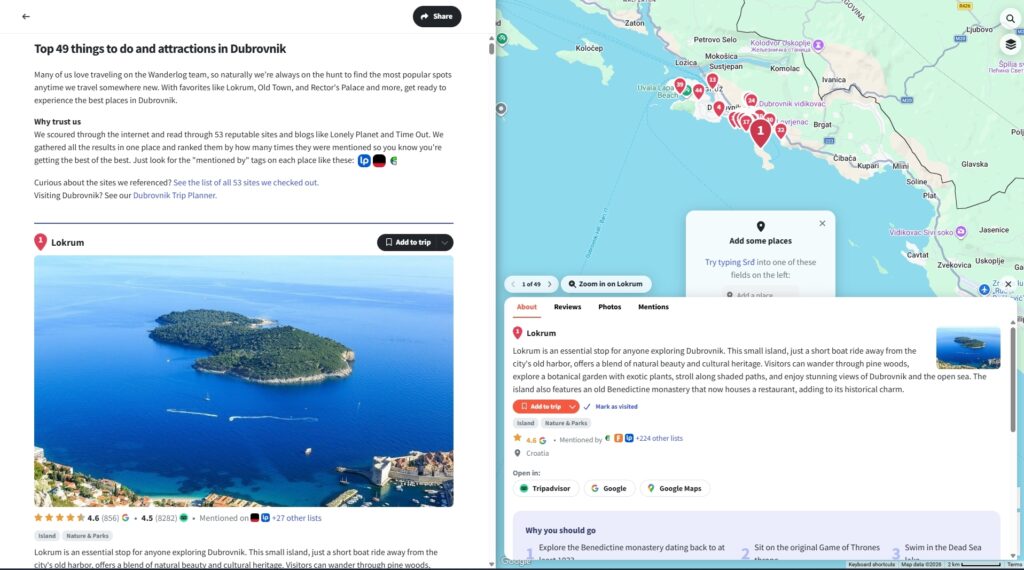
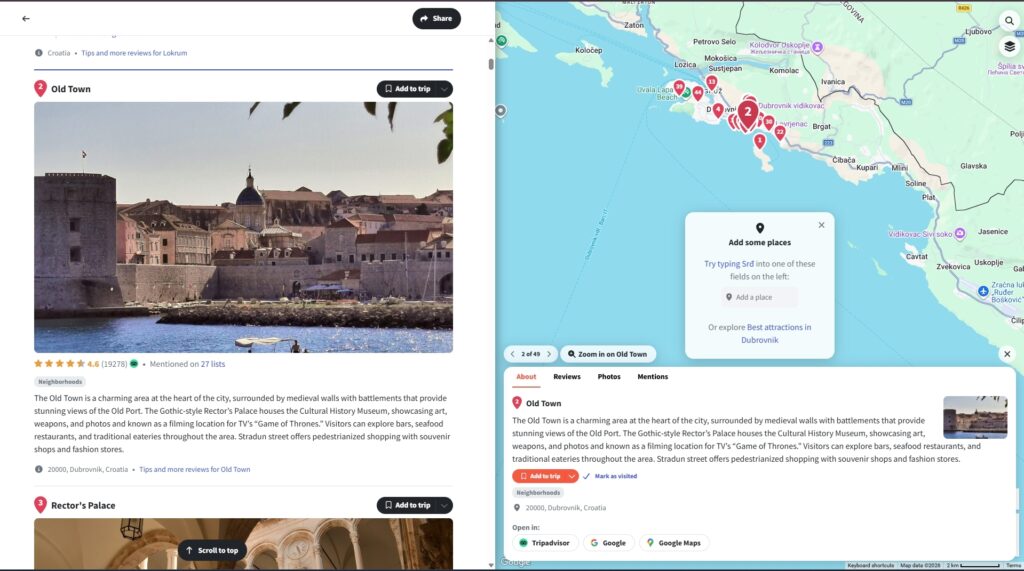
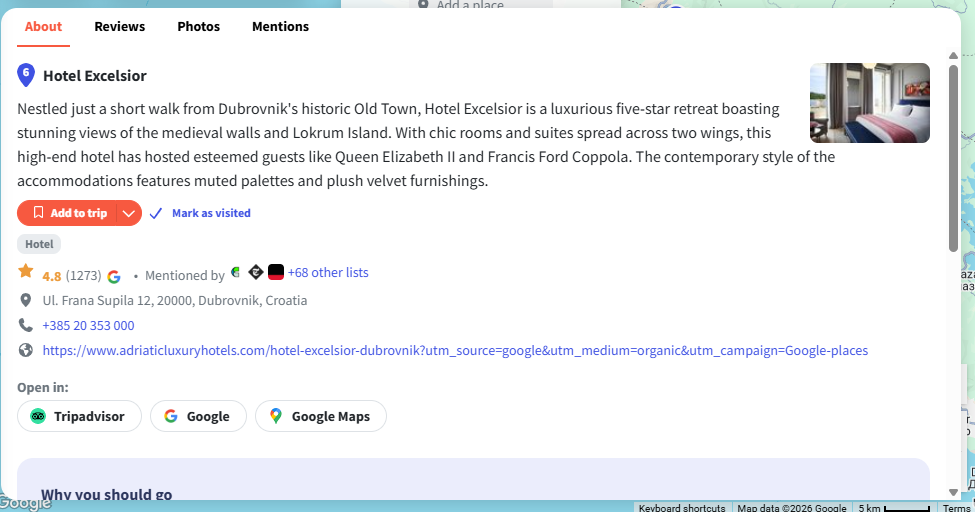
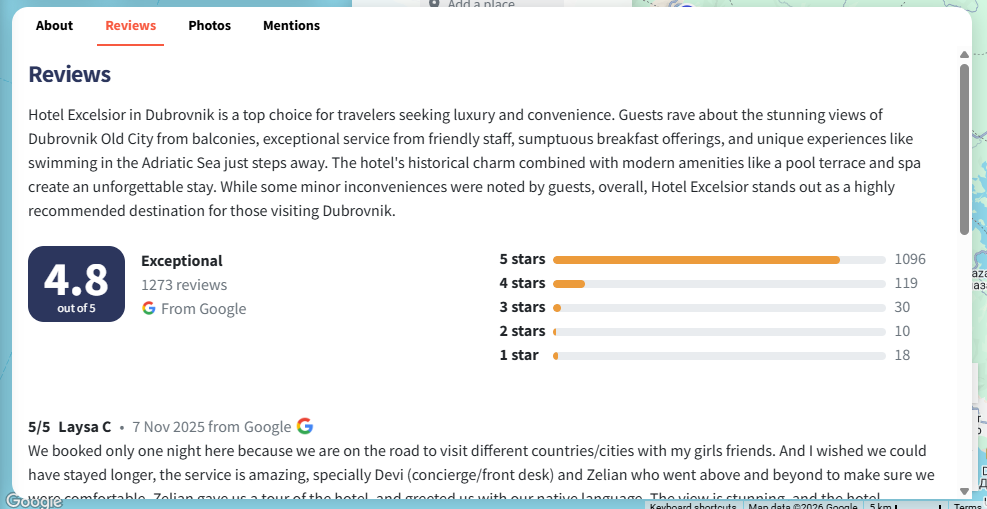
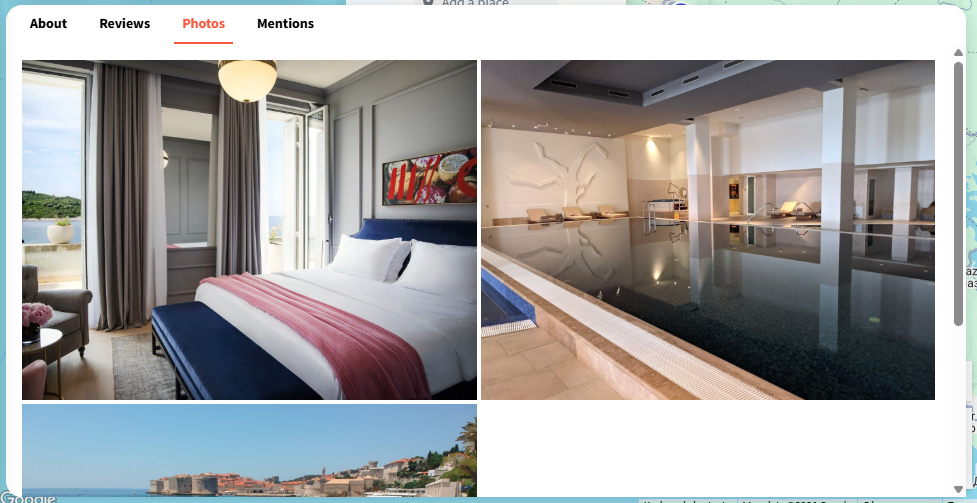
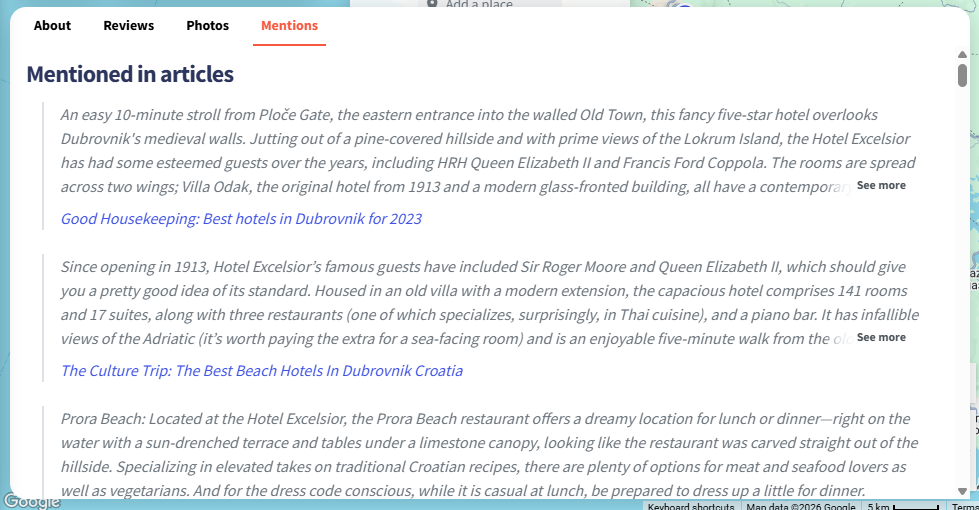
What worked: Solid interactive map with pins, budget broken out by category (hotel, food, transport, activities), easy to add your own stops. Wide selection of activities and restaurants. You can check reviews and hotel photos right inside the app.
What didn’t: AI Assistant is limited on the free plan. Hotel suggestions — Hotel Excelsior or Villa Dubrovnik at €200–400/night — ran higher than necessary. No mention of ferry, border, or road conditions.
AI Travel Planner Comparison: What Each Tool Promised
| ChatGPT | Layla AI | Wanderlog | |
|---|---|---|---|
| Drive time | 2h 20m | 2h 05m | Not specified |
| Hotel | “Boutique hotel in Old Town” | Rixos Premium, €245 | Hotel Excelsior, €200-400/night |
| Restaurants | Nautika, 360, Panorama | Nautika, Panorama, Proto | 360, Proto |
| Budget | €700–1,300 | ~€245 (hotel only) | €705–1,180 |
| Map | No | Yes | Yes (interactive) |
| Ferry | No | No | No |
| Border crossing | No | No | No |
| Weather warning | No | No | No |
| Parking | No | No | No |
| Winter seasonality | Mentioned | No | No |
Now — What Actually Happened
The Road: Rockfall, Gravel, a Ferry, and a Border
We left Bečići (near Budva) in the morning. A few kilometers out, we ran into the aftermath of a rockfall near the Mogren tunnel. Rocks and soil across the road, traffic squeezed to one lane. No AI tool warned about this — they couldn’t have — but it’s not unusual: rockfalls along the Montenegrin coast are a regular thing in winter.

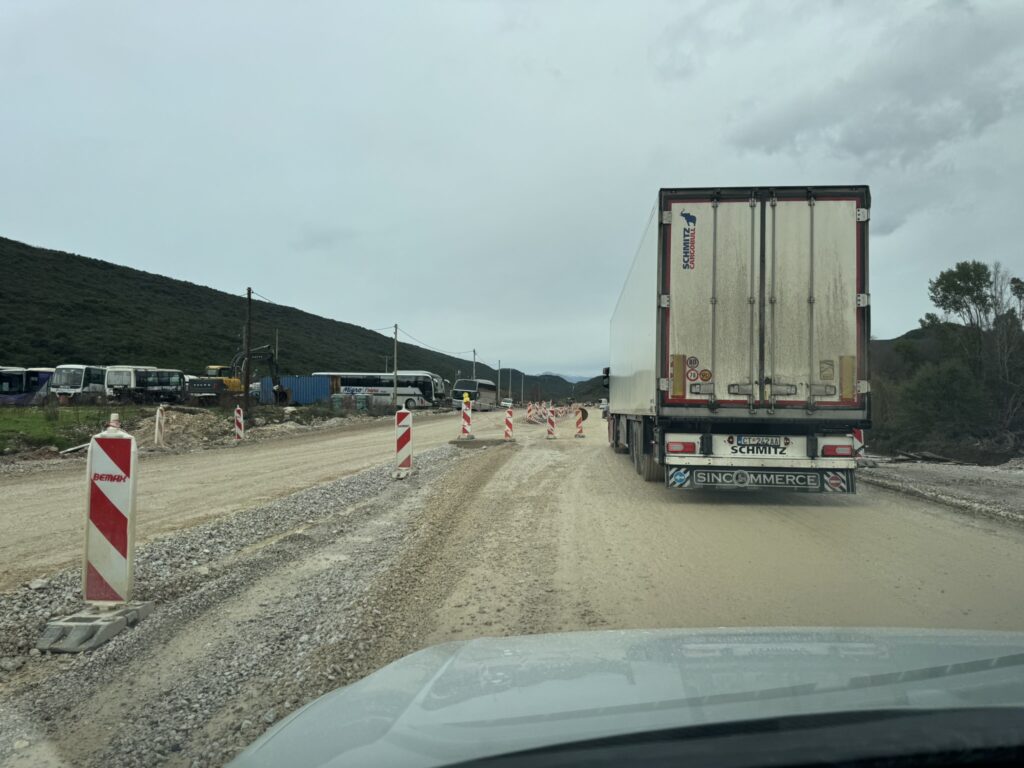
Then came a long stretch of roadworks past Lastva Grbaljska. Several kilometers with no asphalt, just gravel. Slow. Dusty. Not fun.

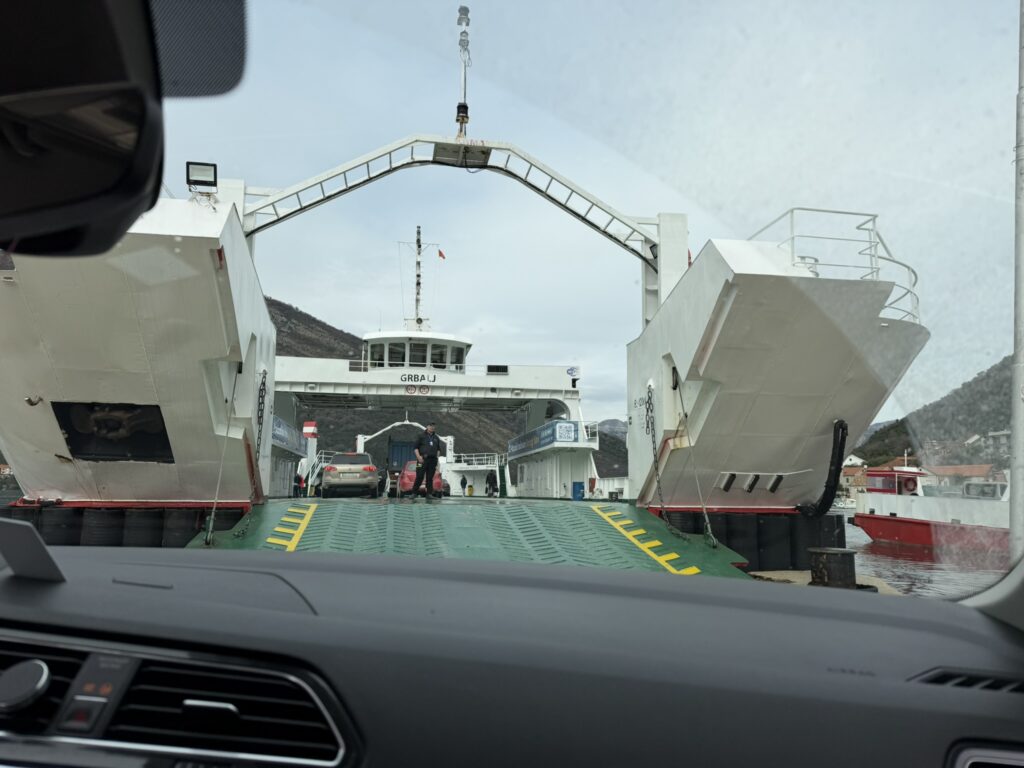
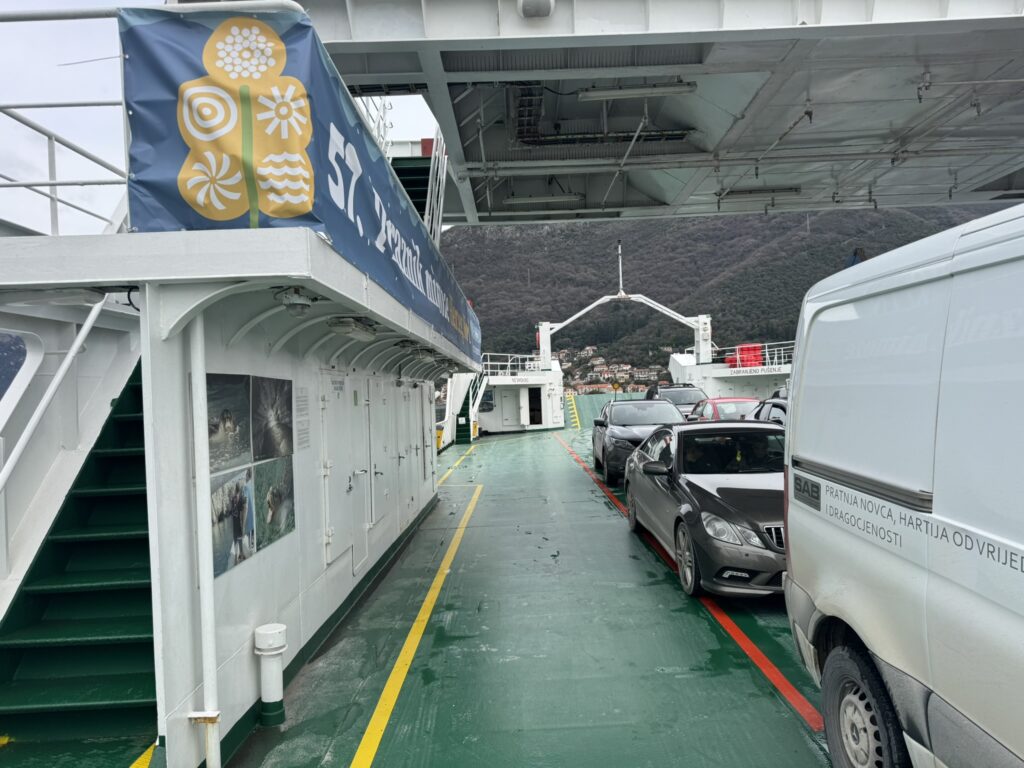
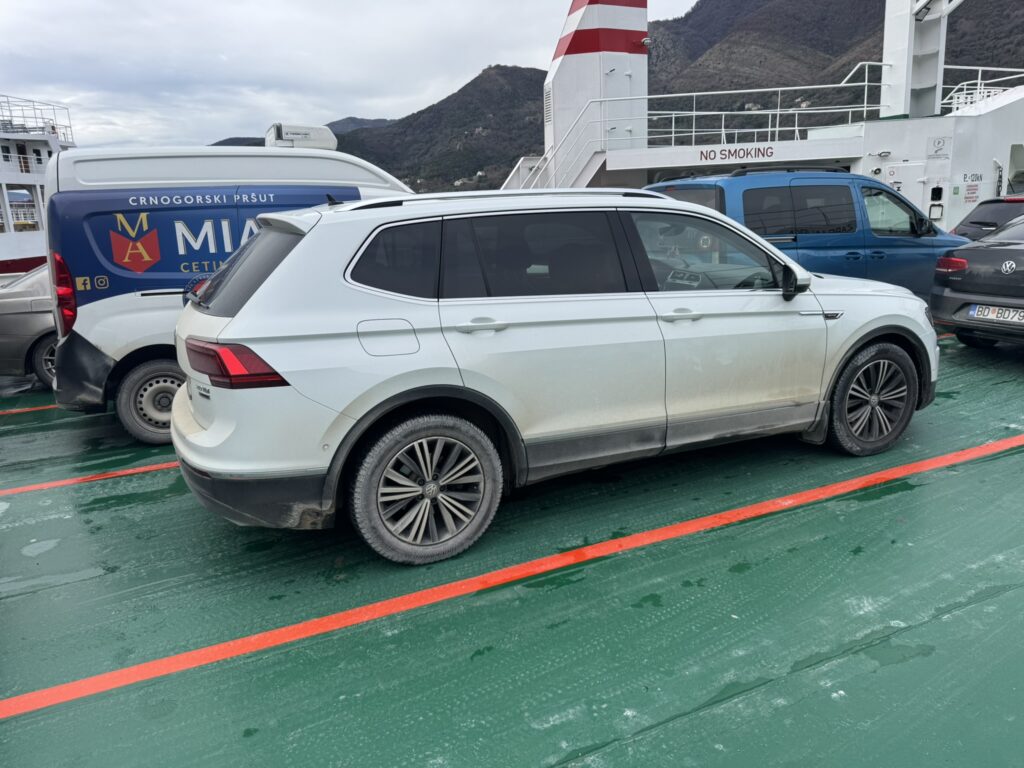
After that — the Bay of Kotor ferry (Lepetane → Kamenari). €5 for a car. In February it was nearly empty, zero wait. But none of the AI planners even mentioned there’s a ferry crossing on this route. You can drive around the bay instead, but that only makes sense in good weather — and in summer the detour is brutal: narrow road, bumper-to-bumper traffic.
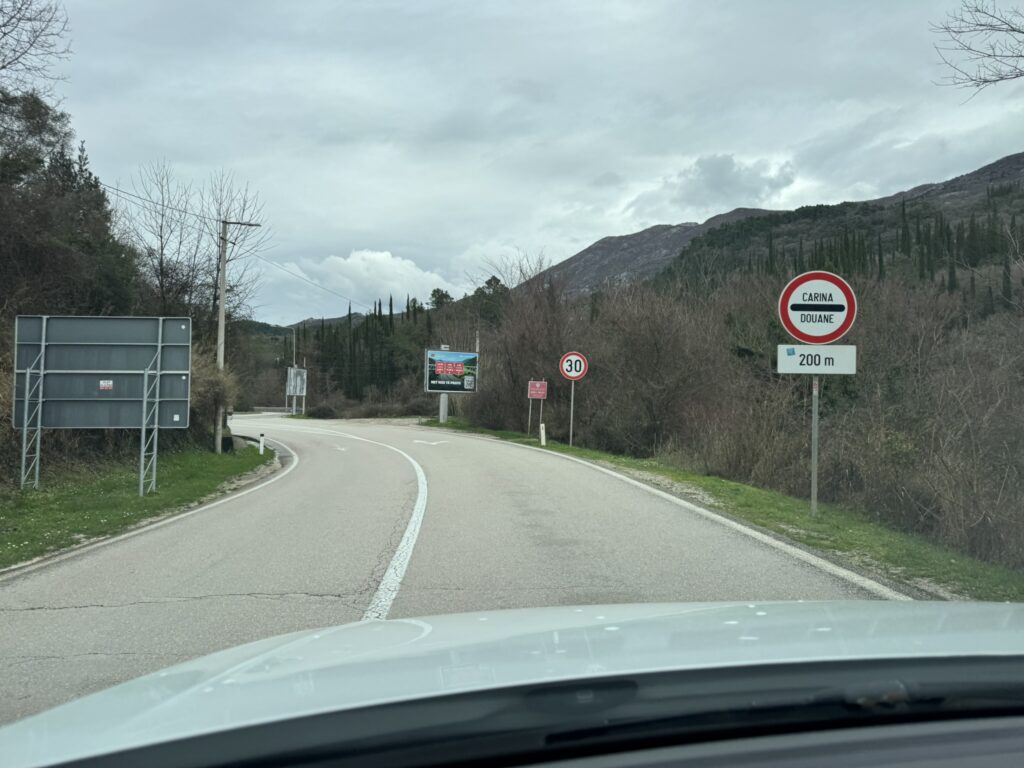
Border crossing, Montenegro → Croatia (Debeli Brijeg). Montenegrin side: completely empty. Croatian side: 6 cars ahead, service started after 4 minutes. Total time at the border: 15 minutes. Fast for February. In summer, expect an hour or more. Not one of the three AI tools mentioned the border.
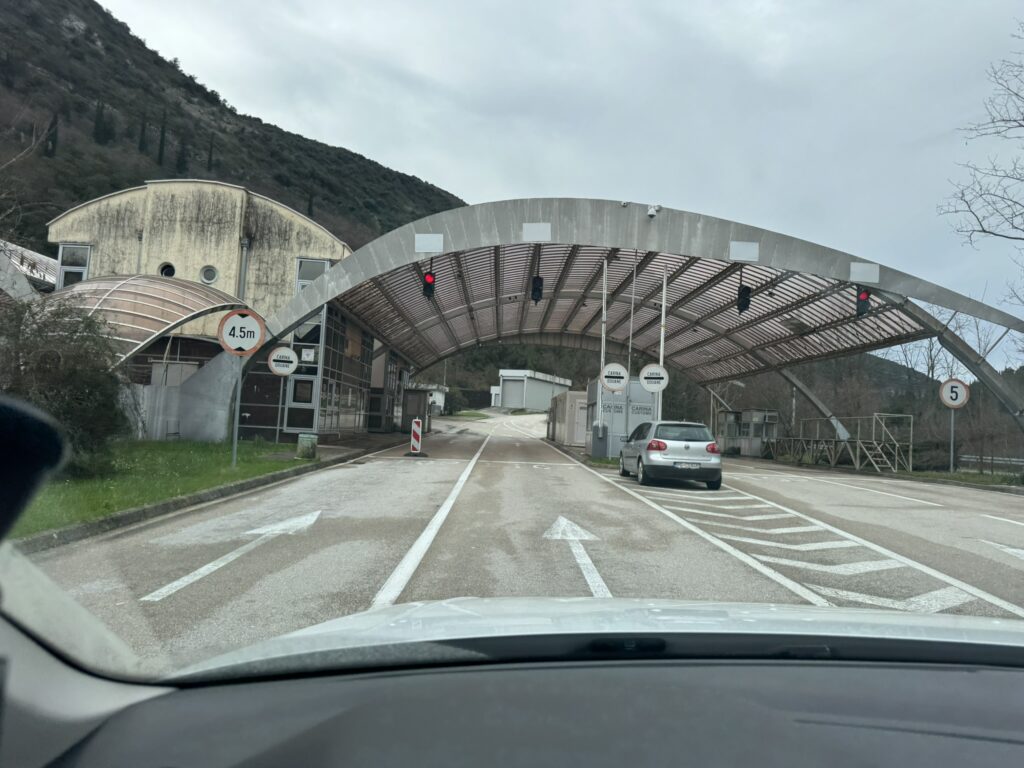
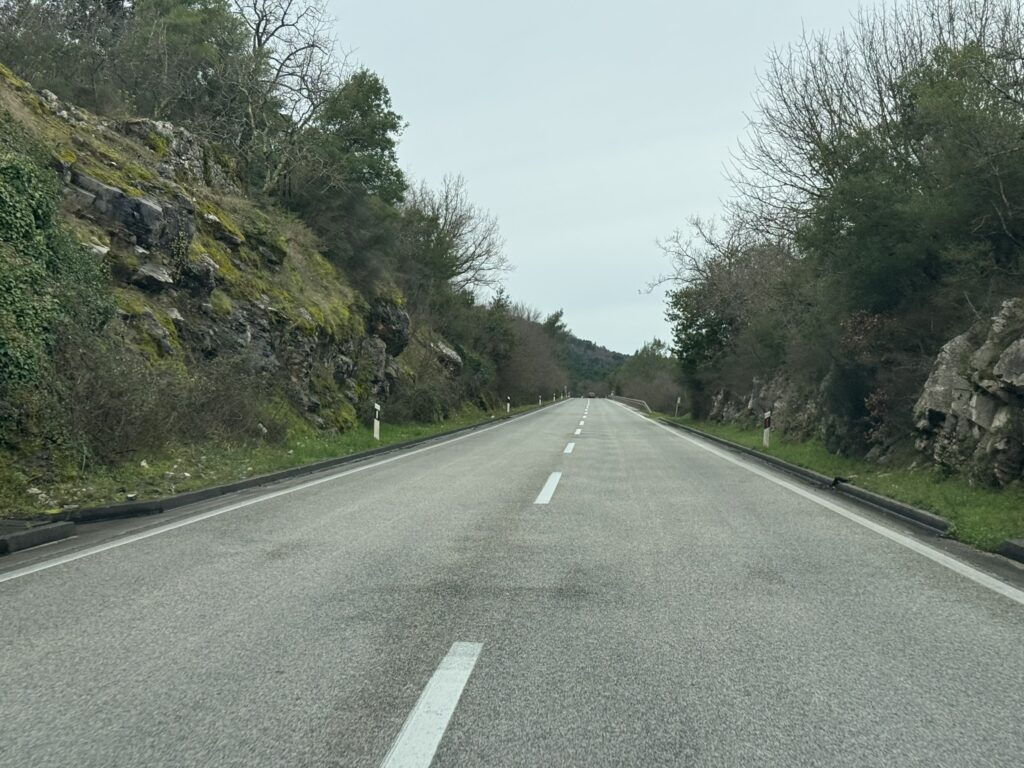
Past the border — two more roadwork zones on the Croatian side. Single-lane traffic controlled by lights.
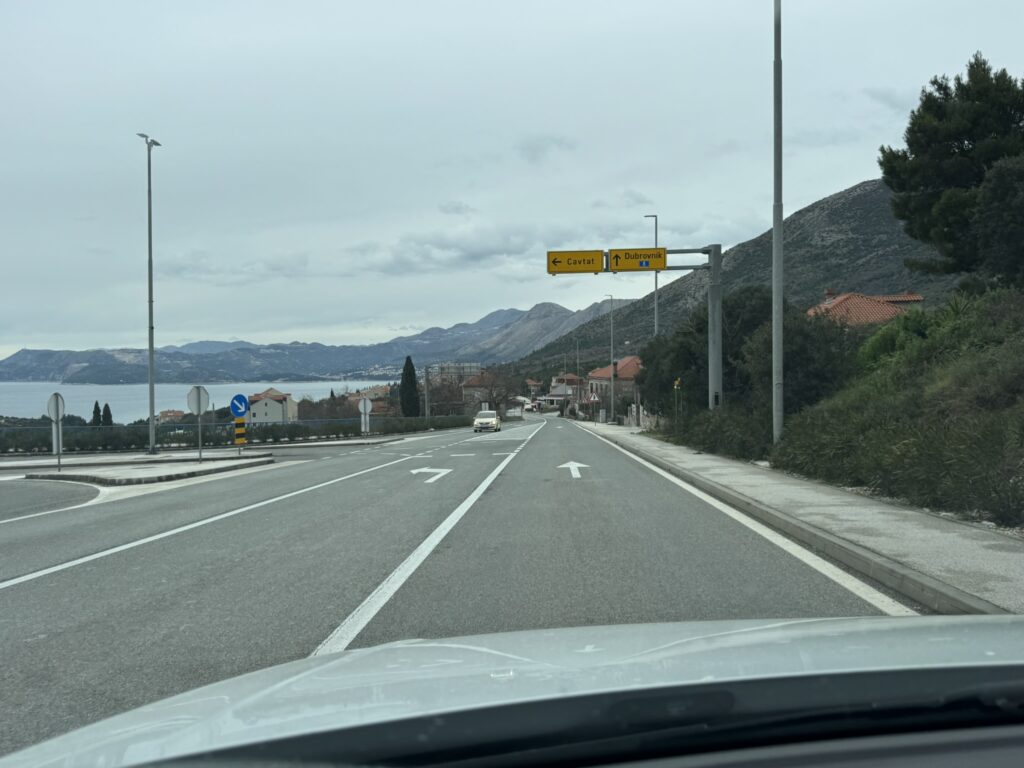
Bottom line: Bečići to the border took 58 km and 2h 09m. The AI tools promised around 2 hours to Dubrovnik total. Actual driving time door to door: roughly 2h 40m.
| Segment | What happened | Did any AI mention it? |
|---|---|---|
| Mogren tunnel | Rockfall, one lane | ❌ |
| Lastva Grbaljska | Roadworks, gravel | ❌ |
| Bay of Kotor | Ferry €5, no queue | ❌ |
| Debeli Brijeg | Border, 15 min | ❌ |
| Croatia | Two roadwork zones | ❌ |
Weather: Three Straight Days of Rain
All three AI tools painted the same picture: romantic Old Town strolls, sunset dinners with a view, cable car up to the Panorama Restaurant on Mount Srđ.
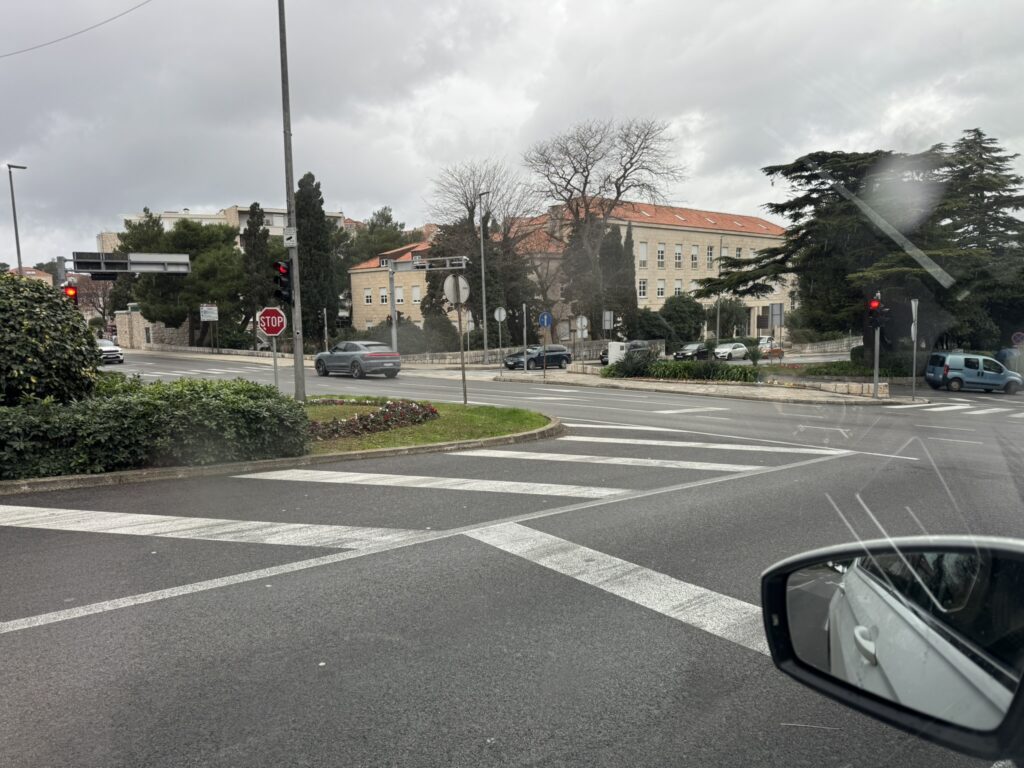
What we got: rain for three days straight. We drove to Nautika — the nearest parking wasn’t close, and even with umbrellas we would’ve been drenched. Turned around, went back to the hotel.
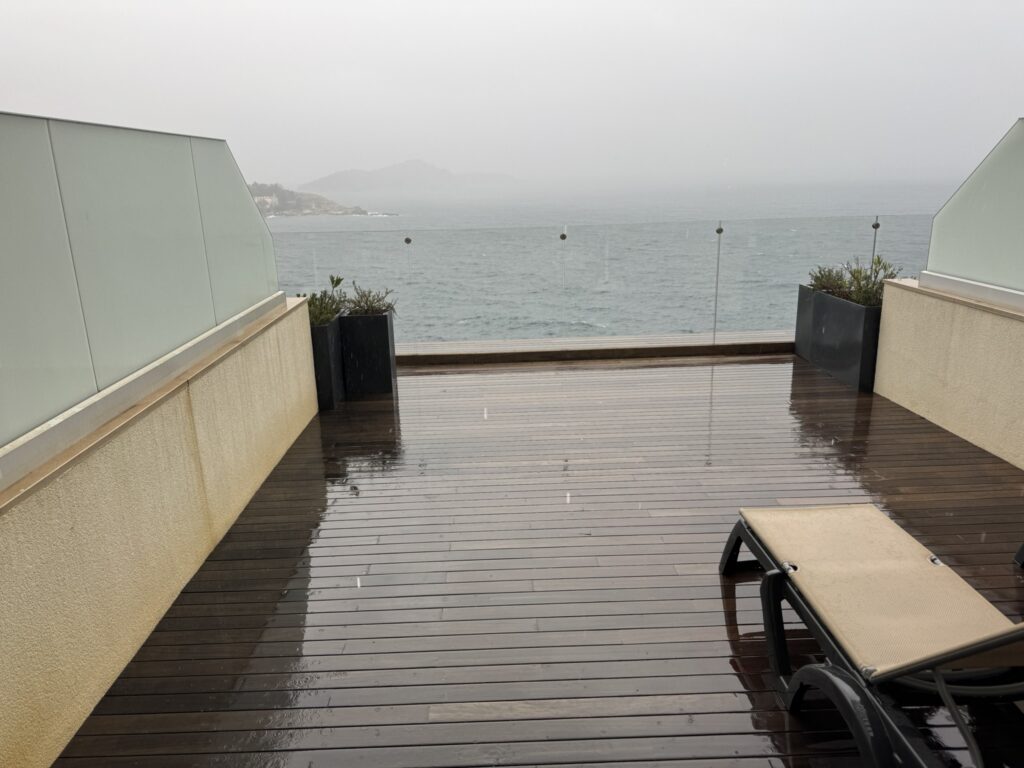
City Walls in the rain? Slippery, miserable, pointless. Cable car to Srđ? Closed for winter. Lokrum Island (Wanderlog’s suggestion)? We didn’t even bother checking tickets — a boat ride in that weather didn’t sound remotely appealing.
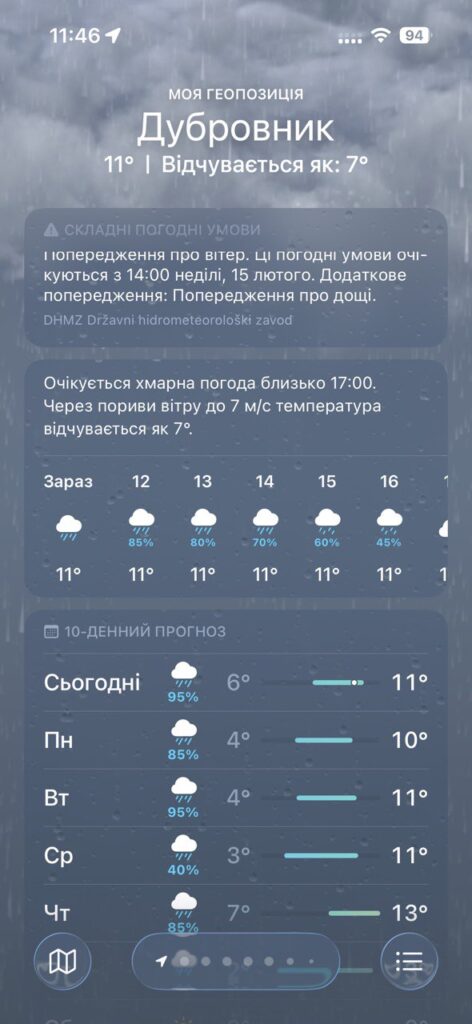
Not one AI vacation planner checked the weather forecast for our dates. This is probably the biggest miss across all three tools. February on the Adriatic means 7–13°C, frequent rain, and short days. Suggesting “sunset at Mount Srđ” and “walk the City Walls” without a weather caveat — that’s not planning, that’s a fantasy.
The Hotel: Our Best Call
We’d been to Dubrovnik before, so we booked Rixos Premium Dubrovnik — 5-star, with spa, pool, and half board. Turned out to be the single best decision of the whole trip.
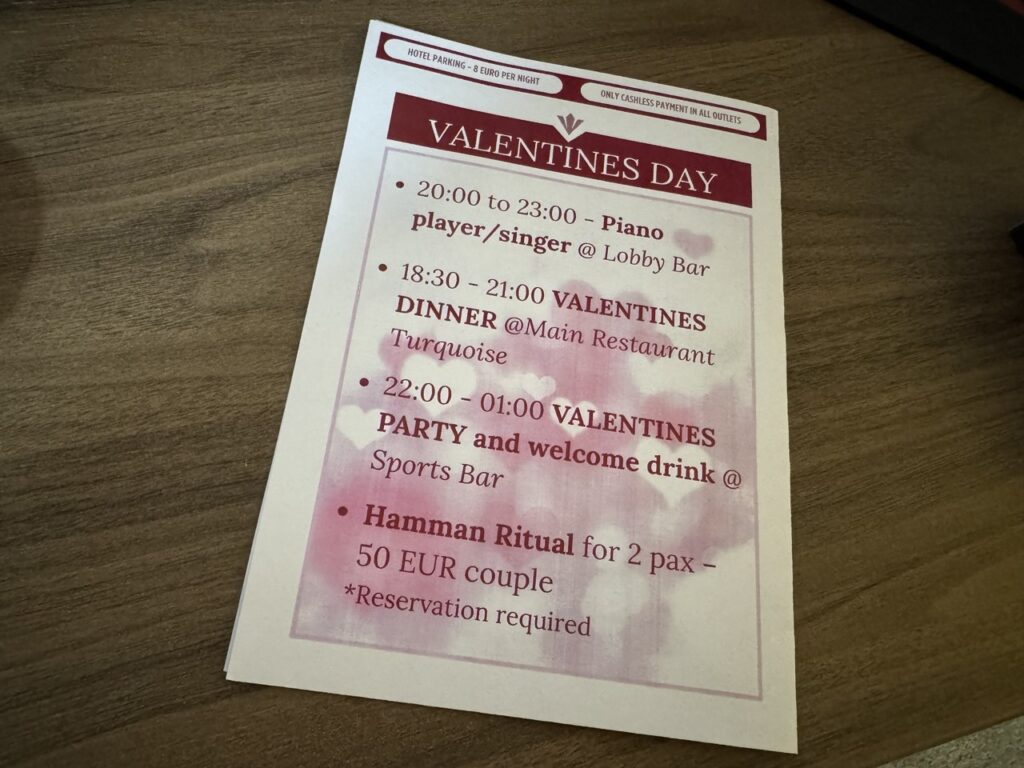
When it’s pouring outside, you end up spending your time between the pool, the sauna, and the terrace with its Adriatic view. Valentine’s dinner at the hotel’s Turquoise restaurant. Live piano in the Lobby Bar from 20:00 to 23:00. Couples Hamam Ritual for €50 — but you need to book ahead; by February 14 it was sold out.

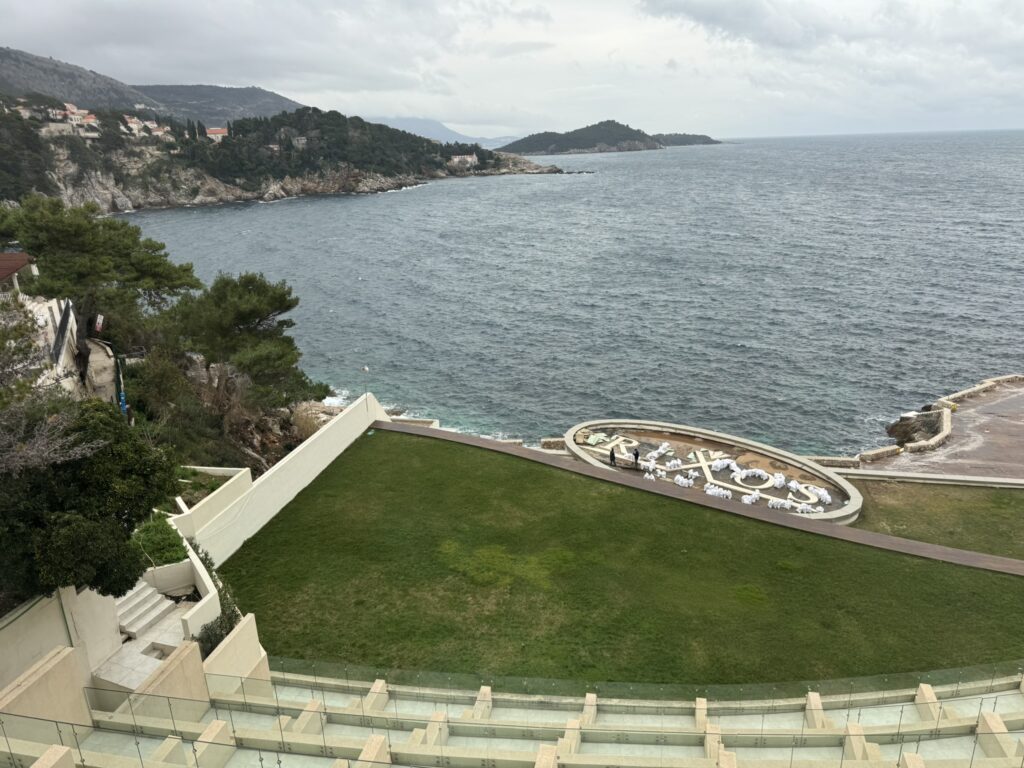

Here’s something none of the AI tools mentioned: in winter Dubrovnik, don’t cut corners on the hotel. The hotel isn’t just a place to sleep — it’s where you’ll spend most of your time. Spa, restaurant, pool, the view: in February these aren’t extras, they’re the core of your trip. Book a cheap guesthouse in Old Town (like ChatGPT suggested) and a rainy February will leave you with nothing to do by noon on day one.
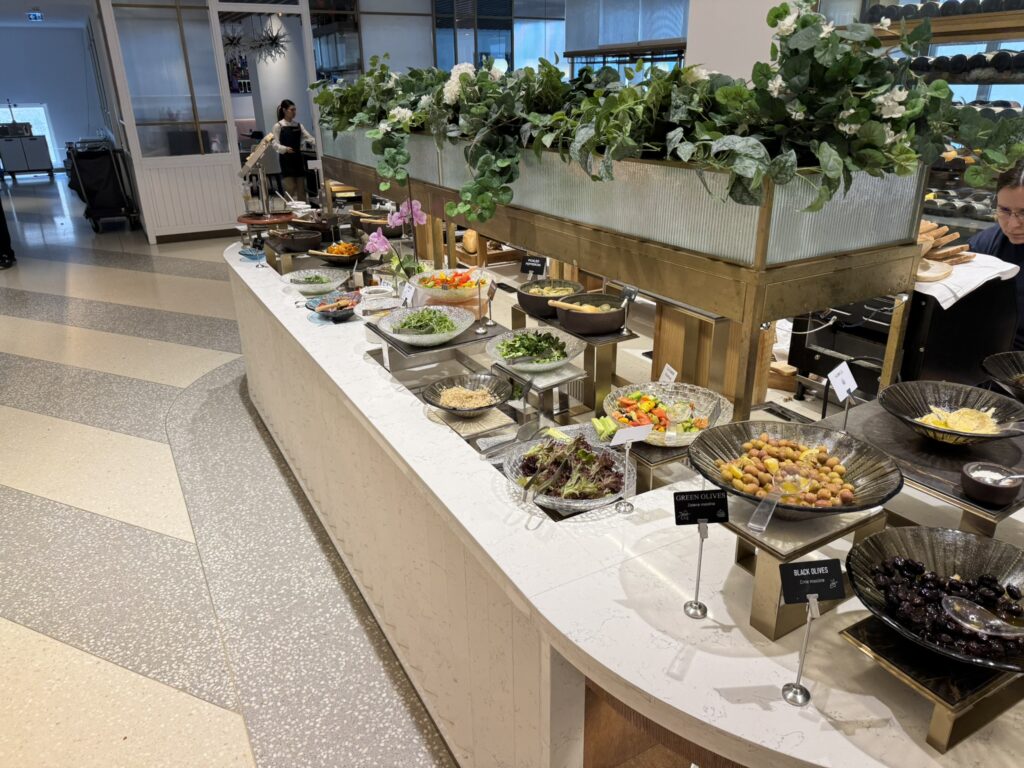
Practical tip: go with half board. You won’t depend on weather or parking. In low season, half the restaurants in Old Town run shortened hours or don’t open at all. When you check in at Rixos Premium Dubrovnik, create a free account — you get at least a 5% discount right away. Half board adds about $60 per dinner for two, and at this particular hotel it’s absolutely worth it: several meat options, several fish dishes, vegetarian, and gluten-free.
Valentine’s Day: What the AIs Left Out
The prompt said “romantic Valentine’s weekend.” All three tools focused on restaurants and walking tours. None of them suggested:
Room decoration — flowers, rose petals, balloons. That’s what makes a regular weekend feel like Valentine’s. We ordered through the hotel: €558 total. The two bouquets alone ran about €300. You could probably find cheaper options through local florists, but the AI tools didn’t even raise the idea.
Booking couples spa early. The Rixos Hamam Ritual (€50 for two) was fully booked for February 14. A week’s advance notice would’ve been enough — but no AI itinerary planner thought to mention it.
Looking for a hotel with a Valentine’s program. The pianist and themed evening at Rixos weren’t a coincidence — most good hotels run something for February 14. But none of the tools suggested searching for that specifically.




Budget: AI vs. What We Actually Spent
What the AIs Predicted
| AI Tool | Budget Estimate |
|---|---|
| ChatGPT | €700–1,300 |
| Wanderlog | €705–1,180 |
| Layla | ~€245 (hotel only) |
What We Actually Spent
| Item | Cost |
|---|---|
| Rixos hotel (2 nights, half board) | €437 * |
| Parking (2 nights) | €16 |
| City tax | €7 |
| Room decor (flowers, balloons, petals) | €558 |
| Diesel (round trip ~160 km) | €40 |
| Ferry (2 × €5) | €10 |
| Total | ~€1,068 |
* Price with a Rixos club discount. Standard rate without the discount runs higher.
Strip out the decor (€558) and our base cost was about €510 — below the lowest AI estimates. But we also skipped city restaurants entirely, eating on half board. Add Nautika or 360 and you’d land around €800–1,000, which lines up with what ChatGPT and Wanderlog predicted.
The real point: the AI tools gave a reasonable range for an average scenario. But your actual spend depends on decisions none of them help you make — half board vs. restaurants, whether to do room decor, spa treatments, hotel tier.

Verdict: Who Won?
As an AI travel planner, each tool is useful — but incomplete.
Layla AI — Best for Getting Started Quickly
The only tool that gave a specific hotel with a price and a booking button right away. The itinerary is clean and easy to act on. If you want a plan and want to start booking fast, Layla is the pick. But it doesn’t calculate a full budget and skips real-world logistics entirely.
ChatGPT — Best for Depth and Detail
The most thorough text-based ChatGPT travel itinerary of the three. The only one that noted winter closures. But there’s no visual map, no concrete hotel pricing, and you have to handle all the booking yourself.
Wanderlog — Best for Hands-On Planning
The interactive map and budget categories are useful if you like building the trip yourself. Wide range of activities and restaurants, easy to browse reviews and photos. Downside: the free AI assistant is capped at 5 messages, and hotel picks ran expensive.
The Overall Loser: All Three
None of them:
- Checked the weather forecast
- Mentioned the ferry on the route
- Warned about the border crossing
- Factored in winter road conditions
- Offered Valentine’s-specific ideas (room decor, couples spa, themed hotel events)
- Said: “In February, half board and a solid hotel matter more than a restaurant list”
5 Lessons No AI Road Trip Planner Will Teach You
1. In winter Dubrovnik, spend more on the hotel. It becomes your main experience. Spa, pool, restaurant, the view. A budget guesthouse in Old Town means boredom when it rains.
2. Go with half board. Parking in central Dubrovnik is a hassle. Winter restaurant hours are unpredictable. In the rain, you’re not making it comfortably to Nautika or Proto — both of which were closed for winter anyway. Half board takes all of that off the table.
3. Book spa and massage early. Valentine’s Day fills up. The Hamam Ritual for two at Rixos — €50 — is a great deal. But last-minute? No chance.
4. Add 30–60% to any AI drive time estimate in winter. “2 hours” became 2h 40m with rockfalls, roadworks, the ferry, and the border. In summer, the border alone can add an hour or more.
5. Check the weather yourself. No AI tool will do it for you. February on the Adriatic = 7–13°C, frequent rain. Plan indoor activities as your main scenario, not your backup.
Should You Use AI for Trip Planning?
Yes — as a starting point. All three tools produced a decent foundation: solid restaurant names (Nautika and Proto really are among the best in Dubrovnik — in high season, anyway), a reasonable route, a rough budget.
An AI travel planner is great for ideas and shortlists, but not for final decisions.
No — as your final plan. AI doesn’t replace common sense, checking the forecast, or knowing what February actually looks like on the ground. The choices that saved our trip — Rixos with half board, skipping Old Town restaurants in the rain, spa instead of outdoor sightseeing — were all ours, not the tools’.
Best strategy: use AI for ideas and restaurant shortlists. Make your own calls on the hotel, meal plan, and activities — factoring in the season and the weather.
Tested by: Alexander, aitravel.tools — February 2026 Route: Budva (Bečići) → Dubrovnik → Budva AI tools used: ChatGPT (free version), Layla AI (free version), Wanderlog (free version)
Sources / Tools:
– ChatGPT (OpenAI): https://openai.com/chatgpt
– Layla AI: https://layla.ai/
– Wanderlog: https://wanderlog.com/
Read next:
- Wanderlog Review: I Tested This Free AI Trip Planner on a Real Istanbul Itinerary
- Layla AI Review: Honest Test on a Real Istanbul Itinerary
- Best AI Travel Planners 2026: Head-to-Head Comparison (coming soon)