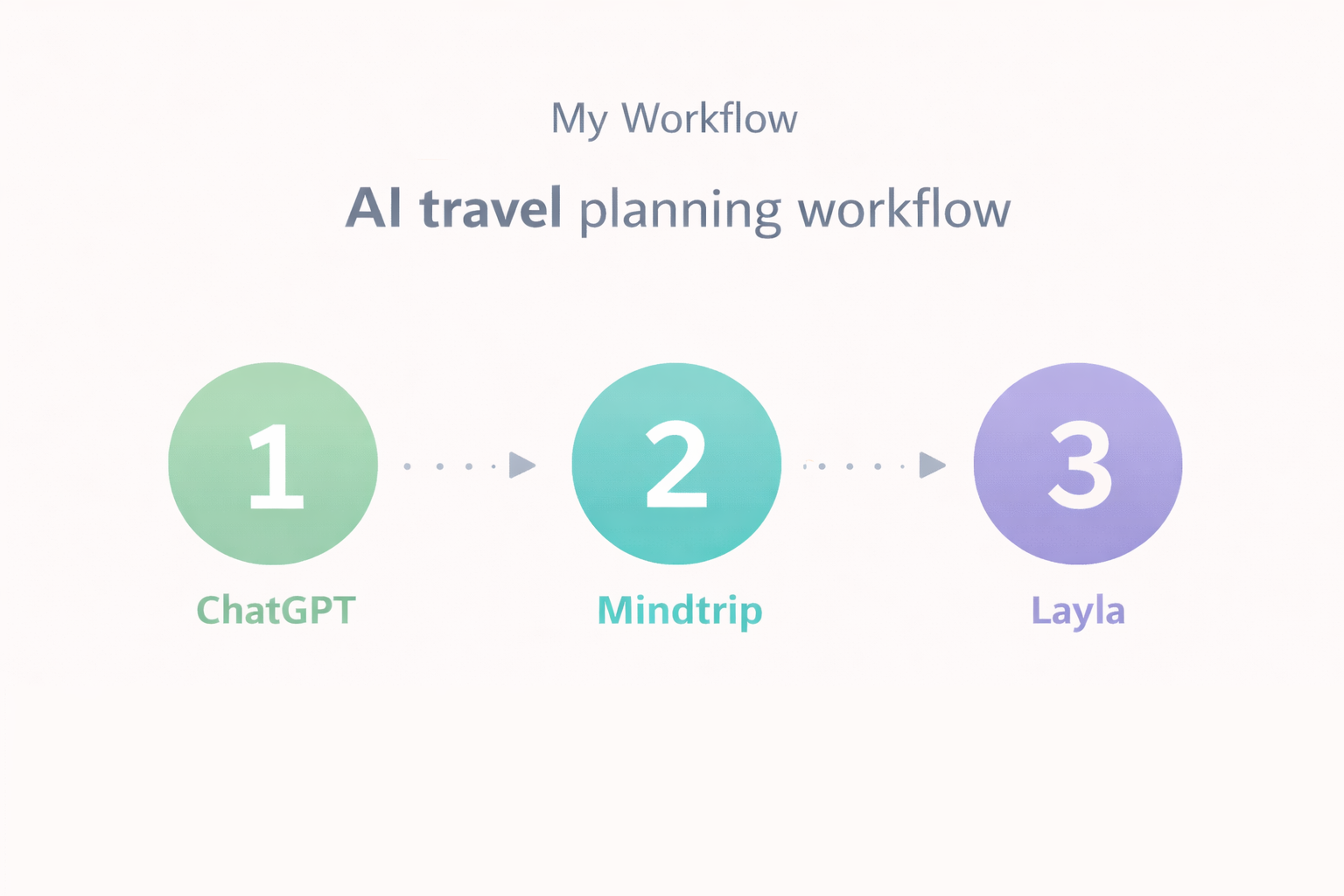
Can AI plan the perfect France road trip for a family with a kid? We decided to find out the hard way — six days, three countries, one AI planner, and an eight-year-old daughter who changes her mind every ten minutes.
We asked Mindtrip — an AI travel planner — to build a family road trip through France for March 2026. Parameters: family of three (two adults and a child, listed as 7 at the time of planning — she turned 8 on March 14, and Disneyland was her birthday gift). Route: Normandy, Mont Saint-Michel, Disneyland, Paris. Mid-range budget. Priorities: history, family activities, and local food.
Spoiler: AI nailed the route about 90% of the time. But the other 10% is what turns a trip from “fine” into unforgettable. Or into a nightmare — like standing alone at an empty gas station in rural France with a blinking fuel indicator and eight people refusing to help.
The short version: AI can absolutely save you hours of planning, but it still misses the details that matter most on a family road trip — from parking nightmares to gas station payment systems to knowing when your kid has had enough.
This isn’t a story about AI ruining everything or saving the day. It’s a story about AI being a great co-pilot — but you’re always the one behind the wheel.
How AI Planned Our France Road Trip
We gave Mindtrip specific inputs: family of three, flying from Tirana to Beauvais, March 21–26, Hertz rental car for the entire trip, moderate budget. Interests: history, family activities, local cuisine.
AI generated a “Family Adventure in France” plan in minutes. Six days broken into themes: the first two in Normandy with D-Day beaches and Mont Saint-Michel, days three and four at Disneyland, day five for kid-friendly Paris, and day six returning to Beauvais with a stop at Cathédrale Saint-Pierre.
Mindtrip estimated the budget at: hotels — €1,000 for five nights (€130–180 per night), food — €600 (€100 per day for the family), Disneyland — two days at two parks for €440–560. Grand total: roughly €2,000–2,200 before flights and car rental.
The overall route structure turned out to be solid — we actually moved in a similar sequence. But in the details, almost everything went differently: we chose Étretat over Bayeux, spent one day at Disney instead of two, and hotel costs came in well below the estimate. Most importantly — AI didn’t warn us about things that nearly derailed the trip.
Backstory: Montenegro → Albania → France
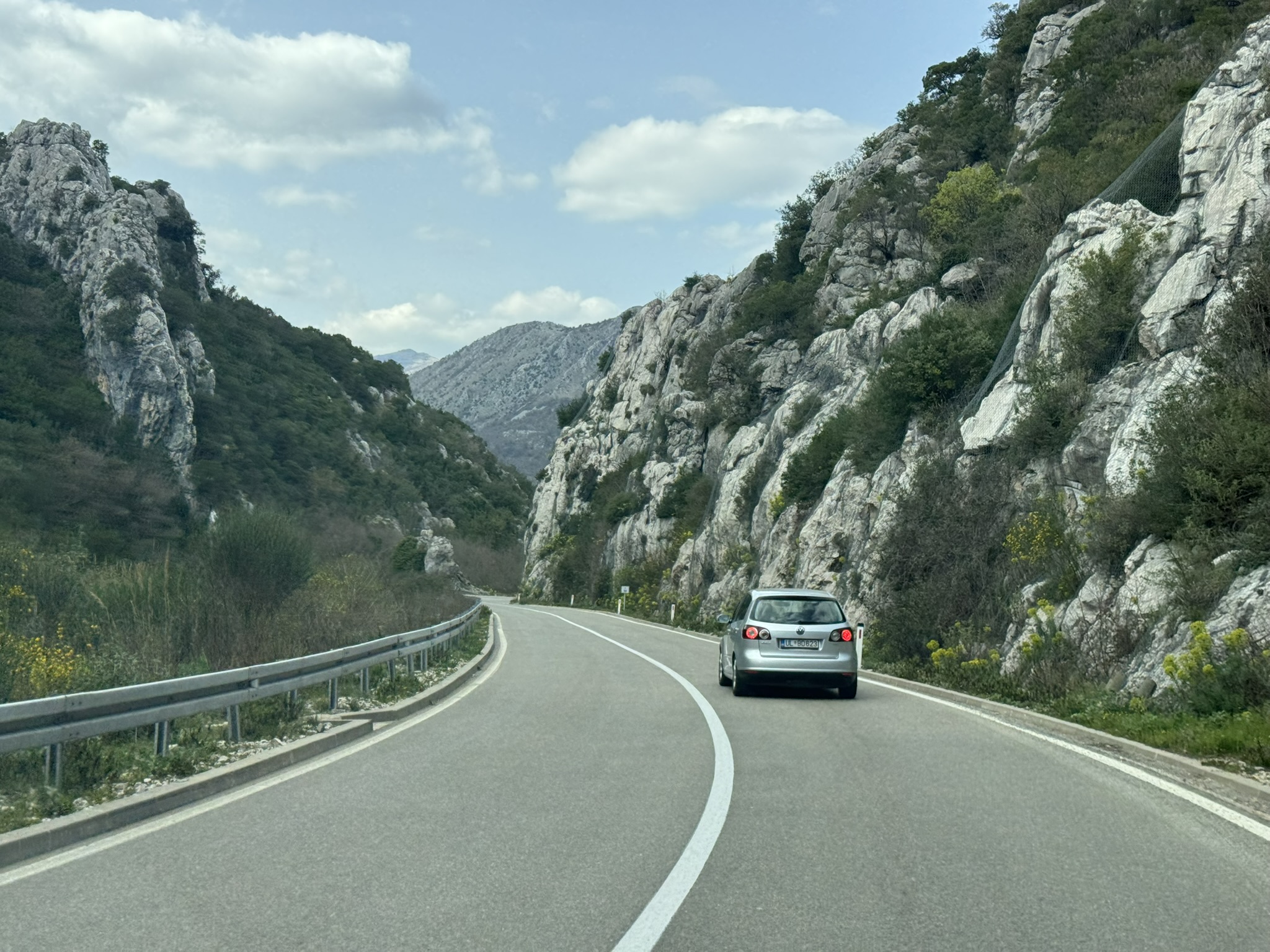
We live in Budva, Montenegro. Our France trip didn’t start at an airport — it started with a road trip through Albania. A few days before the flight, we drove from Budva to Shëngjin — three hours along a mountain serpentine road hugging the Adriatic coast, ten minutes at the border, and we were in Albania.
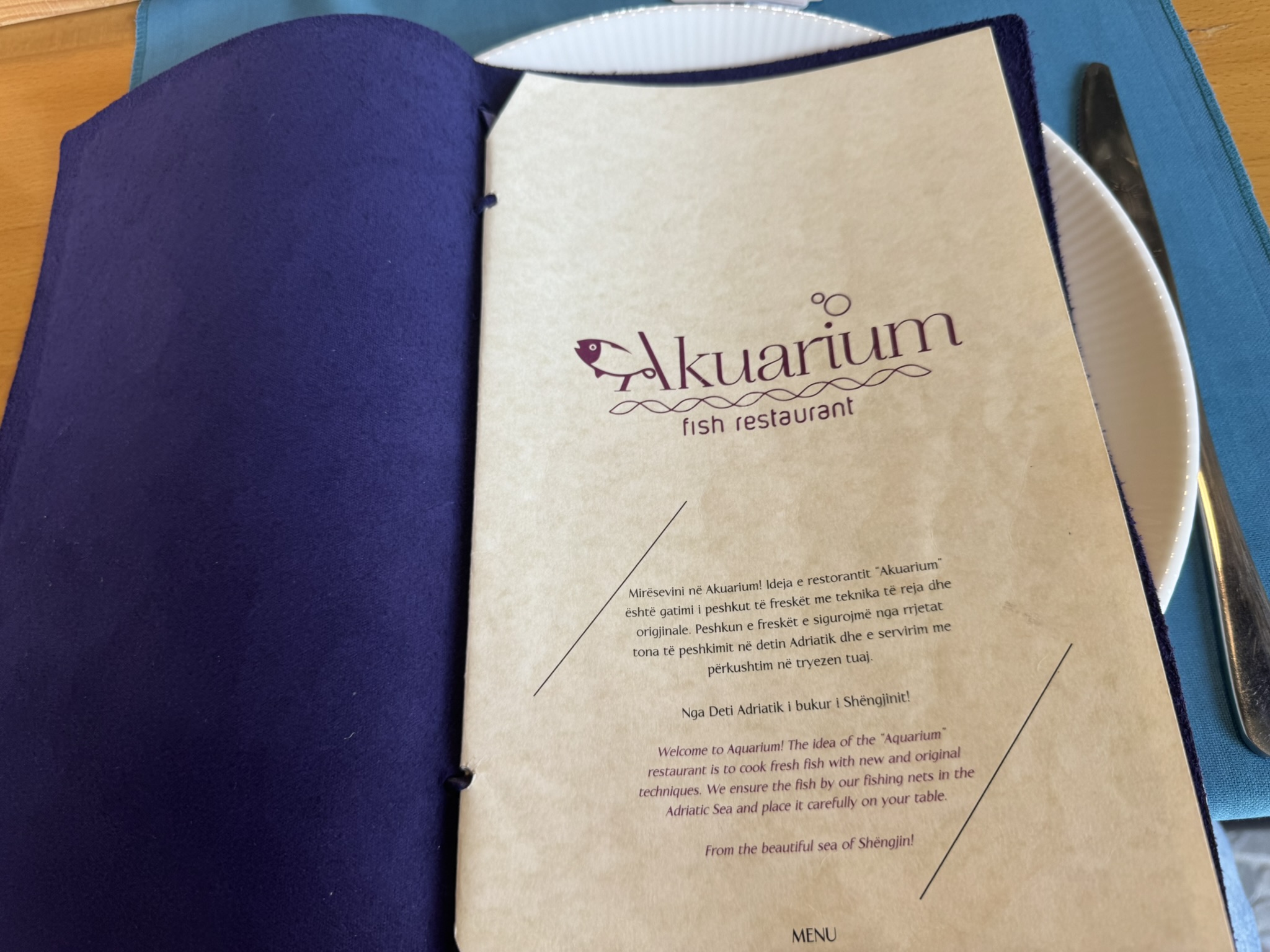
We stopped for lunch at Akuarium Fish Restaurant in Shëngjin — a seafood spot that sources its catch straight from the Adriatic. Three dishes, two glasses of wine, and a coffee came to 3,700 lek — roughly €34 for three of us. Perfectly grilled whole fish, stylish interior with wicker pendant lights and sea views.
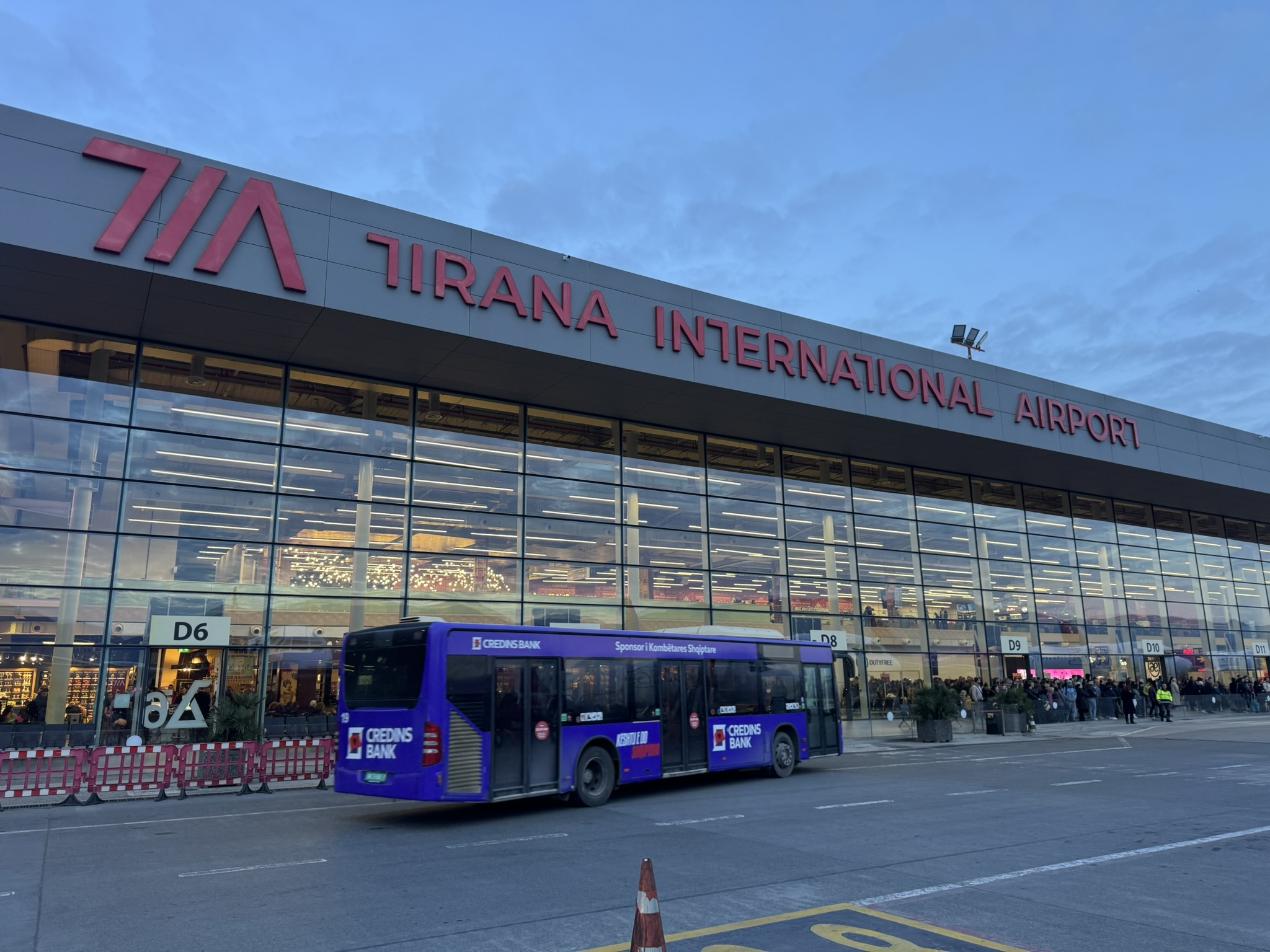
After lunch — Tirana: hotel, shopping mall, bowling with our daughter, and an early night. Wake-up at 4 AM, because our Wizz Air flight to Beauvais departed at 6.
Day 1 — Arrival and the Road to Normandy
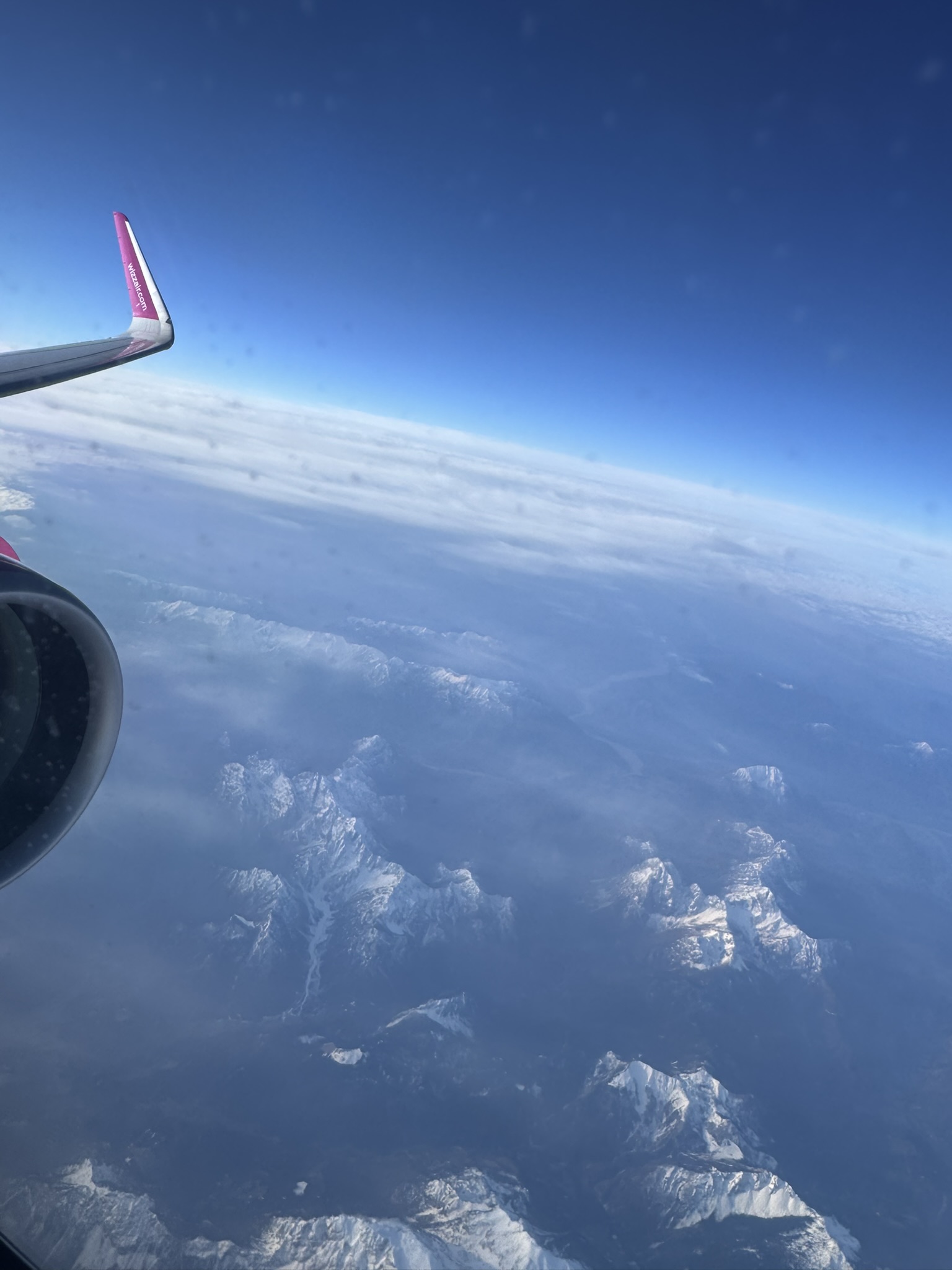
By 9 AM we were at Beauvais Airport. Snow-covered Alps from the plane window — a solid start.
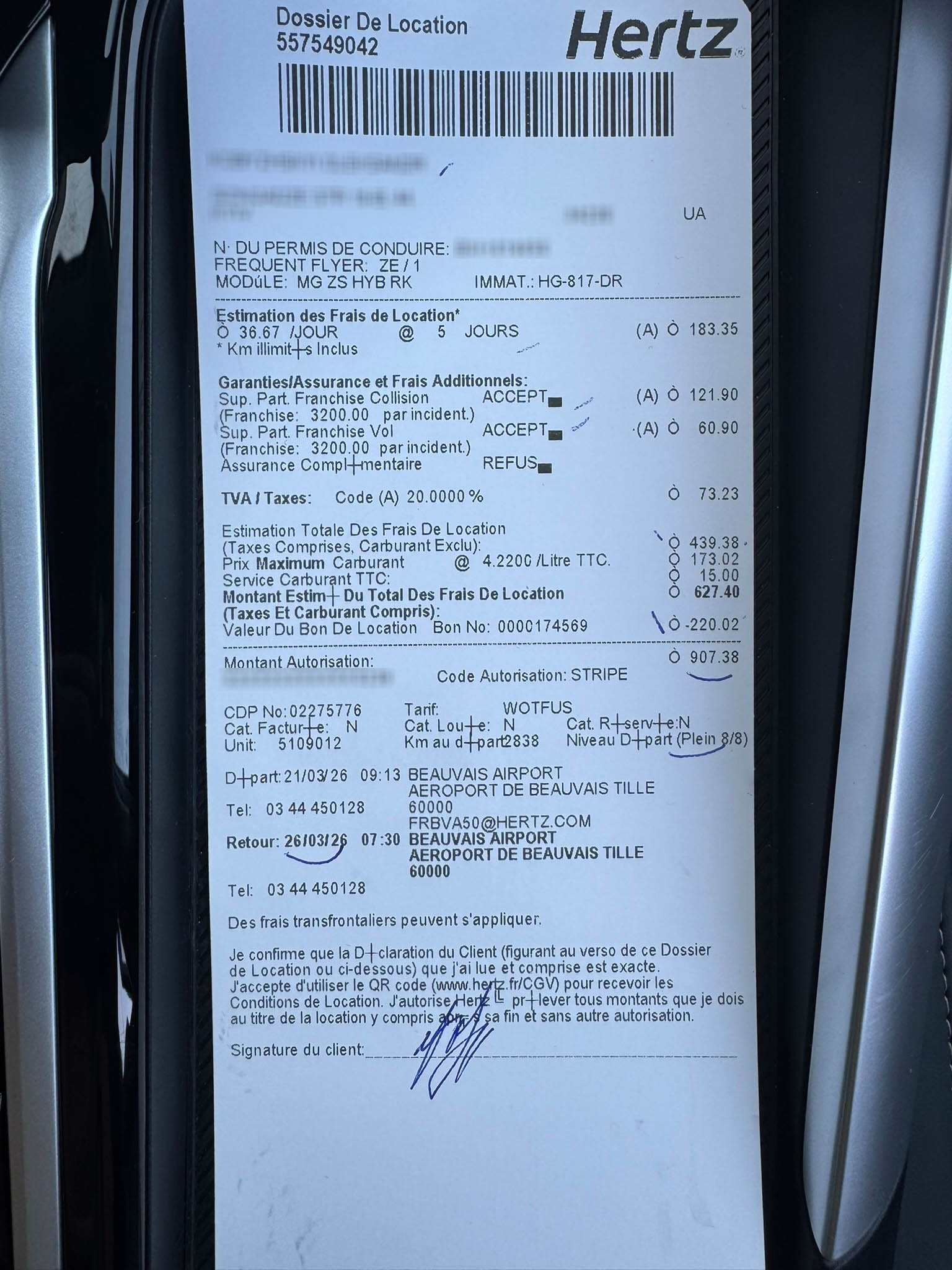
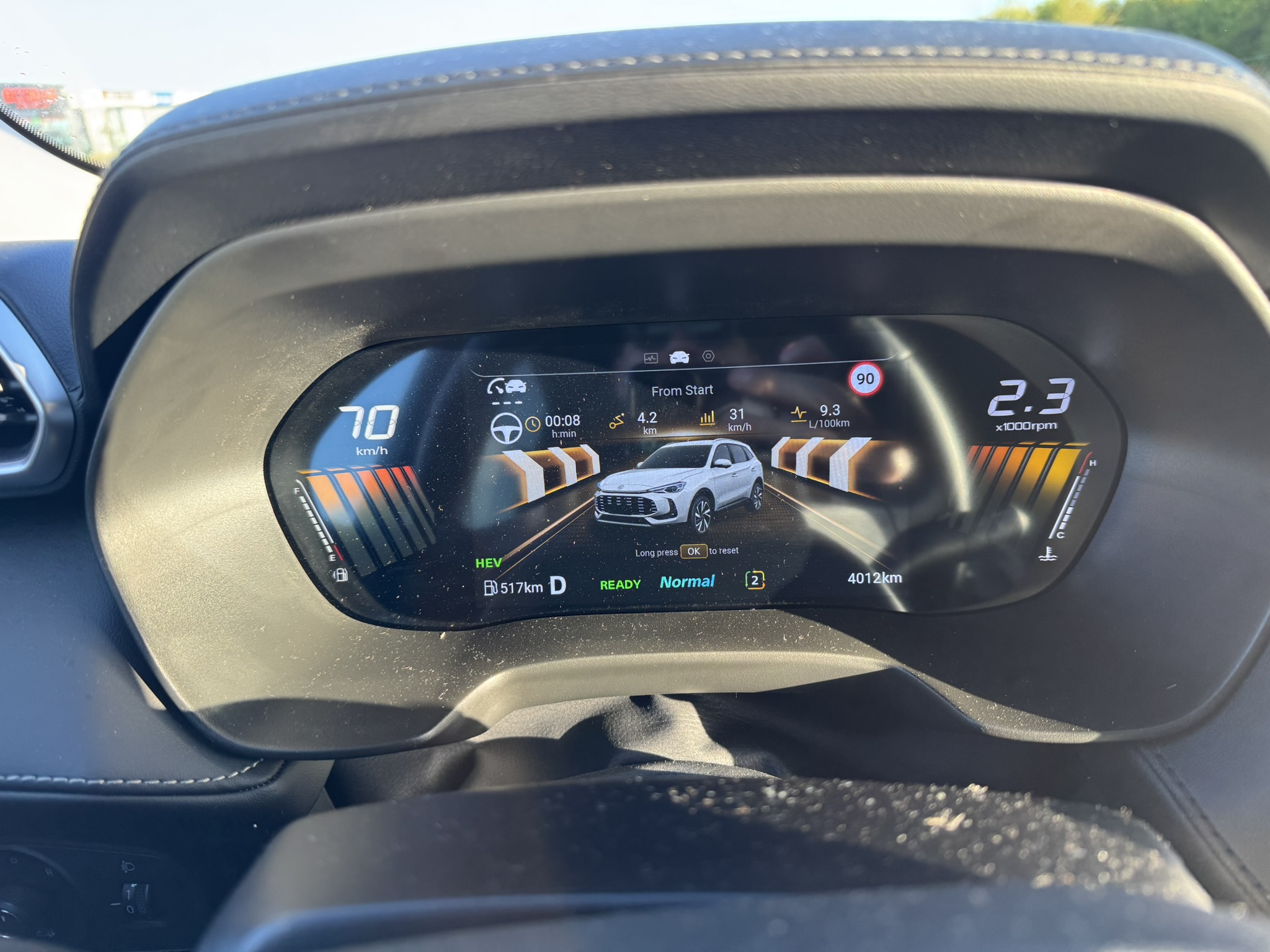
At Hertz, we picked up an MG ZS Hybrid — a black crossover with a digital dashboard and EV mode. Five-day rental: base rate €36.67/day (€183.35), plus collision and theft insurance (€182.80), VAT, fuel — total contract €627.40 after a prepaid voucher. The odometer showed 2,842 km and 536 km of range. Basically a brand-new car.
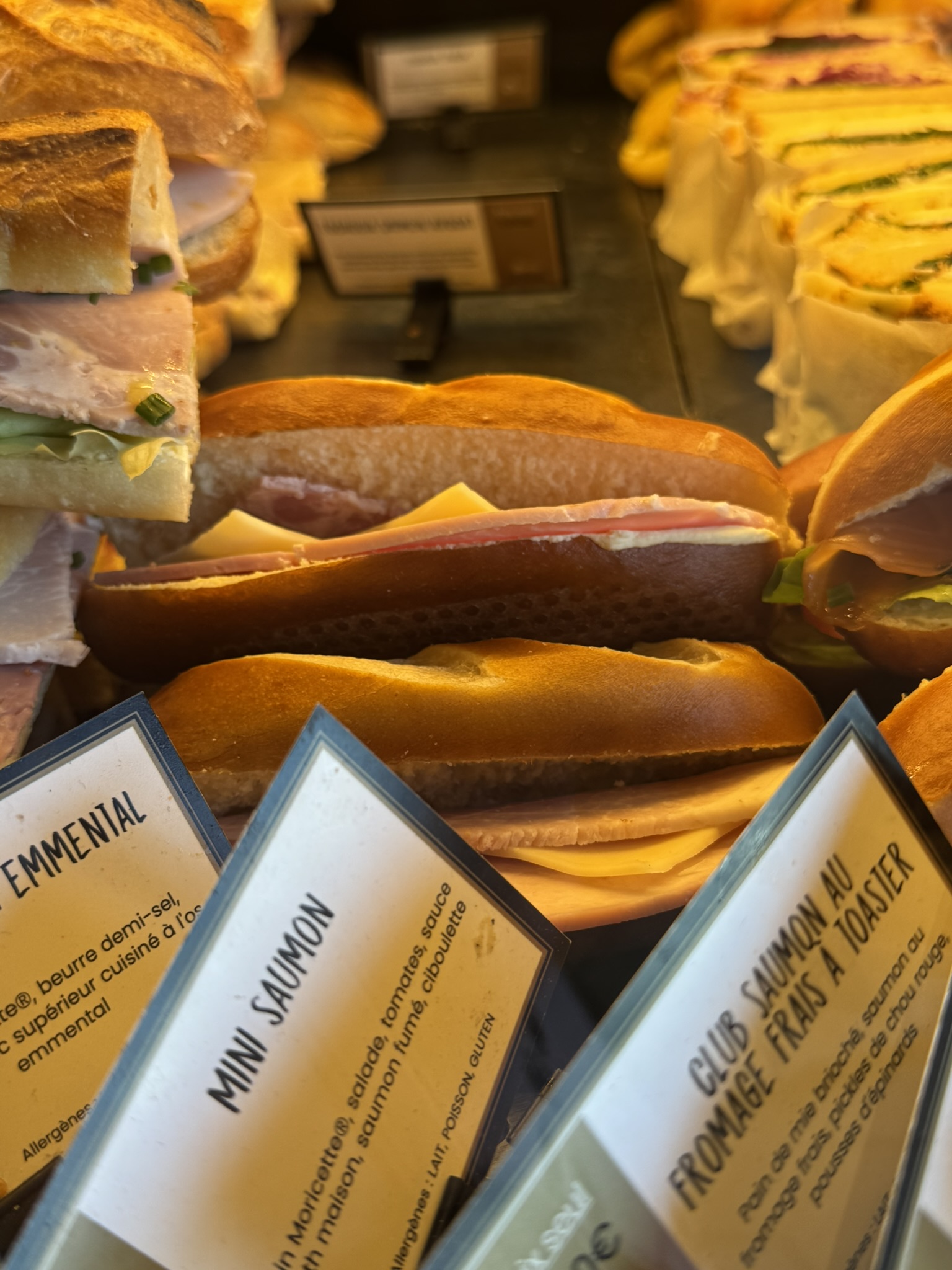
First stop — Boulangerie Feuillette in Beauvais. Pain aux raisins for €1.90, baguette sandwiches with salmon and Emmental. A real French bakery — the kind of place where even a pit-stop breakfast becomes a highlight.
Mindtrip had suggested Bayeux and the D-Day beaches. We picked Étretat instead — the cliffs seemed more fitting for a kid than war memorials. Plus, the night before, we’d watched the Netflix series “Lupin” as a family, which is partly set in Étretat — and our daughter recognized the parking lot and the round café from the show while we were on the beach. When a child spots a real-life location from a movie, the excitement is priceless.
We took the toll road: after a 4 AM wake-up, our daughter wanted to sleep and my wife wanted to get there faster. Once we exited the highway, the charming Norman villages began — half-timbered houses, apple orchards, cows behind fences. Along the way, we spotted a banner outside a restaurant featuring Louis de Funès and an alien from the cult classic “La Soupe aux choux” (1981) — the one where two old farmers feed an extraterrestrial cabbage soup. Normandy lives and breathes its cinema.
We pulled over for a Normandy-style picnic along the road: a cheese tasting platter and a bottle of local cider from an ordinary supermarket. I was driving, so apple juice for me. My wife approved the cider.
Étretat — The Gem AI Didn’t Fully Prepare Us For
AI mentioned Étretat as a possible stop. But it didn’t warn us about the main issue — parking here is an absolute disaster.
No spots in the center whatsoever. We drove to the larger lot further out — spaces for both buses and cars. Even there, we waited about ten minutes for someone to leave. Tip: arrive early or head straight to the outer lot. Don’t waste time circling the center.
From the lot, it’s a five-to-seven-minute walk to the shuttle stop along the main street. On the way, we passed Le Clos Arsène Lupin — the house-museum of Maurice Leblanc (1864–1941), creator of Arsène Lupin. A 19th-century villa with a tower that Leblanc bought in 1919 and renamed after his gentleman-thief character. A must-stop for fans of the Netflix series — especially since we’d just watched it.
The shuttle, Les Petits Trains, is a little tourist train that departs from one of the central streets. Round-trip ticket: €9 adult, €5 child. Runs every forty minutes — more than enough.
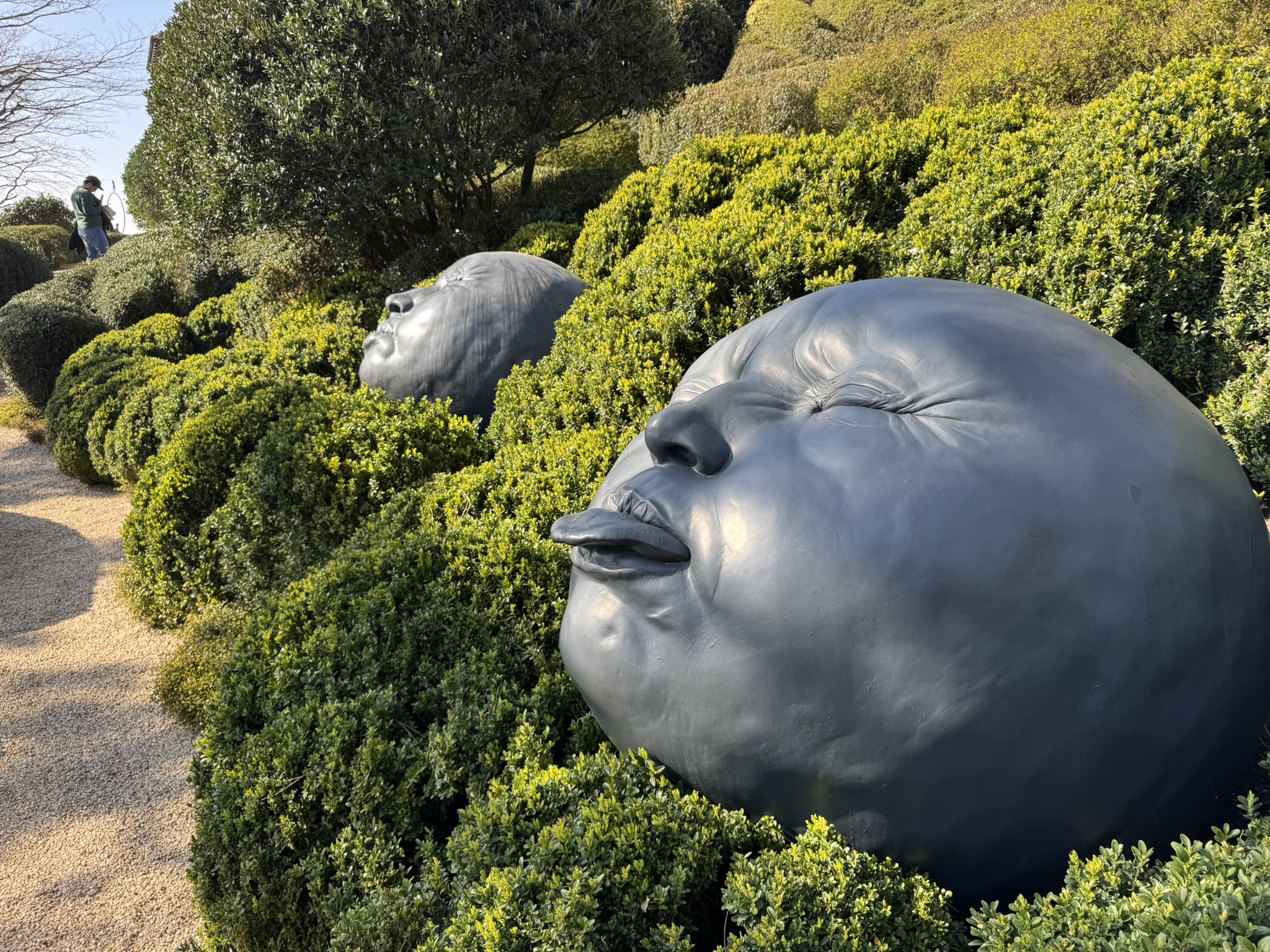
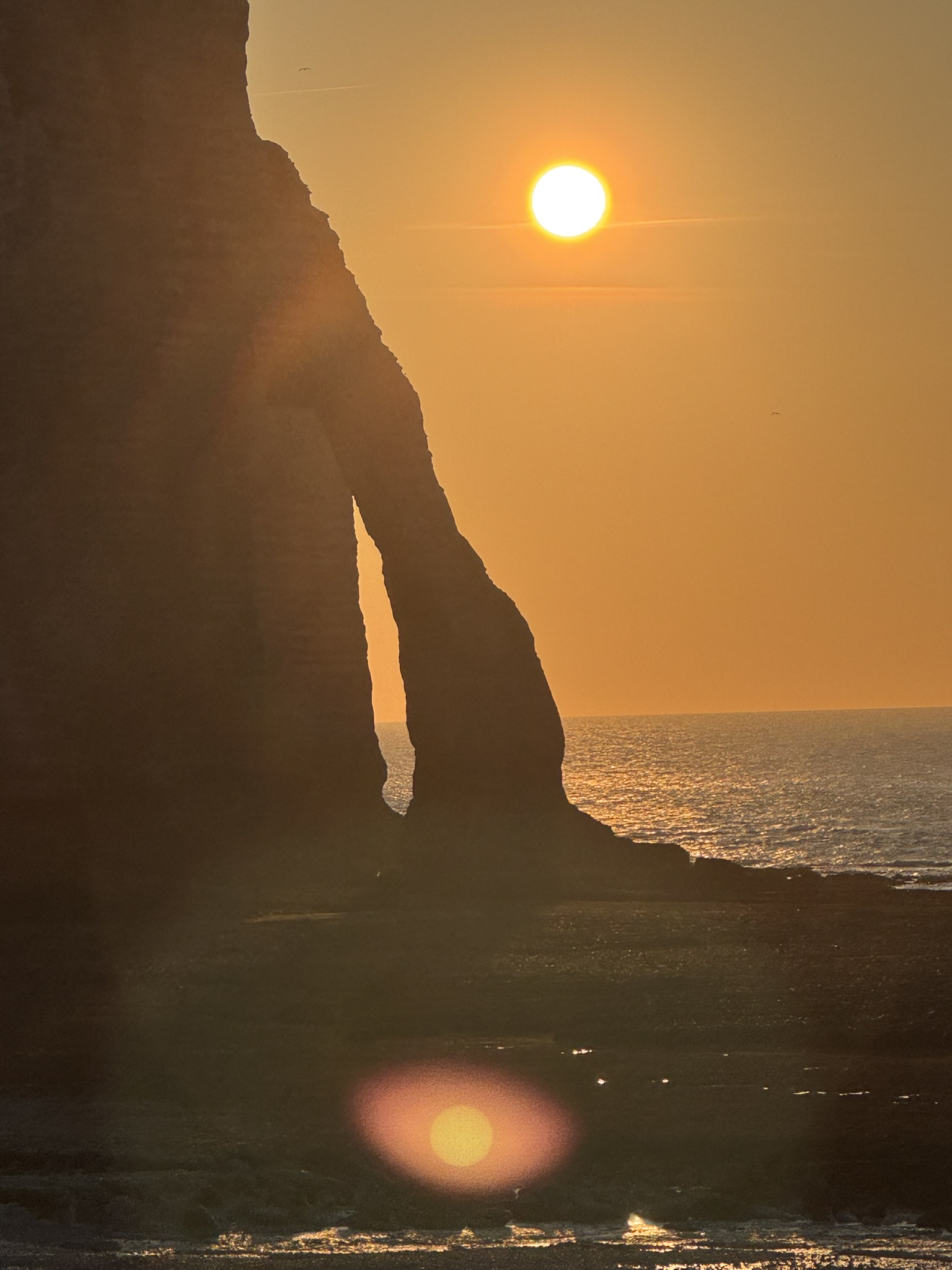
First up — Jardins d’Étretat, clifftop gardens overlooking the famous arch. This was the unexpected wow moment of the entire trip. Among sculpted boxwood hedges, enormous face sculptures “grow” out of the ground — silvery spheres with closed eyes and pursed lips. Our daughter was thrilled. So were we. From the viewing platform, you get that iconic view — the Porte d’Aval arch and the Aiguille needle rock that the Impressionists painted.
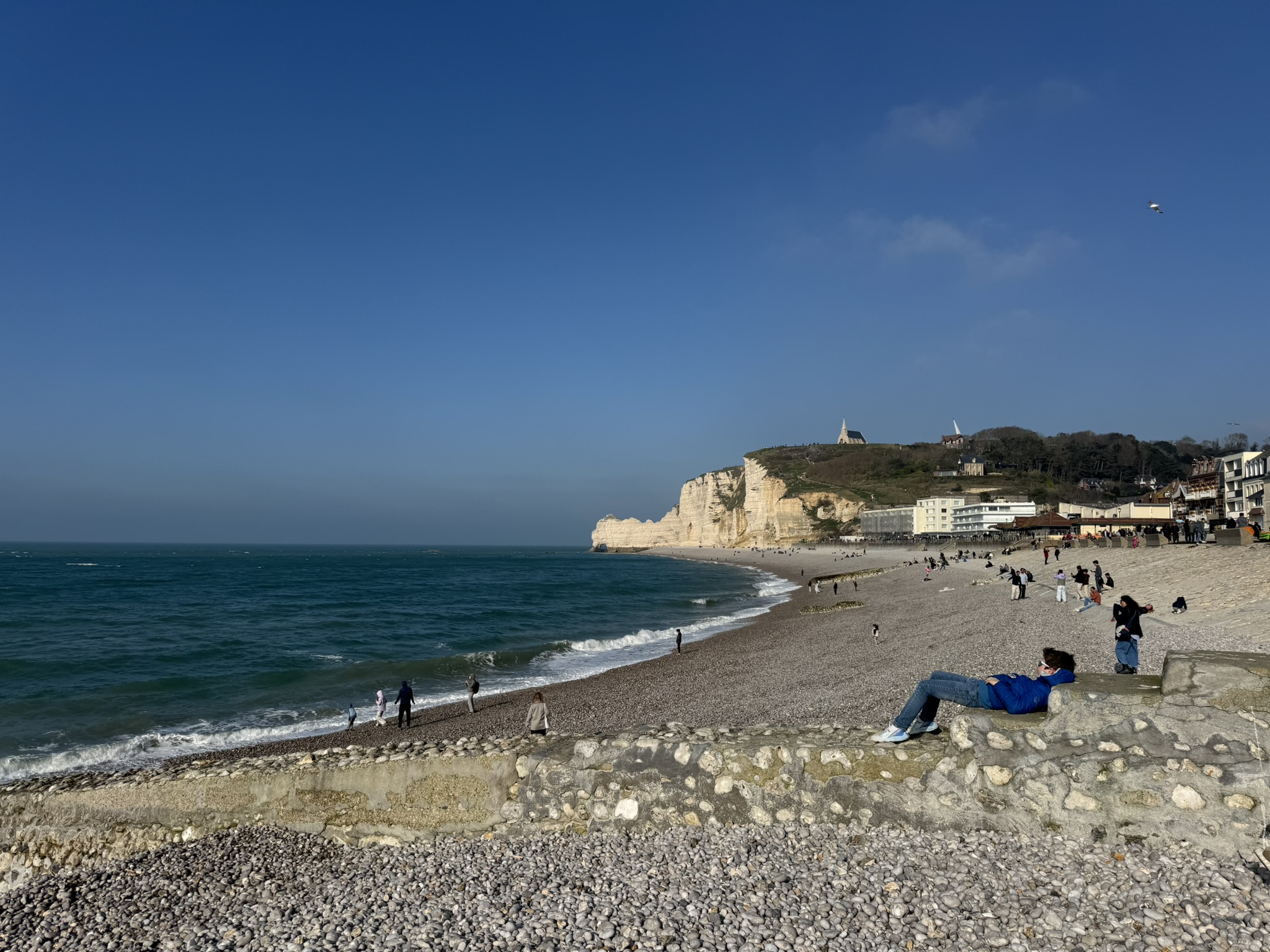
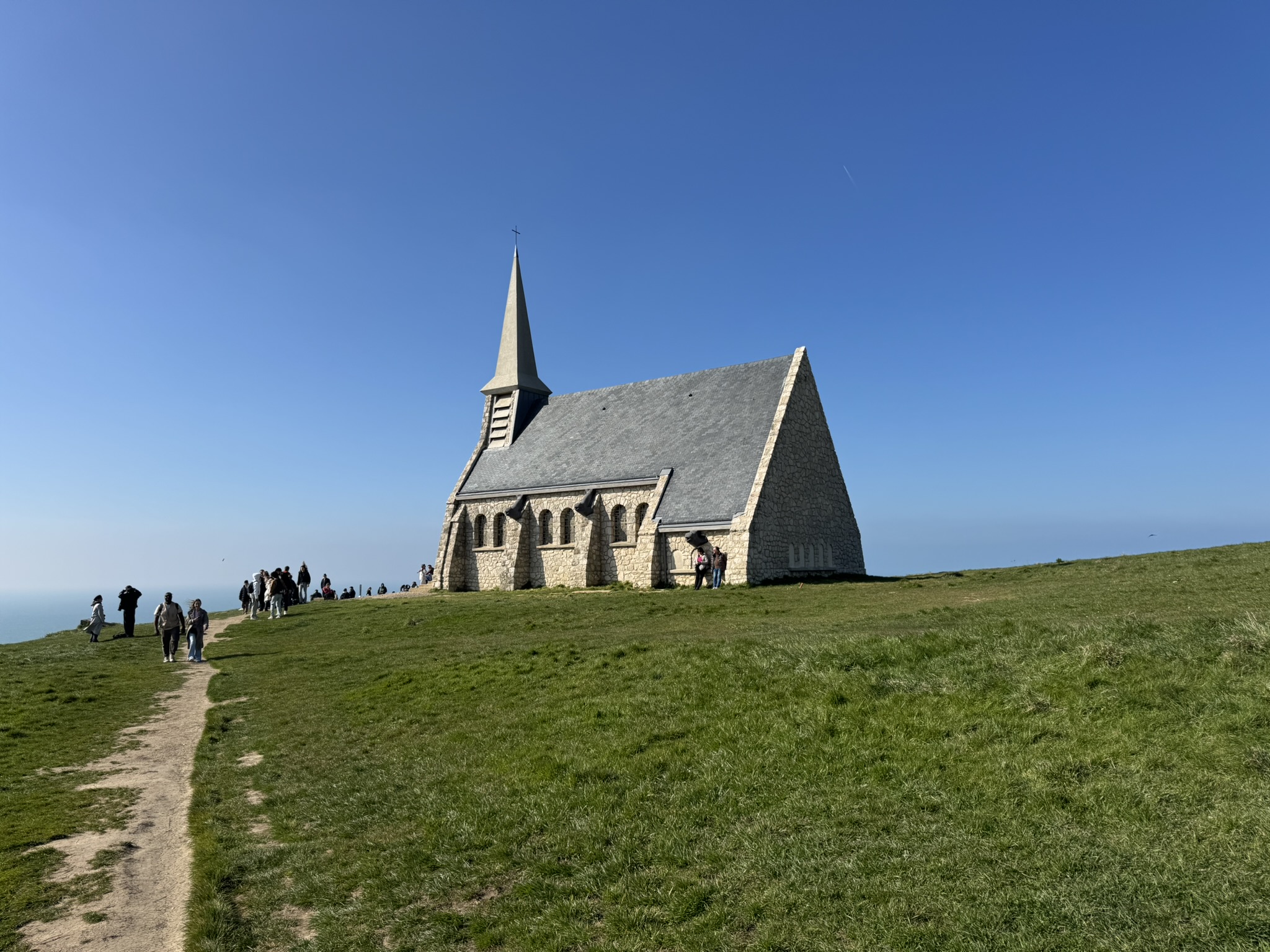
We climbed up to Chapelle Notre-Dame de la Garde — a small stone chapel perched at the very edge of the cliff. Wind, ocean, white cliffs — photos turn out stunning without any filters.
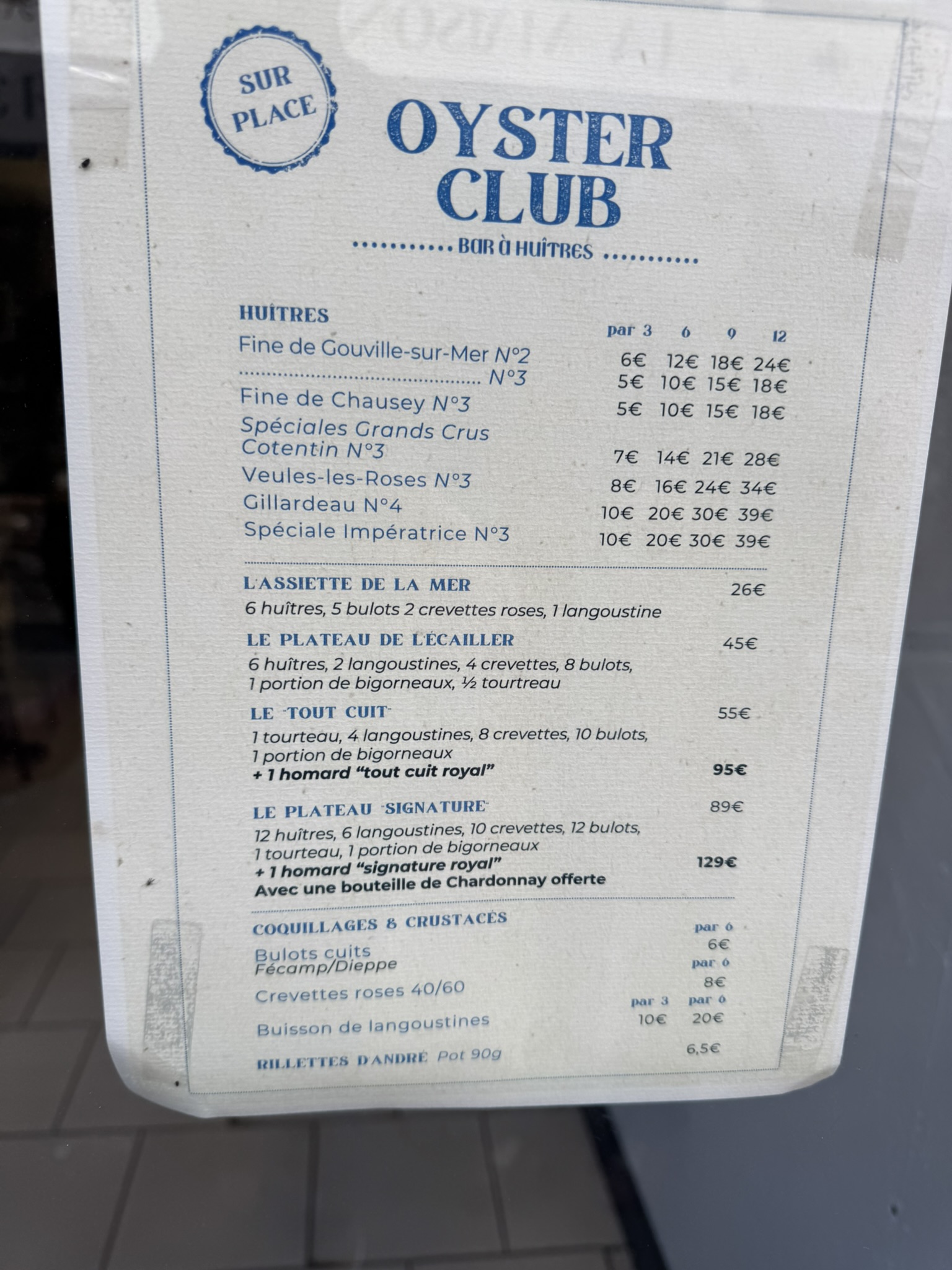
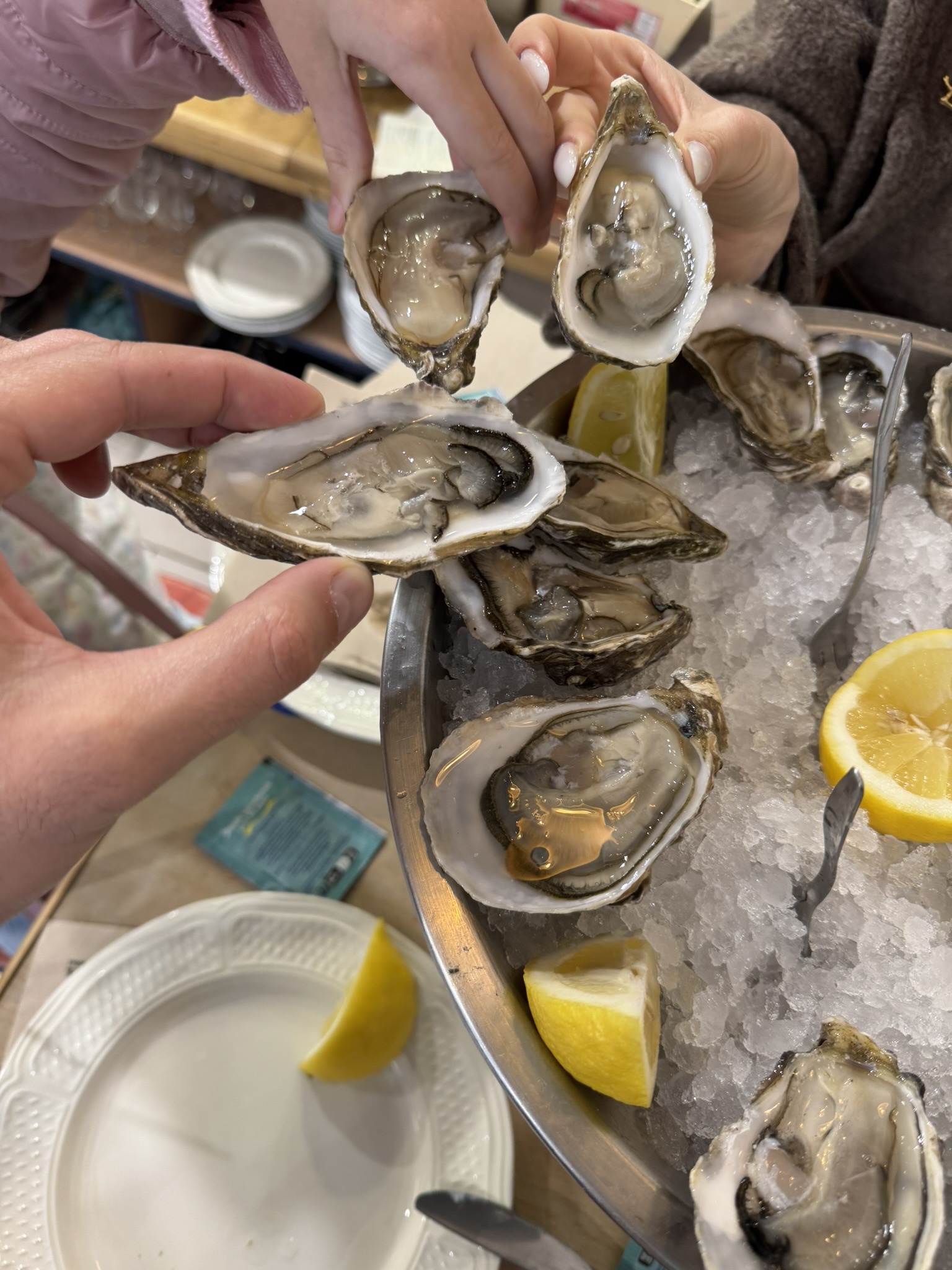
Back in town, we stopped at Oyster Club — an oyster bar on Rue Alphonse Karr, in the historic center. On the owner’s recommendation, we ordered twelve oysters — three of each of four varieties: Fine de Gouville-sur-Mer, Spéciales Grands Crus Cotentin, Veules-les-Roses, and Gillardeau. Here’s the insight: you can only truly taste the difference between varieties when you try them back-to-back. If we’d ordered one kind and then another thirty minutes later, I wouldn’t have noticed a thing. Full disclosure: I’m no oyster connoisseur, but with this side-by-side approach, even an untrained palate picks up that each one has its own character.
For dinner, we tried La Salamandre — Google rating 2.9. And unfortunately, it’s deserved. Étretat is a stunning place for walks and views, but not for dining. Nearly every review complains about the food at local restaurants. Keep that in mind when planning.
Before leaving, we grabbed a bottle of Cidre Artisanal du Pays de Caux from Cidrerie Godefroy for €5.90 — dry, semi-dry, and sweet varieties available. Real Norman cider made from local apples.
Mont Saint-Michel — Tips AI Missed Completely
Our biggest mistake on this trip is one any experienced traveler would have flagged — but AI stayed silent: we stayed in Rouen, and Mont Saint-Michel is three and a half hours away. The return took nearly four hours, partly due to the gas station incident. Almost eight hours behind the wheel in a single day, plus the walk itself — it wore even me out. If you’re planning both Étretat and Mont Saint-Michel, book a hotel somewhere between them. Not in Rouen.
On the bright side, we used a zero-cost hack at the hotel breakfast: we made road sandwiches. Fresh baguette, sliced cheese, ham — wrapped in napkins. We ate them with a panoramic view of the abbey. Best snack of the trip.
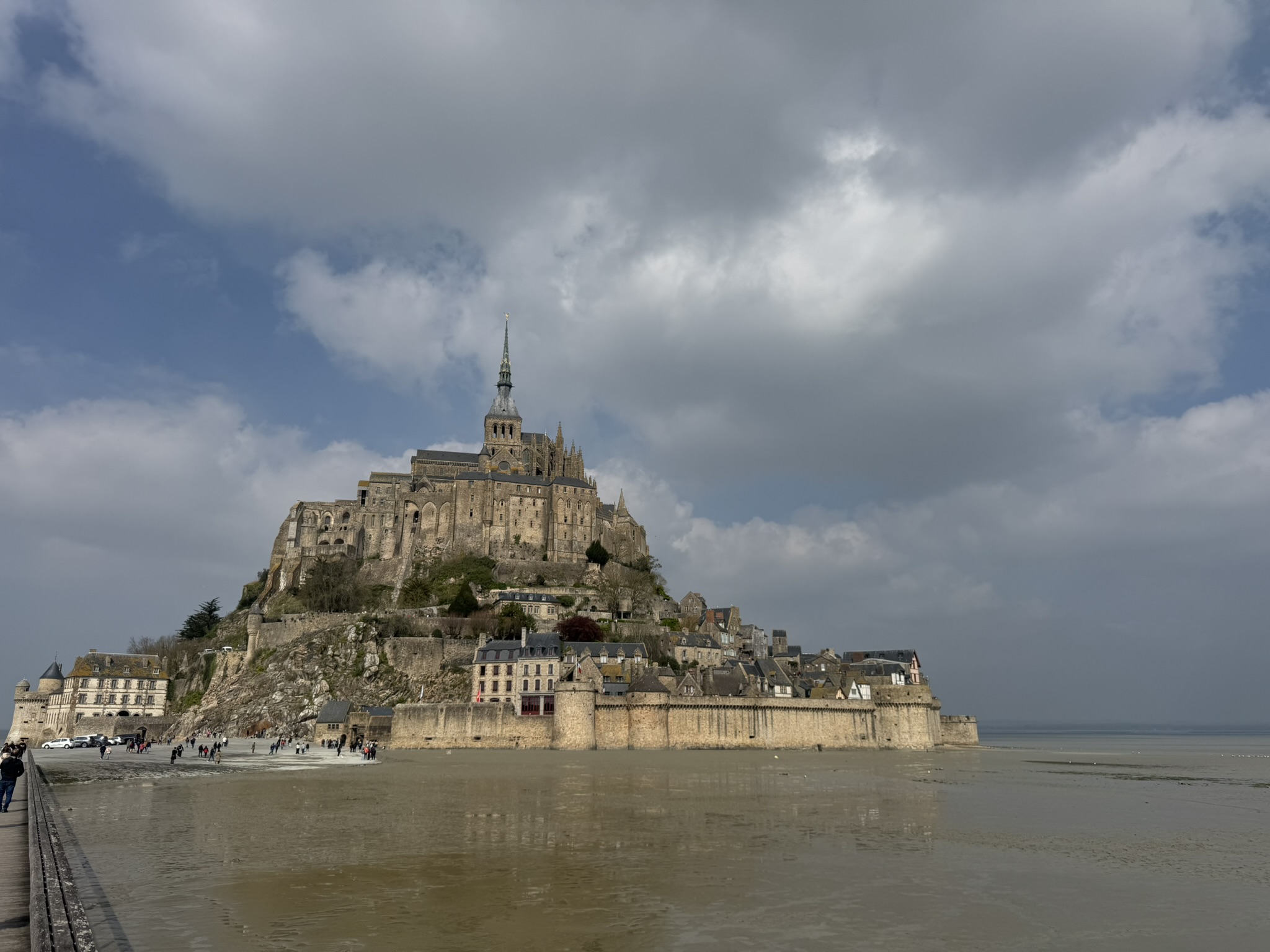
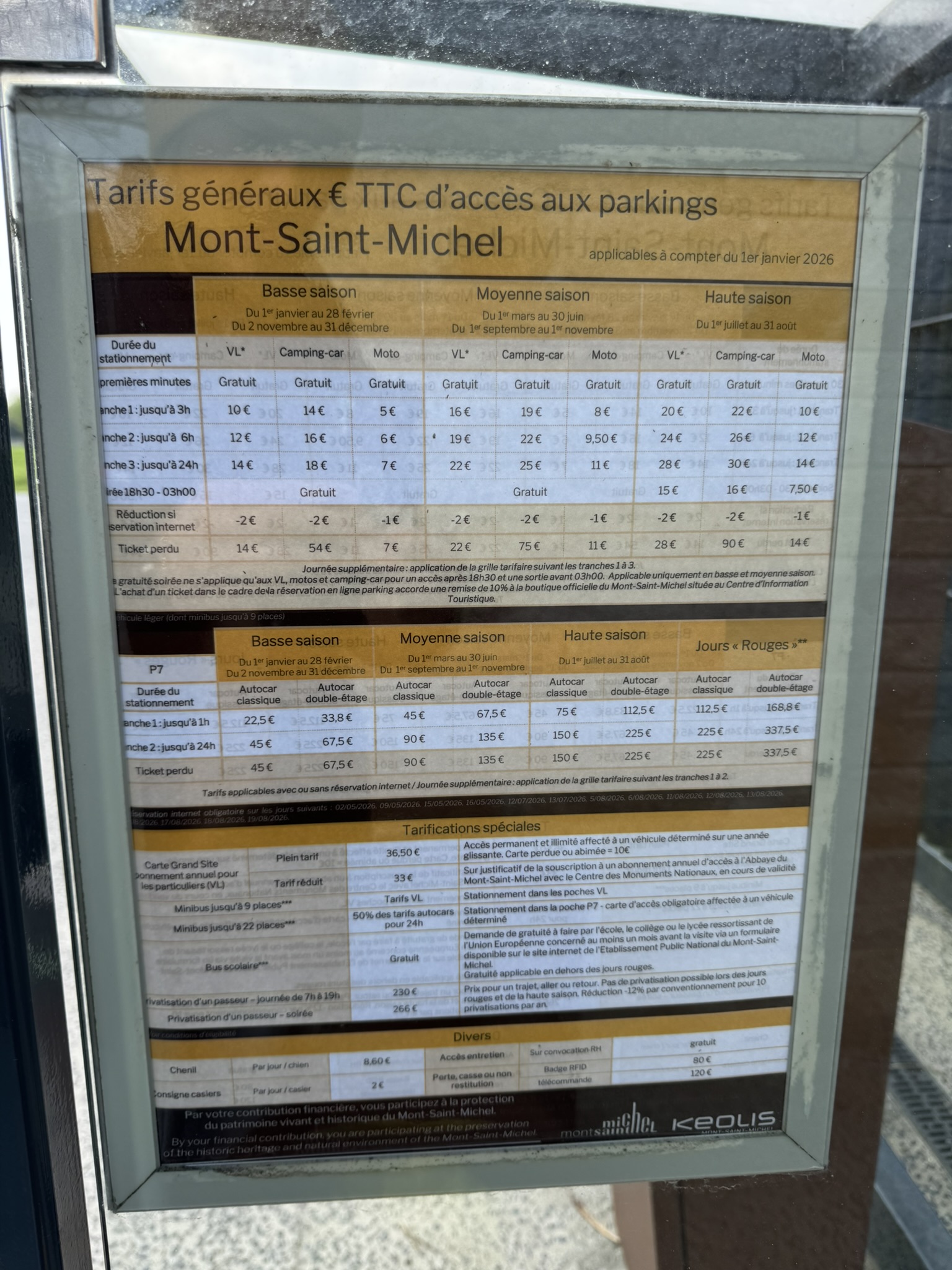
The Mont Saint-Michel parking lot is massive. We arrived around noon and there were still plenty of spots. From there, a free shuttle takes you to the abbey.
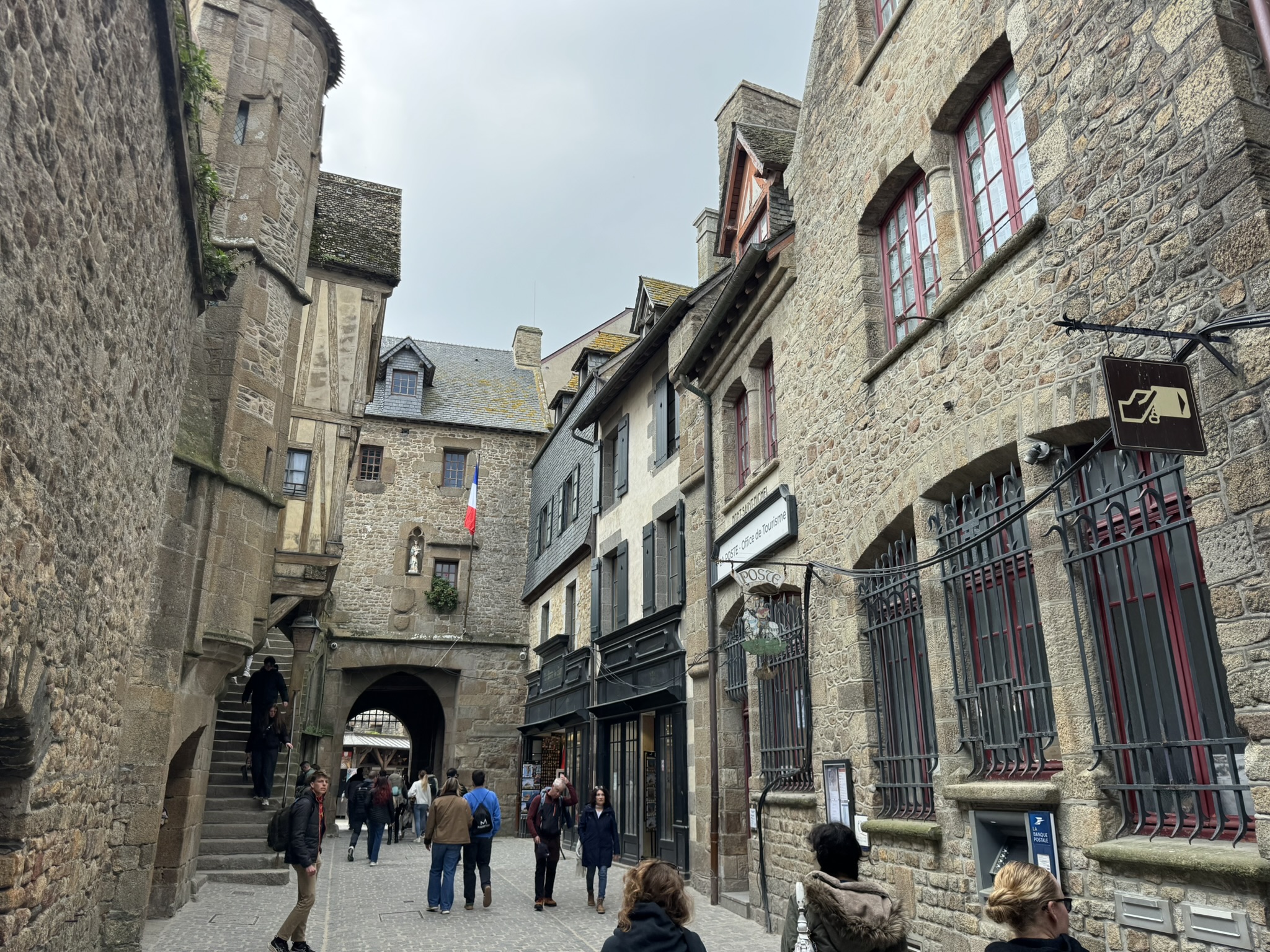
With an eight-year-old, we didn’t rush to buy tickets. We walked around the outside, watched the tides come and go (the difference in water level in March is impressive), climbed the main street lined with souvenir shops and ancient half-timbered houses.
When we reached the paid section of the abbey, our daughter was already tired. We made a call that felt questionable at first: skip the tickets. We just turned around and walked back down the same street — this time slowly, ducking into shops and photographing the details. From the ramparts, we spotted the bay and the small island of Tombelaine — an uninhabited rocky islet about three kilometers to the north. And that’s probably one of the biggest lessons of traveling with kids: you don’t need to “see everything.” If the child is tired, you’ve already gotten the most out of that place.
We wanted to try the local galettes — not regular crêpes, but authentic Breton buckwheat galettes with egg, sausage, and cheese. But at the places that had seats, they’d run out of galettes. And where galettes were available, there were no seats — with a wait of over an hour. When you’re traveling with a kid, there’s only one move: go where there’s a table right now.
So we ate at Brioche Dorée near the parking lot — standard fast food, nothing special, nothing to complain about either.
Here’s the real hack: the UTILE supermarket in Beauvoir, literally five minutes by car from the Mont Saint-Michel parking lot. The same sandwiches sold at the abbey cost two to three times less here. There are ready-made meals and a microwave. And — pay attention — souvenir Norman caramels and cookies are also a fraction of the price. If you’re driving, this is a mandatory stop.
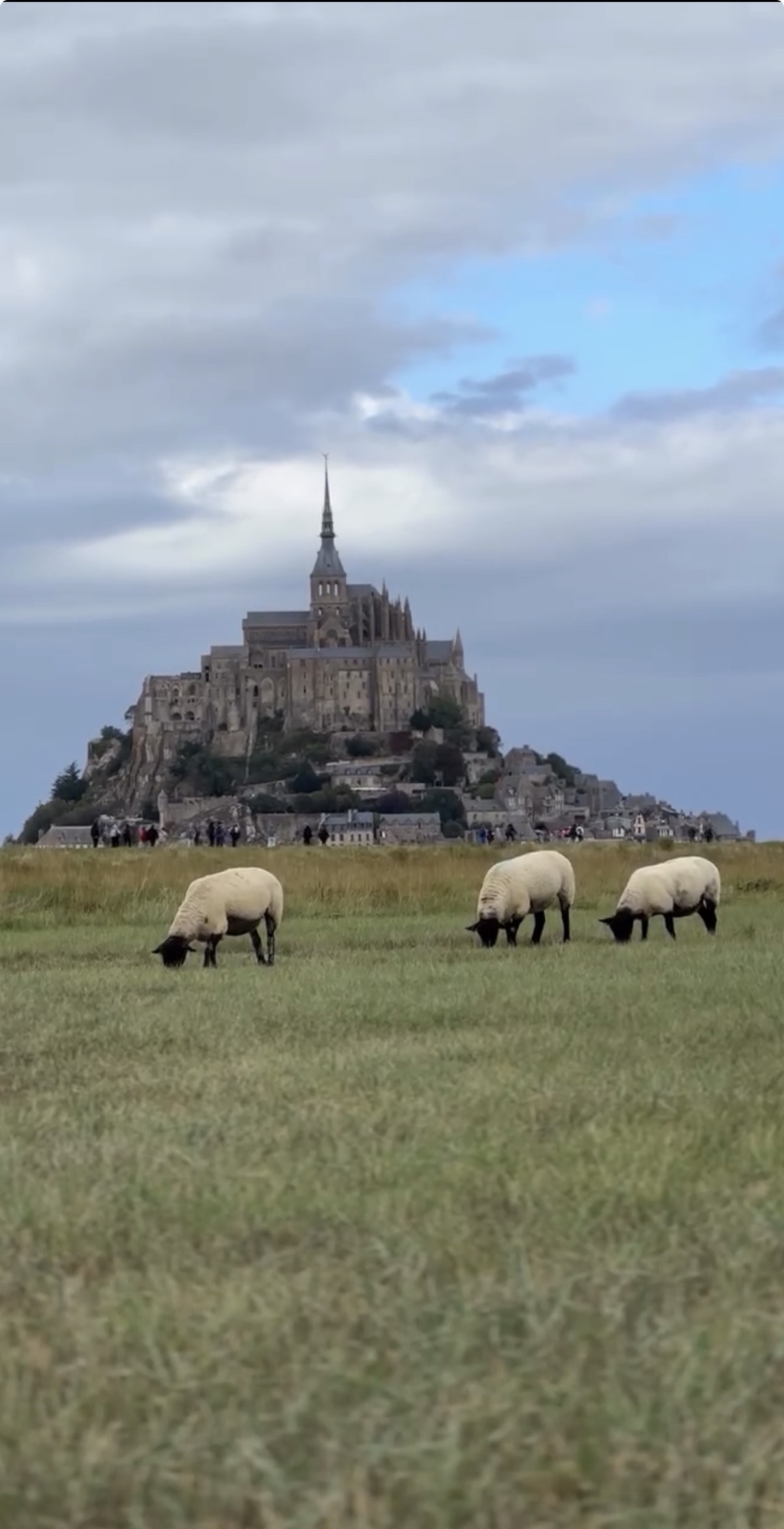
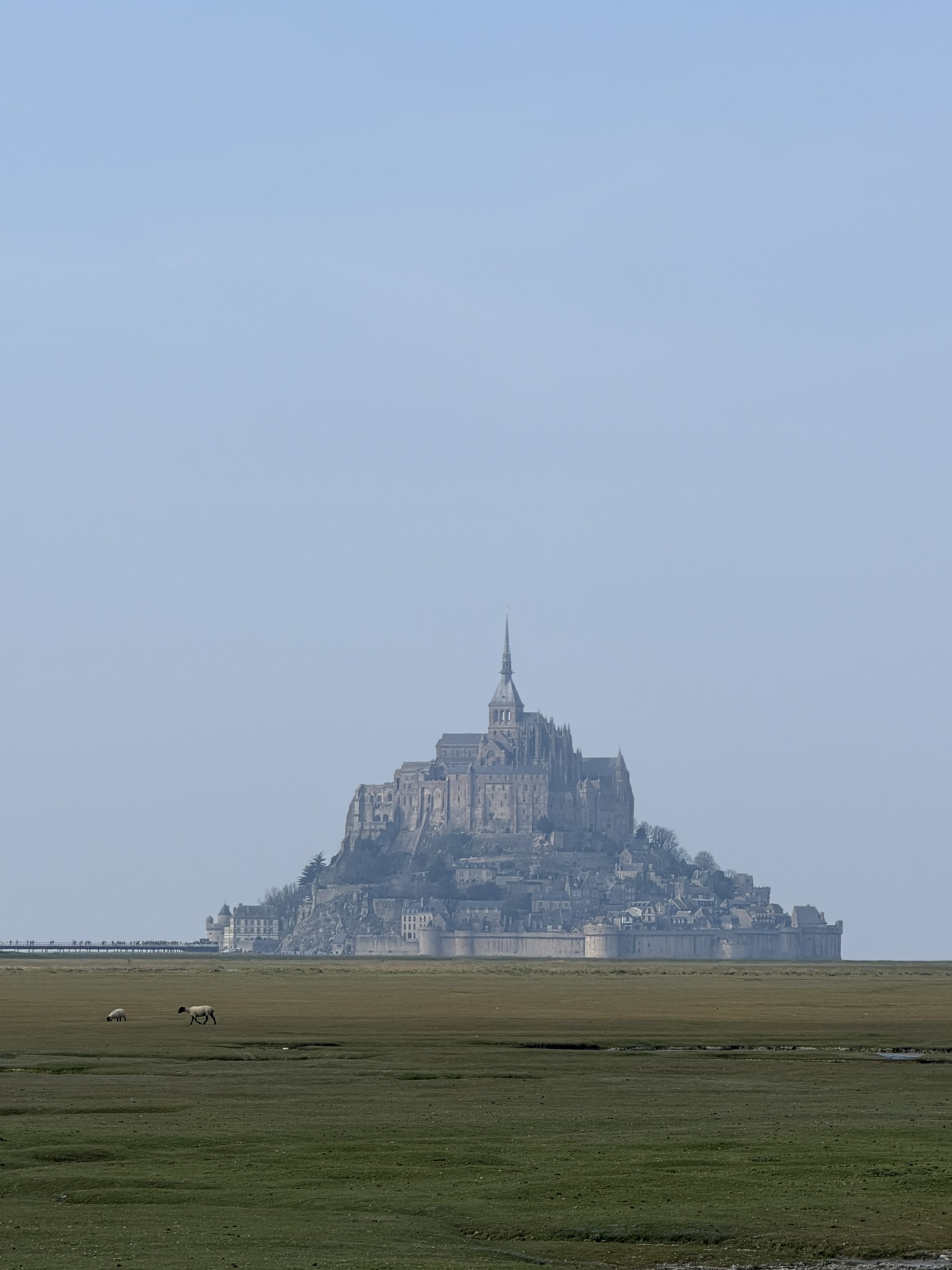
After the supermarket, we drove to a spot that doesn’t appear in any AI-generated plan — Mont Saint-Michel Viewpoint with Sheep. It’s a point on the map (JG95+4V, Pontorson) with a view of the abbey across a field where sheep graze. The best photo spot on the entire route. Mont Saint-Michel on the horizon, a green field, sheep — and zero tourist crowds.
Rouen — 600-Year-Old Houses and Morning Coffee
Rouen was our base for two nights, and the morning walk through the city turned out to be one of the most powerful impressions of the trip.
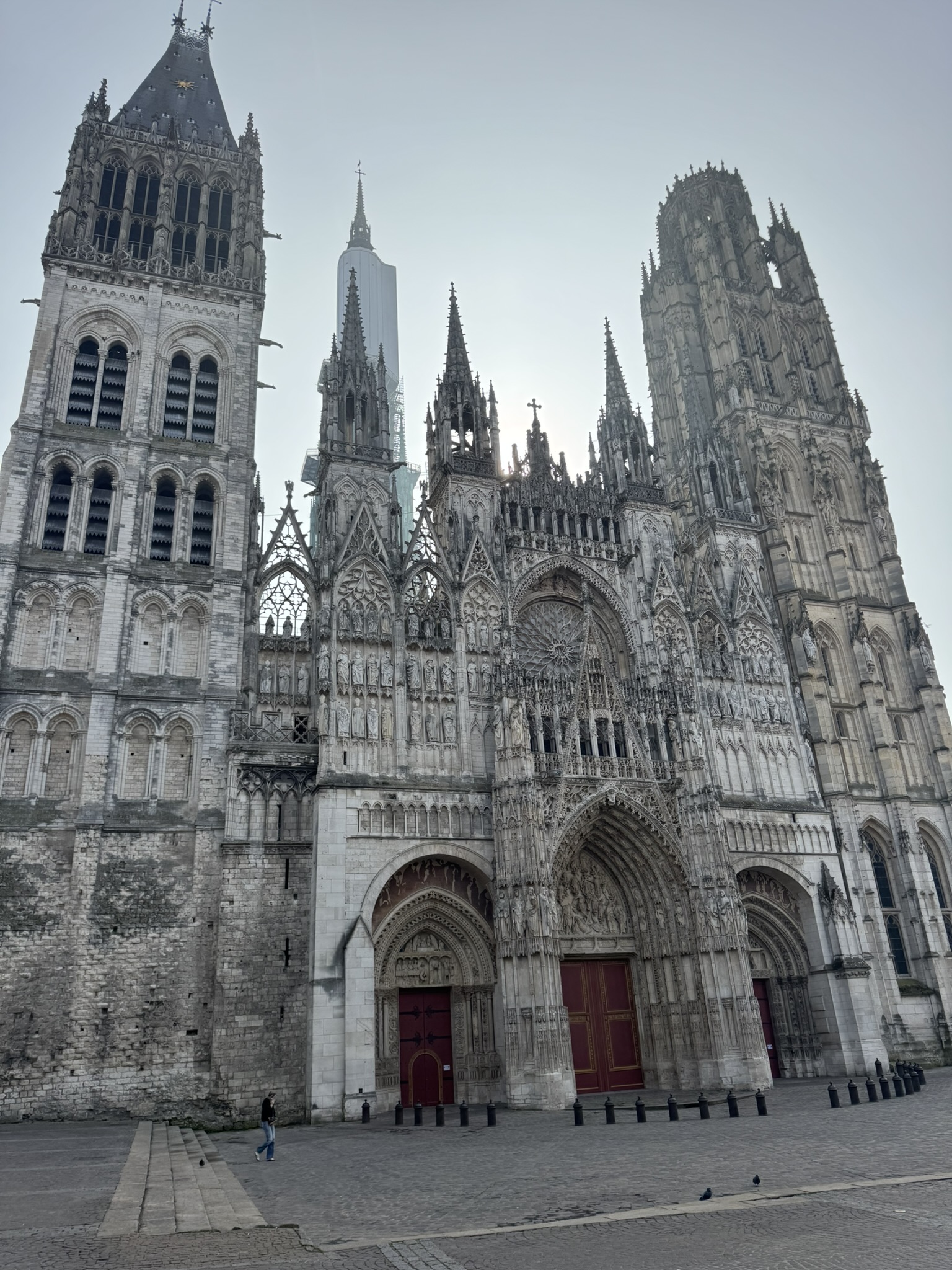
Rouen Cathedral — Cathédrale Notre-Dame — the very one Claude Monet painted thirty times under different lighting. In person, the Gothic façade is staggering — stone lacework so detailed you want to examine every inch.
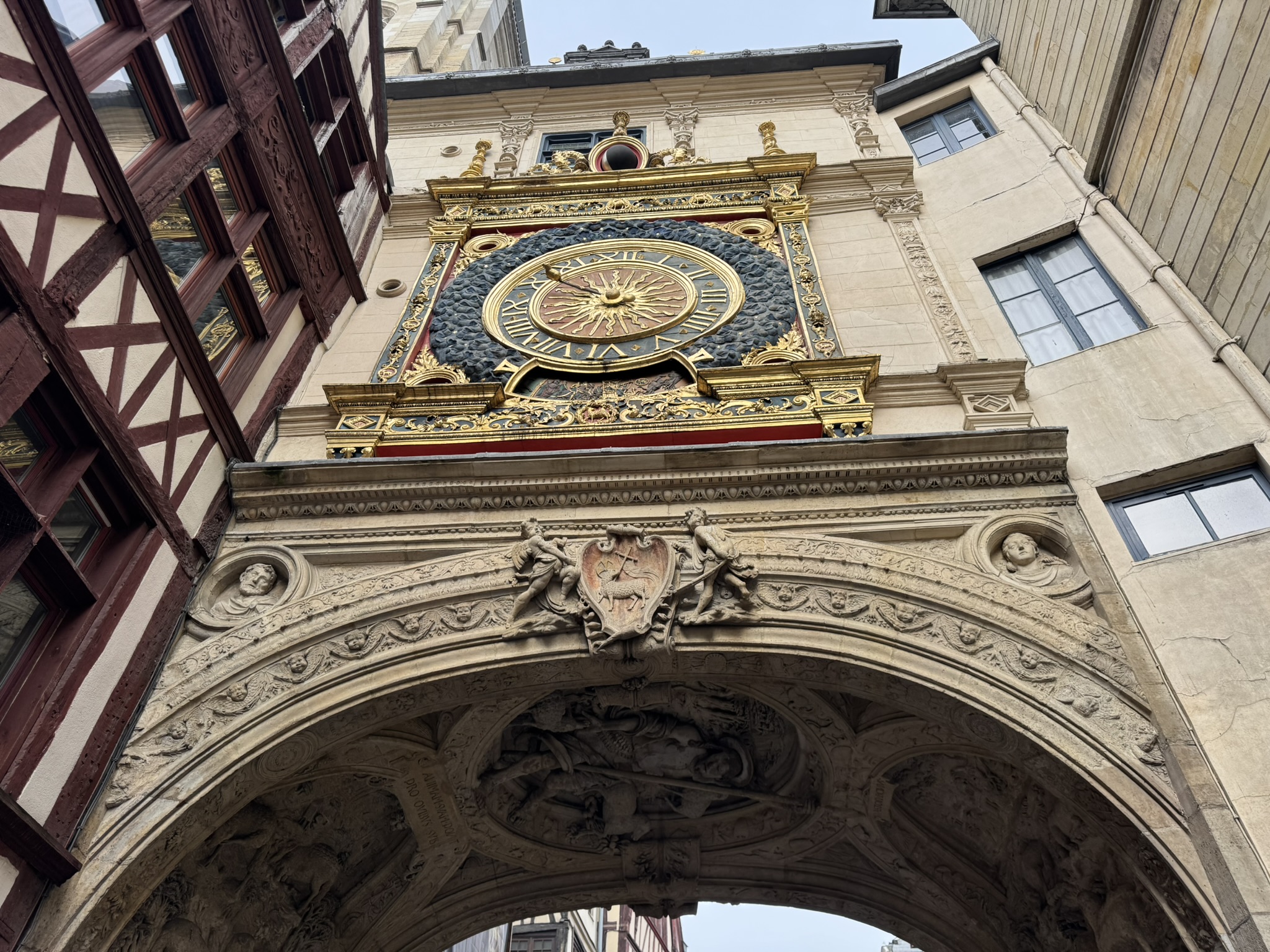
A few minutes’ walk away — the Gros-Horloge, a 14th-century astronomical clock on an arch with a golden dial and a “Pastor Bonus” relief carving. Further down the streets — Auberge de la Couronne, with the inscription “depuis 1345.” The oldest continuously operating inn in France.
And here’s where it hit me. You’re walking along Rue de la Vicomte past red-and-white half-timbered houses with chocolate shops and cafés, and it suddenly sinks in: these buildings are four to six hundred years old. They’re not preserved behind glass in a museum — people live in them, shops are open. When you realize a house was built in the 15th century and it’s actually standing right in front of you — the feeling is hard to describe.
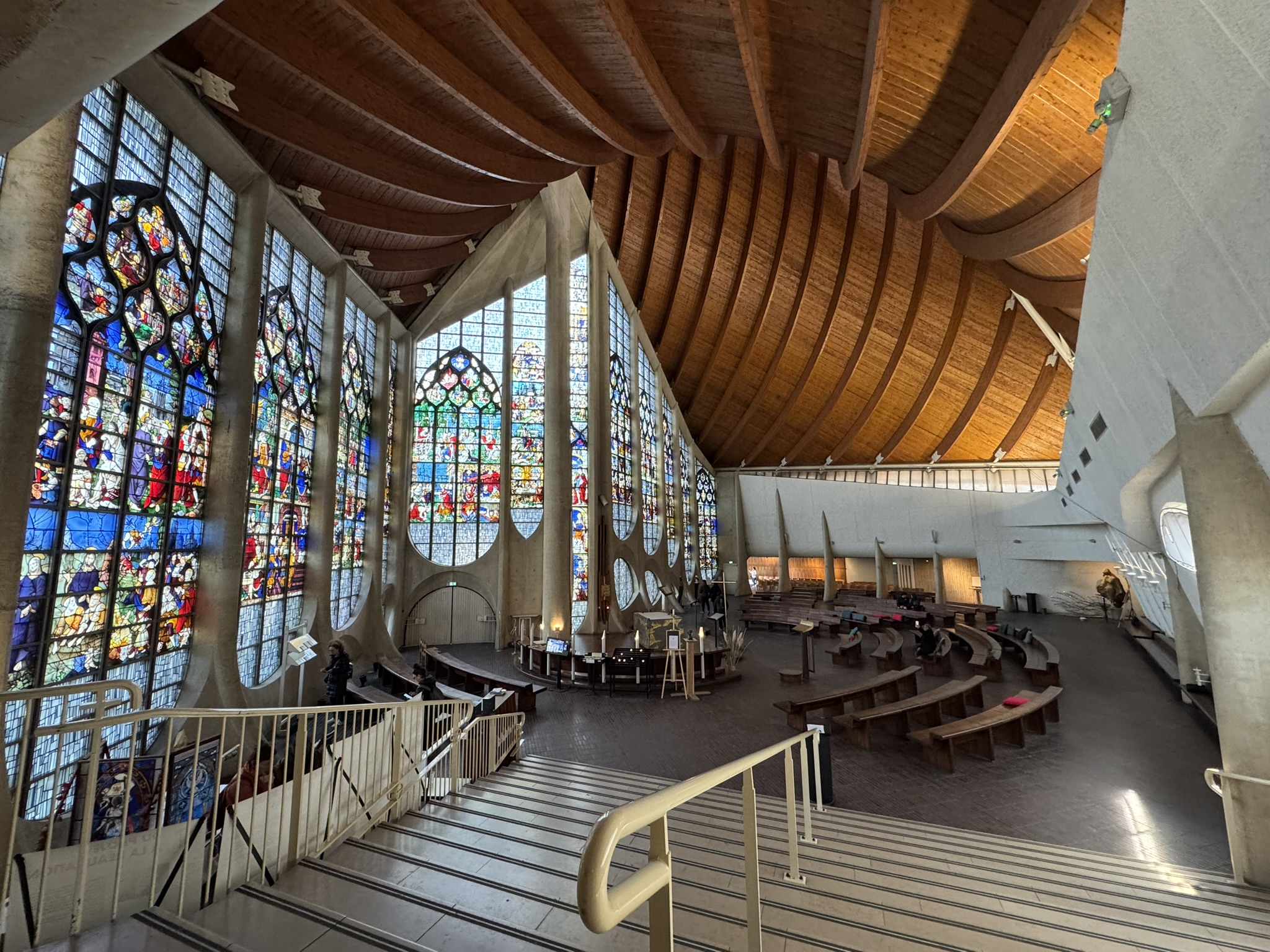
Place du Vieux-Marché — the square where Joan of Arc was burned in 1431. The Church of Sainte-Jeanne-d’Arc looks like a modernist concrete ship from the outside, but inside — 16th-century stained glass windows salvaged from an older destroyed church, and a wooden ceiling shaped like an upturned ship’s hull. The contrast is incredible. We missed the Historial Jeanne d’Arc — the multimedia museum — because we arrived at 9:30 AM and it opens at 10. Tip: check opening hours in advance.
Coffee on the old streets of Rouen in the morning mist — that’s something no AI will ever schedule for you, but it’s exactly the kind of moment worth traveling for.
Paris with AI Recommendations: What Actually Worked
Two days in Paris — one sunny, one rainy. Both turned out great in their own way.
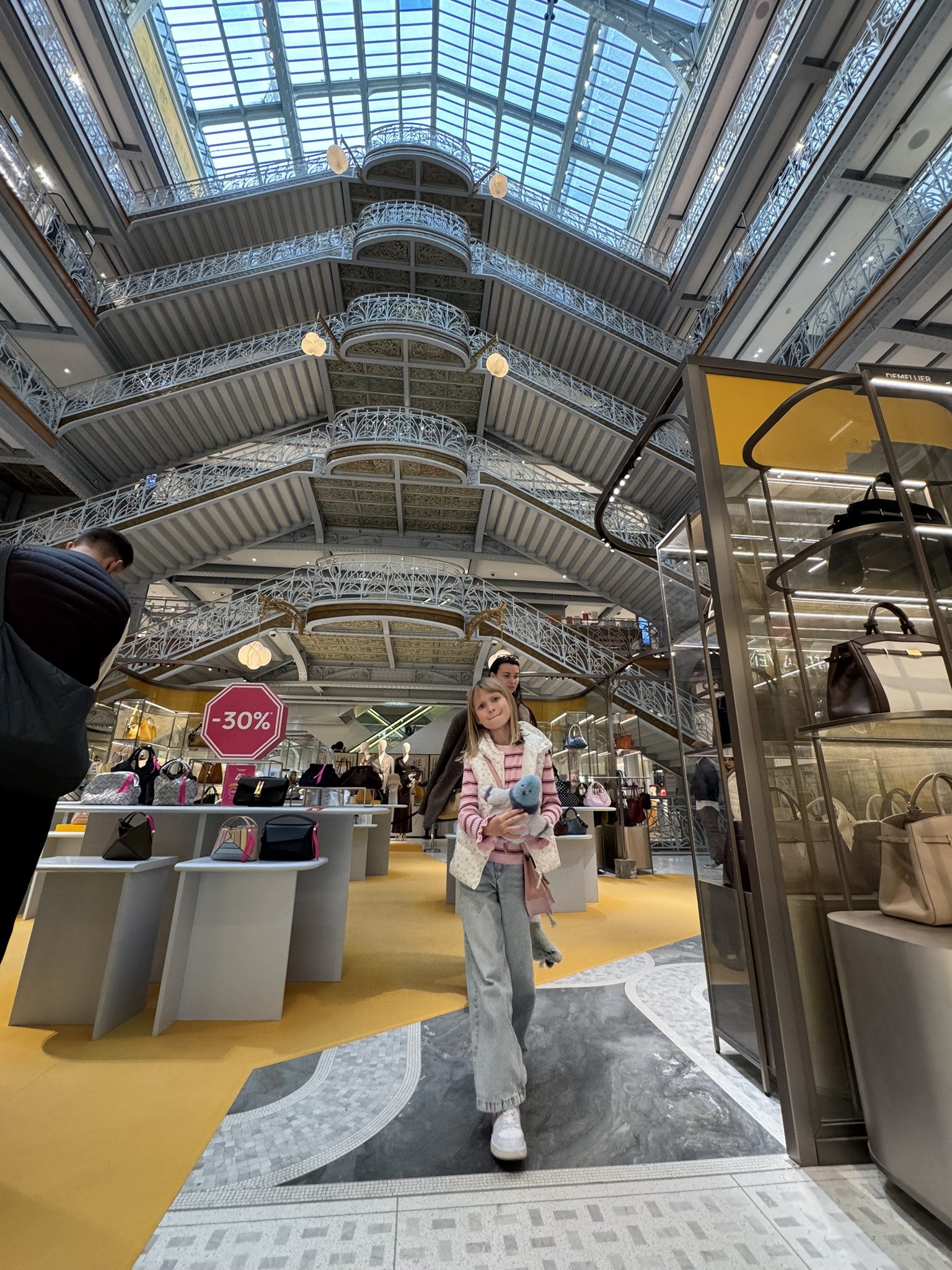
On the sunny day, first order of business — shopping. Jewelry for my wife, toys for our daughter (the kind you can’t find in Montenegro), a stroll through La Samaritaine (9 Rue de la Monnaie, 75001 Paris) — a legendary Parisian department store with a gorgeous Art Nouveau glass roof and cast-iron balconies. It was fully renovated and reopened in 2021 after 16 years, and it’s worth visiting even if you’re not buying anything.
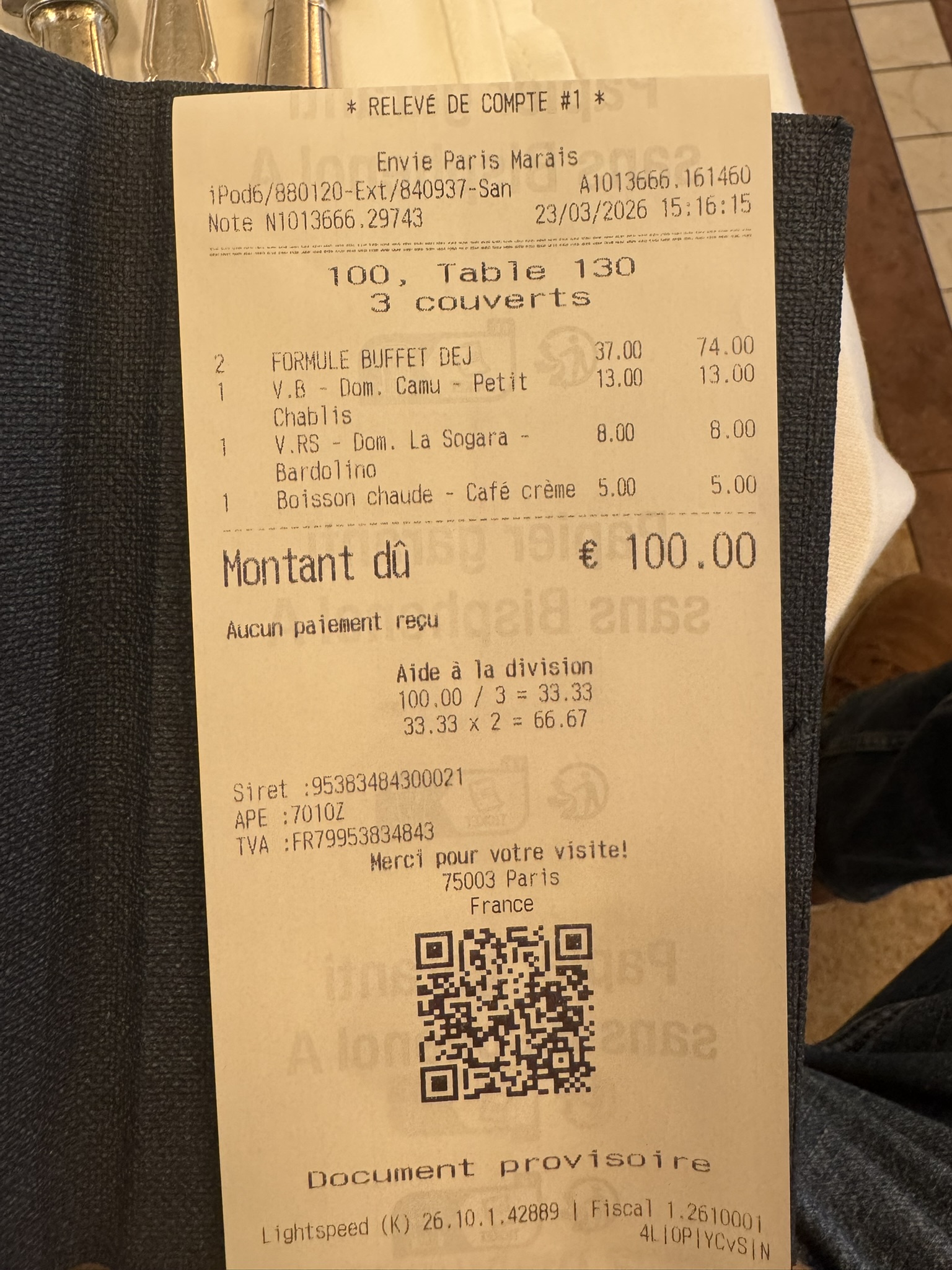
For lunch — ENVIE LE BANQUET in the Marais district. A buffet system: a huge selection of appetizers in open access, while mains are ordered from the chef. On the chalkboard menu: lemon confit risotto, gnocchi cacio e pepe, French onion soup, trout, veal blanquette. Portions are small, but that’s the point — for food lovers, it’s a chance to taste everything. Our daughter picked only the trout from the whole menu and ate three servings — each piece maybe 50–70 grams, but she couldn’t stop. Two buffet meals (€37 each), a glass of Petit Chablis (€13), Bardolino rosé (€8), and a coffee (€5) — €100 total for three. We were so full that dinner was just sweet waffles near the Eiffel Tower.
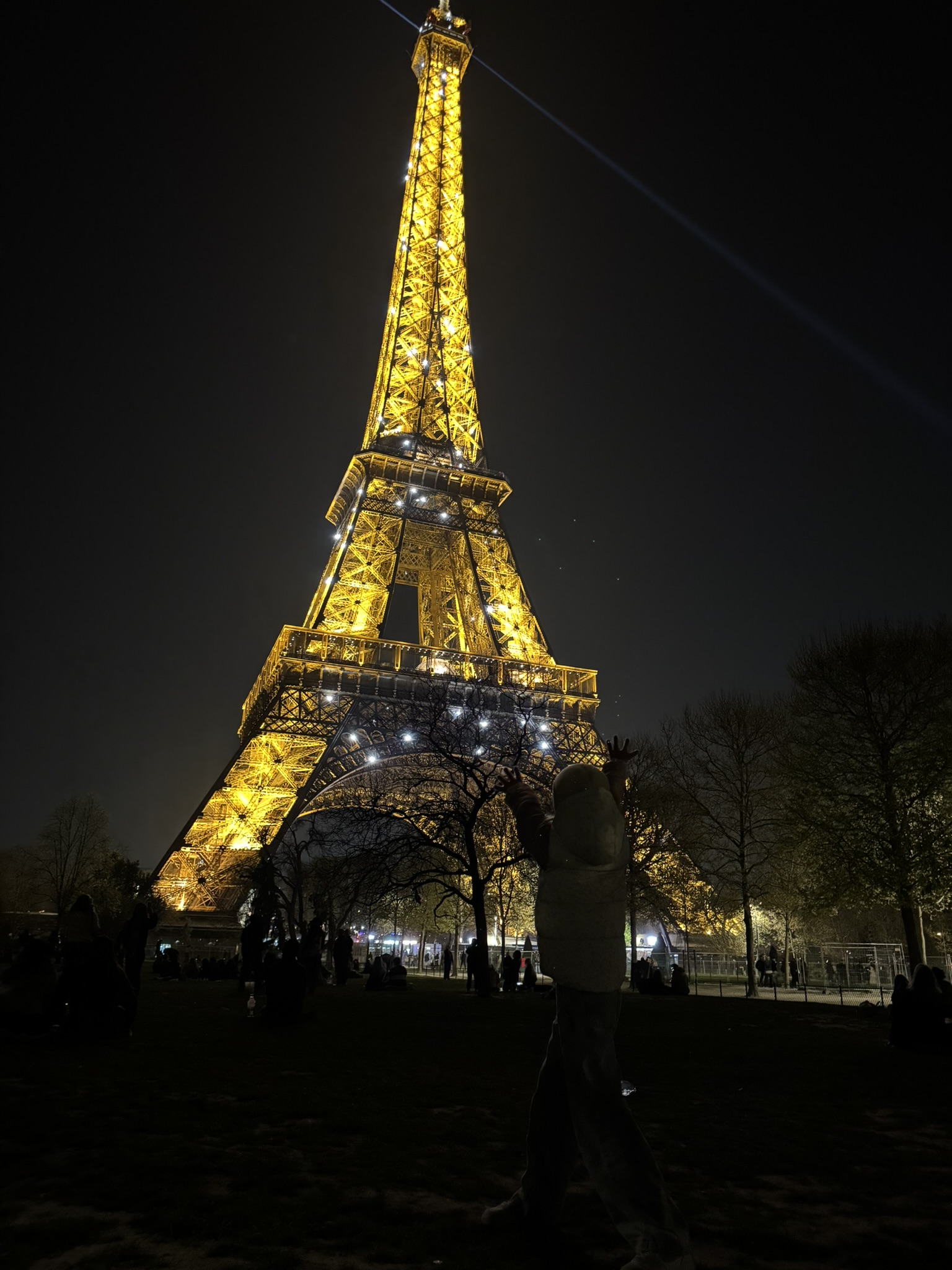
That evening — the Eiffel Tower. We waited for dark and the light show — when the tower starts twinkling with golden lights, the whole park goes silent. Our daughter said: “It’s like a movie, but it’s real.”
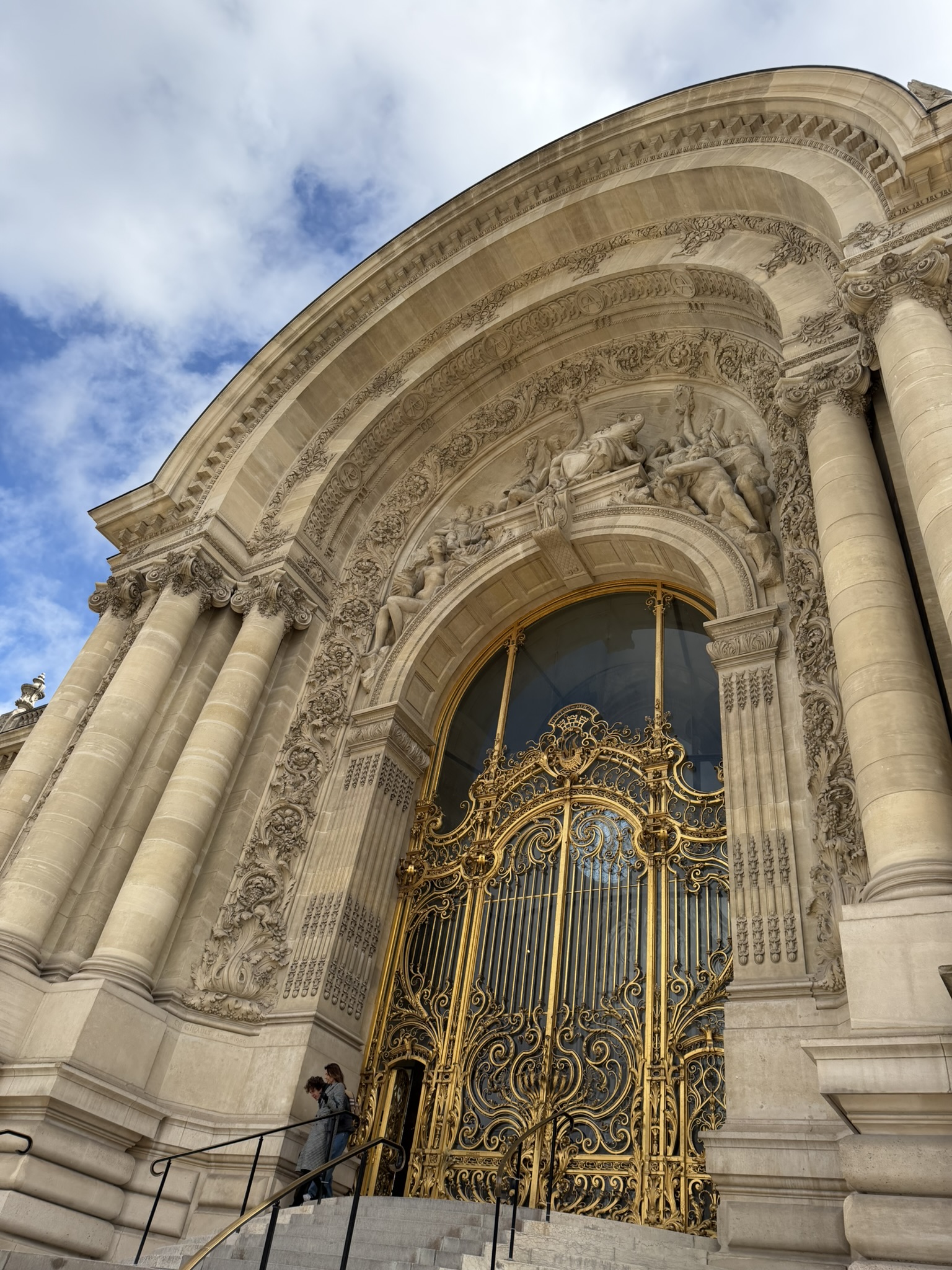
On the rainy day, we started with Petit Palais — Musée des Beaux-Arts de la Ville de Paris. Admission: free. And here’s a tip worth every cent you won’t spend. With kids, always choose free museums. An eight-year-old’s mood shifts every ten minutes: right now she wants to look at paintings, ten minutes later she wants a playground. If you’ve paid €30–50 per person for entry, after thirty minutes you start getting anxious: “We paid for this, let’s see more.” With a free museum — the kid wants to leave, you just leave. No stress, no wasted money. And Petit Palais is genuinely an excellent museum with an impressive collection.
This echoes our decision at Mont Saint-Michel — not buying tickets when our daughter was tired. Before any trip with kids, scout free attractions — there are more than you think.
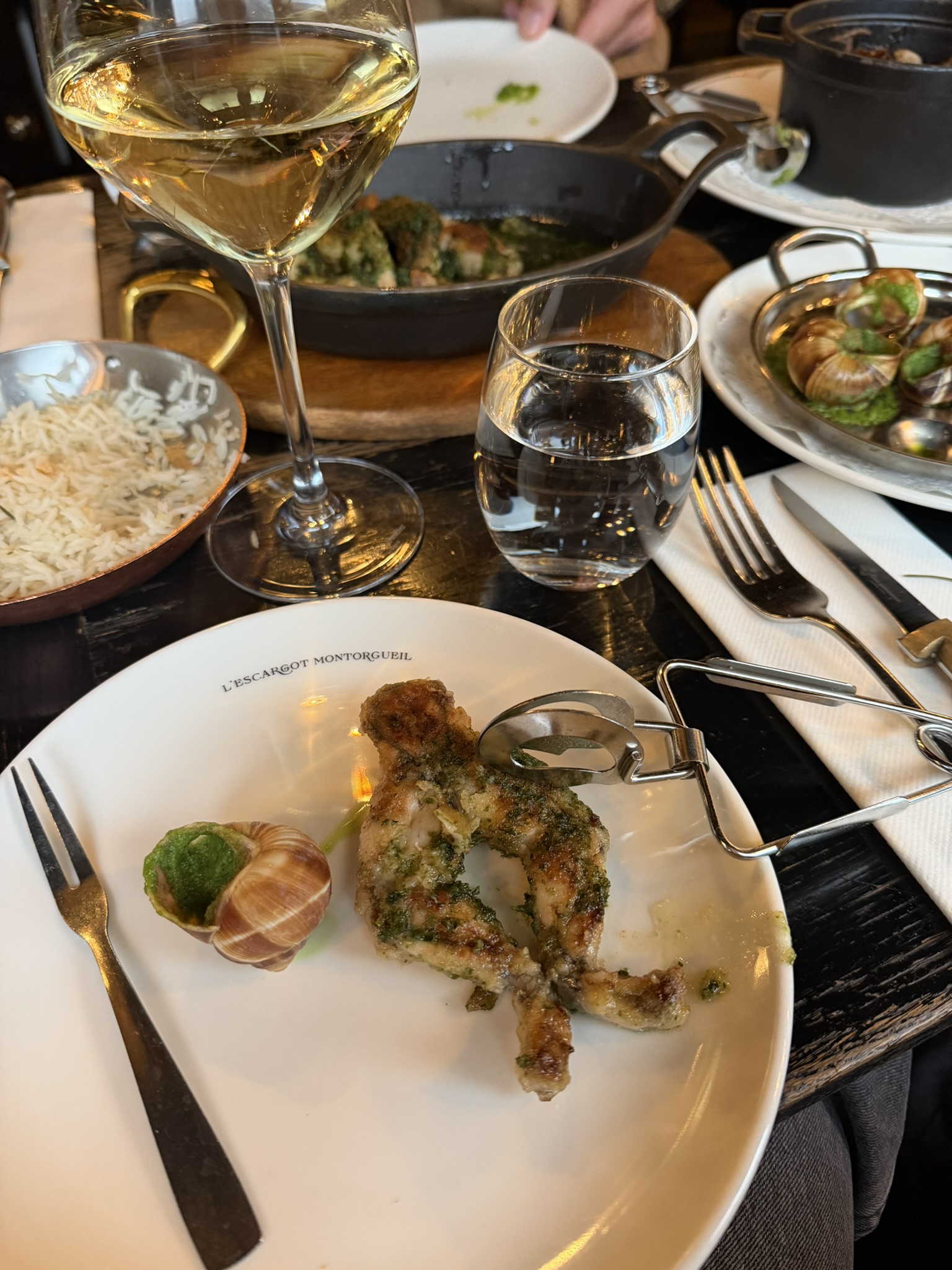
From there — L’Escargot on Rue Montorgueil. For us, this is the most French restaurant in Paris. Veal bourguignon, escargot in garlic butter, frog legs — the full classic experience. This wasn’t our first time, and we try to eat here on every Paris visit. If you want one restaurant that captures the spirit of French cuisine — this is it.
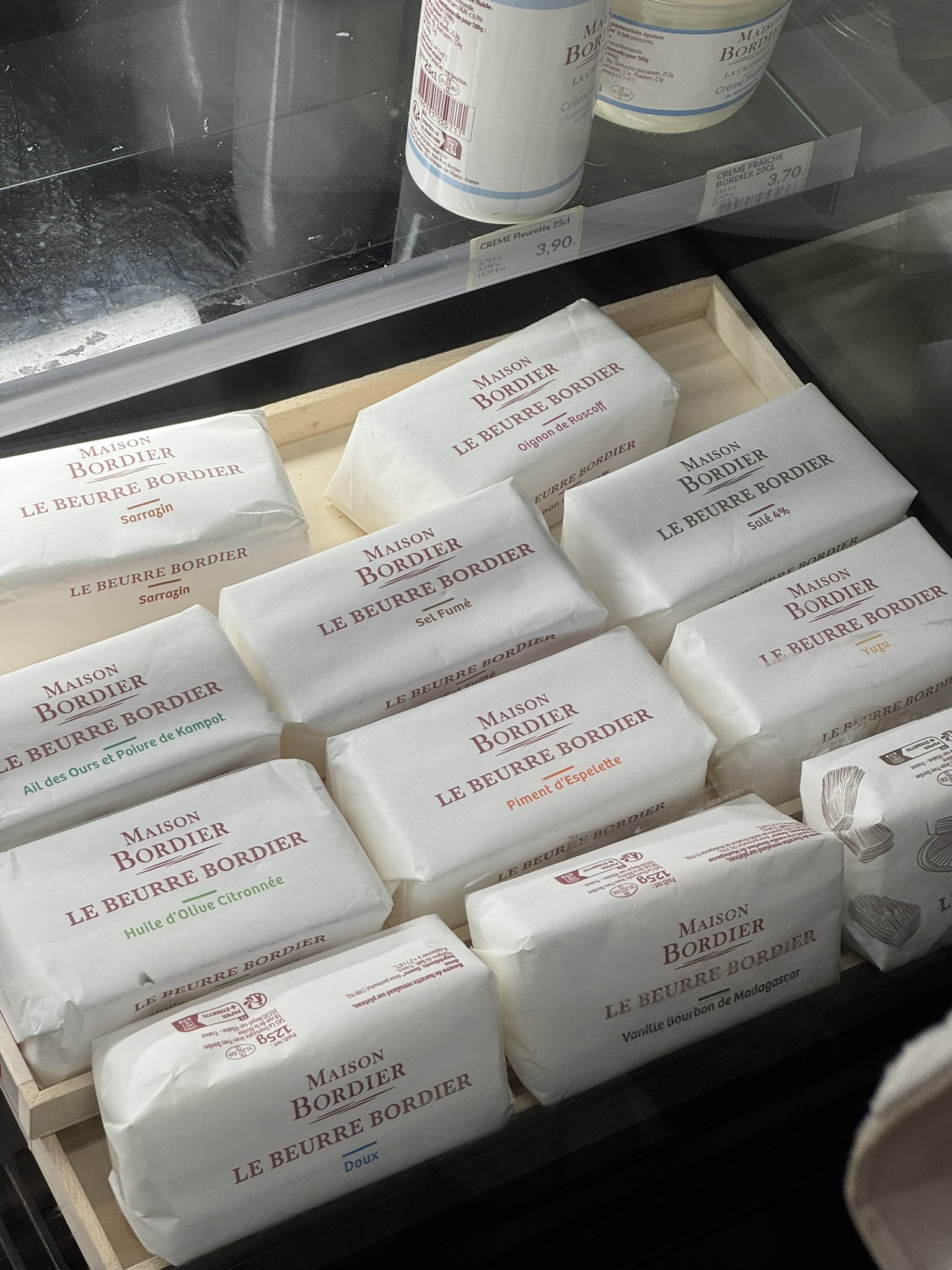
Another find — G. Detou on Rue Tiquetonne (75002), practically right across the street from L’Escargot. A gourmet shop we’d heard great things about from multiple bloggers. We picked up some oil — quality is top-notch. We didn’t make it to a café we’d been eyeing — the one famous for its enormous cappuccino cup and oversized croissant — rain and a tired kid changed the plan. Saving it for next time.
Disneyland Paris — Where AI Got It Right
Mindtrip recommended two days and two parks for €440–560 per family. We bought single-day, single-park tickets: Adult 12+ and Child -12, dated March 24. According to Mindtrip’s own estimate, a 1 Day / 1 Park ticket runs €80–110 per adult and €75–105 per child — so our family total came in around €235–325 instead of the €440–560 the AI had budgeted for two days. One day was enough — the experience was absolutely incredible.
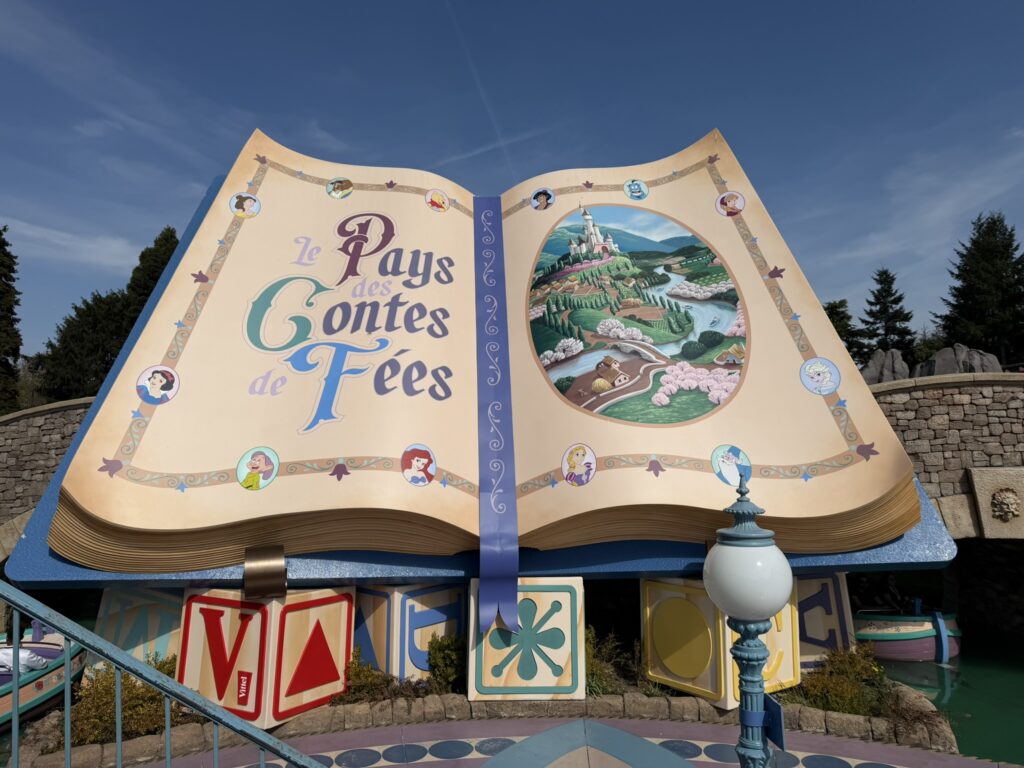
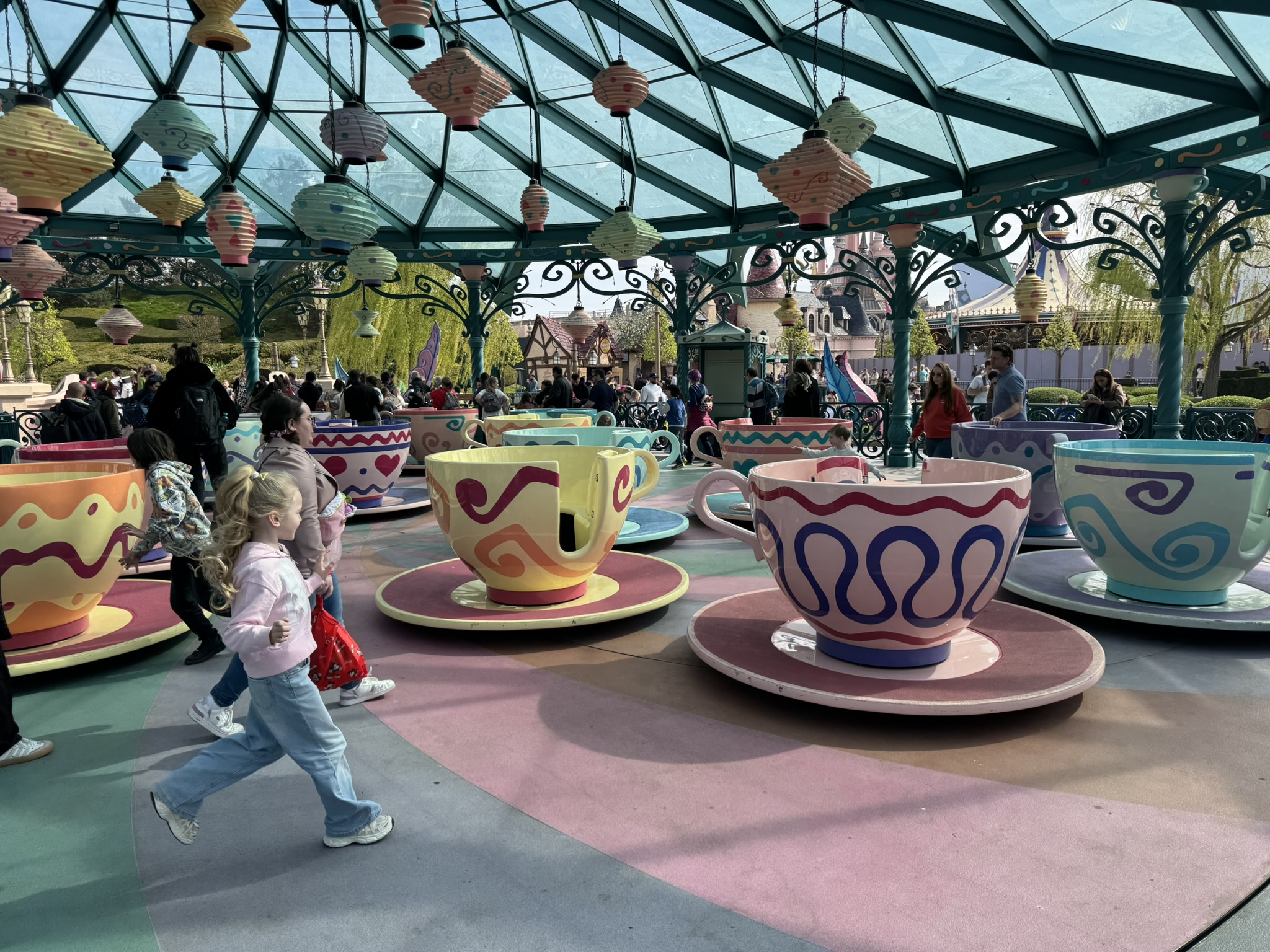
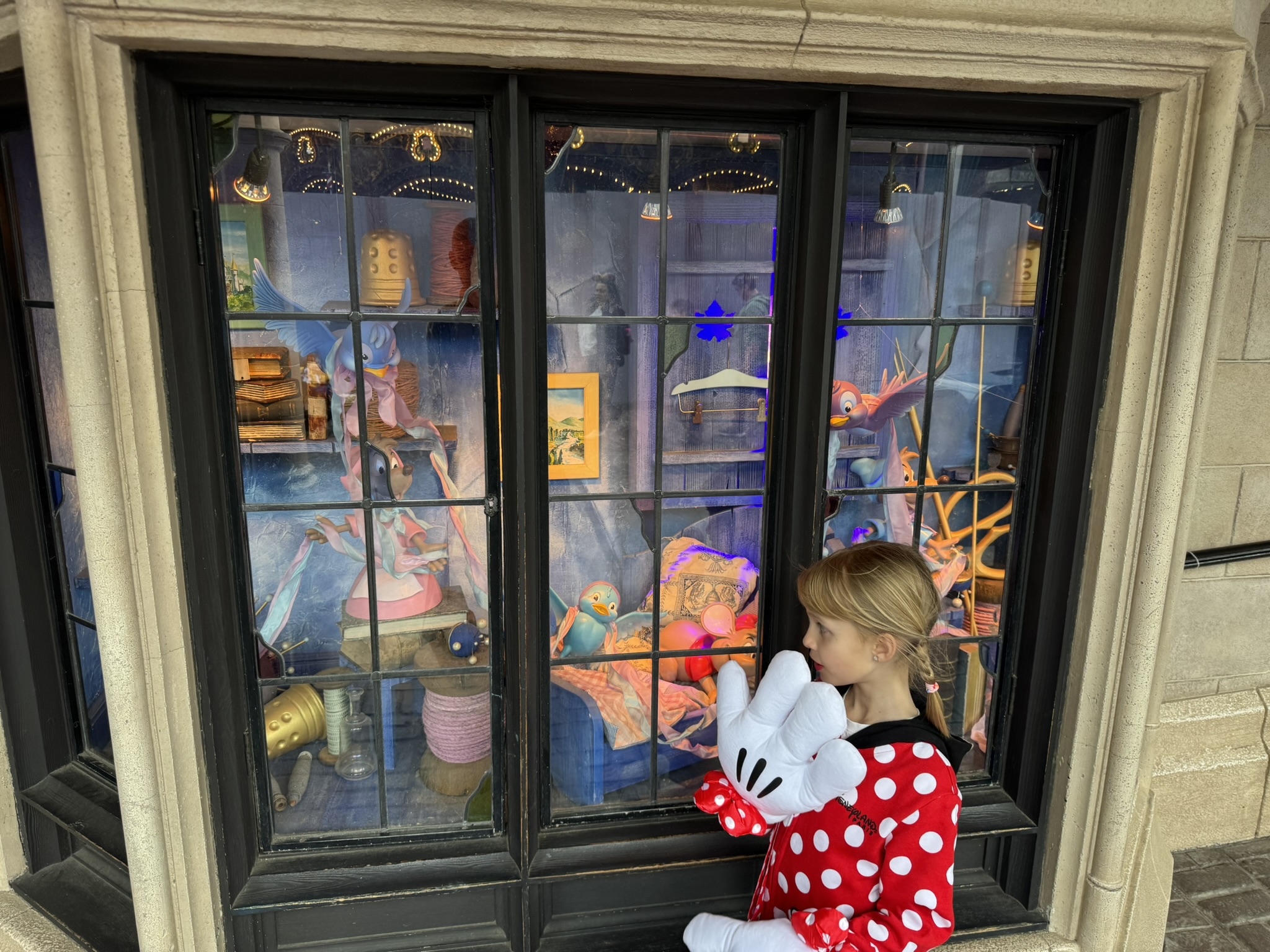
Fantasyland was the main zone for our eight-year-old. Dumbo the Flying Elephant, Mad Hatter’s Tea Cups, Le Pays des Contes de Fées — a boat ride through fairy tales. She loved the UP installation (house on balloons) and the green ivy tunnel. Minnie ears were purchased within the first fifteen minutes and didn’t come off all day.
Where AI truly helped was with the restaurant. On AI’s recommendation, we went to Plaza Gardens Restaurant — and it was outstanding. Buffet-style, but unlike the Paris ENVIE — both appetizers and mains are out in the open. The food is simpler but just as delicious. And the best part — it’s designed for families: ricotta ravioli shaped like Mickey, mashed potatoes deep-fried in Mickey shapes. Our daughter was overjoyed. This was the single best AI recommendation of the entire trip.
For dinner after the park — yogurt and a sandwich from E.Leclerc in Montevrain. Budget-friendly and perfectly fine after a big lunch.
Hotel — Ace Hôtel Paris Marne La Vallée. Breakfast is classic, slightly simpler than an Ibis, but perfectly adequate for a Disney-adjacent overnight stay.
When AI Failed Us — The Gas Station Story in France
This happened on the road from Mont Saint-Michel back to Rouen. We’d planned to catch the sunset in Étretat. That didn’t happen.
The MG ZS dashboard showed about 100 km of range left. Then, in just ten to fifteen minutes at 90–100 km/h, that number started plummeting. Twenty kilometers, ten, and finally — dashes: “—-“. We pulled off into the nearest village.
Here’s the core problem that no AI travel planner will warn you about: most gas stations in France are fully automated. No cashiers. No attendants. If you’re used to gas stations in the Balkans, Germany, Austria, or the Czech Republic — where you fill up first, then pay — forget it. France works differently.
The machine tries to authorize or hold €150 on your card before dispensing any fuel. I had two cards: a virtual one on my phone and a physical plastic card. The machine didn’t accept the virtual card at all. My physical card had about €120 left — not enough for the €150 hold. Declined.
I started approaching people at the station. I asked eight different people: “Could you fill up my car with your card? I’ll pay you cash. Even just ten euros.” Not one agreed. They looked at me like I was running a scam — a foreigner, unfamiliar accent, strange request.
The ninth person — a man who didn’t speak English — used gestures to explain that twelve kilometers away there was a gas station that accepted cash. I knew I might not make it, but there was no other option.
We drove there. Same scene — a machine, not a soul around. But out of sheer desperation, I started circling the pump and noticed an unusual terminal nearby. I translated the instructions: insert bills, get a receipt with a code, scan the code at the pump — get fuel. The man was right: you can pay cash in France, but there’s no cashier involved.
We filled up for €50. We missed the sunset in Étretat. We drove to Rouen.
The lesson: AI doesn’t warn you about how gas stations work in France, about the need for cash, or about €150 card holds. If you’re doing a France road trip — carry cash and make sure your card limit exceeds €150.
France Road Trip with AI — Results and Budget
Six days done. Here’s how the AI plan compared to reality:
| Category | Mindtrip AI | Reality |
|---|---|---|
| Route | Bayeux → MSM → Disney → Paris | Étretat → MSM → Rouen → Paris → Disney |
| Hotels | €1,000 (€130–180/night) | Significantly cheaper (Ace Hôtel, Ibis-tier) |
| Food | €600 (€100/day) | Mix: €100 buffet + picnics + supermarkets |
| Disney | 2 days / 2 parks, €440–560 | 1 day / 1 park — plenty |
| What AI missed | — | Gas stations, Étretat parking, UTILE, Oyster Club, Viewpoint with Sheep |
| Where AI nailed it | — | Plaza Gardens = outstanding, overall route structure |
| Car rental | Hertz (matched) | MG ZS Hybrid, €627 total |
AI delivered a solid framework — direction of travel, day-by-day breakdown, ballpark budget. But the best moments turned out to be unplanned: a roadside cheese picnic on a Normandy back road, four varieties of oysters at the Oyster Club, sheep grazing in front of Mont Saint-Michel, 600-year-old houses in Rouen. And the most stressful moment — the gas station — AI didn’t even mention.
After France, we flew back to Tirana where our car was parked. We spent a night at the Hilton, and the next day drove home to Montenegro in the rain. Full circle: Budva → Albania → France → Albania → Budva.
Tips for a France Road Trip with Family
Here’s what we’d do differently — and what we’d repeat without hesitation.
Cash and gas stations. Bring cash — at least €50–100. Make sure your card limit exceeds €150. French gas stations are automated and they try to freeze €150 before dispensing fuel. Virtual wallets (Apple Pay) are often rejected.
Parking in Étretat. Don’t waste time looking for a spot in the center — there won’t be one. Go straight to the outer lot and take the shuttle.
Hotel for Étretat + Mont Saint-Michel route. Not Rouen. Pick something in between — you’ll save four to five hours of driving.
UTILE supermarket near Mont Saint-Michel. Beauvoir, five minutes by car from the parking lot. Sandwiches and souvenirs are two to three times cheaper than at the abbey. Microwave available.
Sandwiches from the hotel breakfast. Zero euros, maximum enjoyment. Baguette, cheese, ham — and you’re lunching with a view of Mont Saint-Michel.
Plaza Gardens Restaurant at Disneyland. Best restaurant for families with kids. Buffet with Mickey-shaped food. An AI recommendation that delivered 100%.
Free museums with kids. Petit Palais in Paris — free admission and genuinely impressive. Kids’ moods change every ten minutes. Don’t pay €30–50 for entry if you might have to leave after thirty minutes.
G. Detou + L’Escargot. Two must-visit spots in Paris, practically across the street from each other. A gourmet shop and the most French restaurant in the city — combine them in one walk.
Use AI as a starting point, not a rulebook. Use an AI planner for the route structure and budget, but be ready to improvise. The best moments are the ones that weren’t in the plan.
Best Photo Spots on This France Road Trip
If you’re planning a similar route, here are the spots that produced our best shots — no professional camera needed, just a phone and good timing:
Jardins d’Étretat — the face sculptures among the boxwood hedges, with the Porte d’Aval arch in the background. Best in afternoon light.
Mont Saint-Michel Viewpoint with Sheep (JG95+4V, Pontorson) — the abbey across a green field with grazing sheep. Zero crowds, pure magic.
Eiffel Tower at night — wait for the golden light show after dark. The sparkle lasts five minutes on the hour. Cherry blossom trees nearby make a perfect foreground in March.
Rue de la Vicomte, Rouen — red-and-white half-timbered houses, cobblestones, chocolate shops. Best in early morning before the crowds.
Petit Palais courtyard — even if you skip the museum, the inner courtyard garden is stunning and photogenic year-round.
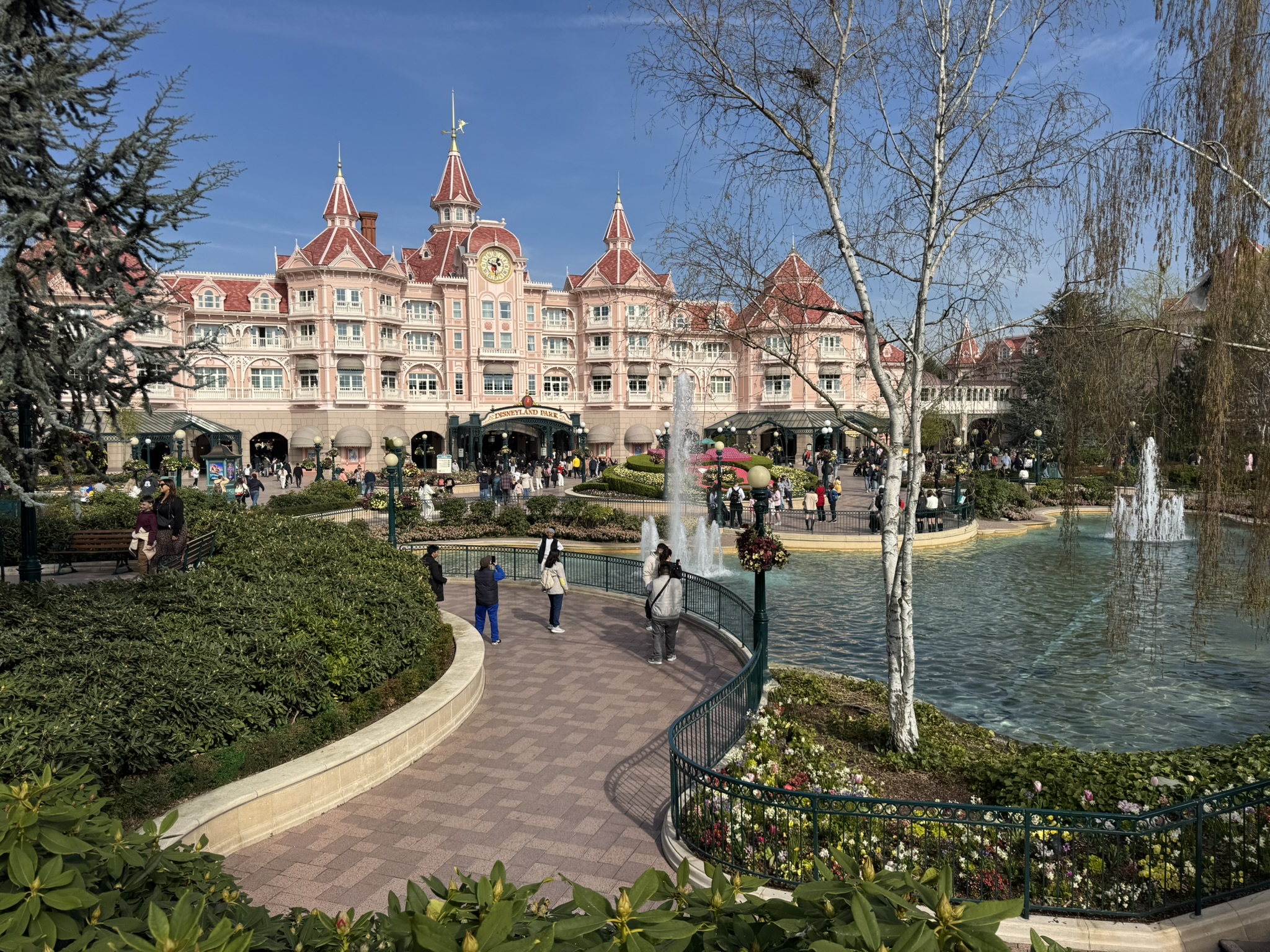
Disneyland Hotel fountain area — the pink Victorian building with the Mickey clock, flower beds, and fountain. Arrive early before the gates open for an empty shot.
FAQ — Frequently Asked Questions
How much does a France road trip by car cost? Not counting hotels and flights, we spent about $3,500 on the ground (paid with a USD card) over 6 days for a family of three. Car rental with fuel and insurance — €627. Fuel at gas stations — about €140 total (three fill-ups: €50, €60, and €30; gas price ~€2 per liter). Toll roads — €20–25 for the entire trip (three to four tolls).
Can you plan a France road trip with AI? Yes, and we recommend it. Mindtrip delivered a workable route structure that we adapted to our needs. AI is great for the skeleton of a trip, but the details are on you.
Is Étretat worth visiting with kids? Absolutely. Jardins d’Étretat with its face sculptures is a hit with children. The climb to the chapel is manageable. If you watch the Netflix series “Lupin” before the trip, your kid will recognize the locations. Only downside — restaurants in Étretat are weak.
How many days do you need for Disneyland Paris? Simple formula: one day equals one park. One day at Disneyland Park was enough for us, but our child had already accumulated so many emotions over the trip that she didn’t need more. If Disney is the main purpose of your trip, two days might be justified. Don’t limit yourself based on someone else’s experience.
How do you pay for gas in France with cash? Look for bill-accepting terminals near the pumps. Insert cash, get a receipt with a code, scan it at the pump. Not all stations have these terminals — plan ahead.
Where should you stay between Étretat and Mont Saint-Michel? If you’re visiting both in the same trip, don’t base yourself in Rouen like we did — the round trip to Mont Saint-Michel alone ate up nearly eight hours of driving. Look for hotels around Caen, Bayeux, or Avranches instead. You’ll cut your driving time significantly and have more energy to actually enjoy the sights.
Final Thoughts
A France road trip with an AI planner is a formula that works. AI gives you direction, saves hours of research, and suggests options you wouldn’t have thought of (Plaza Gardens is the perfect example). But the driver’s seat is always yours. And the best moments of the trip — a cheese picnic by the road, four varieties of oysters, sheep in front of an abbey, a 600-year-old house with a chocolate shop inside — weren’t in any AI plan.
Our route came full circle: Montenegro → Albania → France → Albania → Montenegro. Three countries, six days, one family, and one AI co-pilot that got 90% right — and for the other 10%, we figured it out ourselves.
Read also: Mindtrip AI Review | ChatGPT as a Travel Planner | How to Use AI for Travel Planning