
Can AI budget travel planning actually deliver a cheap European road trip? The short answer is yes — but only if you know exactly where AI tends to underestimate the money.
I have a low tolerance for articles in the “AI planned my perfect vacation for pennies” genre.
In a real family trip, the budget never breaks where the pretty table predicts. It breaks at the Hertz counter, when a physical card you didn’t think you’d need suddenly becomes the deciding factor.
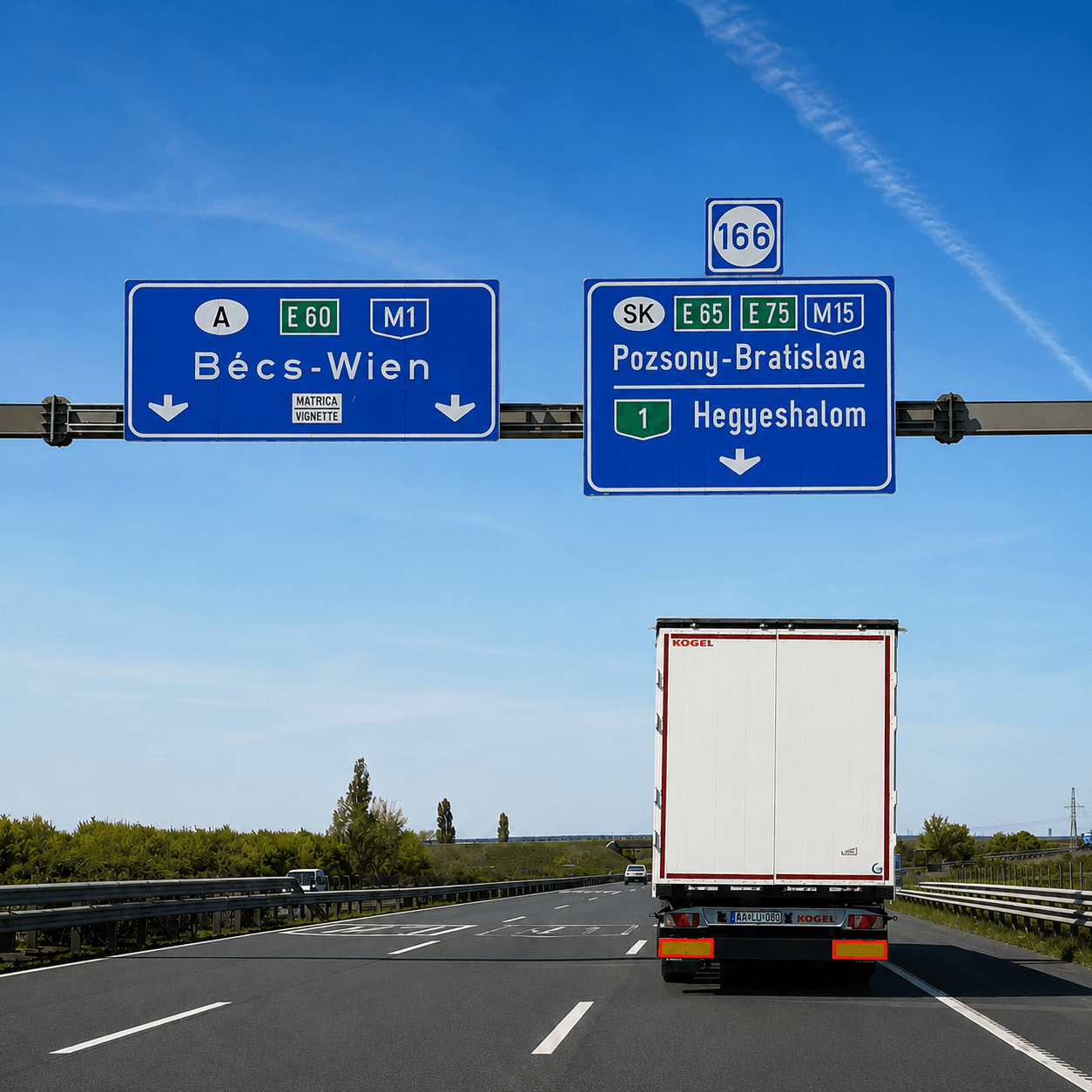
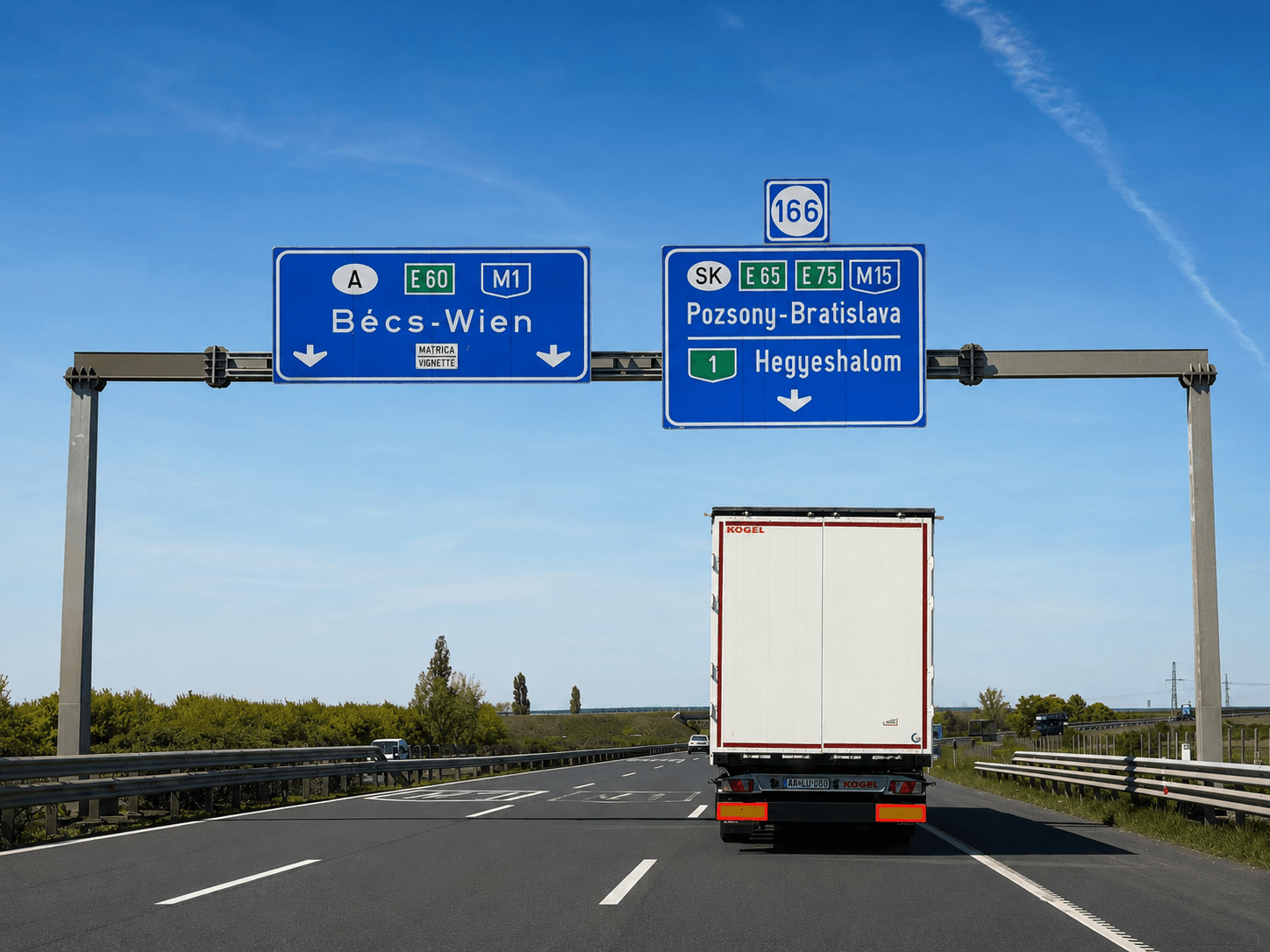
It breaks at a border, where you have to buy a vignette in a hurry. On a child booster seat that looks like a footnote in an AI estimate. At a French gas station where the terminal tries to put a €150 hold on your card and your virtual wallet won’t authorize it.
And sometimes it breaks on a kid who, after the “free walking tour through the old town,” does not actually want to walk — she wants the aquarium, the trampoline park, or the Ferris wheel.
This piece isn’t an attempt to prove that AI is useless for budgeting a trip. Quite the opposite. After running a handful of real tests, I’m more convinced than ever that AI works extremely well as the first layer of trip planning: assemble the route, see the day-to-day logic, compare hotels, suggest the order of cities, flag toll roads, generate a ballpark cost. But the moment you ask it to be the final accountant of the trip, it almost always misses the most painful categories.
The basis for this piece is a real 8-day family trip: me, my wife, and my eight-year-old daughter.
Route: Montenegro → Hungary → Slovakia → Czech Republic → Austria → Hungary → Montenegro. In practice, it became a four-country loop through Central Europe, with car rental at Budapest Airport, hotels in Brno, Vienna, and Budapest, kid-focused activities, restaurants, vignettes, fuel, and small decisions that never fit into a tidy AI table.
The final number: about €2,600 for 7 nights, a family of three, across four countries.
One important frame. We didn’t hand the trip over to AI for end-to-end planning. We know Central Europe too well: we lived in Vienna for almost a year, we’ve made repeated trips to Budapest, Bratislava, and Brno, and we already have favorite hotels and trusted places. So I did something more honest. We ran the trip ourselves first, collected the receipts, and only then compared reality with what Mindtrip, iMean AI, and Layla would have proposed. The full source case is broken down in my AI travel agent test; here I’m extracting just the budget layer — where AI hit, where it missed, and which prompts get you a number closer to reality.
Can AI Budget Travel Actually Work?
Ask any AI tool for a “budget European trip” and it’ll start out correctly. It’ll tell you to skip five-star hotels, pick cities with good public transit, book in advance, look for free walking tours, prefer family ticket packages, and keep a food buffer. All useful. None of it is a budget. That’s top-of-funnel travel advice.
The real question sits one layer deeper: can AI see in advance the actual cost structure of your specific trip?
In our case the hypothesis was this. AI would do a reasonable job on the big blocks — hotels, car rental, food, activities. But it would underperform on the hidden categories: deposits, country of rental, cross-border fees, vignettes, child seats, toll roads, pre-authorizations at gas stations, early-morning departures, holiday closures, and the kind of unplanned family activity that happens because an eight-year-old’s mood shifted.
That’s exactly how it played out.
AI handles well anything that has been described many times online. A hotel in Brno? Mindtrip even matched OREA Resort Santon, which is where we actually stayed. A neighborhood near a Vienna metro line? Citadines Danube Vienna was a logical match. Restaurant budget? On average, AI wasn’t catastrophically off. But the moment the conversation turned to what happens between the lines — the actual Hertz contract, the cross-border permission on a Hungarian-plated car, a physical card requirement for a deposit hold, a vignette on a specific border road, the daughter’s “I want sharks, not a museum” rule — AI stopped being an accountant and reverted to being a helpful first draft.
The single biggest takeaway about AI budget travel, the one this whole piece is built around: AI shouldn’t be the one calculating your budget. It should be the one forcing you to ask the right questions before the trip.
Bad scenario: ask AI to “make me a cheap itinerary” and trust the final number.
Good scenario: ask AI to build a route, then in a separate follow-up force it to list every hidden category of cost, then verify rental car, child extras, vignettes, toll roads, deposits, parking, and emergency cash on your own.
The difference between those two scenarios isn’t philosophical. It’s the difference between “we’ll probably come in under €2,000” and “realistically budget €2,600, plus headroom on the card for holds.”
The Setup: 8 Days, 4 Countries, Family of 3
The trip started in Budva, Montenegro. We left early for Podgorica Airport, flew Wizz Air to Budapest, picked up our car at Hertz Budapest Airport, and drove to Brno. Several days in the Czech Republic, transfer to Vienna, back to Budapest via Parndorf, two more days in Hungary, then a very early flight home.
The composition of the family matters. Two adults and an eight-year-old. That’s not just “plus one ticket.” A kid rewrites the budget logic in nearly every category.
The hotel can’t only be cheap; it has to work. In Brno we picked OREA Resort Santon not because it was the lowest price, but because it has a spa, a pool, a kids’ zone, a lake nearby, and a known family-friendly atmosphere. For a solo traveler this would look like overpaying. For a family it’s a nerve-saver: the child has things to do, you don’t need to hunt for evening entertainment, and breakfast covers part of the next day’s food.
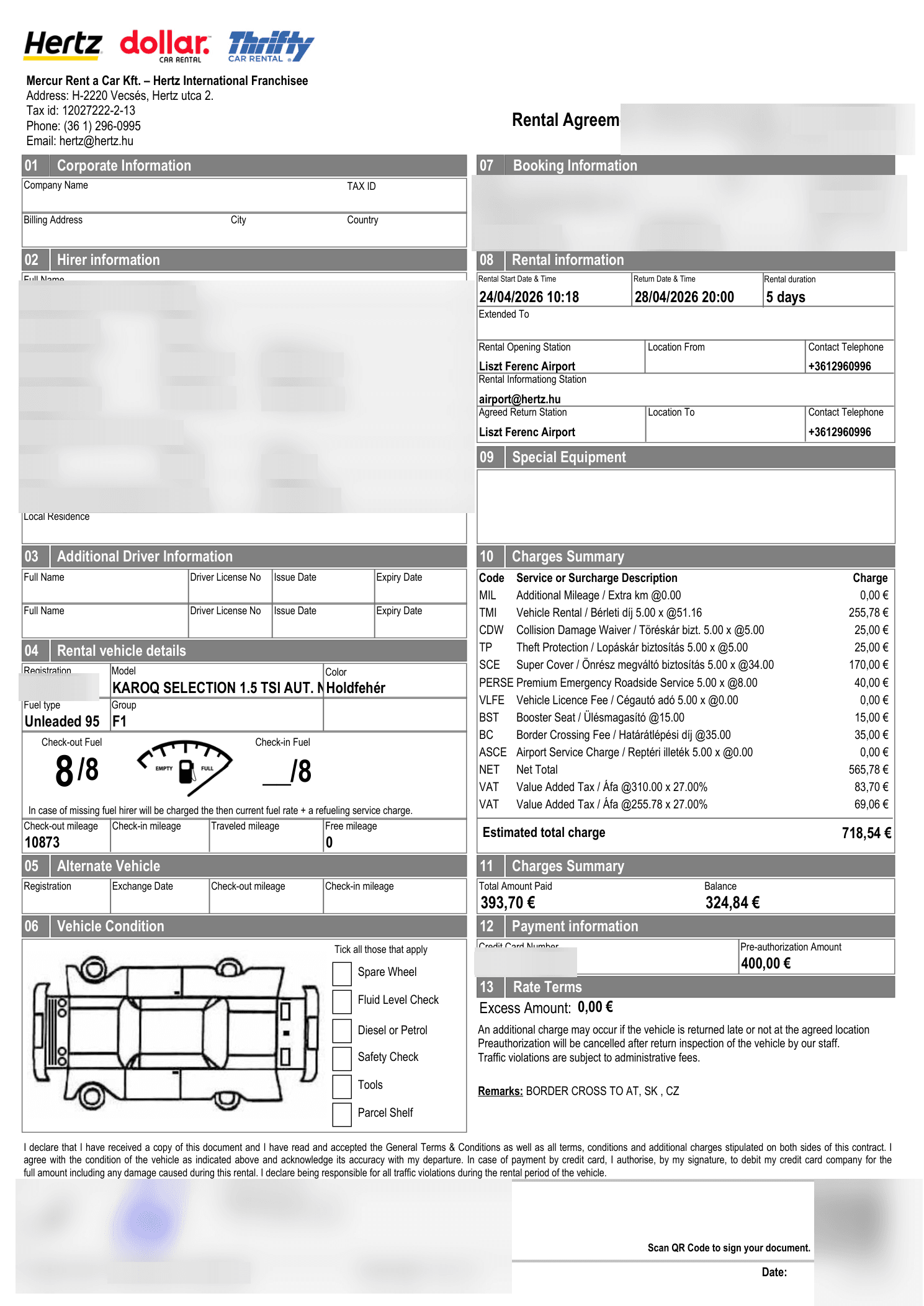
The car isn’t just “a rental.” For a family the size of the trunk matters, the comfort over long drives matters, the booster seat matters, insurance, cross-border permission, and the ability not to argue with a rental company over every scratch all matter. We took a Hertz with Super Cover, which raised the cost but cut the risk of an ugly surprise at return.
Timing matters too. The trip fell in late April through early May 2026 — meaning Hungary’s Labour Day, shop closures, an early-morning departure from Budapest Airport, spring hotel pricing, not yet summer peak but enough demand for good family rooms to be in short supply.
In its base shape, the trip looked like this:
| Day | Route / base | Day logic |
|---|---|---|
| Day 1 | Podgorica → Budapest → Brno | Flight in, Hertz pickup, drive through borders |
| Day 2 | Brno Reservoir | Slow family day — lake, pool |
| Day 3 | VIDA! Science Centre | Kid-focused science day |
| Day 4 | Brno → Vienna | Drive, vignette, Prater, Alte Donau |
| Day 5 | Vienna → Parndorf → Budapest | Outlet, family lunch, Budapest |
| Day 6 | Budapest | Tropicarium + CyberJump |
| Day 7 | Budapest | Slow day — restaurants, Budapest Eye |
| Day 8 | Budapest Airport | Very early departure |
In the full 4-country family trip tested with AI I broke this route down day by day and compared it against the answers from Mindtrip, iMean AI, and Layla. Here the relevant point is different: a route like this only looks budget-friendly on a map. In reality, every day contains a hidden financial fork. Do we take a boat on Brno Reservoir or keep the day free? Do we go to Prater for seven rides or just walk? Do we route into Tropicarium because the kid wants sharks, or stay with AI’s classic city checklist?
On paper, AI usually picks the optimal route. In real life, the family picks the route that keeps the mood intact.
What AI Suggested for Budget Travel
When I ran the route through the three tools, the picture was telling. Not one of them — Mindtrip, iMean AI, Layla — was bad. Each has a real strength. But their views of a budget are not the same.
Mindtrip turned out to be strongest on hotels and route structure. It understood that we needed Brno not as “Brno the city” but as a comfortable family base. It hit OREA Resort Santon and Citadines Danube Vienna — two hotels that genuinely matched our travel logic. For a budget trip that matters more than it sounds: a cheap hotel that saves €30 a night can easily eat those €30 back in taxis, awkward logistics, or a random dinner you didn’t plan.
In a budget sense, Mindtrip does one good thing: it aims for “reasonable mid-range” rather than chasing absolute cheapest. For a family that’s a feature. But it still tends to underestimate the precise extras of car rental: cross-border fees, child seats, deposit terms, local Hertz rules in the country of pickup.
iMean AI was stronger structurally. It likes to break the answer into sections: itinerary, cost, transport, warnings, documents. For a budget piece that’s useful — you can quickly see which categories it at least tried to cover. But iMean had a consistency problem. In some places it gave cautious advice; in others it failed to keep details in memory. In a financial topic that’s dangerous. A tool can correctly say “verify vignettes,” then misquote a price or fail to notice that Hungary’s vignette is included with a Hertz Hungary rental, and the polished estimate becomes accurate-looking but unverified.
Layla came across as the most insider-style and booking-oriented. It sounds confident and gives options that look like a finished itinerary. For a regular traveler that’s pleasant. For budget planning it’s double-edged. The more polished and self-assured the answer, the easier it is to forget that “expect a cross-border fee of ~€30–50” is not a substitute for the actual Hertz contract. In our case the cross-border fee really was €35, but that was just one line. Behind it were Super Cover, theft and CDW, VAT, a child booster, and the deposit story.
Compressed honestly:
| Tool | Where it helped the budget | Where you still need manual control |
|---|---|---|
| Mindtrip | Hotels, route logic, visual map, family structure | Deposit, country-of-rental rules, extras |
| iMean AI | Structured cost breakdown, multi-section format | Self-consistency, accuracy of local prices |
| Layla | Booking-style suggestions, confident framing | A polish that hides the lack of an actual contract |
A separate note. If money is tight, you don’t have to start with paid tools. For a first frame the free AI trip planner options are perfectly serviceable. The closer you get to actual payments, the less you should trust the “ballpark” AI estimate and the more you should rely on real rental sites, hotel terms, and your own list of hidden categories.
What I Actually Paid
Now the part that matters: real money.
The final tally looked like this:
| Category | Real amount |
|---|---|
| Hertz — rental, Super Cover, all insurance, cross-border, child seat, VAT | €718.54 |
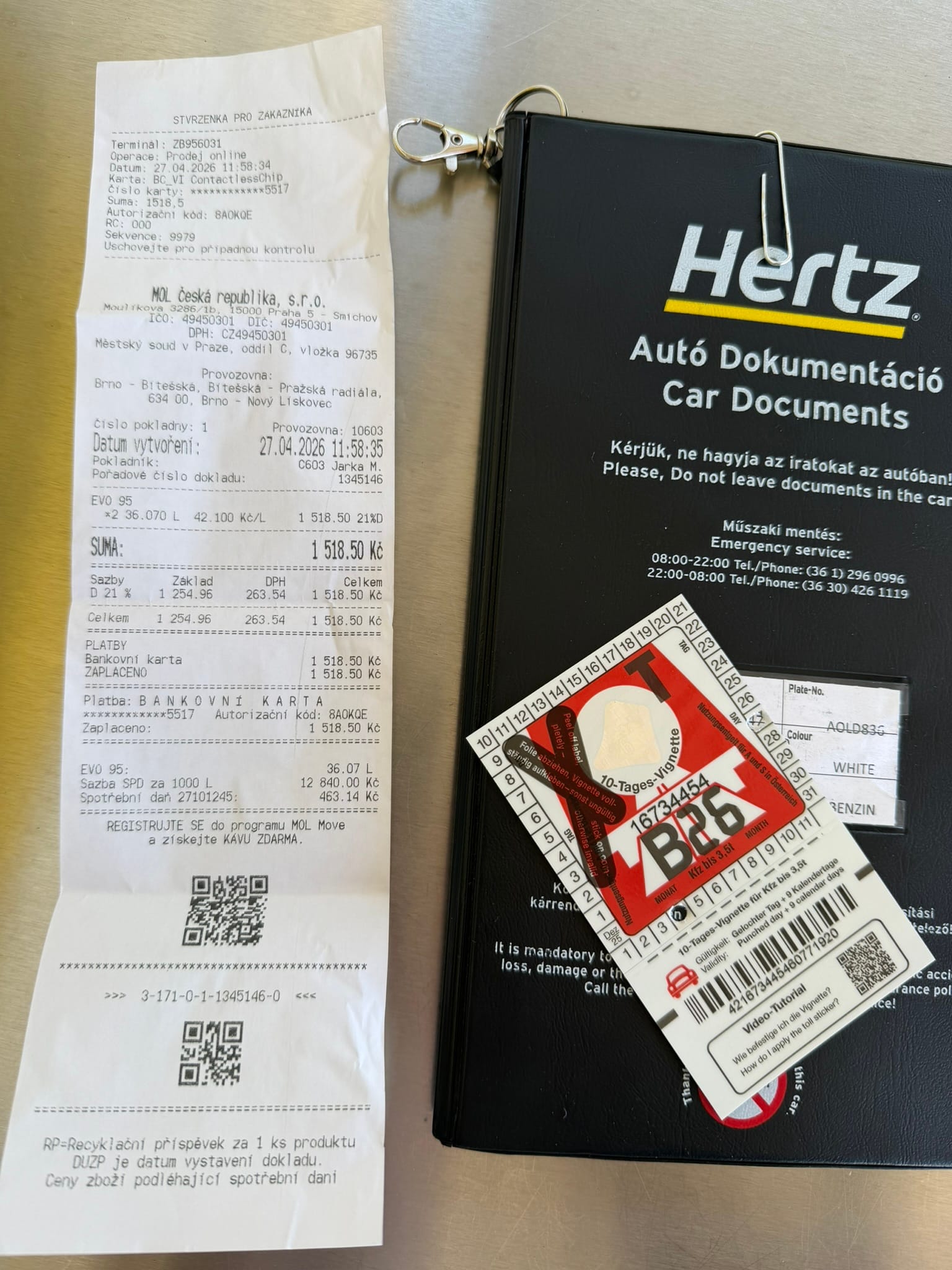
| Vignettes Slovakia + Austria | €23.60 |
| Fuel | ~€62 |
| Lodging — 6 hotels / 7 nights | ~€1,200 |
| Restaurants — 9 receipts | ~€370 |
| Activities — VIDA, Tropicarium, Prater, CyberJump, boats, Budapest Eye | ~€180 |
| Total for a family of three | ~€2,600 |
The biggest line is lodging. Roughly €1,200 for 7 nights for a family of three in Central Europe — not ultra-budget, not luxury. It’s family mid-range: decent sleep, included breakfast, convenient location, minimum logistical stress. That covered three nights at OREA Resort Santon in Brno, one night at Citadines Danube Vienna, and two nights at ibis Styles Budapest Center, plus the broader route context.
The second biggest line is Hertz. €718.54 for five days sounds high until you look at the breakdown: Super Cover, cross-border fee, child booster, theft and CDW protection, emergency roadside, and 27% Hungarian VAT.
Could it have been cheaper? Probably. Should it have been cheaper for a family trip through several countries? I’m not so sure. When you’re driving HU → SK → CZ → AT → HU with a kid, luggage, and a few long stretches behind the wheel, “cheapest possible rental” stops being the right metric.
Vignettes look like a tiny line — €23.60. But these are exactly the lines AI tends to lose. Slovakia, Austria, Czech Republic, Hungary: in some countries you need one, in others it’s already included, in some you buy online, in others at the border, in others through a third-party reseller at a markup. In our case Hungary was bundled with the Hertz Hungary rental, and Slovakia plus Austria required separate payment.
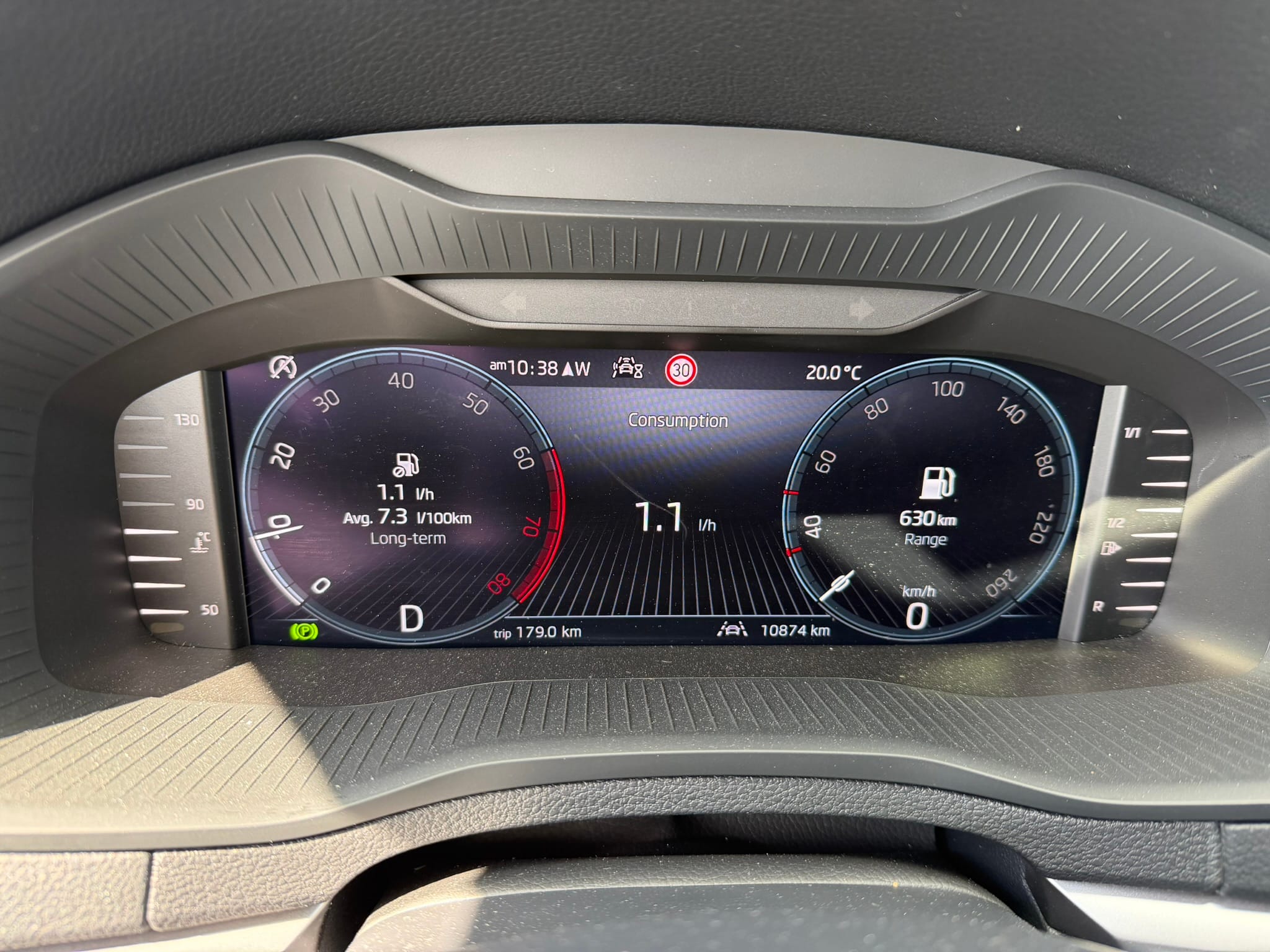
Fuel — about €62. By European standards that’s not scary, because the route was relatively compact and the car was efficient. But fuel budget is always worth padding, especially if AI proposes a scenic detour “because it’s pretty.”
Restaurants — about €370 across nine receipts. This is a good example of why an AI daily average can be misleading. One day you eat at IKEA Wien Nord because with a kid in tow it’s predictable and fast. Another day it’s Le Burger at Parndorf. Then you go back twice to Kawamura Ramen in Budapest because you genuinely loved it. From the outside, that’s “food budget.” From the inside, it’s the family’s mood, fatigue, location, time of day, and the kid’s patience.
Activities — about €180. On paper many days could have been done cheaper: walk the city, look at facades, skip the paid stops. But then the trip would only be cheaper for the grown-up spreadsheet. For our eight-year-old the best moments were VIDA! Science Centre, Tropicarium, CyberJump, Prater, the boats, and Budapest Eye. AI can propose a “free walk.” The child is under no obligation to count that as the day’s best activity.
Where AI Underestimated vs Overestimated
AI’s main mistake on a travel budget isn’t always that it underestimates. Sometimes it overestimates. The deeper issue is that it doesn’t cleanly distinguish flexible costs from hard costs.
Flexible costs are anywhere you control the decision. Restaurant or supermarket. One museum or a walk. Taxi or metro. Hotel near the center or a stop out. Here AI can be useful — it’ll list options, and you pick.
Hard costs are everything you have to pay by someone else’s rules: the rental company, the country, the road, the airport, the card, the child fare. This is where AI consistently undershoots.
AI underestimated rental-car reality. In a tidy estimate a car rental is “€X per day.” In reality it’s a contract stack: base rental, Super Cover, theft protection, CDW, VAT, emergency roadside, child booster seat, cross-border fee, deposit and pre-authorization. And the country of rental matters: Hertz Budapest and Hertz Beauvais behave differently even under the same brand.
AI underestimated cash flow, not just cost. This is an important distinction. A €400 pre-authorization or a €2,000 deposit hold isn’t necessarily an expense — the money may come back. But for a traveler with a card limit, it can still be a blocker. If the card has no available headroom, the trip can stop before it starts. In the 8-day family trip AI vs reality piece I broke down the Hertz Budapest deposit problem in detail: the issue wasn’t the size of the number, it was a combination of which card we had, the Ukrainian card limits, and the local rental rules.
AI overestimated some of the classic tourist line items. It tends to plug in more for standard city attractions, museums, guided tours, and central restaurants. Our reality was more family-shaped: parts of days were built around the hotel, the lake, the pool, simple dinners, and kid-friendly stops. We didn’t try to close every museum. AI sometimes counts a city “like a tourist checklist” while a family travels “like actual people.”
AI underestimated unplanned activities. Tropicarium wasn’t part of AI’s classics, but it became the best moment of Budapest for our daughter. VIDA wasn’t a “Špilberk-tier must-see” in Brno, but it was the standout kid day. Prater could have been skipped on a strict budget. Seven rides for around €30 produced more family happiness than many “correct” free walks.
AI overestimated the family’s ability to stick to a plan. A solo adult traveler can execute an itinerary almost as a checklist. A family cannot. The kid’s mood changes. The spouse has separate priorities. You yourself can be wiped out after an early flight and four hours behind the wheel. So the budget needs to include not just “what does a place cost” but “what does it cost to keep the day intact.”
Budget Categories AI Always Misses
Four categories I now always carve out into a separate budget check. Not because AI never knows about them — it does — but because by default it doesn’t surface them high enough.
Cross-border fees and vignettes
If the route crosses several countries, AI will almost always say something like “check vignette requirements.” That’s correct and insufficient.
A budget needs more than the recommendation “check.” It needs a table:
- which countries are on the route;
- whether a vignette is required;
- whether it’s already included with the rental;
- where to buy it officially;
- the exact price;
- whether you need a printed sticker or an electronic record;
- whether there’s a third-party reseller risk.
For our route, Slovakia plus Austria came to €23.60. Small money, but you need to know it in advance.
Before a similar route, I would check the official Slovak e-vignette site and the official ASFINAG digital vignette shop, rather than trusting a generic AI estimate or a random reseller page.
I would also check the official Hungarian e-vignette portal before the trip, even if the rental company says the vignette is included. The point is not to pay twice; it is to know exactly what is already covered by the car’s registration and rental terms.
Without that context, an AI tool can either add an extra Hungarian vignette by mistake or fail to clarify the rental terms at all.
Child seat and rental extras
A child seat isn’t the biggest line, but it’s a useful marker of AI estimate quality. If a tool writes “car rental €400–500” without asking the child’s age, booster seat, insurance level, cross-border permission, and deposit, that’s not an estimate. That’s a sketch.
For our trip the child booster was part of the Hertz line, alongside Super Cover, emergency roadside, the cross-border fee, and VAT. For family budget travel the move isn’t to find the absolute cheapest car — it’s to ask AI for the full rental-cost checklist and verify each item.
Gas station closures and payment systems
I always include this case from France in budget travel pieces, even though the main trip is Central Europe. Why? Because it’s the textbook example of a problem that isn’t about how much — it’s about whether you can physically pay.
In France we ran into a fully automated gas station where the terminal tried to pre-authorize €150 on the card. The virtual card didn’t go through at all. The physical card had about €120 left — not enough for the hold. Declined.
We ended up driving to a station with a cash-code terminal, feeding banknotes into a slot, getting a code, and fueling up that way.
We only filled €50 of fuel, but we lost time, nerves, and sunset over Étretat. The full story is in the gas station crisis I had in France.
For AI this is a blind spot. It can estimate a fuel cost, but it doesn’t always warn about pre-authorization, virtual-card rejection, cash requirements, and the differences between countries.
Unplanned attractions

The most human category. AI can suggest a free park, an old-town walk, or a museum pass. Families with kids often decide otherwise. We paid for VIDA, Tropicarium, Prater, CyberJump, the boats, and Budapest Eye not because we don’t know how to save money, but because those are the places that made the trip feel alive.
If your budget doesn’t have a line for “unplanned kid-friendly activities,” you’re not planning a budget. You’re planning an idealized robot that walks past every free attraction and never gets tired.
My current minimum: a buffer of at least €20–40 per day for family improvisation. On some days you won’t touch it. On others, it’ll save the mood.
5 Prompts for Accurate AI Budget Travel Estimates
Below are five prompts I’d use before a similar trip. They don’t make AI magically accurate. They force it to think in the right categories. I keep a broader collection of ChatGPT travel prompts for everything else; this is the budget layer.
Prompt 1 — real-cost budget, not average-cost budget
Plan a realistic travel budget for a family of 3, not an average tourist budget.
Route: [cities/countries].
Dates: [dates].
Transport: rental car from [airport/company], crossing [countries].
Child age: [age].
Please split costs into fixed costs, flexible costs, hidden costs, and cash-flow risks.
Do not give only daily averages. List every category I need to verify manually.
When to use it: at the very start, before any bookings. The phrase that does the work here is cash-flow risks. AI needs to think not only about what you’ll spend, but about how much money could be temporarily blocked.
Prompt 2 — rental car trap checklist
Act as a rental-car risk checker for this itinerary.
I will rent a car from [company] at [airport/country] and drive through [countries].
List all possible extra costs: deposit, pre-authorization, insurance, Super Cover, child seat, cross-border fee, motorway vignettes, fuel policy, late pickup/return, card type restrictions.
For each item, say: likely / must verify / source needed.
When to use it: before paying for the rental. This is the prompt I wish I’d run before Hertz Budapest. It doesn’t replace a phone call or reading the terms, but it surfaces what a generic itinerary prompt hides.
Prompt 3 — country-by-country road cost check
For this route, create a country-by-country road cost table.
Countries: [list].
Rental car registered in: [country].
For each country, check: motorway vignette/tolls, official purchase site, typical price, whether rental cars may include it, border purchase options, and common third-party reseller traps.
End with a manual verification checklist.
When to use it: any European road trip, especially one crossing two or more countries. AI shouldn’t just say “buy vignettes.” It should break each country out.
Prompt 4 — family reality buffer
Adjust this budget for a family with an 8-year-old child.
Assume we will not follow the plan perfectly.
Add realistic buffers for snacks, toilets, bad-weather indoor activities, child-friendly attractions, early dinners, taxis/parking when tired, and one unplanned paid activity every 2 days.
Show the difference between strict budget and family-realistic budget.
When to use it: after AI has given you its first pretty estimate. This is the prompt that drops an actual family into the budget instead of an abstract tourist.
Prompt 5 — estimate vs receipt audit
Here is my AI budget estimate:
[paste estimate]

Here are my real costs after the trip:
[paste receipts/categories]

Audit the difference. For each category, say whether AI underestimated, overestimated, or missed the category entirely. Then rewrite the original prompt so the next estimate would be more accurate.
When to use it: after the trip. This isn’t a post-mortem. This is how you build your own planning system for the next route. It’s literally how I keep improving the articles and tests on aitravel.tools: not “AI got it wrong,” but “what question should I have asked so the error would have surfaced earlier?”
This logic naturally leads to a separate, step-by-step AI Europe itinerary tutorial — planning the route from the first prompt all the way to day-of adjustments.
Real Trip vs AI Estimate: Side-by-Side Table
The final verdict reads best in a table.
| Category | What AI usually estimates | Reality of our trip | Verdict |
|---|---|---|---|
| Rental car | Base rental + generic insurance | Hertz €718.54 with Super Cover, all insurance, cross-border, child seat, VAT | AI underestimates the structure |
| Deposit / pre-auth | Often missing | Potential cash-flow blocker | AI often skips it |
| Vignettes | “Check tolls/vignettes” | Slovakia + Austria €23.60 | Needs country-by-country verification |
| Fuel | Approximate fuel budget | ~€62 | Fine, if the route doesn’t change |
| Hotels | Mid-range nightly | ~€1,200 for family-friendly hotels | Close enough |
| Restaurants | Daily average | ~€370 across 9 receipts | Close, but mood-dependent |
| Activities | Museums / attractions | ~€180, including unplanned kid stops | AI underestimates family reality |
| Gas / payment edge cases | Almost never | France: €150 hold, cash terminal, virtual card declined | Critical AI miss |
| Total | A pretty round number | ~€2,600 | Useful as a frame, not as the final word |
My honest read: AI can help plan a budget trip, but it shouldn’t be the last word on the budget. It’s strong on the route, on hotel logic, on comparing options, on structuring costs, and on generating checklists. It’s weaker wherever the price depends on a specific vendor, a specific country, a specific card, and a specific family day.
If I were planning this trip again, I wouldn’t ask “How much will this trip cost?” That’s too vague. I’d ask “What cost categories could break this trip if I miss them?” That’s an actual AI budget travel question.
That’s why I don’t read the final €2,600 as a budget failure. For 8 days, 4 countries, a family of three, a rental car, 7 nights, several hotels, restaurants, and kid-focused activities — that’s a normal, honest number. It could have been cheaper. It could have been much more expensive. The point is that I now have a real receipt-backed table to plan the next trip from, instead of an abstract AI estimate.
For tool selection, I’d start with a general overview in the best AI travel planners of 2026 roundup, then dig into the specifics: the Mindtrip AI planner review for visual maps and hotel matching, the iMean AI travel agent review for structured multi-section answers, and the Layla AI trip planner review for booking-style recommendations. But the final budget? Always assembled by hand — through a checklist, receipts, and a category-by-category verification.
Tested on real trips — not just desk research.